Following the American Civil War Sesquicentennial with day by day writings of the time, currently 1863.

The American Civil War

Thursday Jan’y 9th 1862

In the office as usual. It rained most of last night. Warm today, very foggy tonight. I have spent the evening at home. The boys read, write, spell & cypher and “Bud” gets a Latin lesson every day. There is a good deal of sickness in the City and many deaths at the Military Hospitals daily. Julia was vaccinated today by Doct Gibbons for Kine pox. The small pox is very prevalent. No War news today. Everything quiet. Congress seems to be doing but little. The Republican Party is split betwen the Abolitionists and the Conservatives. The latter support the measures of Mr Lincoln, which is to save the Union, crush the rebellion, and let Slavery take care of itself.

The Douglass Democrats support Mr Lincolns policy also. He has in fact the strength of the Country with him.

______

The three diary manuscript volumes, Washington during the Civil War: The Diary of Horatio Nelson Taft, 1861-1865, are available online at The Library of Congress.

January 9.—The Provost-Marshal General, at St. Louis, Mo., issued an order, requiring all publishers of newspapers in the State of Missouri, St. Louis city papers excepted, to furnish him a copy of each issue for inspection, and failure with such order would render the paper liable to suppression.

Great excitement occurred in the Chamber of Commerce, at St, Louis, this afternoon, on the occasion of the election of officers, which resulted in the disruption of the Chamber by the withdrawal of the Union members, who subsequently established a Union Chamber of Commerce, which will be immediately carried out. The trouble occurred in consequence of the secession members refusing by their votes to admit a number of Union applicants for membership.

—The vessels, containing the Third and Fourth brigades of General Burnside’s expedition, left Annapolis (Md.) harbor, for the rendezvous at Fortress Monroe.—Baltimore American, Jan, 11.

—In the Senate of the United States, Mr. Sumner delivered an elaborate and powerful speech on the “Trent” affair.

—Col. H. Anisansel, commanding at Clarksburg, Va., returned to that place to-day, having been out with two companies of the First Virginia Cavalry, and three companies of infantry, in search of some military stores, which had been taken by bushwhackers, at Sutton, Va. After some time, the Colonel came up with the rebels, about thirty miles east of Sutton, killed twenty-two of them, took fifteen horses, and fifty-six head of cattle, and recaptured the greater part of the stores, though in an injured condition.—Clarksburg Telegraph, January 10.

Wednesday, January 8. — “New Orleans,” “The Union — it must and shall be preserved,” “Old Hickory forever.” These are the watchwords of today. This is our coldest day — clear, bright, and beautiful. Not over three inches of snow.

Rode with Adjutant Avery and two dragoons to Raleigh, twenty-four miles. A cold but not disagreeable day. The village of Raleigh is about ten to twelve years old; three or four hundred inhabitants may have lived there before the war; now six or eight families. Two churches, two taverns, two stores, etc., etc., in peaceful times. Our troops housed comfortably but too scattered, and too little attention to cleanliness. (Mem.: — Cooking ought never to be allowed in quarters.) I fear proper arrangements for repelling an attack have not been made.

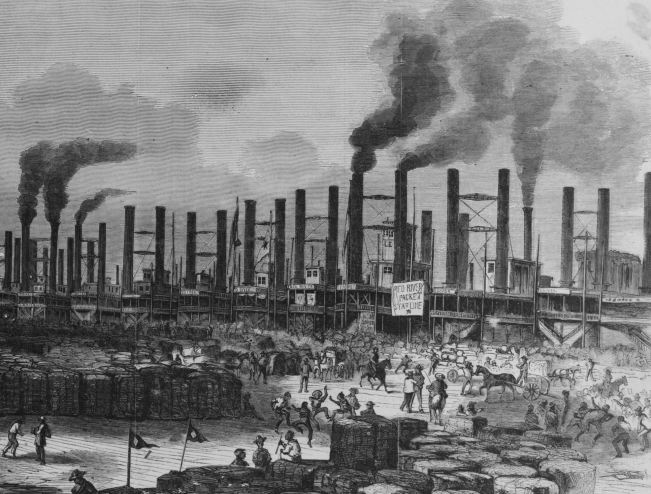
New Orleans, on the left bank of the Mississippi, about one hundred miles from its mouth, was by far the wealthiest and most important city of the Confederacy. Its population in 1860 was 168,675, while that of Charleston was but 40,500, that of Richmond but 38,000, and that of Mobile but 29,000. Just before the war, New Orleans had the largest export trade of any city in the world; in 1860-’61 it received for shipment ninety two million dollars’ worth of cotton and more than twenty-five million dollars’ worth of sugar. These facts, together with the importance of its position from a military point of view (for possession of the Mississippi by the national forces would cut the Confederacy in two), made it the largest prize at which any single expedition could be aimed.


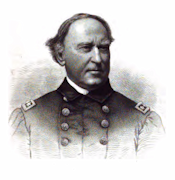
from “The Life of David Glasgow Farragut.”

image

The levee of New Orleans before the war.

E’s journal.

January 1862.

. . . Sunday evening James Gillette came up to our room to tell us his story. He is one of the two hundred and forty Union soldiers just released from Richmond prisons in exchange for an equal number of rebel prisoners from Fort Warren. He was with the 71st N. Y., a three months’ regiment, and his time was out before the battle in which he was taken prisoner. These five months of prison life have turned him from a dapper little fellow into a sad-looking, care-worn, sick man. He and his fellows were in Prison No. 2, a tobacco factory, dirty and uncomfortable beyond description—170 men in a room 40 feet by 60. They immediately organized themselves, however, into a little military community under strict discipline. A detail of men was made every day to police the place, and all unnecessary uncleanliness was punished by the court they instituted for the trial of offenders. They had plenty of water but no soap or towels. Their rations were about eleven ounces of bread daily and one ration of beef or pork, and the water in which this was boiled was served at night as soup— “Confederate swill” they called it. They had no clothing given or sent them except what came to the Massachusetts and Rhode Island men, and an occasional little bundle handed in secretly by some sympathizing citizen. . . . The principal suffering was from the ignorance and brutality of the prison guards, who treated them roughly and often shot at them. Several were killed in that way; and yet these same sentinels would let the prisoners stand guard in their places, and go off and get them whiskey; and when they themselves were drunk, our men would pass them and take an airing in the city. The sick suffered and still suffer for want of decent care and medicine. One building is given up to cases of gangrene—a sufficient commentary on the condition of things. As a rule the prisoners kept up their spirits well and used all sorts of means for entertaining themselves; a debating club, a court, menagerie exhibitions, carving in beef-bones, etc. I have a little ring cut from part of their rations. Some men, though, have grown simple, almost idiotic, from the confinement; some have gone insane; and some of good standing at home will now wrangle pitifully over a bit of cracker or meat. About one hundred of our men, he says, have already died in Richmond of sickness, besides those dying from their wounds.

January 8. — This evening, while the First Kansas regiment was on its march from Sedalia to Lexington, Mo., and within a few miles of the latter place, the rear guard was fired upon from ambush, by which a sergeant of a German company, attached to the regiment, was mortally wounded, and two horses shot.—N. Y. Commercial, January 22.

—A. W. Bradford, Governor of Maryland, was inaugurated at noon to-day, at Annapolis. He made a most able and eloquent address, condemning the rebellion in the strongest terms, and expressing the utmost devotion to the Union and Constitution.

—This morning, Captain Latham, Company B, Second Virginia regiment, accompanied by seventeen of his men, fell in with a company of guerrillas, numbering about thirty, on the Dry Fork of Cheat River, in Randolph county, Va., and after a desperate fight of an hour’s duration, completely routed them, killing six and wounding several others, and burning up their quarters and provisions. Though the numbers engaged were small, the firing was so rapid that it was distinctly heard for eight miles. The parties were within thirty steps of each other when the fight commenced, and the rebels, owing to the superiority of their numbers and position, were so confident of success that they fought, for a time, like tigers, but were finally driven entirely off the field. Captain Latham’s loss was six men wounded, as follows: Corporal Wm. Jenkins, slightly, in the arm; privates: Frederick Dopp, mortally, shot through the left breast; James M. Pfrom, severely, a ball in each leg, and one through the left hand; James Whitchair, slight wound in the head, and a ball through the right arm; John W. Leese, ball in the leg; Edward Henderson, shot in the left hand.

In a skirmish, on the night of the 5th inst, between the same parties, private A. Watts was slightly wounded in the arm.— Wheeling Intelligencer, January 17.

—The Ninety-first regiment of New-York Volunteers, under the command of Colonel Jacob Van Zandt, left New-York, on board the steam transport Ericsson, for Key West, Florida.

—A Battle was fought, this day, at Roan’s Tanyard, in Randolph county, Mo. The rebels, one thousand strong, under Colonel Poindexter, were posted in a very strong position, on the Silver Creek, at Roan’s Tanyard, seven miles south of Huntsville, and seven miles west of Renick, near the residence of Joel Smith. The attack was made by Majors Torrence and Hubbard, with four hundred and eighty men, at four o’clock p. M. The rebels made but a feeble resistance, owing to the want of an efficient commander. They were routed completely, after only half an hour’s resistance. In their flight they left everything; most of them losing overcoats, guns, etc. Some of their horses broke away, and others were cut loose, and but for the lateness of the hour the Federals might have secured a largo number of these animals. The Federals burned the rebel camp, consisting of one hundred and five tents, twenty-five wagons, flour, meal, bacon, and an immense number of saddles, bridles, overcoats, carpet-bags, blankets; together with eighty-seven kegs of powder. The rout was most complete. — (Doc. 10.)

—William F. Smithson, a banker in Washington, D. C, was arrested on a charge of holding communications with the rebels. He was sent to Fort Lafayette.— N. Y. World, January 10.
Tuesday, January 7, 1862.

Dearest L—: — The enclosed letter to Dr. Joe did not get off yesterday and thinking it likely he may be off, I enclose it with this to you.

Since writing yesterday a deep snow has fallen postponing indefinitely all extensive movements southward. We shall have a thaw after the snow, then floods, bad roads for nobody knows how long, and so forth, which will keep us in our comfortable quarters here for the present at least. Write me one more letter if you can before I come home. I shall not leave for home in less than three weeks. I trust my absence will not continue much longer than that time. Take care of yourself and you will be able to be up with me and about long before I leave. I must visit Columbus, Delaware, and Fremont (unless Uncle happens to be at Cincinnati) while at home, besides doing a great many chores of all sorts. I don’t expect you to be able to go with me, but I hope you will be well enough to be with me a good deal while we are in Cincinnati.

I just ran out in the snow to detail four men to run down a suspicious character who is reported as hanging around the hospital and lower part of the village. A queer business this is.

I sent Laura some letters written by lovers, wives, and sisters to Rebels in Floyd’s army. The captured mails on either side afford curious reading. They are much like other folks — those Rebel sweethearts, wives, and sisters.

I trust we shall crush out the Rebellion rapidly. The masses South have been greatly imposed on by people who were well informed. I often wish I could see the people of this village when they return to their homes. On the left of me is a pleasant cottage. The soldiers, to increase their quarters, have built on three sides of it the awkardest possible shanty extensions — one side having a prodigious stone and mud chimney, big enough for great logs ten feet in length. On three of the prominent hills of the village considerable earthworks have been built. There are no fences in sight except around the three buildings occupied by leading officers. Such is war. One young lady writing to her lover speaks of a Federal officer she had met, and laments that so nice a gentleman should be in the Union army.

. . . . You must be ever so careful for a good while yet. Good night, dearest. Much love to all and, as about forty affectionate Rebels say, a large portion for yourself.

Affectionately,

R.

Mrs. Hayes.

Post image for Sweet scorched rice.–Alexander G. Downing.

Tuesday, 7th—Nothing of importance. It rained all day. Our company is divided into messes, seven in all, and each has a cook. Each mess draws its rations every five days, according to number, and the rations are placed in the care of the cooks. Some of the cooks are not well posted on cooking. Cook number 7 wanted to cook some rice for dinner and put his kettle on filled with rice. Presently he began dipping out rice, as it was running over, and he soon had his third kettle filled with rice. In finishing it up he let it scorch and to overcome that he put in some molasses, which the boys foraged out in the country, and so mess number 7 will have sweet scorched rice for some days to come.[1]


[1] Cook number 7 did not hear the last of it for some time. We all recommended him as being a good hand to cook rice.—A. G. D.

8 Brevoort Place, January 7.

My Dear Girls: I have only time before mailing hour for a short letter, but must tell you how pleasantly Hatty’s and Carry’s little party went off last night. . . . Maillard sent up at eleven a very handsome little supper. . . . Bessie and Mr. Merchant came in the afternoon to dinner, which was hardly over and our dresses pitched on when the company came. Miss Tilly Dawson was the prettiest girl here, and Charley Johnson was made happy all the evening by an introduction to her. I think Zenie Smith[1] was the next prettiest. She came with two young friends staying with her, and Minnie Worthington brought the sweet young fellow she is engaged to; and there were the McCurdy girls and Helen Skinner, and Lilly Lusk and Tom Perkins, and Frank Bond, and Mr. Stagg, and the Cryders and McKeevers, and Bucks, etc., etc. Supper was so delayed that I don’t know how we should have got on if it hadn’t been for the man Charley had engaged to play the piano, and they all danced, and you can imagine that it was not a slow time when I tell you that I! figured in a Virginia reel. Some of Charley’s chums were agreeable young fellows, young Marsh, the son of G. P. Marsh, and others. Charley himself had been on the bed all day with a sick headache, but brightened up when the evening was half over, and in spite of his lame hand, dressed himself quite elaborately with a roman scarf for a sling and came down. . . . Chaplain Wrage goes to Washington to-night and will take you a hundred hymn books in German, which I bought at the Methodist book concern. They will do to give away when you come across a German soldier in the hospitals. . . . Did you know that the Boston Tract Society has an agent and a depository in the Post Office Building, Washington?

. . . The box of books for Joe, directed to Alexandria, Va., went off yesterday. Cousin Sarah Coit has sent us her one pair of stockings, her giant pair that she says she has knit, and knit, and knit on, and seemed to make no progress.

. . . Young Crosby begged, the other night, for whatever mittens we or our friends might have this week, to make up 120 pairs for Frank’s artillery company of regulars. Did you know how many of the Crosby family are in the army? You saw Frank Stevens, who has a Lieutenancy at last, in Pratt’s Ulster Guard. Then Schuyler Crosby is in the Regular Artillery at Fort Pickens. Floyd Clarkson is Major in a cavalry regiment at York, Pa. Rutgers is somewhere else, etc., etc. Charles Wainwright is Captain of a battery in General Cooper’s Division on the Lower Potomac.

Little May has been fairly launched in school life, and Mary says she doesn’t know which has raised her in her own importance most—going to school or going to the dentist’s, to have ever so many fillings put into her little back grinders.

. . . We have had intelligence of Aunt Adela Newton, who tried to go through the lines to protect her property in Charleston. Somebody told Amelia Bailey that they had seen a lady from Richmond, who had lately seen Mrs. Newton and daughters in that city. They had passed our lines at some point not stated, had travelled by private conveyance and reached Richmond after every hardship and difficulty, wandering at one time three days in the woods —lost. I want Mother to write a few lines to Aunt A. to go by Fort Monroe and flag of truce. It would get South in course of time if it was short and not treasonable. . . Dr. Buck came in last night and re-vaccinated Hatty and me. He says if Georgy wants to be vaccinated he can send on a little quill with pure virus (Union virus, as Joe says) from here. There is much small-pox and considerable alarm about it here as well as in Washington.


[1] Arixene Southgate Smith, now your Aunt Zenie.

January 7.—A detachment of General Kelly’s forces, commanded by Colonel Dunning, Fifth Ohio, left Romney last night at twelve o’clock, and attacked the rebels, two thousand strong, at Blue’s Gap, Va., east of Romney, at daylight this morning. The rebels were completely routed, with a loss of fifteen killed, two pieces of cannon, their wagons, tents, etc, with twenty prisoners, including one commissioned officer.—(Doc. 8.)

—Ex-governor Morehead, of Kentucky, was released from Fort Warren on his parole, and proceeded immediately to New-York.

—At Washington, D. C, in the Senate, petitions for the emancipation of slaves and for the exchange of prisoners, were presented. A bill relative to the arrest of fugitive slaves by officers of the army or navy, was taken up, but its consideration was again postponed for the present, after a refusal of the Senate to postpone it indefinitely. The Kansas contested seat case was then taken up, but the Senate adjourned without proceeding with it. In the House, a message was received from the President, accompanying the documents relating to the Trent affair. Mr. Vallandigham, of Ohio, took occasion to express his dissatisfaction at the course pursued by the Government in delivering up Mason and Slidell; remarking that in less than three months we would be at war with Great Britain, or else we would tamely submit to the recognition of the Southern Confederacy, and the breaking up of the blockade. Mt. Hutching, his colleague, replied, saying that Vallandigham had heretofore been opposed to coercion as to the South, while now he is against the delivery up of Mason and Slidell, and consequently in favor of war. The position of his colleague was liable to suspicion that his belligerent attitude was one which would benefit the rebels, by causing a war between England and the United States—a war which the South desired. Mr. Thomas, of Massachusetts, argued in justification of the capture of Mason and Slidell. England did us grievous wrong in making the demand for them, which was unjust and insolent in spirit She has done that which implanted in the American breast a sense of wrong, and we shall await the opportunity to strike the blow of retributive justice. The message and documents were finally referred to the Committee on Foreign Affairs.

—Flag – Officer Foote, with the gunboats Essex, Lexington, and Tyler, made a reconnoissance down the Mississippi River to a point within two miles of Columbus, Ky. He went within two hundred yards of the range of the rebel batteries, and on returning was fired upon by the rebel gunboat Mohawk, but her shots all fell short.

—In the State Senate of Virginia, (rebel,) a resolution offered by Mr. Newman was adopted, appropriating so much of the public debt of the State and other securities held by resident citizens of the United States and the District of Columbia, as might be necessary to indemnify the citizens of Virginia who were loyal to the State, for losses sustained by them in consequence of any confiscation act of the Congress of the United States, or any other act growing out of the war.— Richmond Examiner.

—A skirmish took place between a part of the Second Virginia (Union) cavalry, under Colonel Bowles, and a portion of Marshall’s forces, under Shaw, three miles west of Paintsville, on Jennie Creek, Ky. The rebels lost six killed, fourteen wounded, and seven prisoners. The Unionists lost two killed and one wounded.

Before Colonel Bowles attacked him, Humphrey Marshall addressed his men, advising the surrender of the whole force. The men refused, saying that they preferred fighting to such a cowardly course. After a skirmish Marshall’s whole force fled, and three hundred picked infantry and nine Union cavalry pursued.—(Doc. 9.)

—Colonel J. A. Garfield, with his brigade, consisting of the Forty-second regiment of Ohio Volunteers, the Fourth Kentucky, and three hundred of the Second Virginia cavalry, occupied the town of Paintsville, Ky. He says, in his despatch: “On hearing of my approach the main rebel force left their strongly intrenched camp and fled. I sent my cavalry to the mouth of Jennie Creek, where they attacked and drove the rebel cavalry, which had been left as a vanguard, a distance of five miles, killing three and wounding a considerable number. Marshall’s whole army is now flying in confusion. He had abandoned and burned a large amount of his stores. We have taken ten prisoners. Our loss was two killed and wounded.”