Following the American Civil War Sesquicentennial with day by day writings of the time, currently 1863.

The American Civil War

December 21.—The Kentucky House of Representatives, by a vote of sixty-nine to eleven, concurred in the Senate’s amendment to the bill reported by the House Committee on Federal Relations, thanking the President for his modifications of General Fremont’s proclamation and Secretary Cameron’s report, and requesting the President to dismiss Secretary Cameron from the Cabinet.

At Baltimore, Md., this morning, the deputy provost-marshal overhauled the steamer George Weems, as she was about leaving for the Patuxent River landings, and arrested a man named W. T. Wilson, an Englishman, who had secreted in his clothing, and in a bladder in his hat, a quantity of morphine and quinine. He also arrested a man named Hanna, of Chester County, Pa., formerly of California. Both were supposed to be rebel agents.

—This morning a little before daylight, the pickets at Stump Neck, on the Potomac River, saw a boat with a man in it approaching from the Virginia shore. They concealed themselves till the man landed, when they arrested him. He brought with him a number of letters, which were taken charge of and conveyed, with the prisoner, to General Hooker’s head-quarters. Another man was waiting with a horse, upon which to convey the mail-bag. He was also arrested and the horse seized.

Early this morning, as the U. S. gunboat Resolute was on her way down the Potomac, from Washington, some pickets of rebel cavalry were seen at Holland Point, near the White House. Acting Master Tole, in command, fired a few shells among them, scattering the rebels in all directions. A number of them ran out of a house, near which their horses were picketed, and rode off as fast as they could. A boat’s crew was then sent on shore in charge of acting master’s mate J. L. Plunkett. On their way they saw some women and children busily leaving the houses. On entering, the building was found to be deserted, but there were traces of recent occupation by cavalry.—N. Y. Herald, December 23.

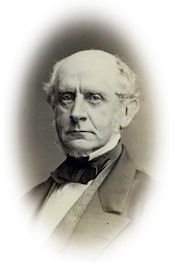
—Charles Anderson, brother of General Robert Anderson, addressed a large audience at Cooper Institute, New York, this evening. The cause of the rebellion he attributed to the check received by men in their greedy pursuit of political power.

—The Southern papers of this date are filled with articles expressive of delight at the prospect of a war between England and the United States, in reference to the seizure of Messrs. Mason and Slidell.

———-

Late addition to Vol. 3:


December 21.—In the Confederate Congress, an act was passed, entitling Kentucky to have twelve members in the House of Representatives.

A series of resolutions were also adopted, the third of which is as follows:

Resolved, That no peace ought to be concluded with the United States, which does not insure to Maryland an opportunity of forming a part of this Confederacy.
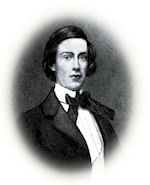
Post image for “We are quite active here at Beaufort, giving the good people on the mainland all sorts of starts.”—War Letters of William Thompson Lusk.

Headquarters 2d Brigade, S. C.

Beaufort, S. C. Dec. 20th, 1861.

My dear Mother:

Here it is almost Christmas, but there is no hope of dining with you all at home on that joyful day. Still I will try to make myself cheerful here, as that alone is a comfortable philosophy. Duties are a bit lighter to-day—the result, I suppose, of great exertion for a few days back. I received last night three letters from you and one from Horace. Let me thank you, dear mother, very much for the photograph you sent me. It gives me much gratification, and now occupies a conspicuous place in my room. I shall look impatiently for the photographs likewise of my sisters and the little boys. It would do me much good to see Hunt’s good-looking face, if he does feel too logy to favor my whims. You write me for my photograph, as though I was living at the seat of civilization, and the abode of elegance. Well, to be sure, I am; but then everything is in Southern style, which does not admit of such vulgar things as tradesmen, much less of itinerant shadow catchers. I have grown immensely aristocratic since in South Carolina. There is something in the air that’s infectious. A few more weeks here, and I’ll be able to stomach even a Bostonian, which — Oh! I had almost forgotten how soon Hall’s wedding comes off; the 25th of December, Walter writes me. Do for Heaven’s sake give the bride something from me. I enclose $10.00 to make the purchase. There is nothing one can possibly buy down here. Pay-day is not far off again, and I hope to be able to remit something handsome to Uncle Phelps, which may make him cry, “Oh, provident youth!” Until then Walter’s baby must go without the coral and bells destined him by his affectionate Uncle William. Tell Horace I took into consideration the request he made with regard to writing a few lines to Saml. Lord, assuring him of the welfare of Miss Mintzing, concluded to do it, have done it, and think the communication will reach him.

We are quite active here at Beaufort, giving the good people on the mainland all sorts of starts. The other night a young Lieutenant crossed to the mainland with a small party, caught six of their pickets, and brought them safely back as prisoners. A captain takes a boat, glides along the shore, gets fired upon, returns the fire, and, it being his first fight, he has the agreeable sensation of seeing the enemy run. The fact is, though the people of respectability are many of them rampant, the poor whites think the war a hard thing, which they do not like to bear. So much we gathered from the prisoners taken the other night. They say that all who do not volunteer are drafted into the army, and the difference made is, that volunteers receive $25.00 for clothes, and are treated with respect, whereas drafted men get nothing but abuse. Therefore it is not difficult to see how popular volunteering must be in the South.

You will be pleased to hear that my friend William Elliott has gained perhaps the most brilliant reputation for cool courage and daring, of any man in the Army down here. He is a rare hero, and is bound to make his mark.

Give my best love to all, dear mother.

Affec’y.,

Will.

London, December 20, 1861

The great event of the past week on this side is the death of the Prince Consort. From the time of my arrival I had formed a very favorable opinion of the man. Having a most difficult part to play he seemed to me to acquit himself most creditably. A feeble person would have fallen into contempt. A vicious one would have created discord. An intriguing one would have filled the Court with animosities and sharpened all the rivalries of parties. He was neither. His capacity and his acquirements commanded the respect of the most powerful subject. His moral character set at defiance all malevolence. And his prudence preserved his neutrality from the assaults of contending factions. Yet he can scarcely be said to have been popular in any class, and least of all among the nobility. He was reserved and shy, little versed in the arts which recommend a man to others. Few were disposed to give him much credit until they lost him. Now they are beginning to open their eyes to a sense of his value. They discover that much of their political quietude has been due to the judicious exercise of his influence over the Queen and the Court, and they do not conceal their uneasiness as to the future without him. The young Prince is just coming of age, with a character by no means formed. The younger children are coming forward with a strong curb removed. The Queen herself has no guide or adviser so well fitted to perform his part without danger of political complications to disturb her. There is no strength in any purely party organization that will keep the government steady. War with the United States seems imminent. It may spread itself all over Europe. Where is the master to direct this storm, if he cannot arrest it? Is it Lord Palmerston or Earl Russell? I trow not. Let any thing happen to Napoleon, and you will see. He is their buckler and their shield.


As to us I fancy you can understand the pleasantness of the position we are occupying in the mean time. The leading newspapers roll out as much fiery lava as Vesuvius is doing, daily. The clubs and the army and the navy and the people in the streets generally are raving for war. On the other side are the religious people and a large number of stock jobbers and traders, together with the radical following of Messrs. Cobden and Bright. The impression is general that Mr. Seward is resolved to insult England until she makes a war. He is the bête noir, that frightens them out of all their proprieties. It is of no use to deny it and appeal to facts. They quote what he said to the Duke of Newcastle about insulting England as the only sure passport to popular favor in America, and a part of a speech in which he talked of annexing Canada as an offset to the loss of the slave states. This is the evidence that Mr. Seward is an ogre fully resolved to eat all Englishmen raw. Pitiful as is all this nonsense, it is of no trifling consequence in its political effect. Even our friend Mr. Thurlow Weed with all his sagacity is baffled in every attempt to counteract it. And if war finally happens, it will trace to this source one of its most prominent causes.


Of course I feel most anxiously the position of my country, and of those who are enlisted in its cause. So far as I now see the field it is much less alarming than it looked some weeks ago. Many of the causes of apprehension are removed. The government has not authorised the act of Captain Wilkes, neither has it adopted it, as yet. So far, so good. But the British government will not rest satisfied with that position. The policy must be disavowed and the men replaced. Such is my understanding of the substance no matter how gently the sense may be conveyed. Shall we do either? For my part I think justice to our former professions demands it of us. I care not about quibbles concerning Sir William Scott’s law, against which I was bred in a mortal aversion. He is no idol of mine, and I care not how soon both nations join to knock his image off its pedestal. But what my opinion may be is one thing. What the delusion of my countrymen is, is another and very different one. They may regard Messrs. Mason and Slidell as more precious than all their worldly possessions. May be so. For my part I would part with them at a cent apiece.

December 20th, 1861.—I spent today at Uncle Tom’s. His daughters are just the smartest, busiest people I ever saw. Cousin Mary Bernard and her three children and cousin Frances with her five are there, while Captain Bernard and Cousin Tom are at the front and Christmas is at hand. There are but few toys to be had, so they are dressing a large Christmas tree with most of the decorations of home manufacture. It is a beautiful tree. They have taken the bright-hued autumn leaves, dipped them in wax and pressed them with a warm iron; these are arranged in clusters and they reflect the light from dozens of tiny twisted Confederate lanterns. Long ropes of “Sodom Apples” lend an added brightness and strings of pop-corn make you think of the snow, which comes at Christmas in colder lands. It is so good of these kind, loving aunts to do so much for the children for I know they work with heavy hearts.

Mr. Routh and Cousin Sallie were to have been married in November, he could only have a three days’ leave of absence and the date was not quite certain, so she was almost ready with her preparations when the news of his death reached us. Her wedding dress was made and waiting and only a few last little things remained to be done. She fainted dead away at the terrible tidings and the next day she locked herself in her room and folded and put away, every article which had been made, in a big Saratoga trunk, locked it and hung the key around her neck. She is so pale and sad, it gives me the heart-ache to look at her. And yet, this is a part of war.

December 20.—George W. Jones, late United States Minister to Bogota, was arrested at New York on a charge of treason, and sent to Fort Lafayette.—New York World, Dec. 21.

—In the House of Representatives at Washington, D. C., a resolution was adopted, thanking Colonel Mulligan and his command for their heroic defence of Lexington, Mo., and authorizing the Twenty-third regiment of Illinois, to inscribe on their colors the name “Lexington.”

—General Burnside arrived at Annapolis, Md., this evening to take command of the expedition destined for the North Carolina coast.

—Seven hundred regulars of the force surrendered to the rebels in Texas by Major Lynde, passed through Rochester, N. Y., destined for Rome and Syracuse, whence they -went to Sackett’s Harbor and Oswego, to garrison the forts at these places.

—An engagement took place to-day near Drainesville, on the Leesburg turnpike, Va., between a foraging party under command of Brig.-Gen. E. O. C. Ord, (consisting of his brigade, a regiment of rifles, a battery of light artillery, and two squadrons of cavalry,) and four regiments of rebel infantry, with a six-gun battery, commanded by Gen. Stuart. The rebels were completely routed, lost many killed and taken prisoners. The National loss was seven killed and sixty wounded.—(Doc. 234.)

—The Ninety-first regiment of New York volunteers, under the command of Colonel Van Zandt, left Albany for the seat of war.

—At Washington, Mr. Lovejoy offered in the House of Representatives a resolution directing the Committee on the Judiciary to report a bill for the confiscation of all rebel property whatever, and for the liberation of the slaves, who should be protected from recaptare by their masters. The resolution was laid aside by a majority of two.

—A Party of rebels from Gen. Price’s army destroyed about one hundred miles of the Missouri Railroad. Commencing eight miles south of Hudson, they burned the bridge, wood-piles, water-tanks, ties, tore up the rails for miles, bent them, and destroyed the telegraph line. This was continued to Warrenton, where the work of destruction ceased.—National Intelligencer, Dec. 24.

—The London Times of this date, in noting the departure of the transports Adriatic and Parana with troops for Canada, holds the following language: “As the Adriatic moved out of dock, the large shields on her paddle-boxes, emblazoned with the Start and Stripes, reminded everybody of the remarkable coincidence that a American-built steamer, and until within a few months ago the property of American owners, should be one of the first employed in the transport of British troops to the northern part of the American continent, to operate, probably, against the country in which she was built.

“On the two vessels leaving the docks, the volunteer band took up a position on the extreme end of the jetty, and as the Adriatic slowly moved past, they played the appropriate airs ‘I Wish I Was in Dixie,’ and ‘The British Grenadiers,’ followed by ‘Cheer, Boys, Cheer,’ and ‘Should Auld Acquaintance be Forgot,’ as the Parana passed, in each case closing with ‘God Save the Queen,’ after which several parting rounds of enthusiastic cheers were exchanged between the multitude of spectators on shore and the gallant fellows on board the vessels.”

—Major McKee, with one hundred and three men of Col. Bishop’s command, encountered and repulsed four hundred rebels four miles south of Hudson, Mo., and killed ten, and took seventeen prisoners and thirty horses. Five of the National troops were slightly wounded. The rebels had attacked a stock train, captured all the stock, and held the railroad men as prisoners. They were in the act of unloading the stock, when the train, stock, and men were rescued.

—Yesterday morning the stone fleet of sixteen old whalers arrived off Charleston Harbor, S. C. In the afternoon, one of the lightest draught was sunk on the right of the main ship channel; during the night four more were sunk, and to-day the remainder, eleven in number, were made to complete the work. All the vessels but one, which was reserved for a pyrotechnic display, were dismantled, and deprived of masts, rigging and every thing but the hulls. The sinking of the fleet was under the direction of Captain Charles H. Davis, U. S. N., who, by his able and scientific management of the work, effectually closed the main ship channel of Charleston Harbor.—(Doc. 235.)

—The brave little steamer Theodora, which has won for her name so prominent a place in the history of the Confederate States, is still “bobbing around” on the high seas. A despatch from Thos. J. Lockwood announces that he has arrived safe, ” as usual,” in the flourishing Confederate seaport of _____, after paying a flying visit to several foreign lands, and running half a dozen times under the very noses of the Yankee cruisers.—Charleston Mercury, Dec. 21.

—This afternoon, Richard Gatewood, a private soldier of the First Kentucky regiment, was executed at Charleston, Va., for the combined crimes of desertion, mutinous conduct, and a murderous assault upon a sentinel while on duty.— Cincinnati Gazette, Jan. 1, 1862.

19th.—To-day I have received the expected letter ; but it relieves no part of my sadness. My dear child at home is no better. I may never meet her again. This in another of the trials of this unholy war; but I am selfish. How many have so much more reason to complain than I?

Boxes of luxuries and comforts for the sick received from home to-day. Many of the days which we have spent in this army have been days of gloom and darkness; and, oh! how these stars of kindness do sparkle in the gloom and lighten the darkness around us! The luxuries contained in the boxes are a comfort to the sick, but these are not the comforts which we derive from them. They come from friends at home. They tell of the interest felt by them in the cause for which we suffer, of their interest in us as the defenders of that cause, and that we are not forgotten! Names of many of those who are engaged in this work of kindness are known to us, and whenever heard will call up a thrill of grateful affection so long as memory holds a place among us.

Camp Union, Fayetteville, Virginia, December 19, 1861.

Dear Uncle: — Yesterday morning, a party of contrabands started for Ohio. It is not unlikely that some of them will find their way to Fremont. Allen, a mulatto, with his wife and one or two children, is one of a thousand — faithful, intelligent, and industrious, — will do for a house servant — would just answer your purpose. His wife can cook — is neat and orderly — a most valuable family, you will find them, if you put them into the new house, or anywhere else. If you don’t want them, you can safely recommend them. Quite a number have come to me, but these are the pick of the lot. They have another black man and wife with them who are well spoken of; I do not know them. It is, of course, doubtful whether Allen will find you; I think he will. I send him because I think he will just answer your purpose.

They will all be entitled to freedom, as I understand the rule adopted by our Government. Their master is a Rebel, and is with Floyd’s army as quartermaster, or the like, being too old for a soldier. These people gave themselves up to me, and I let them go to Ohio. The rule is, I believe, that slaves coming to our lines, especially if owned by Rebels, are free. Allen gave me valuable information as to the enemy. These facts, if necessary hereafter, can be proved by members of Captain McIlrath’s Company A, Twenty-third Regiment, Cleveland, or of Captain Sperry’s Company H, Ashtabula County. Of course, there is little present danger of attempt to recapture them under the Fugitive Bill, but it may be done hereafter.

You, perhaps, know that Dr. Joe took a contraband to Cincinnati. These people do not go to Cincinnati, preferring the country, and fearing relatives of their master there. The party start for Galion in company with the servant of one of our men; from there, they will probably get to you.

Sincerely,

R. B. Hayes.

S. Birchard.

December 19 — This morning we went on a little reconnoissance to a large field that slopes away from the river a little distance below the dam. The edge of the field and the river is fringed with a dense thicket, and is much higher ground than the Maryland side. Here and there were small open spaces in the undergrowth, and from one of these we plainly saw the Yankees’ infantry and a battery of artillery. In a very few moments after we spied them we had impressive information that they saw us about as plainly as we saw them, for they sent us their compliments in the form of a few shell from rifled guns. These were the first shell that ever flew over me. Though oblivion may blot all else from my memory, its darkest waters can never erase the remembrance of the tremor of fear that rushed all over me, and crept into every little corner about me, from my hat to my shoes, when I heard the frightful screaming whiz of the first shell. Somebody remarked that it was a twelve-pounder. Of course I am not used to hearing these things, but from the way it sounded to me I think it was about the size of a nailkeg — or a little larger.

It is wonderful how close to Mother Earth a raw recruit can get when he hears the “Hark from the tomb” of the first shell. When, the first shell passed over our heads to-day I laid so close to the ground that it seems to me I flattened out a little, yearning for a leave of absence. Our battery was not in position when the Yanks opened on us, and they did not even see our guns; but four of us Rebel curiosity-seekers had stuck our heads above the bank, which was the sole object that drew the enemy’s fire, with the expectation, I suppose, of finding bigger game behind the bushes.

The Second Regiment of Virginia Infantry was bivouacked in a field back of the one we were in, and in range and line of the Yankee shell. The men had their arms stacked, and were grouped around their fires, a great many with their blankets spread in the sunshine, but when the Yankee shell screamed across the field— one of which exploded over the regiment—it created a lively scene for a while, and caused a general stir among the men. Bivouac, equipage, and spread out blankets were ready to move in a very few moments after the report of the shell died away.

We did not reply to the fire of the Federal battery, but remaining on the field about an hour after they ceased firing, went back to camp about a mile from the dam.

This evening after dark we went above the dam on a hill for the purpose of firing on the riflemen and battery, while Jackson’s destroyers were working on the dam, but with their artillery the Yankees set a mill on fire on this side of the river near the dam. The burning mill threw a light on the dam almost as bright as day, which made it too hazardous for the destroyers to operate.

The light of the burning mill had no effect on our position, as a hill covered with thick woods screened us, and we were in perfect darkness, and a good distance from the mill. Yet I heard a bullet whiz over my head, and I have been wondering what the man was shooting at that fired it; and have come to the conclusion that it must have been fired by one of these angelic philanthropists of the North who has been taking lessons in religion from ” Uncle Tom’s Cabin” and has come down here to gratify his saintly prejudice by shooting at the Southern Confederacy in the dark.

We remained in position until we learned that the work on the dam had been abandoned, then we fell back a little distance and slept in a wood, without fire.

December 19.—Maj. Frank K. Bloom, of Macon, Ga., Aide to Gen. Henry R. Jackson, died to-night of pneumonia, at that place. He distinguished himself at Sewall’s Point and at Greenbrier, Va., and was possessed of all the generous qualities and greatness of soul which characterize the true patriot and soldier; and in the community in which he lived no man was more beloved or had more devoted friends. —Richmond Dispatch, Dec. 27.

—Captain Ricketts, First Artillery U. S. A., who was wounded and captured at the battle of Ball Ran, arrived at Washington, released on parole, accompanied by his wife.

—At ten o’clock this morning a rebel battery of three guns, flanked with about two hundred infantry, suddenly commenced shelling the encampment of Col. Geary’s Pennsylvania regiment, near Point of Rocks, Md. About twenty shell, well aimed, fell in the midst of the encampment—the first within a few feet of Lieut. Col. De Korponay, commanding. The six companies in camp were well deployed and entrenched. The Twenty-eighth regiment opened fire with two guns—the first shot disabling one of the rebel guns, and the second falling in the centre. The Union battery then advanced and poured a continuous fire into them, silencing all their guns and driving back a fourth one reinforcing. The rebels were driven from their position in full retreat. Fourteen of them were killed, and many wounded. The Nationals did act lose a man. The engagement lasted a half hour. After the rout of the rebels their victors turned their guns on some houses near an old furnace, on the Virginia side of the Potomac, where about a hundred and fifty rebels were secreted, and drove them out, killing and wounding many.

—The British ship Cheshire, of Liverpool, Eng., Capt. Craig, from Liverpool Oct. 10th, and Belfast 19th, via Savannah Bar 6th inst., arrived at New York in charge of a prize crew, and in command of Prizemaster Heath, of the U. S. steamer Augusta, Capt. Parrot. The Cheshire was discovered on the 6th inst. off Tybee Island, in six fathoms water, and, upon being boarded, it was found that she had cleared for Nassau, N. P., and that her cargo consisted of coffee, salt, and army blankets, which was deemed very suspicious. Upon her captain being questioned as to why, if he was bound to Nassau, he should be found in that locality, he replied that he had received instructions at Liverpool to speak the blockading squadron, “but for what purpose it was not made known.” Not deeming it safe to allow her to proceed, and as the replies were not satisfactory, she was towed to Charleston by the U. S. steamer Angusta, Capt. Parrot, a prize crew put on board, and then sent to New York.

—About nine o’clock to-night a rebel band, called “Moccasin Rangers,” entered and took possession of the town of Ripley, Jackson Co., Va. The inhabitants were defenceless, their arms having been locked up in the jail by a man who had been recruiting in the town for the United States army. The rangers, after robbing the town, decamped with their booty. —(Doc. 233.)

—C. J. Faulkner arrived at Richmond, Va., this evening. He was met at the depot by Governor Letcher, the mayor of the city, and a large concourse, with music, and escorted through a portion of the city, when the crowd increased to thousands. The ladies from the windows and crowded balconies saluted the procession with smiles and waving handkerchiefs, and cheers from the thronged sidewalks greeted the procession along the route to the City Hall. Mayor Mayo introduced Mr. Faulkner, when he made a speech, detailing his captivity, imprisonment, and position on parole, and referred to the position of England and the United States. He said if Lincoln recedes from the present status in the Mason and Slidell affair, the furious Abolition sentiment would overwhelm him, and if he does not they will be involved in a war with England. Mr. Faulkner said he was a fellow prisoner in Fort Warren with Messrs. Mason and Slidell, and said they never wavered, but felt confident that England would protect them and her flag. Governor Letcher made a few remarks, welcoming Mr. Faulkner to Virginia, and the immense crowd dispersed.—Fredericksburg ( Va.) Recorder, Dec. 28.

—To-night the office of The St. Croix Herald, St. Stephens, was broken into, and a large quantity of type, and other material, destroyed. The editor’s opposition to secession was the cause of the outrage.—N. Y. Tribune, Dec. 21.

—The Memphis Appeal of this day says that “property to the amount of two million five hundred thousand dollars has been already confiscated by the receivers, and this is only about one-half the amount of Northern property in our midst. Some reports have already been made of real estate, and many others are to be made.—The cost of taking the floating battery up the Mississippi was one hundred and twenty thousand dollars.—The Mississippi Legislature have a plan under consideration to advance to planters twenty-five dollars per bale on cotton.”

—The Eleventh and four companies of the Third Iowa regiments, which went up the Missouri River from Jefferson City on the 14th, returned to-day with property valued at five thousand dollars, and seven prisoners. Among the property taken were one hundred and seventy-two kegs of powder, which were intended for the rebel General Price.—N. Y. Commercial, Dec. 27.

—This night a party of the Connecticut Fifth regiment and some of the men of Lieut. Rickett’s battery crossed the Potomac in a skiff, and burnt the mill at Dam No. 5, which had been occupied by the rebels as a stronghold. They captured some guns, tools for breaking up the canal dam, blankets, etc.

—A Bill passed the Mississippi Legislature, providing that the banks should receive State Treasury notes in payment of debts, and that the notes of the banks should be receivable for all public dues except the Confederate war tax.

WEDNESDAY, DECEMBER 18, 1861.

The weather continues delightful but there are today indications of rain. We have heard all day heavy guns. Some in the distance are the rebel guns at Centreville. They are practicing too. Troops have been moveing about the City a good deal today. We are expecting important news from various quarters, and the public mind is considerably agitated just now. Our forces now appear to be nearly ready to Strike at various points, in Missouri, Kentuckey, and at the South. I have been at home all the evening.

______

The three diary manuscript volumes, Washington during the Civil War: The Diary of Horatio Nelson Taft, 1861-1865, are available online at The Library of  Congress.