Following the American Civil War Sesquicentennial with day by day writings of the time, currently 1863.

The American Civil War

Fayetteville, Virginia, November 29, 1861.

Dear Uncle: — We have just got our orders for the winter. We are to stay here, build a little fort or two, keep here fifteen hundred men or so — sixty horsemen, a battery of four or six small cannon, etc., etc. We shall live in comfortable houses. The telegraph will be finished here in a day or two. We shall have a daily mail to the head of navigation — sixteen miles down the Kanawha. On the whole a better prospect than I expected in western Virginia. Our colonel will command. I am consequently in command of the Twenty-third Regiment. This is the fair side. The other side is, sixteen miles of the sublimest scenery to travel over. We get supplies chiefly, and soon will wholly, by pack mules. We have a waggon in a tree top ninety feet high. If a mule slips, good-bye mule! This is over the “scenery,” and where there is no scenery, the mud would appal an old-time Black Swamp stage-driver. If rations or forage give out, this is not a promising route, but then we can, if forced, march the sixteen miles in one day — we have done it — and take the mouths to the food if the food can’t be carried to the mouths.

If the river gets very low, as it sometimes does, the head of navigation will move thirty or forty miles further off; and if it freezes, as it does once in six or eight years, there will be no navigation, and then there will be fifteen hundred souls hereabouts anxiously looking for a thaw.

You now have the whole thing. I rather like it. I wish you were in health. It would be jolly for you to come up and play chess with the colonel and see things. As soon as we are in order, say four or five weeks, I can come home as well as not and stay a short time. . . .

Sincerely,

R. B. Hayes.

S. Birchard.

Post image for “The seeds of disease are now sown in our regiment, which, in despite of the greatest care, will not fail to yield rich harvests of sickness all winter.”–Journal of Surgeon Alfred L. Castleman.

29th.—Since the order of the early part of this month, that my directions in reference to the sanitary measures could be disregarded, I have not visited the camp, or given any directions in regard to cleaning, ventilating, &c., and though it is now but three weeks since that order was made, the sick list, which had decreased in two weeks from about two hundred to thirty-nine, has suddenly run up again to one hundred and sixty, and the diseases are assuming a low typhoid type. So foul are the tents that if a soldier, with simple intermittent, remains three days in his quarters, he is sent to hospital in a condition approximating ship-fever. The seeds of disease are now sown in our regiment, which, in despite of the greatest care, will not fail to yield rich harvests of sickness all winter. Our Governor has been in camp to-day. He has no doubt seen the effect of this military interference, for he has called on me to know if something cannot be done to arrest the trouble. I have laid the whole matter fully before him, and I have no doubt that what is in his power to do, will be done to avert the evil.

November 29.—The following was drawn up to-day on board the British frigate President, lying in one of the docks in England, and signed by all the men of the naval reserve in the ship.

To Capt. Lacy, R. N., her Majesty’s ship President, City Canal:

Sir : Having heard that our flag has been grossly insulted by an American ship-of-war, and people who claimed its protection forcibly taken from it and made prisoners, we write this to let you know that we are ready to fulfil our engagement and protect the honor of our flag, our good Queen and country, whenever called upon to do se. We respectfully request you will make this our determination known in the proper quarter.

[Signed on behalf of the volunteer reserve on board the President.]—London Telegraph, Nov. 30.

—At eleven o’clock to-night the heavens to the southwest of Charleston, S. C., were brilliantly illuminated with the patriotic flames ascending from burning cotton. As the spectators witnessed it they involuntarily burst forth with cheer after cheer, and each heart was warmed as with a new pulse. Such a people can never be subjugated. Let the holy flames continue to ascend, and let the demons of hell, who come here on their diabolical errand, learn a lesson and tremble. Let the torch be applied whenever the invader pollutes our soil, and let him find, as is meet, that our people will welcome him only with devastation and ruin. Our people are in earnest—men, women, and children—and their sacrifices will ascend as a sacred holocaust to God, crying aloud for vengeance against the fiends in human shape who are disgracing humanity, trampling down civilization, and would blot out Christianity. Patriotic planters on the seaboard are hourly applying the torch to their crops of cotton and rice. Some are authorized by military authorities to destroy their crops to prevent ravages by the enemy. Plantations on North Edisto and in the neighborhood, and elsewhere on the coast of South Carolina, are one sheet of flames and smoke. The commanding officers at all of the exposed points on the coast have receive positive instructions to burn or destroy all property which cannot be conveniently taken away and is likely to be seized by the enemy.— Charleston Mercury, November 30.

—An official order was received at the Custom-house, in London, England, not to allow the shipment of any saltpetre to any place till further order. A large quantity had been placed in lighters previous to shipment for export, but the whole was relanded under the supervision of the Customs officers, and returned into warehouse.—London Times, November 30.

—Major R. M. Hough, aide-de-camp to Gen. Hunter, in command of four companies of the First Missouri Cavalry, as escort to a large train from Sedalia, Mo., arrived at Leavenworth, Kansas. The command had an engagement with rebels at Black Walnut Creek, and killed and wounded seventeen and took five prisoners. Five Federals, including Major Hough, were wounded, but none seriously.— N. Y. Commercial, December 2.

—The Jackson Mississippian, in an article on the pay of the privates in the rebel army, holds the following language:—It has been a conviction of ours since the beginning of the war, that there was too great a distinction made between the privates and commissioned officers of our army. Under the old order of things, such a distinction and difference in pay was, perhaps, altogether proper. But our Southern army is composed of the flower of the country. The privates occupy respectable social positions. They are not, as in the case with Northern horde, the refuse of society, who take up arms as a means of securing their daily bread, but they are .the social equals of their officers. They have enlisted in the service of the country from the purest promptings of patriotism. They endure all the privations and hardships of the camp; and their high tone of character, disinterested and quenchless love for the cause of liberty, make each one of them equal to at least three of Lincoln’s mercenaries. They deserve to receive more, nay, and higher consideration than the mere brutish hirelings of a despot, who know not, and care not, what they are fighting for.

When it is considered that the officers are already handsomely paid, that they monopolize in a great measure the honors of the war, and their names figure conspicuously in the official reports and newspaper accounts, surely it will not be denied that the poor private, whose name is never mentioned, and to whose courage and patriotism the army is indebted for its most brilliant victories, should receive a better compensation for the sacrifices and hardships which he undergoes than is now allowed by the pay regulations. And when it is further considered that many of them are poor, with dependent families to support, and that provisions and clothing of every description have largely increased in price, it will be universally admitted, we think, that their pay should be increased. For these and many other reasons, we think the Confederate Congress, when it reassembles, will promptly raise the pay of the private soldier.

—Lieutenant John L. Worden, of the U. S. Navy, who had been seven months a prisoner in the South, arrived at Washington.—(Doc. 204.)

—To-day Drake DeKay, aide-de-camp to General Mansfield, accompanied by Major Sharfp, Captain Hellerer and Capt. Breck, left Fortress Monroe, Va., with a party of about forty men. They had not travelled long before they met with a body of the Prince Edward Cavalry, twenty-five to thirty in number, about a mile beyond New Market. De Kay had not more than a dozen men, the balance being in reserve. The enemy attacked with fire, but the Federals took to the woods and opened upon them so briskly that they were soon forced to retreat, leaving two killed, while they succeeded in carrying off the wounded.

One of the former was Mr. Edward A. Scott, of Richmond, a gentleman well known in Baltimore as well as Virginia. Upon his person was found, among other things, a letter from a lady, dated Richmond. The following was the concluding sentence, saying: “Now be sure, my darling Edward, that this letter does not fall into the hands of the rascally Yankees.” The Federals took a number of pistols, some of which were of the most approved standard, and handsomely ornamented with silver.—N. Y. Commercial, December 8.

—At Nashville, Tenn., twenty-one prisoners from East Tennessee appeared in the Confederate court, acknowledged the error of their ways, took the oath of loyalty to the Southern Confederacy, and attached themselves to a company being raised in Nashville. — Nashville Gazette, November 30.

— The rebels at Harper’s Ferry, Va., opened a hot fire of shells on the quarters of the Twenty-eighth Pennsylvania regiment, causing some excitement among the men. Major Tyndall returned the fire with Enfield rifles, but the distance was too great to do any damage. None of the Pennsylvania men were hurt. — N. Y. Herald, November 30.

— General Carroll has received orders from the War Department at Richmond, Va., to march immediately to the support of General Zollicoffer. The step is one in the right direction, and will, we doubt not, be taken without delay. —Memphis Appeal, November 2.(sic)

THURSDAY 28

Rather a warm day with rain this evening. It being “Thanksgiving” I did not go to the office. Did some fixing round the house in the morning and then went to Church with all the family. After church and after dinner went with the three boys to the “Monument” pond after aquatic plants and fish for the Aquarium. On our return met four Regts of NY troops on their way over the River. It is said today that our troops have advanced.

______

The three diary manuscript volumes, Washington during the Civil War: The Diary of Horatio Nelson Taft, 1861-1865, are available online at The Library of  Congress.

The Governors of all the loyal states issued in these dark days their annual proclamation of a day of Thanksgiving. Governor Andrews’ of Massachusetts was dated Nov. 21,’61, “the anniversary of the day on which the Pilgrims of Massachusetts on board the Mayflower united themselves in a solemn compact of government:
‘Sing aloud unto God our Strength.’”
The proclamation proposes to “give thanks for the privilege of living unselfishly, and dying nobly in a great and righteous cause.”
These state proclamations came, heartening and sustaining a people sorely in need.
E’s Journal.

November 28, Thanksgiving.

We have kept the day with J. in camp. He commissioned us to ask Mrs. Franklin to meet the General, unbeknown to him. So we sent the carriage for her by half-past eight, and started a little after nine, hoping to reach camp in time for service with the regiment. The roads were very bad, however, and we were too late. We stopped at the Brigade Hospital on the way, to leave oysters, jelly, oranges, etc., keeping some for the regimental “sick in quarters.” Our camp looked very neat and comfortable, tents all raised three or four feet on logs and clay, and nearly every one with a fire-place or stove. J. had arranged everything nicely for us, and his little fire and General Slocum’s were running races. General Franklin soon arrived, and we all sat round the firesides till dinner time. The dining-room was the Sibley tent, charmingly ornamented with evergreens, and the dinner was a great victory in its way; for out of the little tent-kitchen appeared successively, oyster soup, roast turkey, cranberry sauce, canvas-back ducks, vegetables, and a genuine and delicious plum pudding that would do justice to any New England housekeeper. Cake, pies and ice cream were also among the good things. The whole day was delightful, ending with a visit to General Franklin’s camp and the return to town with outriders.

November 28.—A submarine telegraph cable was successfully laid between Forts Moultrie and Sumter, in Charleston (S. C.) harbor, by Messrs. Seville, Denby, and Hobbs. When the burying of the cable was completed a salute was simultaneously fired in honor of the event from the forts, the order having been transmitted from Fort Moultrie. The communication between the forts was perfect, and much to the satisfaction of the skilful operators concerned. —Norfolk Day Book, November 30.

—Two schooners from Baltimore, Md., one laden with coal and one with lumber, were captured by the steamer George Page, as they lay becalmed under the rebel batteries, on the Potomac. The National pickets challenged the Page, which passed in pursuit within a hundred yards of them, but the reply that she was a United States steamer deceived them.

The Fifty-seventh and Sixty-first regiments of New York, the latter commanded by Col. Cone, made a reconnoissance from Springfield, nine miles from Alexandria, Va., and went three miles and a half beyond the Federal pickets, toward Manassas, when, discovering a rebel force numbering eight thousand men, they returned to their starting point, reaching it in good order and without casualties.

—For the first time in the history of Virginia, thanksgiving-day was observed in that State. Governor Pierpont is the first Governor of Virginia who ever proclaimed one. Business was entirely suspended.—(Doc. 202.)

—The Concordia Cavalry, Capt. Benjamin, left their encampment at Concordia, La., on the Magenta, for Bowling Green, Ky. They bear in their midst a large-sized black flag, on which appear, in bold relief, death’s head and bare bones. These Concordians go to expel, not capture, vandal invaders of their homes and firesides, and they will make their mark. — Concordia Intelligencer, November 29.

— This morning the schooner Waterman, Capt. Huron, for Charleston, S. C., was wrecked off Tybee. She fell into the hands of the Yankee blockaders. — Last night the cotton and provisions on Hutchinson, Fenwick, and adjoining islands were destroyed by fire by the proprietors. — Commissary-General Whitaker, of Georgia, seized in that State, one thousand five hundred and forty sacks of salt, for which be paid as directed by Governor Brown. — The colored people of Vicksburg, Miss., advertise in the papers of that city to give a ball for the benefit of the soldiers from that State, in the Confederate service. — General Lee issued an order granting furloughs to these members of the South Carolina Legislature who were serving as soldiers in the Confederate States army, in that State, during the session, which commenced on the 25th ult. — Savannah News.

—Adjutant-Gen. Thomas sent out instructions to Gen. Sherman, in Beaufort, S. C., to take possession of all the crops on the island — cotton, corn, rice, etc.— on military account, and ship the cotton, and such other crops as were not wanted for the army, to New York, to be sold there for account of the United States; also, to use negro slaves to gather and secure the crops of cotton and corn, and to erect his defences at Port Royal and other places on the island. — Washington Republican, Nov. 30.

—A Band of rebels, under the notorious Sy. Gordon, captured Capt. Robb, Capt. White, and Lieutenant Moonlight, three United States officers, from the railroad train, at Weston, Missouri. — The Sixty-third New York regiment (third regiment, Irish Brigade) left New York for Washington.

— Col. Mulligan, the commander of the Irish Brigade at the siege of Lexington, Mo., had a reception at Detroit, Mich., and in response to a speech of welcome made an address, rehearsing some interesting particulars of the siege. — (Doc. 203.)

— The Annual Thanksgiving festival of the Free States was celebrated this day — with more than usual earnestness. Proclamations by various persons in authority called attention to it as a fit occasion to render thanks, especially, that so many loyal men were ready to fight for the honor and glory of the country.

WEDNESDAY, NOVEMBER 27, 1861.

A rainy morning. Went to the office as usual and was very busy writing all day. Got with my stationary today a new Pocket knife and a gold pen with which I am writing now but I do not think much of the Pen. No further news from Pensecola. It is “Thanksgiving” tomorrow and the Office is closed for the day. Turkeys are very scarce this year and we shall have rather slim “Thanksgiving” without one. I have spent the evening at home.

______

The three diary manuscript volumes, Washington during the Civil War: The Diary of Horatio Nelson Taft, 1861-1865, are available online at The Library of  Congress.

Fayetteville, Virginia, November 27, 1861.

Dearest: — I sent you a rifle for Birch. It was loaded, as I learn. The lieutenant promised to take the load out. If he has forgotten it, have our neighbor of all work, corner of Longworth and Wood, take out the load before Birch plays with or handles it. You may send my vest by anybody coming direct to my regiment. We expect to move two or three days nearer to you the last of this week. The point is not yet known — perhaps Cannelton or Charleston on the Kanawha. I have got a “contraband,” a bright fellow who came through the mountains a hundred miles, hiding daytime and travelling nights to get to us. Daniel Husk is his name, His story is a romantic one, if true, as it probably is.

I would have Mr. Stephenson invest in Government 7 3/10 per cent five hundred or six hundred dollars. I shall send you three hundred or four hundred dollars more, as soon as the paymaster comes again. . . . Colonel Scammon is absent. I command the regiment and the post, so I am busy. Excuse brevity, therefore. Love to the boys.

Affectionately,

R.

Mrs. Hayes.

November 27.—The following is a list of rebel vessels captured by the Federal flotilla in Mississippi Sound, since the 21st of November: Steamer Anna, loaded with spirits turpentine, rosin, and cane-bottom chairs; schooner Olive, loaded with lumber originally intended for Ship Island, but at this time destined for Fort Pike; steamer Lewis, loaded with sugar and molasses; schooner J. H. View, loaded with spirits turpentine and tar.—N. Y. Evening Post, Dec. 17.

—At Liverpool, England, soon after noon today, a private telegram was received announcing the boarding of the Trent by a Federal vessel of war, and the forcible removal of the Southern Commissioners. The intelligence spread with wonderful rapidity, and occasioned great excitement among all classes. On ‘Change the utmost indignation was expressed, and in a very brief space of time the following placard was posted:

“Outrage On The British Flag.—The Southern Commissioners Forcibly Removed From A British Mail Steamer.

“A public meeting will be held in the Cotton Sales-room at three o’clock.”

In compliance with the preceding announcement a meeting was held in the Cotton Salesroom at three o’clock, which was crowded to excess by nearly all the gentlemen frequenting the Exchange. The meeting was quite as remarkable for enthusiasm as numbers. After several gentlemen had been requested to preside, the chair was occupied by Mr. James Spence, and on taking the chair he proceeded to read the subjoined resolution:

“That this meeting, having heard with indignation that an American Federal ship-of-war has forcibly taken from a British mail steamer certain passengers, who were proceeding peaceably under the shelter of our flag from one neutral port to another, do earnestly call upon, the Government to assert the dignity of the British flag by requiring prompt reparation for this outrage.”

On hearing this resolution read, the meeting expressed in the most unmistakable manner the feeling by which it was pervaded in favor of the views included in it. When silence had been in some measure restored, the chairman remarked that, when the news of the outrage reached this town, the feeling created was one of surprise, mingled with indignation. He remarked that we had all heard of the sacred dignity of the American flag. That dignity, he proceeded to say, was a means by which the persons engaged in the nefarious slave trade could at once protect themselves by hoisting the American flag, which fully enabled them to resist any attempt to search such vessel. He trusted it would not be allowed that men prosecuting so nefarious a trade should be protected, and that men peacefully proceeding on their own affairs, under the protection of our flag, might be forcibly taken out of our ships. (Cheers.) On the contrary, he believed that the people of this country would not by any means permit such an outrage. (Cheers.) He said, in having agreed to take the chair on this occasion, he did so without reluctance or regret, as he felt deeply that he only expressed the feeling, not merely of the meeting, but of the community in general, when he said it was the duty of the people to press on the Government the imperative necessity of vindicating the honor and dignity of the British name and flag. (Loud and continued cheering.)

Mr. H. C. Chapman, as a mere matter of form, moved that the resolution be adopted.

Mr. A. Forwood said he felt much pleasure in seconding the adoption of a resolution which must find an echo in every English besom.

Mr. John Campbell, while fully concurring in the propriety of preventing any outrage from being offered to the British flag—a sentiment which was universally acknowledged throughout the kingdom—said he felt assured that there was no Englishman, Irishman, or Scotchman who would not at once, and promptly, resent any insult offered to our flag. (Cheers.) While feeling this in the strongest manner and to the fullest extent, he considered that there still remained some reason to doubt whether the facts related, and acted on by calling this meeting, were in reality a breach of international law. (Cries of “No, no!”) He referred at some length to the opinions of the law officers of the Crown, as being in some measure inclined to show that such a step as that taken with respect to the Southern Commissioners was justifiable under the existing state of international law. In conclusion, he proposed a direct negative to the resolution. As, however, he was not desirous of doing any thing which would create a spirit of dissension, he was willing to adopt any middle course which could be suggested, and urged the propriety of postponing the consideration of the subject till the next day.

The chairman suggested that, to meet the objection thrown out by Mr. Campbell, it would be sufficient to strike out of the resolution the words, “by requiring prompt reparation for this outrage.”

Mr. Campbell said he could not concur in the suggestion of the chairman, and must decline to do so.

Mr. Torr expressed his concurrence in the views put forward by Mr. Campbell, and in doing so met with frequent interruption. He argued that the present meeting was hastily convened, and had in its proceedings already prejudged the case, with the merits of which the meeting was unacquainted. He insisted that there was no reason to believe that the responsible ministers of the crown would allow an insult to be offered to the British flag. (Loud cheers.) He urged the advantage of proceeding calmly in considering a case such as the present, which, if prematurely urged to extremity, might result in involving this country in a war. (Great interruption.) He contended that to urge on the Government a particular line of conduct in respect to the proceedings now under consideration, was impolitic and unjust. He would not, and no Englishman would, advocate putting up with insult; but in the present case let him ask, what had the Americans done? [Mr. Chapman: They fired a shot across the bows of the mail steamer to bring her to, and as she did not stop for that, they fired a shell at her, which burst close by her. (Tremendous cheering.)]

Mr. Torr proceeded to say that there was every reason to avoid coming to a hasty resolution, and, in thanking the meeting for the patience with which they had heard him—(loud and ironical cheers)—he again urged on these present to consider the matter calmly and dispassionately, and not to be carried away by the impulse of feeling in a case which required mature judgment and calm deliberation. A letter had been shown to him by a Southern gentleman, in which it was stated as a positive fact that the law officers of the Crown had, in anticipation, expressed a decided opinion in favor of the legality of a proceeding similar to that which had just taken place in regard to the Trent by the San Jacinto.

Mr. J. Turner next attempted to address the meeting to the same effect as had been done by Mr. Torr and Mr. Campbell, but the feeling of these present was so decidedly opposed to that view that he was forced to desist.

The resolution, as proposed to be amended by the chairman, was then put to the meeting, and carried by a tremendous majority, and amid the most deafening and enthusiastic cheers. For the negative, only a few hands were held up.

At the conclusion of the meeting, which was at four o’clock, a number of the merchants on ‘Change expressed privately their conviction that the meeting and its proceedings had been premature.—London Times, Nov. 28.

—A reconnoitring party of the Lincoln Cavalry, under command of Captain Boyd, advanced to within a thousand yards of Fairfax Court House, Va., where they had a sharp skirmish with a portion of the rebel scouts, cavalry, and infantry. No one was killed on the National side, but one of the enemy was brought down from his saddle. Captain Boyd says that a small force of infantry, supported by a battery and a company of cavalry, could easily take and hold Fairfax Court House at the present time.—(Doc. 196.)

—This day the plantation of John Raven Mathews, situated on Bear Island, near the mouth of Ashepoo River, S. C., was visited by the Lincolnites. On their approach, the proprietor, with noble patriotism, set fire to his entire crop, and was about placing the match to his residence when a detachment of “Confederate” cavalry arrived, and he spared the house for the troops to quarter in. Mr. Mathews is a most extensive rice and cotton planter, and has made a splendid crop this year. Mr. Edward Baynard, of Edisto Island, likewise burned his whole crop of cotton, as well as his residence, and the other buildings upon his plantation. Such noble sacrifices to the cause of the South deserve the highest praise.—Charleston Mercury, November 29.

—The full organization of the Western Virginia Convention, in session at Wheeling, was effected, and the work of forming a State Constitution was assigned to a committee. There appears to be no opposition to the idea of forming a new State. A gradual emancipation act will be passed by the convention.

—Henry R. Jackson was appointed a major-general, and Wm. H. T. Walker a brigadier-general in the Georgia army.—Richmond Dispatch, November 28.

—The Seventy-seventh regiment N. Y. S. V., the Bemis Heights battalion, left Saratoga for the seat of war.—N. Y. Herald, November 30.

—General McClellan issued orders from the head-quarters of the army of the Potomac, at Washington, D. C., directing the Sunday morning services to be commenced at eleven o’clock, and all officers and soldiers off duty, to attend divine service. The orders give the freedom of camps, quarters, and hospitals to chaplains, who are also released from attending reviews or inspections.—(Doc. 197.)

—The U. S. Government authorities assumed command of the entire commerce of the Mississippi River below St. Louis, Mo. None but Government boats will hereafter be employed, but freight and passengers will be conveyed at current rates as heretofore. All boats entering these waters will report at the first military post, and stop, to proceed under military orders at the discretion of the military commander. Freight and baggage will be subjected to careful inspection. The oath will be administered to all the employees and passengers, and the plans of landing and departure will conform as near as possible to the custom of trade, but all commission and storage business must be transacted with openly avowed Union men. The purpose of this measure is to check communication with the enemy and prevent the conveyance of contraband goods.—(Doc. 198.)

—To-day six scouts of Capt. Gregory’s company, sent out from Lieut.-Col. Anthony’s command, on the Old Lexington roads, Mo., were fired upon by about fifty rebels at the crossing of the Little Blue, from the rocks and bushes. One of the scouts was wounded; two missing. The three returning met some fifteen rebels on Little Blue bridge, with shot guns. The scouts then turned, took another road, and arrived safely in camp. Lieut. Hedgeman sent out twenty men, and found the rebels near the same place, drove them into the brush, and captured twenty horses and mules.—Cincinnati Gazette.

—Gen. De Saussure’s plan of defence for Charleston, S. C., in case of attack by the Northern troops, found among other papers in Fort Walker, at Port Royal, is this day published.— (Doc. 200.)

—An interesting correspondence passed between the Presbyterian Synod of New York and New Jersey, and Secretary Seward. The Synod, at a late session, in view of the critical condition of the country, passed a series of resolutions, pledging the influence of its members in behalf of the Government. They also took occasion, while disclaiming any intention of offering suggestions in regard to slavery, to express their full belief that it lies at the foundation of all the present difficulty, and to deprecate its existence.—(Doc. 199.)

—On the 25th inst. a reconnoissance from Port Royal, S. C., was made by Commander Drayton, of the U. S. steamer Pawnee, who ascended the Coosaw River, S. C., finding two deserted forts, of which he took possession. Yesterday morning he returned, and to-day ascended the Ashepoo River, took possession of an abandoned redoubt, and continued up the river as far as Hutchinson Island. The expedition then returned and examined Hunting Island, on the coast, but found no marks of fortifications.—(Doc. 201.)
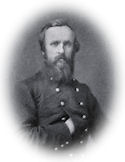
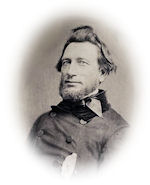
Quincy, November 26, 1861

I don’t know whether you will be surprised or disgusted or annoyed or distressed by the information that I have gone into the army, but such is the fact. Before this reaches you I shall be an officer of the 1st Mass. Cavalry and probably in Carlisle Barracks. You know it now and I am glad of it! You ask what has impelled me to this unadvised and sudden step. Many reasons, I answer; a few of which I will now give you. But in the first place let me say that I have not felt sure of my appointment until within the last five days and that I would have notified you of it before had not former false alarms made me timid of present ones. Now I feel reasonably sure and will give you the reasons of my actions. You will say, of course, that the arguments which were decisive against my going two months ago are decisive now in no less degree; but this is not so. I have all along felt that it was my place to represent our family in the army in this struggle, but a higher sense of public duty kept me at home while I was useful to you; and when that usefulness was gone, the argument which had justified my staying at home became one for my going away. I can be of little future use to you here. . . .

For going I have many reasons. I do not think myself a soldier by nature. I am not sure I am doing that which is best for myself; but I feel that, if I go, I shall be better satisfied with myself, and, as I said to you before, I do not think it right that our family, so prominent in this matter while it is a contest of words, should be wholly unrepresented when it has grown to be a conflict of blows. You say there is neither glory nor honor to be won in civil strife. I answer, that it cannot be otherwise than right for me to fight to maintain that which my ancestors passed their whole lives in establishing. These however are general arguments which I have advanced to you before, but there are others nearer home. I have completely failed in my profession and I long to cut myself clear of it. I have indeed derived an income this summer from my office, but not from the law, and that I have made up my mind to give up. This mortifies me and the army must cover my defeat. My future must be business and literature, and I do not see why the army should not educate me for both, for its routine is that of business and it will go hard if my pen is idle while history is to be written or events are to be described. Thus my decision not only closes one career in which I have failed, but it opens others in which experience teaches me I can succeed if at all. . . .