Following the American Civil War Sesquicentennial with day by day writings of the time, currently 1863.

The American Civil War

London, September 28, 1861

Time goes precious fast and yet seems to leave very little behind it. I have been very busy for the last three weeks but now am at leisure again though I have some ideas of beginning a new tack. Papa got back late last night from a visit to Lord Russell’s in Scotland. I must say I think Lord Russell was rather hard in making him take all the journey, but as it could n’t well be helped I am glad it has happened, and especially so as it will have an excellent effect on the relations of the two countries. When I last wrote things looked threatening if I recollect right. Since then they have wonderfully cleared away. Lately, except for the Bunch affair and the negotiation business, England has behaved very well. The Southerners were refused recognition and we are no longer uneasy about the blockade. Lord Russell has explained the Mexican business very satisfactorily and it appears that England is trying to check Spain, not to help her. Lord Russell was very open and confidential towards the Chief and showed him confidential despatches proving the truth of the matter with regard to Spain, besides treating him in every way extremely kindly and confidentially. You know that these are state secrets which no one knows out of the immediate circle here, so you must be very careful not to let it out, even to write back here that you know about it, as it might shake confidence in me….

I have no news for you beyond what I’ve told. We are all right here, strong and confident. If you win us a victory on your side, the thing’s finished. Rosecrans seems to be a good deal of a man, if I understand his double victory over Floyd and Lee. The Lee business has not wholly reached us yet, but seems to be a first-rate thing, as he was one of their great guns.

I occasionally worry a newspaper writer, but advance slowly. Called on Tom Brown Hughes the other day but he was out of town and won’t be back for some time. No one is in London, but in about a month I suppose the country visiting will begin and then one may make a few more acquaintances. . . .

We are settling down into the depths of a London autumn. The fogs are beginning and the streets look as no streets in the world do look out of England. Berlin was never so gloomy as London. Every now and then, when things go wrong, I feel a good deal as though I would like to cut and run, but on the whole my position is much better than it was three months ago. I saw a little article of yours (I suppose) in the Transcript a short time ago, and I hope that you will see in some of the London newspapers if not my writing, at least my hand. They need it, confound ’em.


I enclose an order on the Times. I did n’t know precisely how to word it for I don’t know how many of my letters he has published. Fourteen or parts of fourteen I know of, but there may be more. I wish you could manage to get the money from Raymond without letting the subordinates into the matter. I doubt if I can carry it on much longer without being known.
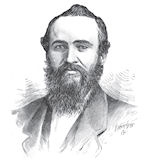
Post image for “How strange! that they should think that we were making war on women and children!”–Richard R. Hancock, Second Tennessee Cavalry.

Saturday, 28th.—According to previous instructions (see under 25th instant), Col. Rains, with his regiment, McNairy’s Battalion and Falcond’s section of artillery, moved out from Barboursville in the direction of Laurel Bridge, while Colonel Cummings, with his detachment and about fifty wagons, moved out for the Salt Works, and Colonel Statham moved so as to support either of the other detachments if necessary.

Colonel McNairy was ordered to take the advance with Harris’s, Payne’s and Allison’s Companies. Our Colonel had not gone far along the London road before he threw out flankers as well as an advance guard, with instructions to keep a sharp lookout for the enemy. Thus, we moved on without any incident worthy of note until we struck the enemy’s picket, within three miles of their camp. Our advance guard captured three of their picket and chased the rest (six or eight) into camp. Colonel McNairy then fell back a short distance, sent a messenger to meet Colonel Rains, and awaited his arrival with the infantry and artillery. As soon as Rains caught up, the command moved on again with McNairy’s three companies still in front. We met a citizen who said that the enemy was lying in wait for us. So we thought that we would sure have our first engagement, then and there. Before reaching the enemy’s camp, Colonel McNairy was ordered to halt, and Colonel Rains took the advance with his regiment, leaving orders for McNairy to hold his battalion well in hand, ready to pursue if he (Rains) should succeed in routing them. On reaching, the Federal camp, and finding it deserted, Rains’ men raised a war-whoop that must have made the Federals believe, if they were in hearing, that 10,000 men1 were after them. Then dashing forward in pursuit, our battalion went as far as London, took down a Union flag, but did not overtake any of the fugitives. The citizens caught the panic—men, women, children and negroes—nearly all, either fled with the Home Guards and Federals to Camp Wildcat, some thirteen miles beyond London, or went to their neighbor’s off the main road. How strange! that they should think that we were making war on women and children!

As it was now about nightfall, our battalion moved back about two miles and rejoined Colonel Rains, encamped where the Home Guards had been camping.

_______

1 Colonel Walford estimated our force at “from 5,000 to 7,000.”—See Rebellion Records (Garrard to Thomas), p. 280.

Camp near Fairfax C. H., September 28, 1861.

I will close a delightful Sunday evening in answering your last letter, received a few days since. I heartily sympathize with you, Love, and our dear little Matthew in your wish for my return. My absence does not press more heavily upon your heart than upon my own. But we must not suffer ourselves to grieve over the necessity which compels our separation. We must bear it in patience, in the hope that when I return we shall love each other all the better for it. I have had the offer from Gov. Letcher of a Commission as Major. I was much flattered by the compliment, but declined it, as I would be assigned to duty at Norfolk. Feeling that I was more pleasantly situated and could render more efficient service here, I preferred to remain. I was very much tempted to accept it, from the consideration that it would probably afford me an opportunity of passing by home on my way; but I thought this should not make me deviate from what my judgment approved as my proper course. I replied that I would accept the appointment if assigned to duty in this brigade, but would not leave it for the sake of promotion.


The weather begins to feel like frost, and hereafter we shall, I fear, find a soldier’s life rather uncomfortable. Sleeping in the open air or thin tents was comfortable a few weeks since; but when the frost begins to fall freely, and the night air becomes more chilly, lying upon the ground and looking at the stars will not be so pleasant. Then we shall think in earnest of home, warm fires, and soft beds. I think I shall get used to it. I have seen many ups and downs and begin to fancy that I can bear almost anything. In November I suppose we shall find comfortable winter quarters somewhere, or shall build log cabins and stay here. I went down to see Mat some days since, but did not find him.

Jim Holly came this evening and tells me he has the pair of pants which you sent me, and that Waltz will bring some more things for me. You need not get the overcoat; my coat for the present answers a very good purpose, and if I find hereafter that I need an overcoat, I will send to Richmond for it.

And now, Love, as I have taxed my eye about enough, I will bid you good-bye. I trust that you will make yourself contented. I shall be all the happier knowing that you are so. Give a kiss to our dear little boys for me; for yourself accept a fond husband’s best love.

September 28.—A foraging expedition from Gen. Franklin’s division was sent out in considerable force from their encampment. They went eight miles from Alexandria to Edsall’s Hill, on the Orange and Alexandria railroad. The pickets of the rebels retired to Springfield station, a mile and a half beyond Edsall’s Hill. The detachments which went out for forage, had s fine view of the country, but saw no signs of the enemy having had defences of any kind. The foraging party was quite successful in obtaining large quantities of hay, corn, and oats, which they removed to camp. There was no molestation from the enemy. A company visited the Mount Vernon estate of John A. Washington, and brought away about eight hundred bushels of wheat, near five hundred bushels of oats, and seventy-five barrels of fish; all of which was stored in the commissary’s depot at Alexandria.—National Intelligencer, Oct. 1.

—At Cumberland, Md., a Union meeting was held. Speeches were delivered by Messrs. Bradford and Maffit. The “wickedness of the rebellion was portrayed in its true colors; and the deceitfulness of secession under the hypocritical guise of a ‘peace party,’ was fully exposed.”— Cumberland Civilian, October 3.

—The Fourth regiment of New Hampshire Volunteers, under the command of Colonel Thomas J. Whipple, passed through Jersey City, N. J., en route to Washington. The regiment is well provided with all the necessaries peculiar to the movable soldier, and has twenty-two baggage-wagons, one ambulance, one hospital, and ninety-five horses, which are provided entirely for accommodation and comfort. It numbers one thousand men, who are armed with the Enfield rifle.

Colonel Whipple is well known as having bravely borne himself in the Mexican war. He is from the same State as the volunteers he now commands. On the 9th of April, 1847, he was made a First Lieutenant of the Ninth infantry, and in the following month he was placed on the staff of his regiment as Adjutant. He was appointed Volunteer Aide-de-camp to Brigadier-General Lane, and distinguished himself in the battle of Atlixco. He resigned from the service on the 23d of February, 1848; but now he is again found ready to take the field.

—Munson’s Hill, Va., was evacuated by the rebels this morning. About ten o’clock the pickets reported to General Richardson that the rebel pickets had been drawn in, and subsequent observation confirmed the report. Information of this fact was telegraphed this afternoon to General McClellan, who at once crossed the ferry at Georgetown with his Staff, and rode to Bailey’s Cross Roads. They then followed the course of the railroad to Upton House and Hill. They saw only half a dozen horsemen on Munson’s Hill. General Wadsworth moved to the right and front with a body of skirmishers, and Captain Colburn, of General McClellan’s Staff, skirmished to the left, without encountering any of the enemy. General Richardson then moved forward with a body of troops toward the hill, the rebel horsemen retiring as they approached. They entered the work with out difficulty, and found that the rebels had taken every thing of value with them. Eight regiments were moved forward to the outposts. A portion of Richardson’s Brigade and a portion of McDowell’s Division occupy Munson’s Hill.

The fort on Munson’s Hill is a closed work, and a great deal of laber has been expended upon it. The site was not well selected, as it is fully commanded by Upton’s Hill, which is now held by the national forces.—(Doc. 61.)

Post image for Barboursville, Kentucky.–Richard R. Hancock, Second Tennessee Cavalry.

Friday, 27th.—We remained at Barboursville. Colonel Rains ordered his demi-brigade to cook three days’ rations and be ready to move early the next morning.

We were now in twenty miles of the enemy’s camp at Laurel Bridge. Col. Brown, who lived near London, was in command of the Home Guards at that camp. Colonel Wolford, with a part of his regiment, was also in that vicinity.

SEPTEMBER 27TH.—To-day I prepared a leading editorial article for the Enquirer, taking ground directly opposite to that advocated by Mr. Benjamin. It was written with the law before me, which gave no warrant, as I could perceive, for the assumption of the Secretary.

September 27.—To-day Major-General Dix and staff, Brig.-General Duryea and Major Belger proceeded to the Relay House, Md., for the purpose of reviewing and presenting the Fourth Wisconsin regiment, Col. Paine, with a stand of colors. The regiment was drawn up in line and presented a truly martial appearance. When the presentation was about to take place, the divisions on each flank of the battalion were wheeled to the left and right, forming a three-sided square. The color guard was marched forward from the line, the colors then brought forward, when Gen. Dix addressed the regiment in the most patriotic and impassioned language. Col Paine replied in the same lofty sentiments and with burning eloquence, which spontaneously drew from his regiment acclamations of eternal fidelity to the emblem of our country’s glory—after which the colors took their place in line.—Baltimore American, Sept. 28.

——-

Late addition to Volume 3:


September 27.—A battle was fought near Shanghai, in Benton County, Missouri, between a body of Kansas troops, under Montgomery and Jamison, and the advance guard of Ben. McCulloch’s army and some of the State Guard, under Judge Cheneault. The rebels were driven back with considerable loss, and pursued forty miles, when Montgomery fell back on Greenfield. Great alarm was felt by the rebels in Springfield lest Montgomery should attack that place, and the troops there rested on their arms for several nights.—(Doc. 75.)

Post image for Barboursville, Kentucky: “Our men put up in deserted houses.”–Richard R. Hancock, Second Tennessee Cavalry.

Thursday, 26th.—According to Zollicoffer’s orders of yesterday, the several detachments named (except Companies B and C of McNairy’s Battalion that did not move to Barboursville till the next day), marched (sixteen miles) from Camp Buckner to Barboursville, the county seat of Knox County, Kentucky, leaving their tents at the former place.

It was said that only three families remained in town, and this showed the strong “Union sentiments” of that town. Our men put up in deserted houses. 1

______

1 The larger portion of the household furniture was left in many of the dwellings; therefore, the writer, as well as a good many others, had the pleasure of occupying a good Kentucky feather bed the two nights that we remained in Barboursville.

SEPTEMBER 26TH.—Had a conversation with the Secretary to-day, on the policy of sending Union men out of the Confederacy. I told him we had 15,000 sick in the hospitals at Manassas, and this intelligence might embolden the enemy to advance, capture the hospitals, and make our sick men prisoners. He said such prisoners would be a burden to them, and a relief to us. I remarked that they would count as prisoners in making exchanges; and to abandon them in that manner, would have a discouraging effect on our troops. He said that sending unfriendly persons out of the country was in conformity with the spirit of the act of Congress, and recommended me to reperuse it and make explanations to the people, who were becoming clamorous for some restriction on the egress of spies.

September 26.—Capt. Stewart’s cavalry, numbering seventy-five men, to-day encountered forty rebel cavalry at Lucas Bend, Ky., whom they pursued into Jeff. Thompson’s camp at Belmont. Four rebels were killed, five captured, and many wounded. The remainder escaped to the woods. The Federal troops captured all the guns and pistols they could bring away with them. No Federal troops were injured.

—the Thirty-fifth regiment of Ohio Volunteers took possession of Cynthiana, Kentucky.

—at Louisville, Ky., W. G. Querton, formerly one of the editors and proprietors of the Courier, was arrested for aiding the Southern rebellion.—The turnpike bridge over Green river, near Mumfordville, was burned by rebels.
—J. B. Archer, Captain of the steamboat Commercial, was arrested, but bailed in ten thousand dollars. The beat was also seized, but released on security being given to surrender her on demand to the Federal Government.— Louisville Journal, September 28.

—The Twenty-first regiment of Ohio Volunteers, left Findlay for Camp Dennison.—Ohio Statesman, October 2.

—Is accordance with the recommendation of the President of the United States, published August 12th, this day was observed as a day of fasting and prayer.