Following the American Civil War Sesquicentennial with day by day writings of the time, currently 1863.

The American Civil War

August 24.—Depredations by soldiers on the property of citizens of Elizabeth City and County, in Virginia, occasioned an order from Gen. Wool, in which marauders were threatened with severe punishment—(Doc. 4.)

—The Cameron Rifles, N. Y. S. V., commanded by Col. Robert J. Betge, struck their tents at Hudson City, N. J., and departed for the seat of war.—N. Y. World, August 26.

—The Nashville American of this day says: We very much regret to observe that in some quarters, that are generally regarded as highly influential in moulding and controlling public opinion in the South, there is betrayed an evident willingness to create strife or dissension among the leaders of that grand revolution which is now exciting the respect and admiration of the civilized world, and is destined to eventuate in placing the South among the foremost nations of this or any other age. Whether this spirit arises from mistaken zeal of opinion, undue ambition, or envy of the prominent position of some in the revolution, we shall not stop to inquire. Whether it originates in all or either of these causes, it is alike calculated to lead to the most serious and disastrous consequences, unless checked by the patriotic unanimity of the people, in frowning down these incipient steps to party division. All the power, resources, malignity, and hostility of the enemy could not now do us a heavier injury than could be done by an angry, determined and acrimonious dissension, in which the people could be induced to enlist their feelings and array their strength on the different sides.

There is, indeed, no greater calamity that could befall the great Southern cause at this time than for a spirit of jealousy to get the ascendency in the councils of the Confederacy, or a deep-seated dissension to arise with regard to the conduct of the war, the policy of finance, or any other measure that may claim the attention of the Administration. Unity of action is so clearly necessary to the Southern cause, that we do not deem it necessary to illustrate or enforce its importance by argument. To the present time it has proven the chief strength of the Confederate States. That there will necessarily be differences of opinion, cannot be doubted. These are inevitable. They are useful. They promote sound views and healthy action. But these differences should be surrendered when decision has given place to discussion, and when the proper authorities determine on their policy.

The great mass of the people are prepared to follow those, whom they have chosen to lead in the war, in whatever direction they may designate. They are, moreover, prepared to make whatever sacrifices in fortune, in privation, or even in life, that may be necessary to maintain their rights, liberties and independence, and to secure for themselves and children the blessings of constitutional freedom. They have the highest confidence in the courage, prudence, judgment, and patriotism of those they have selected to lead them. No amount of criticism can shake their confidence, until the acts of the leaders of the revolution shall demonstrate that they are incapable of conducting our cause to success.

Their superior statesmanship thus far vindicates their wisdom. We will rally as one man, the people of the Confederate States, one and all, to sustain their policy, because it has proven to be the best, the wisest, and most successful. We will listen to no mere cavil. We will not forget that the leaders of the Revolution of ’76 had their rivals, even amid the storms of war. And we will remember that the patriotism of our ancestors sustained their chosen leaders, frowned down discord, and saved the cause.— Nashville American August 24.

—This morning James G. Berret, Esq., Mayor of the city of Washington, was arrested at his residence by a portion of the Provost-marshal’s Guard, and conveyed northward by the early railroad train. The causes of his arrest are unknown to the public. Several days ago he declined to take the oath prescribed by the act of Congress for members of the Board of Police Commissioners.—Capt. Robert Tansill and Lieut. Thos. S. Wilson of the Marine Corps, who had tendered their resignations, were also arrested and conveyed to Fort Lafayette. Mrs. Phillips, wife of Philip Phillips, Esq., ex-member of Congress from Alabama, and Mrs. Greenhow, widow of the late Robert Greenhow, were arrested on the charge of holding correspondence with the Confederates.—National Intelligencer, August 26.

—Last evening, while ex-Governor Thomas was addressing a crowd in front of a hotel at Cumberland, Va., some secessionists raised a disturbance which resulted in their being driven home and the destruction of the Alleghanian office, a secession newspaper. This morning the train bound West, which had ex-Governor Thomas aboard, when near Cumberland, came suddenly on several cross-ties thrown across the track, and at the same time a number of armed men were seen rapidly descending a neighboring hill. The engineer increased the speed of the locomotive, and succeeded in throwing the ties off the track with but little damage to the engine. Some Federal scouts then fired into the train, it is supposed by mistake, but without doing any damage. The design of the secessionists was to take ex-Governor Thomas prisoner.—(Doc. 5.)

—The True American, the Democratic organ of New Jersey, published at Trenton, suspended this morning, giving as a reason for the act that the National authorities had virtually interdicted the publication of every paper that did not support the Government and Administration.—N. Y. Times, August 26.

—Two attempts were made in Connecticut to raise peace flags—one of which failed, while the other was successful. The first was at Stepney, ten miles north of Bridgeport. According to previous announcement a meeting was to have been organized after the raising of the flag. No sooner was the flag hoisted, however, than the Union men made a rush for it, pulled it down, and tore it into shreds. A Union meeting was then organized, which passed a series of Union resolutions. Soon after the Farmer newspaper office, published in Bridgeport, was demolished, notwithstanding the efforts of prominent citizens to prevent it. The other flag-raising was at New Fairfield, where about four hundred persons were engaged in the enterprise. An attempt was made by about seventy Union men to pull the flag down, and a desperate fight ensued, in which two of the “peace” men were seriously injured.—(Doc. 6.)

—To-day a detachment of Col. Richardson’s Home Guards arrived at Jefferson City, Mo., from an expedition to Jamestown. This place is about twenty-three miles above Jefferson City. The soldiers left on Wednesday on board the steamer Iatan. They took no provisions with them, there being plenty of rebels in the vicinity they intended visiting, and were ordered to quarter themselves on the secessionists. At Sandy Hook they discovered eight mounted rebels on the bank, who, on seeing the steamer coming, fled. Ten men were immediately detached in pursuit of them, and, coming within sight of the rebels, fired. Two of them immediately dismounted and, leaving their horses, escaped into the woods— the horses and two fine double-barrel shot-guns were captured, and a lieutenant’s uniform fell also into the hands of the Nationals.

One of the horses had a sabre cut across the head, and the rider was known to have been engaged in the battle at Springfield. Meanwhile, the balance of the force were marched to Jamestown. About four miles from Sandy Hook they arrested two of the most noted secessionists in the whole State, George Jones and C. Hickox, besides seven other of lesser note. From the first-mentioned, who is a wealthy farmer, the troops took ten horses, and plenty of fodder and provisions from all the rebels in the vicinity. They returned with twenty horses and a considerable quantity of provisions and nine prisoners. One of the prisoners, put on a confession, divulged the names of all the men, eighteen in number, who fired the other day with such fatal effect upon the railroad trains. Jones was the President of the Knights of the Golden Circle. The property of the Union men was left untouched. —Dubuque Times, August 27.

—Hamilton E. Gamble, Governor of Missouri, at Jefferson City, issued a proclamation calling for forty-two thousand troops to aid the Federal Government in expelling the forces of Ben McCulloch from the State.—(Doc. 7.)

—The Memphis Argus of this day publishes the following proclamation from the Mayor of that city:

To the Citizens of Memphis: Applications hare repeatedly been made to me, as executive officer of the city, for protection against indiscreet parties who are sent out to impress citizens into service against their will on steamboats. Many of these men have been dragged from their beds, wives, and children, but never has there been a man taken who had on a clean skirt. I hereby notify any citizen who may wish a pass within the city of Memphis to call on me, and I will furnish the same, and will see he will be protected. One poor man being shot yesterday by one of these outlaws, as they may be called, causes me to give the above notice.

“John Park, Mayor.”
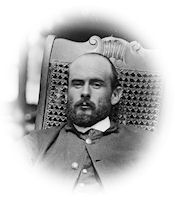
Boston, August 23, 1861

I did n’t get your letter of the 5th until the steamer of the 21st was gone, so I telegraphed to Mr. Motley at Halifax, as I did n’t want to have you come blundering home under the impression that I had been ordered off, and now I will at once answer your letter. If you insist upon coming home and getting a commission, of course you are of age and no one can gainsay you. I don’t favor the idea myself for reasons which I will give you presently; but still if you insist I shall be glad to aid you and will do so. In this war some things are getting clear every day and one is that volunteers won’t do, and another that haste makes waste. If you insist on going, Ritchie advises that you should get a commission in the regular army and go into that. It will be cut down at the end of the war and meanwhile you’ll escape the curse, nuisance and danger of volunteers. If your mind is made up I will apply for you and you can doubtless get your commission and be ready for a winter campaign. Meanwhile you’ll gain nothing but blunders by rushing ahead so like the devil.


So much for that; and now allow me to state some considerations which should prevent your coming home at all. I have three in my mind, and first one relates to myself. I am trying, as well as I may, to do what strikes me as my first duty at home. It is very hard for me to stay here, and no one gives me credit for doing it for any cause save fear; but the truth is the Governor is abroad in the public service, and property was never so difficult of management as it now is. . .. Under these circumstances I concluded very reluctantly I ought to stay at home if I could, and I think you ‘ll agree I was right.

Have n’t I difficulties enough without your piling up new ones? If you insist on this step, I have no election but, at any sacrifice, must go too. The reason is obvious, for while I am single and robust and John remains at home, the world cannot go into these domestic questions, and your coming home in a hurry to get a commission, while I remained in Boston, would be regarded as a most decided implication on my courage. You can’t but see this, and as for your taking a commission under me, it’s bad enough to have a hundred men you don’t care for to look after; but when it comes to looking after a brother and having your attention taken up by what may be occurring to him, it would be intolerable. Besides I expect drafting will have to begin before long and then I have made up my mind to go, and if I go, I think the family in supplying two out of four to the public service does enough, and you ought to stay at home.


In the next place I think decidedly you ought to stay abroad and remain with your father and mother. No one knows what may happen in these days—a foreign war is possible, even an English war — and difficulties you do not now see may any day spring up, and for one I think most decidedly that while times are so troubled our father and mother have got to an age when they ought not to be deserted abroad by all of their children.

Finally, the most weighty consideration to my mind I reserve for the last. Of course you make this a question of usefulness and duty. You are not particularly well fitted for the army and your object, is to be of service to your country. As for distinction and all that sort of thing, when the whole country is rushing into the army it is hardly the place to look for a chance. Where can you be most useful in this emergency? The answer is to my mind too clear to admit of discussion. The rush for commissions is tremendous and you can only get one by shoving somebody equally capable with yourself aside, and you can really do no service, if you get one, which would not be equally well done if you were away. Where you now are you are useful to the whole country and, like a coward, you want to run home because our reverses make the post abroad into which fortune has thrown you very uncomfortable. You fight our battle in England and let us alone to fight it here. There are men enough here, but there your place, if you leave it, must remain empty.

You’ll say, you can’t do anything and have no opening. What could a second lieutenant in an infantry regiment do that would be so immense? Is that a prodigious opening? Go to work at once in England with all your energy and force your way into magazines and periodicals there and in America, so that you can make yourself heard. For there is going to be difficulty about this blockade and much bad feeling, though, God grant, no blows. For heaven’s sake try to influence that and don’t throw yourself away by rushing into this mob of bruisers. Try to raise people up a little. Look into the cotton supply question and try to persuade the English that our blockade is their interest. If they raise it and transfer it to our coasts, they have the power to do so, but they ally themselves with slavery — give it the victory, give the lie to their own protestations and secure to the South for years with the advantage of their system of labor and production that monopoly of cotton under which England groans. If the blockade lasts and forces supply, England will purchase, at the price of one year’s suffering, freedom and plenty for ever. Touch England through her pocket and help your country that way.

Then write to the Atlantic of the way fighting America appears in English eyes, of her boasting and bragging, her running and terror; tell us of the pain she causes her children abroad and how foolish her angry threats sound, and help your country that way. Here is your field, right before your nose, in which you could be of real service, and you want to rush away to do what neither education nor nature fitted you for — what others could do as well or better, and get your head knocked off without doing the least good. If you have any energy use it where you are and where it can be of value. If you have n’t any keep out of the army. Talk of backing the Governor up in the Times in these days! We’ve got beyond all that, I hope. For God’s sake take a broader view and make yourself heard where a voice is wanted. Don’t talk of your connection with the legation to me; cut yourself off if necessary from it and live in London as the avowed Times correspondent and force your way into notice of the London press that way. Wake up and look about you and make yourself useful and don’t jog on in this cart horse way, or brag over your harness and wish yourself a blood-horse, with McClellan, instead of a jackass who can’t break his traces. There, I have blown my blast and have done, and you can do as you see fit. Free from the legation you could earn a living by your pen in London and be independent, busy, happy and eminently useful. If you come home you won’t be of the slightest use to any one, and you will have deserted your post. Now if you want a commission let me know and I’ll do my best for you; but have nothing to say to Horace Sargent. He is n’t the man and I know him.’


We’ve had a bad panic, but it seems to be over now and I think they were wise in refusing the battle.

Post image for “Since I came here, I think I can tell a man’s calibre by his shoulder-straps. The amount of brain is generally in inverse proportion to the size of his straps.”–Journal of Surgeon Alfred L. Castleman.

23d.—Colonel _______ to-day complains that I have too much force employed in the hospital, and says that he will cut it down. The regulations allow ten nurses and two cooks to the regiment, besides Surgeons, and Hospital Steward. All I have, are three nurses and two cooks. Will he dare to cut that down? Should he do so I will “try conclusions” as to his authority to do it. Three nurses, for one hundred sick, and that must be cut down! Nor is this all. The Quartermaster, taking his cue from the Colonel, refuses to acknowledge our right to a hospital fund, and I therefore get but few comforts for the sick, except through charity or a fight for it. It is to be hoped that these officers will, by a little more experience, become better posted in their duties, and that the sick will not then be considered interlopers, or intruders on the comforts of the regiment. I forgot to say, in the proper place, that we are brigaded, forming a part of Gen. Rufus King’s brigade, composed of four regiments.

I have not yet donned the full uniform of my rank, and there is scarcely a day passes that I do not get a reproving hint on the subject from our Colonel. A few days ago, whilst in Baltimore, he came to me almost railing at certain army officers for appearing in citizens’ dress. “There,” said he, “is Major B., Major K., Gen. D., Doct. N. P., all of the regular army, and not one of whom can be distinguished from a private citizen.” “Colonel,” I replied, “they probably fear being mistaken for volunteer officers. He did not feel flattered, but dropped the subject. Since I came here, I think I can tell a man’s calibre by his shoulder-straps. The amount of brain is generally in inverse proportion to the size of his straps.

AUGUST 23D—No arms yet of any amount from Europe; though our agent writes that he has a number of manufactories at work. The U. S. agent has engaged the rest. All the world seems to be in the market buying arms. Mr. Dayton, U. S. Minister in Paris, has bought 30,000 flint-locks in France; and our agent wants authority to buy some too. He says the French statisticians allege that no greater mortality in battle occurs from the use of the percussion and the rifled musket than from the old smooth-bore flint-lock musket. This may be owing to the fact that a shorter range is sought with the latter.

August 23.—The Second Fire Zouaves, N. T. S. V., under the command of Colonel James Fairman, left New York for the seat of war. The regiment numbers over seven hundred men, most of whom are well-tried firemen.—N. Y. Herald, August 24.

—A band of secessionists, calling themselves “The Coast Guard,” and commanded by Captain Arnow, from St. Augustine, arrived at Key Biscayne, coast of Florida, at two o’clock this morning, in a boat from the mainland, and at once took possession of the light-house, the dwelling, and all the Government property, and imprisoned the keeper. They then went up into the tower, and destroyed the lens, (and a valuable second order Fresnel illuminating apparatus,) and injured the machinery so badly that it cannot be used again. They reported that Jupiter Light was put out by them on the 20th, and Cape Canaveral some days previous. The party left Key Biscayne after a short stay, proceeding toward Miami in their own boat, and taking a boat belonging to the light-house department.—Simon Frow, in the National Intelligencer, September 9.

—At West Chester, Pa., Deputy United States Marshal Jenkins S. Schuyler, by order of the United States Marshal, took possession of the Jeffersonian newspaper building, with its contents, this afternoon, to await further orders from Washington.—N. T. Times, August 24.

—The Seventeenth and Twenty-first regiments of Massachusetts Volunteers, under the command of Lieutenant-Colonel John J. Fellows and Colonel Augustus Morse, departed for the seat of war.—Idem.

—The State Department at Washington issued the following explanatory notice:

“The regulation of this department of the 19th inst., on the subject of passports, was principally intended to check the communication of disloyal persons with Europe. Consequently passports will not be required by ordinary travellers on the lines of railroads from the United States which enter the British possessions. If, however, in any special case, the transit of a person should be objected to by the agent of this Government on the border, the agent will cause such person to be detained until communication can be had with this department in regard to the case.”

—The Seventh regiment of Maine Volunteers, under the command of Colonel E. C. Mason, U. S. A., left Augusta, Me., for the seat of war. There are in the regiment about eight hundred men. They were hastily organized, and therefore have had but little drill. The organization was made at Augusta, where Company A first went into encampment five weeks ago; some of the other companies were in camp only four or five days. The men are nearly all lumbermen, raftsmen, and farmers, mostly from along the Kennebec and Penobscot rivers. The largest company (A) have ninety men, who, with the exception of a few blacksmiths, are all lumbermen. This company, and Company K, did not have a man rejected at the inspection, nor did one refuse to take the oath of enlistment. The other companies lost each from two to five men in going through these forms.

The regiment have camp equipage complete. Their uniform is light blue pantaloons, dark blue blouses, and the dark blue U. S. regulation infantry caps. They are armed with Windsor rifles and sabre bayonets.

Colonel Mason is yet a regular army officer, holding a captaincy in the Seventeenth U. S. Infantry.—N. Y. Express, August 24.

—The schooner Sarah Ann, Rome, recently purchased by John Douglas Mirridless, of Wilmington, N. C., and registered with the British consul as the William Arthur, of Liverpool, loaded with fish, beef, pork, etc., cleared from Portland, Me., for St. Thomas, and sailed today—but information having been received that her destination was Wilmington, N. C., she was seized down the harbor by the collector of the port and surrendered to the United States marshal under the authority of the act of August 6, confiscating property intended for insurrectionary purposes.—N. Y. World, August 24.

—Isham G. Harris, governor of Tennessee, issued an appeal to the mothers, wives, and daughters of that State, for contributions of clothing, blankets, and other articles “which will contribute to the relief, comfort, and health of the soldier in the field.”—(Doc. 3.)

—There was a great mass meeting in Camden, Me., in favor of a vigorous prosecution of the war. Dr. J. H. Esterbrook presided. Speeches were made by Major Nickerson, of the Fourth regiment, Hon. E. K. Smart, A. P. Gould and D. A. Boody, democrats; and by N. A. Farewell, General Davis Tillson, T. R. Simonton and C. A. Miller, republicans. About three thousand people were in attendance. Great enthusiasm prevailed.—N. Y. Evening Post, August 24.

—The First regiment of Iowa Militia returned to Dubuque from the seat of war in Missouri. The troops were received by thousands, who “turned out to greet them and shout hozannas on their return.” This regiment was one of those who did the hardest fighting in the battle of Wilson’s Creek, Mo.; they were the troops whom General Lyon rallied to the charge with his latest breath.—Dubuque Times, August 24.

[August] 22. Thursday.—At our nice camp. P. M. rained and blew violently. In the midst of it we got orders from General Rosecrans to prepare to march to Beverly. “Early” in the morning would do. Slept in my wet boots. Wrote home and to mother and Uncle.

_______

BUCKHANNON, August 22, 1861.

DEAR JIM:—I have written hastily to Mr. Warren. I hope he will not be so much disturbed after he reflects on matters. Have you had a formal application before the governor for a place? It should be done by yourself or by a friend in person. I suppose examination may be required. If so, attend to it. Dr. Joe is well. We are expecting an enemy soon.

Sincerely,

R. B. HAYES.

DR. JAMES D. WEBB.

_______

BUCKHANNON, VIRGINIA, August 22, 1861.

DEAREST:—It is a cold, rainy, dismal night. We are all preparing for an early march. I have made up a large bundle of duds—all good of course—which must be left here, to be got possibly some day but not probably. All are cut down to regulation baggage. Many trunks will stop here. A tailor sits on one end of my cot sewing fixings. All is confusion. The men are singing jolly tunes. Our colonel takes his half regiment, the left wing, and half of McCook’s Germans, and we push off for the supposed point of the enemy’s approach. We shall stop and camp at Beverly a while, and then move as circumstances require.

How are the dear boys ? Will Scott writes me that he goes into the Kentucky Union regiments.

Good-bye, darling. Joe wishes to write and wants my pen.

Affectionately,

R. B. HAYES.

MRS. HAYES.

August 22nd.—

“The little dogs and all,

Tray, Blanche, and Sweetheart,

See they bark at me.”

The North have recovered their wind, and their pipers are blowing with might and main. The time given them to breathe after Bull Run has certainly been accompanied with a greater development of lung and power of blowing than could have been expected. The volunteer army which dispersed and returned home to receive the Io Pæans of the North, has been replaced by better and more numerous levies, which have the strong finger and thumb of General McClellan on their windpipe, and find it is not quite so easy as it was to do as they pleased. The North, besides, has received supplies of money, and is using its great resources, by land and sea, to some purpose, and as they wax fat they kick.

A general officer said to me, “Of course you will never remain, when once all the press are down upon you. I would not take a million dollars and be in your place.” “But is what I’ve written untrue?” “God bless you! do you know in this country if you can get enough of people to start a lie about any man, he would be ruined, if the Evangelists came forward to swear the story was false. There are thousands of people who this moment believe that McDowell, who never tasted anything stronger than a water melon in all his life, was helplessly drunk at Bull’s Run. Mind what I say; they’ll run you into a mud hole as sure as you live.” I was not much impressed with the danger of my position further than that I knew there would be a certain amount of risk from the rowdyism and vanity of what even the Americans admit to be the lower orders, for which I had been prepared from the moment I had despatched my letter; but I confess I was not by any means disposed to think that the leaders of public opinion would seek the small gratification of revenge, and the petty popularity of pandering to the passions of the mob, by creating a popular cry against me. I am not aware that any foreigner ever visited the United States who was injudicious enough to write one single word derogatory to their claims to be the first of created beings, who was not assailed with the most viperous malignity and rancour. The man who says he has detected a single spot on the face of their sun should prepare his winding sheet.

The New York Times, I find, states “that the terrible epistle has been read with quite as much avidity as an average President’s message. We scarcely exaggerate the fact when we say, the first and foremost thought on the minds of a very large portion of our people after the repulse at Bull’s Run was, what will Russell say?” and then they repeat some of the absurd sayings attributed to me, who declared openly from the very first that I had not seen the battle at all, to the effect “that I had never seen such fighting in all my life, and that nothing at Alma or Inkerman was equal to it.” An analysis of the letter follows, in which it is admitted that “with perfect candour I purported to give an account of what I saw, and not of the action which I did not see,” and the writer, who is, if I mistake not, the Hon. Mr. Raymond, of the New York Times, like myself a witness of the facts I describe, quotes a passage in which I say, “There was no flight of troops, no retreat of an army, no reason for all this precipitation,” and then declares “that my letter gives a very spirited and perfectly just description of the panic which impelled and accompanied the troops from Centreville to Washington. He does not, for he cannot, in the least exaggerate its horrible disorder, or the disgraceful behaviour of the incompetent officers by whom it was aided, instead of being checked. He saw nothing whatever of the fighting, and therefore says nothing whatever of its quality. He gives a clear, fair, perfectly just and accurate, as it is a spirited and graphic account of the extraordinary scenes which passed under his observation. Discreditable as those scenes were to our army, we have nothing in connection with them whereof to accuse the reporter; he has done justice alike to himself, his subject, and the country.”

Ne nobis blandiar, I may add, that at least I desired to do so, and I can prove from Northern papers that if their accounts were true, I certainly much “extenuated and nought set down in malice”—nevertheless, Philip drunk is very different from Philip sober, frightened, and running away, and the man who attempts to justify his version to the inebriated polycephalous monarch is sure to meet such treatment as inebriated despots generally award to their censors.

Camp Causten, Aug. 22d, 1861.

My dear Cousin Lou:

What a pleasant thing it is to live, and how I do enjoy it here on the banks of the Potomac. I do not believe God ever made a more beautiful land than this. How I would fight for it if I believed it threatened by an unscrupulous foe! Cousin Lou, I used to think the “booty and beauty” allusion a sort of poor joke, too sorry even for ridicule, but I now see it as the cunning work of the far-sighted master who knew his people.

By-the-way do you know we are now encamped on the Kosciusko farm, and near by the house still stands where the patriot lived? I was walking in a cornfield today, and spied the silk drooping from one of the ears, dyed a deep red. I plucked it, and send it now to you in memory of Kosciusko, or if you like it better, in memory of Cousin Will. Bother! I was getting sentimental, when a gust of wind tore up the tent pins and blew out the candle. One has great experiences in camp. The other night I was softly slumbering, dreaming of Dolly Ann or of cutting a Secessionist’s throat, or something agreeable at any rate, when I heard a sound like that of mighty waters — I felt the waves washing over me — then followed a chilly sensation. I awoke. The stars were above me and by my side lay a sea of canvas — “in short,” as Mr. Micawber would say, my tent was blown down. Another night my tent was pitched on the side of a steep hill. I wrapped myself in my blanket, braced my feet against the tent-pole and fell asleep. In the night my knees relaxed, and no longer prevented by the prop, I slid quietly downward, awaking in the morning at a good night’s march from the point at which I first lay down to rest.

Much obliged for the information you send me regarding that youngest son of the Earl of Montrose, who came to America and graduated at Yale College. I always knew I was of noble degree, and have felt my blood preeminently Scotch since the first time I heard Aunt Caroline singing “Where, and oh where is my Highland Laddie gone?” I look too, admiringly upon the queenly Julia, and I say, “Nay, nay, but there’s no churl’s blood there.” In beatific vision the sisters five file past me; then comes long lanky Sylvester Vegetable Graham, leanest of men, with a bag of oatmeal, and I say to myself, “Verily my blood is very Scotch.”

Give my best love to that wee mite of a little lady who is to have the delightful honor of taking charge of my wooden leg when I return from the wars a garrulous one-legged old soldier. Imagine me, Cousin Lou, tripping it at my own wedding not on the light fantastic, but on timber toes. Now let us consider the matter, Cousin Lou. Shall the leg be a real timber one though, or shall a compromise be made with Nature, and one of the flexible Anglesea pattern be chosen?

Alas, alas! All day long we have heard guns firing in the distance. Some poor fellows must have fallen, though we get no intelligence of movements made. We are left out of the question. There is a great battle soon to take place, but I fear the 79th is too much crippled to make a great show. We numbered once a thousand gallant hearts — we number now 700 men capable for action; to such a pass we have been reduced by death and what is worse, by desertion. Officers have deserted, and the men have followed the base example. I have seen enough to convince me that this is no war for foreigners. It is our war, and let us cheerfully bear the burden ourselves. The South sends its best blood to fight for a phantom, but we, in the North, send our scum and filth to fight for a reality. It is not thus we are to gain the victory. I would have all our Northern youth not talk, but act — not deem their lives so precious as their honor. Have you read the names of those who resigned their commissions after the Battle of Manassas? The names of over 250 cowards. Life is sweet to all, but have they no trust in God that they fear the bitterness of death? Love to all friends in Enfield. I must say good-night.

Au-Revoir,

Will.

I did not serve as a private but in the capacity of Lieut. at Bull Run.

August 22.—At Philadelphia, Pa., on the arrival of the New York train this morning, Marshal Milward and his officers examined all the bundles of papers, and seized every copy of the New York Daily News. The sale of this paper was totally suppressed in that city. Marshal Milward also seized all the bundles of the Daily News at the express offices for the West and South, including over one thousand copies for Louisville, and nearly five hundred copies for Baltimore, Washington, Alexandria, and Annapolis.—National Intelligencer, August 23.

The First regiment of Pennsylvania Cavalry, under the command of Colonel Max Friedman, passed through Baltimore, Md., on the way to Washington. The regiment is composed of ten full companies, having an aggregate of nine hundred and fifty men, of whom a large portion have seen service. They were accompanied by twenty trumpeters and buglers. The men, with the exception of fifty, were uniformed alike in a dark blue cloth jacket and pantaloons, with yellow trimmings, and a high felt hat. The horses of the command had previously been sent on to Washington, where the men will receive such arms as may be requisite.— Baltimore American, August 23.

—The Stark County Democrat, a secession sheet, published in Canton, Ohio, was entirely destroyed by some volunteers of that place.— Buffalo Courier, August 24.

—Edwin D. Morgan, Governor of New York, issued a proclamation, urging all good and loyal citizens to use all means in their power to sustain the credit of the State and of the National Government, as well as furnish an ample response to the late call of the President for men to crush the rebellion.—(Doc. 1.)

—The following order was promulgated from Washington, and virtually suppressed the Day Book: and the Daily News of New York:

“Post Office Department, August 22, 1861.

“Sir: The Postmaster-General directs that from and after your receipt of this letter, none of the newspapers published in New York City, which were lately presented by the Grand Jury as dangerous, from their disloyalty, shall be forwarded in the mails.

“I am, respectfully, jour obedient servant,

“T. B. Trott, Chief Clerk.

“To the Postmaster of New York City.”

—Sixty-four of the leading Democrats in Vallandigham’s district, Montgomery County, Ohio, issued a circular against the “despotic and traitorous course of the Vallandigham clique.” They say: “It is the mission of the Democratic party to give strength and vigor and efficiency to the Constitution and Government when they are attacked by rebels and traitors. In the language of the lamented Douglas, ‘No man can be a true Democrat without being at the same time a loyal patriot; and there are but two positions to assume: we must either be for or against our Government —either patriots or traitors.'” They pledge themselves “to unite with all loyal citizens in the defence of the nation, and in rebuking the unpatriotic action of said convention, and of the Dayton Empire, and in supporting for office in the county of Montgomery men, irrespective of party, who are loyal to the Government by a vigorous prosecution of this war, and who in no contingency are in favor of secession.”— N. Y. Evening Post, August. 22.

—The steamer Samuel Orr, an Evansville and Paducah mail packet, was seized at Paducah, Ky., and taken up the Tennessee River. The officers and crew left her, and went to Cairo, Ill., in skiffs. Her cargo was valued at twenty thousand dollars.—Baltimore American, August 24.

—In Philadelphia, Pa., the U. S. marshal, Milward, proceeded to the office of the Christian Observer, in Fourth street below Chestnut, and took all the type, paper, and other appurtenances of the place. He also closed up the office, and warned the persons conducting the Observer that, on any attempt to revive the publication, they would be dealt with according to law. The indignation of the people against this sheet was rapidly culminating down to the time of its stoppage, and it was to have been torn out on Saturday night next—a matter of which the authorities were cognizant.—Philadelphia Press, August 28.

August 21st.—The echoes of Bull Run are coming back with a vengeance. This day month the miserable fragments of a beaten, washed out, demoralised army, were flooding in disorder and dismay the streets of the capital from which they had issued forth to repel the tide of invasion. This day month and all the editors and journalists in the States, weeping, wailing, and gnashing their teeth, infused extra gall into their ink, and poured out invective, abuse, and obloquy on their defeated general and their broken hosts. The President and his ministers, stunned by the tremendous calamity, sat listening in fear and trembling for the sound of the enemy’s cannon. The veteran soldier, on whom the boasted hopes of the nation rested, heartsick and beaten down, had neither counsel to give nor action to offer. At any moment the Confederate columns might be expected in Pennsylvania Avenue to receive the welcome of their friends and the submission of their helpless and disheartened enemies.

All this is forgotten—and much more, which need not now be repeated. Saved from a great peril, even the bitterness of death, they forget the danger that has passed, deny that they uttered cries of distress and appeals for help, and swagger in all the insolence of recovered strength. Not only that, but they turn and rend those whose writing has been dug up after thirty days, and comes back as a rebuke to their pride.

Conscious that they have insulted and irritated their own army, that they have earned the bitter hostility of men in power, and have for once inflicted a wound on the vanity to which they have given such offensive dimensions, if not life itself, they now seek to run a drag scent between the public nose and their own unpopularity, and to create such an amount of indignation and to cast so much odium upon one who has had greater facilities to know, and is more willing to tell the truth, than any of their organs, that he will be unable henceforth to perform his duties in a country where unpopularity means simply a political and moral atrophy or death. In the telegraphic summary some days ago a few phrases were picked out of my letters, which were but very faint paraphrases of some of the sentences which might be culled from Northern newspapers, but the storm has been gathering ever since, and I am no doubt to experience the truth of De Tocqueville’s remark, “that a stranger who injures American vanity, no matter how justly, may make up his mind to be a martyr.”