Following the American Civil War Sesquicentennial with day by day writings of the time, currently 1863.

The American Civil War

WESTON, VIRGINIA,
Tuesday Morning, July 30, 1861.

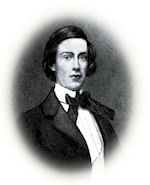
DEAR UNCLE:—If you look on the map you can find this town about twenty-five miles south of Clarksburg, which is about one hundred miles east of Parkersburg on the Northwest Virginia Railroad. So much for the general location; and if you were here, you would see on a pretty sidehill facing towards and overlooking a fine large village, surrounded by lovely hills, almost mountains, covered with forest or rich greensward, a picturesque encampment, and on the summit of the hill overlooking all, the line of field officers’ tents. Sitting in one of them, as [Henry] Ward Beecher sat in the barn at Lenox, I am writing you this letter.

I have seen Conger, acting assistant quartermaster of [the] Tenth Regiment. He wishes a place. I ventured to suggest that he could perhaps raise a company in your region by getting an appointment from the governor. All here praise him both as a business man and as a soldier. He must, I think, get some place. His reputation is so good with those he is associated with.

Dr. Rice also called to see me; he looks well and is no doubt an efficient man. Dr. Joe has had a consultation with him and thinks him a good officer.

We enjoy this life very much. So healthy and so pretty a country is rarely seen. After a month’s campaign here the Tenth has lost no man by sickness and has but seven sick. General Rosecrans takes immediate command of us and will have us with him in his operations against Wise. We shall have mountain marches enough no doubt. So far I stand it as well as the best. . . .

This is the land of blackberries. We are a great grown-up armed blackberry party and we gather untold quantities.

Here there are nearly as many Secessionists as Union men; the women avow it openly because they are safe in doing so, but the men are merely sour and suspicious and silent…

Men are at work ditching around my tent preparatory to a thunder-shower which is hanging over the mountain west of us. One of them I hear saying to his comrade: “This is the first time I ever used a spade and I don’t like it too well.”

But you have had enough of this incoherent talk. Colonel Scammon and Matthews have both been absent and left me in command, so that I have been exposed to numberless interruptions.

Good-bye. Direct to me by my title “Twenty-third Regiment, Ohio troops, Clarksburg, Virginia,” and it will be sent me.

R. B. HAYES.

Send this to Lucy.

S. BIRCHARD.

July 30th.—I have just been conversing with some young soldiers, who joined in the dangers and glories of the battle-field. They corroborate what I had before heard of the presence of Northern females. I would not mention it before in my diary, because I did not wish to record any thing which I did not know to be true. But when I receive the account from eye-witnesses whose veracity cannot be doubted, I can only say, that I feel mortified that such was the case. They came, not as Florence Nightingales to alleviate human suffering, but to witness and exult over it. With the full assurance of the success of their army they meant to pass over the mutilated limbs and mangled corpses of ours, and to go on their way rejoicing to scenes of festivity in the halls of the vanquished, and to revel over the blood of the slain, the groans of the dying, the wails of the widow and the fatherless. But “Linden saw another sight,” and these very delicate, gentle, womanly ladies, where were they? Flying back to Washington, in confusion and terror, pell-mell, in the wildest excitement. And where were their brave and honourable escorts? Flying, too; not as protectors to their fair friends, but with self-preservation alone in view. All went helter-skelter—coaches, cabriolets, barouches, buggies, flying over the roads, as though all Fairfax were mad.

“Ah, Fear! ah, frantic Fear!

I see—I see thee near.

I know thy hurried step, thy haggard eye!

Like thee, I start; like thee, disordered fly!

Each bush to their disordered imaginations contained a savage Confederate. Cannon seemed thundering in the summer breeze, and in each spark of the lightning-bug, glinted and gleamed the sword and Bowie-knife of the blood-thirsty Southerner. Among the captured articles were ladies’ dresses, jewels, and other gew-gaws, on their way to Richmond to the grand ball promised to them on their safe arrival. There were also fine wines, West India fruits, and almost everything else rich, or sweet, or intoxicating, brought by the gay party, for a right royal pic-nic on the field of blood. The wines and brandies came in well for our wounded that night, and we thank God for the superfluities of the wicked.

July 30.—News from home. Mr. McD., of the Theological Seminary, an Irish student, who was allowed to remain there in peace, being a subject of Great Britain, has just arrived at this house as a candidate for ordination. He says that our house has been taken for a hospital, except two or three rooms which are used as headquarters by an officer. Bishop Johns’ house is used as headquarters; and the whole neighbourhood is one great barracks. The families who remained, Mrs. B., the Misses H., and others, have been sent to Alexandria, and their houses taken. Mr. J’s and Mr. C’s sweet residences have been taken down to the ground to give place to fortifications, which have been thrown up in every direction. Vaucluse, too, the seat of such elegant hospitality, the refined and dearly-loved home of the F. family, has been levelled to the earth, fortifications thrown up across the lawn, the fine old trees felled, and the whole grounds, once so embowered and shut out from public gaze, now laid bare and open—Vaucluse no more! There seems no probability of our getting home, and if we cannot go, what then? What will become of our furniture, and all our comforts, books, pictures, etc.! But these things are too sad to dwell on.


Mr. McD. gives an amusing account of the return of the Northern troops on the night of the 21st, and during the whole of the 22d. Such a wild, alarmed, dispirited set he had never an idea of. He had seen them pass by thousands and thousands, first on one road and then on the other, well armed, well mounted, in every respect splendidly equipped, only a few days before. As a Southern sympathizer, he had trembled for us, and prayed for us, that we might not be entirely destroyed. He and one or two others of similar sentiments had prayed and talked together of our danger. Then what was their surprise to see the hasty, disordered return!

Post image for A Diary of American Events – July 30, 1861

July 30.—Senator Trumbull of Ohio spoke in the Senate of the United States on the Bill to suppress insurrection, and favored the approval of what had been done by the President before Congress assembled as done by the legal representative of the nation in the nation’s defence. Senator Carlile spoke against the 8th section of the bill which empowers military commanders to discharge from custody prisoners who take the oath of allegiance.—(Doc. 131.)

—The Thirteenth Regiment of Massachusetts Volunteers, under the command of Colonel Samuel H. Leonard, passed through New York, on their route for Harper’s Ferry, Va. The regiment numbers one thousand and eleven men, and is armed with the Enfield rifle. While on their march through the city, the troops sung several martial airs, the stanza of one of them commencing:

We’ll hang Jeff. Davis on a Palmetto tree,
Glory hallelujah! Glory hallelujah!

And the Union then will be great and free,
Glory hallelujah! Glory hallelujah!

New York World, July 31.

—General B. F. Butler wrote another interesting letter to the Secretary of War on the subject of the “contraband.”—(Doc. 132.)

—The Fifth Regiment of Connecticut Volunteers passed though New York en route for Washington, by the way of Harrisburg, Pa. It is commanded by Colonel O. S. Terry, of Norwalk, and is splendidly equipped.

—The Thirteenth Regiment of Brooklyn, N. Y. S. M., returned from Annapolis, Md., its term of service having expired on the 23d instant. —N. Y. World, July 31.

—Fredericka W. Lander was this morning appointed a brigadier-general by the President of the United States. He has command of the Rhode Island and part of the Massachusetts regiments. This appointment was made at the earnest recommendations of Gen. McClellan, Gov. Sprague of Rhode Island, and Senator Carlile of Virginia.

—Six Government clerks in the departments at Washington, resigned to-day, owing to the passage of the Virginia ordinance, providing that any citizen of that Commonwealth holding any office under the Government of the United States after to-morrow shall be forever banished from that State, and is declared an alien and enemy; and further, any citizen who may hereafter undertake to represent the State in the Congress of the United States, in addition to the penalties above presented, shall be deemed guilty of treason and his property confiscated, to the use of the State.—(Doc. 135.)

—The Fifth Regiment of Massachusetts Militia returned to Boston from the seat of war, its time of service having expired. Delegations of military, firemen, and civic authorities from adjoining towns, which had furnished companies to the gallant 5th, were waiting during the forenoon for their arrival, and Boston poured out its thousands to greet and welcome them home. After partaking of a bountiful collation on the Common, prepared by the City Government, the regiment was mustered out of service, and the companies soon after started, under an escort of their towns-people, for their homes. Three contrabands came with the regiment; two men and a woman.

At Bull Run the regiment lost 25 killed, 26 wounded, and 5 missing. The national flag borne by this regiment bears marks of hard usage. The eagle is missing from the staff, and there are three holes in the flag, two made by bullets, and one by a fragment of a shell. This flag, at the beginning of the fight, was borne by the color-bearer, Lawrence, who was shot dead, receiving two musket balls in his breast. The bearer of the Massachusetts flag, G. W. Wallace, of the Haverhill company, was at his side, and seizing the national flag as it fell from Lawrence’s hand, he for a time bore both, but at length the last-named was taken by the Sergeant-Major of the regiment, and was retained by him. The story that it was left on the field at any time is false.—N. Y. Tribune, July 31.

—To-day an order was issued by Gen. McClellan prohibiting officers or soldiers from leaving their camps or quarters except upon important public or private business, and then not without written permission from the commander of the brigade of which they may be a part.—(Doc. 136.)

—In the United States Senate the resolution legalizing certain acts of the President being under consideration, Mr. Pearce, of Maryland, spoke in opposition thereto.—The bill to suppress insurrection and sedition was taken up, and after some discussion was postponed.— Baltimore American, July 31.

—Five companies of the First Regiment of Nebraska Volunteers, Col. Shager commanding, left Omaha, on the steamer West Wind this morning, for St. Joseph, Mo. They took two pieces of cannon with them.—N. Y. Tribune, August 1.

—The following order was made by the Post-Office Department for the execution of the law respecting soldiers’ letters:

“Postmasters at or near any camp or point occupied by the United States forces will mail without prepayment of postage any letter written by a soldier in the service of the United States and certified to be such by the Major or Acting Major of the regiment to which the writer is attached. The envelope should have plainly stamped or written on its face the certificate ‘Soldier’s letter,’ signed in writing by the Major or Acting Major of the regiment, describing his regiment by its number and its State. The postage due on such letters will be collected at the office of delivery. Commissioned officers will prepay their postage as heretofore.

John A. Kasson,

“First Assistant Postmaster-General.”

“Mountain View,” July 29.—Mr. _____ and myself came over here on Friday, to spend a few days with the Bishop and his family. He delivered a delightful address yesterday in the church, on the thankfulness and praise due to Almighty God, for (considering the circumstances) our unprecedented victory at Manassas. Our President and Congress requested that thanks should be returned in all of our churches. All rejoice for the country, though there are many bleeding hearts in our land. Among our acquaintances, Mr. Charles Powell, of Winchester, Col. Edmund Fontaine, of Hanover, and Mr. W. N. Page, of Lexington, each lost a son; and our friend, Mr. Clay Ward, of Alexandria, also fell. The gallant Generals Bee and Bartow were not of our State, but of our cause, and we all mourn their loss. Each mail adds to the list of casualties. The enemy admit their terrible disaster, and are busy inquiring into causes.

This house has been a kind of hospital for the last month. Several sick soldiers are here now, men of whom they know nothing except that they are soldiers of the Confederacy. They have had measles, and are now recruiting for service. One who left here two weeks ago, after having been carefully nursed, was killed at Manassas. The family seem to lament him as an old friend, though they never saw him until he came here from the Winchester hospital. Two sons of this house were in the fight; and the Bishop had several other grandchildren engaged, one of whom, R. M., lost his right arm. His grandfather has been to Winchester to see him, and is much gratified by the fortitude with which he bears his suffering. He says, “R. is a brave boy, and has done his duty to his country, and I will try to do my duty to him, and make up the loss of his arm to him, as far as possible.” It is delightful to be with Bishop Meade. There is so much genuine hospitality and kindness in his manner of entertaining, which we perhaps appreciate more highly now than we ever did before. His simple, self-denying habits are more conspicuous at home than anywhere else. We sit a great deal in his study, where he loves to entertain his friends. Nothing can be more simple than its furniture and arrangements, but he gives you so cordial a welcome to it, and is so agreeable, that you forget that the chair on which you sit is not cushioned. He delights in walking over the grounds with his friends, and as you stop to admire a beautiful tree or shrub, he will give you the history of it. Many of them he brought with him from Europe; but whether native or foreign, each has its association. This he brought in his trunk when a mere scion, from the tide-water section of Virginia; that from the “Eastern Shore;” another from the Alleghany mountains; another still, from the Cattskill mountains. Here is the oak of old England; there the cedar of Lebanon; there the willow from St. Helena, raised from a slip which had absolutely waved over the grave of Napoleon. Here is another, and prettier willow, native of our own Virginia soil. Then he points out his eight varieties of Arbor Vitas, and the splendid yews, hemlocks, spruces, and firs of every kind, which have attained an immense size. Our own forest trees are by no means forgotten, and we find oaks, poplars, elms, etc., without number. He tells me that he has more than a hundred varieties of trees in his yard. His flowers, too, are objects of great interest to him, particularly the old-fashioned damask rose. But his grape-vines are now his pets. He understands the cultivation of them perfectly, and I never saw them so luxuriant. It has been somewhat the fashion to call him stern, but I wish that those who call him so could see him among his children, grandchildren, and servants. Here he is indeed a patriarch. All are affectionately respectful, but none of them seem at all afraid of him. The grandchildren are never so happy as when in “grand-papa’s room;” and the little coloured children frequently come to the porch, where he spends a great deal of his time, to inquire after “old master’s health,” and to receive bread and butter or fruit from his hands.

—An engagement took place at Aquia Creek, Va., to-day. Four vessels of the Potomac flotilla opened the attack by firing shot and shell at a new battery which had been erected by the rebels. Several of the shells fell and exploded into a camp of rebels near the battery. The rebels returned the fire with considerable vigor from rifled cannon, but caused little damage, as their range was too high. The engagement lasted three hours, during which time the flotilla was struck but by one shot, which, however, inflicted no personal injury.— N. Y, Commercial Advertiser, July 31.

—Captain Wm. P. Allen, of the Eleventh Massachusetts Regiment, E. P. Doherty, of the New York Seventy-first, and Orlando Waldorf, Second Wisconsin, arrived in Washington city, having escaped from Sudley Church, Va., where they were detained as prisoners. The sentinel fell asleep, and they leaped from a window and escaped to the woods. They reached the Potomac, which they forded, fourteen miles above Washington.—N. Y. World, July 30.

—The Memphis Appeal, in urging planters to keep their cotton at home, says: “Should the usual quantity be brought to Memphis—say 400,000 bales—and be stored in our warehouses this fall, the temptation for the enemy to essay its capture would be extremely great, particularly as cotton will be very scarce at the North next winter. It would be tantamount, indeed, to offering $20,000,000 for invasion of the Mississippi Valley, and for a successful invasion against Memphis.”—N. Y. World, July 31.

—The House of Representatives, at Washington, refused to entertain a motion of Mr. Cox (Ohio) to appoint a Committee of Conference to report on amendments to the Constitution of the United States, with a view to the reconstruction of the Union.—(Doc. 130.)

—The first regiment of the Polish Brigade, under Col. Sulakowski, left New Orleans to-day for Virginia. The second regiment of the brigade is rapidly filling up, and will be in Virginia long before Lincoln, Scott & Co. make their second attempt to dine in Richmond, where Gen. Tochman now is drawing up his share of the bill of fare which the Polish Brigade intend serving up.—N. O. Crescent, July 29.

—A large meeting was held at the Merchants Exchange, in New Orleans, to make arrangements for the relief of the soldiers wounded at Manassas. Gen. W. A. Elmore presided, and Rev. Dr. Palmer spoke. Among other things he said that he did not believe this would be a protracted war. Protracted wars did not prevail among the great civilized nations of the earth, but only among barbarians. Such a war would bankrupt any nation in one year. Even England, in the war of the Crimea, found herself pressed and worried to the extreme in furnishing her army with supplies. For what duration of time could the North hope to sustain 400,000 men? As to the issue, the enemy might as well throw their millions into the rivers as to expect to subjugate us. Our cotton gave us immense power. The millions of Europe depended on it for their bread. As for the blockade, we laughed it to scorn. This war must soon terminate, or the civilized nations of Europe must become engaged in it; and he predicted our independence would be acknowledged before the first day of next year. But we would carry on this war until that end was accomplished. He alluded to a meeting at the New York Tabernacle, at which it was declared that the war should not end until Slavery was driven from our soil! But he felt it must continue until every nation on earth should recognize our independence and our institutions. He spoke of the imbecility, usurpation, and tyranny of Lincoln—unparalleled since the days of Charles I. He would have said that the North was almost unanimously against us, if he had not heard Vallandigham’s voice. (Tremendous cheering.) But he felt there were many brave men at the North, who strongly sympathized with our cause. He felt the certain success of our cause, because right and truth were on our side. Not till the crush of worlds would our country be subjugated.

A series of resolutions were adopted, of which the following is the first:

1. That we recognize in these victories on the side of liberty, against tyranny and oppression, the hand of the same just and righteous God who guided the armies of the country when lead by Washington in defence of its liberty ; that our hearts are filled with gratitude to the most high and mighty Ruler of the Universe for that signal interposition on our behalf, manifested in the strength and courage given to our soldiers and the terror which seized upon our enemies..N. Y. Times, August 6.

—Brigadier General Cox in a message to Governor Pierpont dated this day at Gauley, Va., says: “The Kanawha Valley is now free from the rebel troops. Most of the forces raised by Wise in this valley left him between Charleston and this place. I had sent them assurances that if they laid down their arms they might go quietly to their homes, and many have done so, asserting that they were cheated into the rebel service. I regret to have to say that Wise in his retreat has burned a number of valuable bridges, and carried off most of the wagons and teams belonging to the people of the valley. All parties denounce him for his vandalism. I congratulate you on the success of this expedition.”—Baltimore American, Aug. 2

Post image for Bull’s Run. “…our roll call shows that 199 are numbered among the dead, the wounded, and the missing.”—War Letters of William Thompson Lusk.

July 28th, 1861.

Dear Mother:

A week has passed since our misfortunes at Bull’s Run, and in all the intervening time I’ve had only opportunity to let you know that I was safe. But I must tell you something of that unlucky day, for I know you had rather have the story from my own lips. As I promised Henry Goddard to write once in a while for the Bulletin, I will put my story in a form to suit that sheet, if you think proper to communicate it: —

We too have breathed into our nostrils the smoke of battle, we too have listened to the voice of the cannon, we too have seen the finest of pagents, the most splendid of dramatic spectacles — the death struggle between armed arrays of men. We, who only yesterday were numbered among the “Sons of the Muses,” find ourselves today counted among the full-fledged “Sons of Mars.” We have fought, suffered, and survived to tell our tale. “To-morrow morning at 2 o’clock be ready for an advance, provided with a couple of day’s provisions,” is the command we receive on Saturday evening, and at the chilly hour appointed, without the sounding of the Reveillé, we are noiselessly summoned to our Arms. We stand in silence at our posts until the red glare of the rising sun had followed the dark hour before dawn. Then we marched on, gay of heart, and full of confidence. We cross Bull’s Run, and see men cutting trees by the bridge. We ask their reason. “It is to cover a retreat,” they tell us. “Ho! Ho!” How we laughed at the thought of our retreating! What innocent woodmen those were that could talk of us defeated! It was a bonnie sight to see us then, eager for battle, dreaming of victory. Some three miles we marched on, and then were drawn in the woods in line of battle. In line we advanced till we came to the edge of the forest, where we were told to lie down to avoid the range of the enemy’s cannon. About 6 o’clock a couple of pieces of our artillery to the left of us opened a fire upon such of an unseen foe as our skirmishers were able to discover. Long our pieces were unanswered. How glorious, we thought, this firing on the foe, and ourselves in seeming safety! How we laughed when afar we could see an exploding shell scattering the enemy in confusion, who for a short moment were thus forced to show themselves on open ground. The fields before us were occupied by our officers reconnoitring. Away off on the line of wood-covered hills two or three miles away, we could see the glitter of bayonets. Seen from a tree, they were found to belong to fine troops, well equipped, and marching in order — troops not to be scattered by threats, but worthy of being combatted. Upon an elevated open space of ground before us to the right, we could see more troops moving — horsemen riding — above all one on a white horse who seemed to be everywhere. The sun grew warm and we became listless. The artillery continued to discharge its Death messengers, the sharp rattle of musketry was heard to our right, volley after volley following in quick succession, yet many of us slept, quietly awaiting our turn to be summoned to action. About 11 o’clock two horses came galloping riderless toward us. While surmising whence they came, we were called to rise and march to battle. We sprung from the earth like the armed men of Cadmus. On we rushed by the flank, over fields, through woods, down into ravines, plunging into streams, up again onto rising meadows, eager, excited, thrilled with hot desire to bear our share in routing the enemy. We cheered, and yelled, pressing onward, regardless of shells now and then falling among us, thinking only of a sharp fight and a certain victory. At last we reached the lines of the brave boys of the 69th. Here the American banner was planted, so we shouted lustily, for the spot had not long since been wrung from the foe.

From many a point not long since covered by secession forces, the American banner now floated. What wonder we felt our hearts swelling with pride, and saw, hardly noticing, horse and rider lying stiff, cold and bloody together! What, though we stepped unthinking over the pale body of many a brave fellow still grasping convulsively his gun, with the shadows of Death closing around him! We were following the foe, I have said, and were dreaming only of victory. So we were marched to the edge of a slope which sheltered us partially from the aim of the enemy’s artillery. Here lying prostrate, shell after shell flew over our heads, or tore up the ground around. Now we could feel the hot breath of a cannon ball fan our cheeks; now we could see one fairly aimed, falling among our horses, and rolling them prostrate; and now again one of these messengers would come swift into the ranks of one of our columns, and without a thought or a groan, a soul was hurried into eternity.

After about an hour in this trying position, we were called up and turned into the road, where Death began to make sad havoc in our ranks. Surely aimed, the shot of the enemy fell among us. We could not see the foe, and then it was terrible to see our own boys, whose faces we knew, and whose hands we had pressed, falling in Death agony. We heard, while marching stealthily, a great shout, and looking we saw a hill before us, covered with the Ellsworth Zouaves. A moment more, and from the top of the hill, from unseen hands blazed a terrible discharge of arms. It was one of those masked batteries, which have so often brought us misfortune. Bravely fought the Zouaves, but they had to fall back from that hellish fire. Other Regiments made the charge, but only to be repulsed with ranks thinned and broken. At length our turn came. Up we rushed — our brave Colonel with us.

The first fire swept our ranks like a quick darting pestilence. “Rally, boys—Rally!” shouted the officers, and a brave rally was made. Our men stood firmly firing, answering volley by volley. Here we felt the worthlessness of our old Harper’s Ferry muskets, when matched against the rifles of the enemy. Tall men were mowed down about me. Wounded men begged their comrades to press on, and not to risk anything by lingering near them. We were only some twenty yards from a battery, belching forth a thick heavy hail of grape and canister, shell and fire of musketry. With unerring accuracy the enemy’s riflemen singled out our officers and mighty men. Suddenly we saw the American flag waving over the battery. “Cease firing” was the order given, and for a short moment we believed the battery was ours. It was the enemy though that had raised the flag to deceive us. As we lowered our arms, and were about to rally where the banner floated, we were met by a terrible raking fire, against which we could only stagger.

“By the Lord, but I believe them coons’s too cunning for us!” cried an old soldier near me. We halted, fell back, and the hillside was left to such only as lingered to bear away their wounded comrades.

As we passed down we saw our Colonel lying still, in the hands of Death. He had fallen bravely, breast to the foe, not wishing to cherish his own life, while the lives of his men were imperilled. Over the sad disheartening retreat let us not linger — let it be covered by the darkness of the night which followed. We took with us 750 brave men into the battle, but our roll call shows that 199 are numbered among the dead, the wounded, and the missing. Six captains of ours are silent now when their names are called. They died with many of their men, careless of Death, willing to give up all things, even life in its sweetness, for the good of the Republic. “Dulce et decorum est pro patria mori.”

L. of the 79th.

I have received only three letters from you, the rest probably having been intercepted by the enemy while I was in Virginia.

Very affec’y.,

Will Lusk.
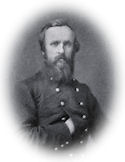
Post image for “…courage and resolution never failing though surrounded by his dead and dying comrades.”—Elizabeth Freeman Lusk to Mrs. Henry G. Thompson.

Norwich, July 28th, 1861.

Dear Cousin Louisa:

I will not commence with prefatory remarks but hasten to reply to your questions about my boy. Mr. Abbott returned from Washington to-day. He found Will well, and well cared for at the house of Lt.-Col. Elliott, whose family are bestowing upon him every imaginable kindness. Oh! dear Louisa, God’s promise has not failed, and the widow’s son is not only safe, but he has added joy to his mother’s heart by his noble conduct. Col. Elliott told Mr. Abbott he should be promoted, that his courage and prudence were rare, and eminently qualified him to be an officer. Mr. A. wept as he spoke of his appearance on the battlefield, his courage and resolution never failing though surrounded by his dead and dying comrades. The Colonel said, “that boy is not known, but he must be now.” I do not hesitate to write you this, dear friend. God knows I rejoice tremblingly, but I share him now with the country to whom he is devoting all the energies of his earnest spirit. If you or any friend feel like writing him, direct to Washington, Lieut. William T. Lusk, 10th Co. 79th Highland Regiment; he has not written even me, for he has no time, but as soon as he can be spared he hopes to come to me for a day or two. I notice by the papers he was in the hottest of the fight and that the regiment was covered “with immortal honor.” Tell Laura, as he is connected with the Highlanders, I would like to know something of his Scotch ancestry we have so often laughed about. Pray for him, my friend. God never seemed so near as in this dark hour. I know that He pities his sorrowing children, remembering “we are but dust.” With much love to all our dear Enfield friends,

I remain

Affectionately yours,

E. F. Lusk.

Post image for A Diary of American Events – July 28, 1861

—At Savannah, Ga., the funeral obsequies of Gen. Francis S. Bartow, who was killed at the battle of Bull Run, were celebrated to-day in most imposing style. There was an immense military and civic procession, comprising all the companies in the city, with detachments from the several garrisons of the neighboring forts and batteries. The cortége started from Christ Church, where an eloquent funeral sermon was preached by Bishop Elliott. The entire population of the city was present, and manifested the deepest sorrow. The bells were tolled and minute guns were fired during the march of the column. A salute of three rounds was fired by the infantry and artillery over the grave.—Charleston Mercury, July 29.

—Last night the steamer W. I. Maclay, Capt. Conway, bound from Cincinnati for St. Louis, M . was fired into at Cape Girardeau. The Maclay had landed at Cape Girardeau to discharge freight and passengers, and had no trouble whatever with any person or persons at that place. It was late at night, and very few people were seen. The officers discovered a number of tents, presenting the appearance of a camp, above the town. Soon after the boat had left the wharf to continue her trip to St. Louis, between two and three hundred shots were fired at her from shore. The shots took effect in the texas, pilot-house, and hurricane roof, some of them entering a lot of empty barrels on the roof. Two or three shots passed through the bulkheading of the texas, and one of them took effect in the head of the cook, who was asleep in his berth. It struck him on the left temple and passed around the skull, making a severe flesh wound. Another passed through the leg of a cabin boy, in the same apartment. No other damage was done to either the crew or passengers. Among the latter were about fifty soldiers, belonging to one of the Illinois regiments at Cairo, on their way home.—St. Louis Republican, July 30.

—The privateer Gordon, of Charleston, S. C., captured and carried into Hatteras Inlet the brig McGillery, of Bangor, Me., and the schooner Protector, from Cuba for Philadelphia. The privateer Mariner also captured a schooner, and the York captured the brig D. S. Martin, of Boston, Mass., with a cargo of machinery.—N. O. Delta, Aug. 1.

—A Detachment of two companies of Col. Mulligan’s regiment and three companies of the Home Guards sent to Hickory Hill, near Mount Pleasant, in Cole County, Mo., were fired on from an ambush near that place, but no one was hit. Col. Mulligan’s men captured twenty-eight rebels, among them two captains of Jackson’s forces; also, forty horses and two teams. —National Intelligencer, July 31.

—A Flag of truce came into Newport News, Va., this morning, with a proposition giving the national troops twenty-four hours to leave, and announcing that in case the place was not vacated they would force them out. The gunboat Dale, of twenty guns, at once went up from Old Point. The Albatross and Penguin were also stationed there, while the Minnesota and seven gunboats at Old Point are ready to assist should Newport News really be attacked. —Baltimore American, July 29.

—Thanksgiving Day was celebrated in the “Confederate” States, “for the success of our arms and the deliverance of our homes from the menacing hordes that have hung upon our borders like wolves upon the outskirts of the forest. We are pleased to be able to state that the day was generally observed in Memphis in accordance with the spirit of the resolution, and we believe that every pulpit echoed the thankfulness that fills the public heart”—Memphis (Tenn.) Appeal, July 30.

27th.—On my arrival here, I found our tents pitched on ploughed ground, in a swale. The bottoms of the tents were very damp, and the mud in the streets over shoe-top. I at once set to work to correct this. I had the streets all ditched on either side, the dirt thrown into the middle, and already, instead of the mud and water streets and tents, we have them so firm, smooth and dry that they are swept every day. I hope by this, and by constant care in ventilating the tents, to arrest the rapidly increasing sickness.

Having finished the above note for the day, I have, on the point of retiring, just received an order from Gen. King to be ready to move at a minute’s notice. The enemy is probably again threatening Washington. I must prepare.

The regiments called out for three months were now about disbanding, though a large number of the men at once re-enlisted for the war.

–  –  –  –  –  –  –

July 27, 10 a. m.

My dear Eliza: I have just been up to the corner to see a sorry sight, the return of the 69th Regiment—oh, so shabby, so worn and weary—all sorts of hats and shirts and some with hardly any clothes at all, staggering along under their knapsacks which they should never have been allowed to carry up Broadway. The surging mass of men and women locking arms and walking with the soldiers, was wonderful. It was a wild, tumultuous, promiscuous rush—not a march. Yesterday afternoon the 8th came through. I could see from the balcony how brown they looked and sturdy, and trimmer than the 69th. The girls and Mother saw them from Brady’s window. The cheers and applause they got down town, I suppose. There was not much of it up here—there was too much crying. Even policemen were in tears. What a dreadful collapse the “Grand Army” of the Potomac suffered. I don’t think the North needed such a lesson! Perhaps they did—perhaps the people have felt as if they could march down to Richmond whenever they chose. . . . Scott sent an inefficient general (known as a perfect windbag among brother officers) without commissariat, without organization, without proper regimental officers, against what he knew to be a fortified camp of a hundred thousand men. The one great blunder was that the battle was fought at all. All other minor blunders—and how many there were! are included in this. . . .

Jefferson Davis is free now to do what he pleases—flushed with success. Everyone says this battle has been as good to him as an increase of a hundred thousand fighting men. . . . He will perhaps attack Washington itself. The papers speak of the danger of this—and we all feel that the city is in greater peril than it was in those April days. Under such circumstances we do not quite relish your idea of going to Alexandria. You would be cut off at once, in that town, from communication or escape. One thought that checked Mother’s desire to go immediately to Washington last Monday was the idea that on reaching there she might find that women and children had been ordered to leave—for fear of an attack from Beauregard. That order may come yet. My dear sisters, I do not want to write anything depressing, but you must make up your minds after this disaster for a long war, an impoverished country, many reverses. So far, you have had but one thought —that of immediate success. General Scott’s plan of closing in on the rebels in Virginia and crushing them as in his fingers, is blown to the winds. We are to have a protracted and somewhat equal struggle, but the North is in earnest; its fault has been over-eagerness. Men there always have been enough of,—let them have proper officers; and as to money, Congress ought to be ashamed to haggle about direct taxation but pass the bill at once and provide ways and means. . . . I am very glad the boxes had all arrived safely. Next day you would get Aunt Emily’s two barrels, and Uncle Edward’s $250 in money. Buy whatever you see is needed or the surgeons and nurses want. Don’t wait for red tape. If it is mattresses, cots, pillows, spirit lamps, food, sheeting, flannel, etc. to wrap wounded men in, or what not. You can have plenty of money, and it could not be better spent than in fitting up a hospital even if that is government work. Carry wanted me to send you some money for her, but I told her I would wait and see whether you could buy the things you needed in Washington, or whether it had better be spent here. Please let me know. We shall have enough more things to fill a barrel early next week. Shall we put in the bandage roller, or are the hospital surgeons provided? I am sorry that Mrs. Leavitt did not send you a list of the contents of her boxes. . . .

Don’t save up things if you see them needed. It is easy to buy more slippers and mosquito net here, and it does not cost us any time or a stitch of effort to send more clothing. The Society has plenty on hand. Mrs. Parker jumped up with pleasure when we sent round the other day to see if she could let us have a few things for the trunk, and granted enough, as you saw, to fill two boxes and over. She was delighted at the idea of their being distributed where she could hear about it, and I must manage to put some scraps of your accounts together and tell her what you say. There is a fresh lot of handkerchiefs under way. Maria Gilman hemmed them on her machine.