Following the American Civil War Sesquicentennial with day by day writings of the time, currently 1863.

The American Civil War

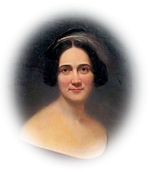
April 23d.—Note the glaring inconsistencies of life. Our chatelaine locked up Eugene Sue, and returned even Washington Allston’s novel with thanks and a decided hint that it should be burned; at least it should not remain in her house. Bad books are not allowed house room, except in the library under lock and key, the key in the Master’s pocket; but bad women, if they are not white, or serve in a menial capacity, may swarm the house unmolested; the ostrich game is thought a Christian act. Such women are no more regarded as a dangerous contingent than canary birds would be.

If you show by a chance remark that you see some particular creature, more shameless than the rest, has no end of children, and no beginning of a husband, you are frowned down; you are talking on improper subjects. There are certain subjects pure-minded ladies never touch upon, even in their thoughts. It does not do to be so hard and cruel. It is best to let the sinners alone, poor things. If they are good servants otherwise, do not dismiss them; all that will come straight as they grow older, and it does! They are frantic, one and all, to be members of the church. The Methodist Church is not so pure-minded as to shut its eyes; it takes them up and turns them out with a high hand if they are found going astray as to any of the ten commandments.

—The Montgomery (Ala.) Advertiser of this day says:—Up to yesterday morning the following military companies of this State had responded to the proclamation of the Governor, calling for 3,000 and 5,000 volunteers, respectively, for the service of the Confederate States. The list comprises fifty-one companies, which completes the requisition for 3,000, and furnishes eleven companies, or nearly a thousand men, in response to the last requisition for 5,000. There is no doubt but that in a few days the balance of the last 5,000 will be offered and accepted. Alabama has now actually in the field and ready to march about 5,400 troops. Notwithstanding this fact, the war fever has just begun to rage; and, if necessary, we verily believe that the number could be increased to forty or fifty thousand in thirty days. There are perhaps twenty counties in the State that have not as yet furnished a man, but will certainly do so. Of these troops, two regiments have already been ordered to Virginia.

—John Bell and Edwin H. Ewing, at a public meeting held at Nashville, Tenn., declared themselves in the strongest and most emphatic terms for “resistance to the attempted subjugation of the South.”—(Doc. 89.)

—Governor Moore, of Louisiana, issued an address, calling for 5,000 additional State troops. He says:—”The Government at Washington, maddened by defeat and the successful maintenance by our patriotic people of their rights and liberties against its mercenaries in the harbor of Charleston, and the determination of the Southern people forever to sever themselves from the Northern Government, has now thrown off the mask, and, sustained by the people of the non-slaveholding States, is actively engaged in levying war, by land and sea, to subvert your liberties, destroy your rights, and to shed your blood on your own soil. If you have the manhood to resist, rise, men, pride of Louisiana, in your might, in defiance of your dearest rights, and drive back this insolent, barbaric force. Like your brave ancestry, resolve to conquer or perish in the effort; and the flag of usurpation will never fly over Southern soil. Rally, then, to the proclamation which I now make on the requisition of the Confederate Government”

A number of parishes in Louisiana appropriated ten thousand dollars each for the support of the volunteers, and pledged themselves to pay fifty thousand dollars a year each as long as the war shall last.

A meeting of five hundred of the ladies of New Orleans, was held at the St. Charles Hotel, for the purpose of making arrangements for the holding of a fair to raise money for clothing the Louisiana volunteers.—N. Y. Herald, April 26.

—The Western Pennsylvania Regiment passed through Philadelphia for the seat of war. It consists of the following companies:—State Zouaves, Captain Seagrist; Turner Rifles, Captain Emlen; Seaborn Guards, Captain Winch; Ringgold Rifles, Captain Lawrence; Scott Artillery, Captain Medler; Union Light Infantry, Captain Corley; Columbia Infantry, Captain Brannan; State Guards, Captain McDowell. The whole are under the command of Lieut. Col. P. C. Cress and Major R. B. Petriken.— Phila. Inquirer, April 24.

—The New Orleans papers are convinced from the language of the Northern press, and from every possible manifestation of public opinion, that “a very considerable proportion of the people at the North are actuated by an impulse of blind, irrational and insensate hatred towards the South.”—(Doc. 90.)

—First South Carolina Regiment of Volunteers left Charleston for the seat of war on the Potomac. As the troops left for the depot in groups, there was the warm, hearty shaking of hands, the friendly “God bless you,” and the silent prayer of brothers, sisters, and mothers, offered up for the safety of South Carolina’s gallant sons, who. after months of hard service in the camp, have nobly volunteered, at the shortest notice, and without even an opportunity to visit their homes, to march to the assistance of the Old Dominion, “the Mother of States and Statesmen,” in the day of her trial.

The call made upon South Carolina has been promptly responded to. Gov. Pickens has been perfectly overwhelmed with offers of brigades, battalions, regiments, and companies, all desirous of being accepted as volunteers for Virginia. The reverence felt for her soil by South Carolinians is only equalled by the spirit and enthusiasm of the people to be the first to defend her, and, if necessary, with the best blood of the State.—Charleston Courier, April 24.—(Doc. 91.)

—An immense Union meeting was held at Brooklyn, N. Y. Robert J. Walker delivered an eloquent and forcible speech in defence of the Constitution and laws. Meetings were also held at Albion and Whitehall, N. Y., and Woodstock, Vt. At the latter, Senator Collamer spoke.—(Doc. 92.)

—The Eighth, Thirteenth, and Sixty-ninth Regiments of New York State Militia left New York for Washington.—(Doc. 93.)

—General B. F. Butler has taken military possession of the Annapolis and Elk Ridge Railroad in Maryland. Governor Hicks protests against the act, “ as it will interfere with the meeting of the Legislature.”—(Doc. 98½.)

—Sherman’s celebrated battery, consisting of ninety men and eight howitzers, passed through Philadelphia, Pa., on the route to Washington. The train containing the troops stopped in Market street, between Fifteenth and Sixteenth, which was immediately observed by the ladies of Benton street, who rushed out and vied with each other in their attention to the weary soldiers. Bread, meat, pies, and cakes, were brought forward in goodly supplies, hundreds of girls running with hot dinners just from the ranges; bakers with baskets of bread and cakes; fruiterers with baskets of apples, oranges, &c., were quickly upon the ground. The men said that they were thirsty, and in a trice there were a dozen pretty girls handing up cups of water. After the battery had been thus refreshed, a collection was taken up, and the soldiers were supplied with enough segars and tobacco to last for some days. The military cheered continually for the ladies of Philadelphia, and as the train moved off, they gave nine hearty cheers for Philadelphia, the Union, the Constitution, and the success of the Federal arms in the South.—Phila. Inquirer, April 24.

April 22nd.—To-day was fixed for the visit to Mr. Pringle’s plantation, which lies above Georgetown near the Peedee River. Our party, which consisted of Mr. Mitchell, an eminent lawyer of Charleston, Colonel Reed, a neighboring planter, Mr. Ward of New York, our host, and myself, were on board the Georgetown steamer at seven o’clock, A.M., and started with a quantity of commissariat stores, ammunition, and the like, for the use of the troops quartered along the coast. There was, of course, a large supply of newspapers also. At that early hour invitations to the “bar” were not uncommon, where the news was discussed by long-legged, grave, sallow men. There was a good deal of joking about “old Abe Lincoln’s paper blockade,” and the report that the Government had ordered their cruisers to treat the crew of Confederate privateers as “pirates” provoked derisive and menacing comments. The full impulses of national life are breathing through the whole of this people. There is their flag flying over Sumter, and the Confederate banner is waving on all the sand-forts and headlands which guard the approaches to Charleston.

A civil war and persecution have already commenced. “Suspected Abolitionists” are ill-treated in the South, and “Suspected Secessionists” are mobbed and beaten in the North. The news of the attack on 6th Massachusetts, and the Pennsylvania regiment, by the mob in Baltimore, has been received with great delight; but some long-headed people see that it will only expose Baltimore and Maryland to the full force of the Northern States. The riot took place on the anniversary of Lexington.

The “Nina” was soon in open sea, steering northwards and keeping four miles from shore in order to clear the shoals and banks which fringe the low sandy coasts, and effectually prevent even light gunboats covering a descent by their ordnance. This was one of the reasons why the Federal fleet did not make any attempt to relieve Fort Sumter during the engagement. On our way out we could see the holes made in the large hotel and other buildings on Sullivan’s Island behind Fort Moultrie, by the shot from the fort, which caused terror among the negroes “miles away.” There was no sign of any blockading vessel, but look-out parties were posted along the beach, and as the skipper said we might have to make our return-journey by land, every sail on the horizon was anxiously scanned through our glasses.

Having passed the broad mouth of the Santee, the steamer in three hours and a-half ran up an estuary, into which the Maccamaw River and the Peedee River pour their united waters.

Our vessel proceeded along shore to a small jetty, at the end of which was a group of armed men, some of them being part of a military post, to defend the coast and river, established under cover of an earthwork and palisades constructed with trunks of trees, and mounting three 32-pounders. Several posts of a similar character lay on the river banks, and from some of these we were boarded by men in boats hungry for news and newspapers. Most of the men at the pier were cavalry troopers, belonging to a volunteer association of the gentry for coast defence, and they had been out night and day patrolling the shores, and doing the work of common soldiers—very precious material for such work. They wore grey tunics, slashed and faced with yellow, buff belts, slouched felt hats, ornamented with drooping cocks’ plumes, and long jackboots, which well became their fine persons and bold bearing, and were evidently due to “Cavalier” associations. They were all equals. Our friends on board the boat hailed them by their Christian names, gave and heard the news. Among the cases landed at the pier were certain of champagne and pâtés, on which Captain Blank was wont to regale his company daily at his own expense, or that of his cotton broker. Their horses picketed in the shade of trees close to the beach, the parties of women riding up and down the sands, or driving in light tax-carts, suggested images of a large picnic, and a state of society quite indifferent to Uncle Abe’s cruisers and “Hessians.” After a short delay here, the steamer proceeded on her way to Georgetown, an ancient and once important settlement and port, which was marked in the distance by the little forest of masts rising above the level land, and the tops of the trees beyond, and by a solitary church-spire.

As the “Nina” approaches the tumble-down wharf of the old town, two or three citizens advance from the shade of shaky sheds to welcome us, and a few country vehicles and light phaetons are drawn forth from the same shelter to receive the passengers, while the negro boys and girls who have been playing upon the bales of cotton and barrels of rice, which represent the trade of the place on the wharf, take up commanding positions for the better observation of our proceedings.

There is about Georgetown, an air of quaint simplicity and old-fashioned quiet, which contrasts refreshingly with the bustle and tumult of American cities. While waiting for our vehicle we enjoyed the hospitality of Colonel Reed, who took us into an old-fashioned, angular, wooden mansion, more than a century old, still sound in every timber, and testifying, in its quaint wainscotings, and the rigid framework of door and window, to the durability of its cypress timbers and the preservative character of the atmosphere. In early days it was the grand house of the old settlement, and the residence of the founder of the female branch of the family of our host, who now only makes it his halting-place when passing to and fro between Charleston and his plantation, leaving it the year round in charge of an old servant and her grandchild. Rose-trees and flowering shrubs clustered before the porch and filled the garden in front, and the establishment gave one a good idea of a London merchant’s retreat about Chelsea a hundred and fifty years ago.

At length we were ready for our journey, and, in two light covered gigs, proceeded along the sandy track which, after a while, led us to a road cut deep in the bosom of the woods, where silence was only broken by the cry of a woodpecker, the scream of a crane, or the sharp challenge of the jay. For miles we passed through the shades of this forest, meeting only two or three vehicles containing female planterdom on little excursions of pleasure or business, who smiled their welcome as we passed. Arrived at a deep chocolate-colored stream, called Black River, full of fish and alligators, we find a flat large enough to accommodate vehicles and passengers, and propelled by two negroes pulling upon a stretched rope, in the manner usual in the ferry-boats of Switzerland.

Another drive through a more open country, and we reach a fine grove of pine and live-oak, which melts away into a shrubbery guarded by a rustic gateway: passing through this, we are brought by a sudden turn to the planter’s house, buried in trees, which dispute with the green sward and with wild flower-beds the space between the hall-door and the waters of the Peedee; and in a few minutes, as we gaze over the expanse of fields marked by the deep water-cuts, and bounded by a fringe of unceasing forest, just tinged with green by the first life of the early rice crops, the chimneys of the steamer we had left at Georgetown, gliding as it were through the fields, indicate the existence of another navigable river still beyond.

Leaving the verandah which commanded this agreeable foreground, we enter the mansion, and are reminded by its low-browed, old-fashioned rooms, of the country houses yet to be found in parts of Ireland or on the Scottish border, with additions, made by the luxury and love of foreign travel, of more than one generation of educated Southern planters. Paintings from Italy illustrate the walls, in juxtaposition with interesting portraits of early colonial governors and their lovely womankind, limned with no uncertain hand, and full of the vigor of touch and naturalness of drapery, of which Copley has left us too few exemplars; and one portrait of Benjamin West claims for itself such honor as his own pencil can give. An excellent library—filled with collections of French and English classics, and with those ponderous editions of Voltaire, Rousseau, the “Mémoires pour Servir,” books of travel and history which delighted our forefathers in the last century, and many works of American and general history— affords ample occupation for a rainy day.

It was five o’clock before we reached our planter’s house—White House Plantation. My small luggage was carried into my room by an old negro in livery, who took great pains to assure me of my perfect welcome, and who turned out to be a most excellent valet. A low room hung with colored mezzotints, windows covered with creepers, and an old-fashioned bedstead and quaint chairs, lodged me sumptuously; and after such toilette as was considered necessary by our host for a bachelor’s party, we sat down to an excellent dinner, cooked by negroes and served by negroes, and aided by claret mellowed in Carolinian suns, and by Madeira brought down stairs cautiously, as in the days of Horace and Maecenas, from the cellar between the attic and the thatched roof.

Our party was increased by a neighbouring planter, and after dinner the conversation returned to the old channel—all the frogs praying for a king—anyhow a prince—to rule over them. Our good host is anxious to get away to Europe, where his wife and children are, and all he fears is being mobbed at New York, where Southerners are exposed to insult, though they may get off better in that respect than Black Republicans would down South. Some of our guests talked of the duello, and of famous hands with the pistol in these parts. The conversation had altogether very much the tone which would have probably characterized the talk of a group of Tory Irish gentlemen over their wine some sixty years ago, and very pleasant it was. Not a man—no, not one—will ever join the Union again! “Thank God!” they say, “we are freed from that tyranny at last.” And yet Mr. Seward calls it the most beneficent government in the world, which never hurt a human being yet!

But alas! all the good things which the house affords, can be enjoyed but for a brief season. Just as nature has expanded every charm, developed every grace, and clothed the scene with all the beauty of opened flower, of ripening grain, and of mature vegetation, on the wings of the wind the poisoned breath comes borne to the home of the white man, and he must fly before it or perish. The books lie unopened on the shelves, the flower blooms and dies unheeded, and, pity ’tis, ’tis true, the old Madeira garnered ‘neath the roof, settles down for a fresh lease of life, and sets about its solitary task of acquiring a finer flavor for the infrequent lips of its banished master and his welcome visitors. This is the story, at least, that we hear on all sides, and such is the tale repeated to us beneath the porch, when the moon while softening enhances the loveliness of the scene, and the rich melody of mocking-birds fills the grove.

Within these hospitable doors Horace might banquet better than he did with Nasidienus, and drink such wine as can be only found among the descendants of the ancestry who, improvident enough in all else, learnt the wisdom of bottling up choice old Bual and Sercial, ere the demon of oidium had dried up their generous sources for ever. To these must be added excellent bread, ingenious varieties of the galette, compounded now of rice and now of Indian meal, delicious butter and fruits, all good of their kind. And is there anything better rising up from the bottom of the social bowl? My black friends who attend on me are grave as Mussulman Khitmutgars. They are attired in liveries and wear white cravats and Berlin gloves. At night when we retire, off they go to their outer darkness in the small settlement of negro-hood, which is separated from our house by a wooden palisade. Their fidelity is undoubted. The house breathes an air of security. The doors and windows are unlocked. There is but one gun, a fowling-piece, on the premises. No planter hereabouts has any dread of his slaves. But I have seen, within the short time I have been in this part of the world, several dreadful accounts of murder and violence, in which masters suffered at the hands of their slaves. There is something suspicious in the constant never-ending statement that “we are not afraid of our slaves.” The curfew and the night patrol in the streets, the prisons and watch-houses, and the police regulations, prove that strict supervision, at all events, is needed and necessary. My host is a kind man and a good master. If slaves are happy anywhere, they should be so with him.

These people are fed by their master. They have half a pound per diem of fat pork, and corn in abundance. They rear poultry and sell their chickens and eggs to the house. They are clothed by their master. He keeps them in sickness as in health. Now and then there are gifts of tobacco and molasses for the deserving. There was little labor going on in the fields, for the rice has been just exerting itself to get its head above water. These fields yield plentifully; the waters of the river are fat, and they are let in whenever the planter requires it by means of floodgates and small canals, through which the flats can carry their loads of grain to the river for loading the steamers.

(Tuesday, April 23rd)

On Tuesday morning we came to an anchor, and were told the ship was off the Naval Academy at Annapolis, on the Chesapeake Bay. Our experience the past two days has been most unpleasant. The ship is outrageously crowded from deck to keelson; towards evening of the first day out the wind began to blow, increasing until midnight, when it blew a gale and rain fell in torrents. Those of us who were quartered on deck got promptly soaked through, and as a rule were horribly seasick, with no conveniences, and packed literally like sardines in a box; the state of affairs may readily be imagined by one who has been to sea, but it is difficult to describe. Seasickness is a dreadful leveler of rank and destroyer of the ordinary amenities of life; every one is indifferent to the wants of others and utterly without sympathy. There were a few facetious fellows, too gross to feel the effects of the rolling of the ship themselves, who took a fiendish delight in dangling pieces of fat pork from the end of a string in the faces of those less gross, and this little pleasantry usually succeeded in producing the desired effect. There were many of us who wished more than once that we had never been born.

At 5 P. M. the first day out we fell in for dinner, struggled up to the galley, and there received a chunk of salt pork and large slice of bread, which we ate standing, bread in one hand, meat in the other. My piece of meat had a large bone in it, and smelt so badly that I threw it overboard to the fishes, and ate the bread alone. As the wind was freshening every minute, and the ship beginning to roll suspiciously, my appetite was not of the best, and later on entirely disappeared. Monday the wind went down and it stopped raining, but we did not get dried out, and as we had no shelter, were much the worse for want of sleep. There is not much romance about this, certainly, but we are beginning to get experience.

This morning, Tuesday, we found ourselves in company with five other vessels, all packed with troops similar to our own, convoyed by a small cutter called the Harriet Lane, a handsome craft carrying a couple of guns, and regular man-of-war crew. She is ready for action and looks quite warlike. Abut nine o’clock we anchored, rations were issued, including hot coffee, the band shook themselves together and played some stirring airs, and as the sun came out just about this time, we soon forgot our little troubles and became thoroughly interested in the magnificent view around us. The bay was smooth as glass, all the ships were gay with bunting, and crowds of armed men were mustering on every deck, while their bands were playing, sending their martial strains far over the silvery surface of the placid waters. Surely this is a small but beautiful picture of glorious war that we have dreamed of so much. Some time afterwards a tug boat came puffing along, and reported to the officer commanding the Lane that the rebels were reported in force ashore, intending to dispute our landing. In consequence the Lane steamed in towards shore, guns shotted and run out; when she got pretty close she lowered boats, armed with howitzers and marines, and sent them in to land and reconnoiter the town. We knew Maryland was a questionable state, being about evenly divided in its sympathies, and, consequently, were greatly interested in the outcome of the present affair. If they proved friendly, our chances would be greatly improved; on the contrary, if they opposed our landing, the capital might be in serious danger. After a good deal of delay and manœuvering, the boat’s crews landed, finding nobody to oppose them. This was signaled to the Lane, when our ship was immediately ordered to weigh anchor, go in and disembark the regiment. We got aground, and were transferred to the steamer Boston, and then landed at the Naval Academy docks. The Academy we found deserted, the students scattered, and only a few men in charge. We stacked arms, broke ranks, and received rations, coffee, meat (the same old salt pork), and bread, but we did not confine ourselves to this diet; the grounds swarmed with negroes, men and women, who had for sale, in abundance, eggs, pies, butter, and milk; we soon bought them out, and for the first time since leaving home fared sumptuously. We appreciated it immensely, not yet being used to hard living and roughing it, and miss our regular meals prodigiously.

There were no white persons in the camp, nor any white men in town; all had disappeared, the negroes say, to join the rebel army. We remained overnight for want of transportation for the quartermaster’s department, and were quartered in some of the many class-rooms. We heard various rumors about the doings of the rebels in this neighborhood, and since dark have seen many blue lights and rockets in the air, no doubt signals to warn their friends of our arrival; we conclude rail traffic between here and Washington is destroyed, from the reports of the negroes, and that we shall have to march, instead of going by train, as was expected; and possibly have to fight, if, as is reported, some organized rebel troops are in the neighborhood. Marching in the condition we are in, loaded down with satchels, bundles, etc., is going to be very tiresome. It is nearly thirty miles to the junction, the place we must reach before we can go by rail.

April 22nd.— Early a few mornings since, I called on Gov. Wise, and informed him that Lincoln had called out 70,000 men. He opened his eyes very widely and said, emphatically, “I don’t believe it.” The greatest statesmen of the South have no conception of the real purposes of the men now in power in the United States. They cannot be made to believe that the Government at Washington are going to wage war immediately. But when I placed the President’s proclamation in his hand, he read it with deep emotion, and uttered a fierce “Hah!” Nevertheless, when I told him that these 70,000 were designed to be merely the videttes and outposts of an army of 700,000, he was quite incredulous. He had not witnessed the Wide-Awake gatherings the preceding fall, as I had done, and listened to the pledges they made to subjugate the South, free the negroes, and hang Gov. Wise. I next told him they would blockade our ports, and endeavor to cut off our supplies. To this he uttered a most positive negative. He said it would be contrary to the laws of nations, as had been decided often in the Courts of Admiralty, and would be moreover a violation of the Constitution. Of course I admitted all this; but maintained that such was the intention of the Washington Cabinet. Laws and Courts and Constitutions would not be impediments in the way of Yankees resolved upon our subjugation. Presuming upon their superior numbers, and under the pretext of saving the Union and annihilating slavery, they would invade us like the army-worm, which enters the green fields in countless numbers. The real object was to enjoy our soil and climate by means of confiscation. He poohed me into silence with an indignant frown. He had no idea that the Yankees would dare to enter upon such enterprises in the face of an enlightened world. But I know them better. And it will be found that they will learn how to fight, and will not be afraid to fight.

—Several delegations of citizens of Maryland waited upon President Lincoln, to endeavor to procure some countermand of the order for troops to march to Washington. One delegation of thirty, from five “Young Men’s Christian Associations” of Baltimore, had a prolonged interview, but made no impression upon him.—N. Y. Times, April 25.

—Gov. Hicks presented to the President a communication again urging the withdrawal of troops from Maryland, a cessation of hostilities, and a reference of the national dispute to the arbitrament of Lord Lyons. To this the Secretary of State replied, that the troops were only called out to suppress insurrection, and must come through Maryland, as that was the route chosen for them by the Commander-in-Chief, and that our troubles could not be “referred to any foreign arbitrament.”—(Doc. 84.)

—A meeting was held in Clarksburg, Harrison county, Virginia. Resolutions were adopted censuring severely the course pursued by Governor Letcher and the Eastern Virginians. Eleven delegates were appointed to meet delegates from other northwestern counties, to meet at Wheeling, May 13th, to determine what course should be pursued in the present emergency. Reports thus far received speak encouragingly of the Union sentiment in Western Virginia.—National Intelligencer, April 29.

—The Twenty-fifth Regiment of New York Militia arrived at New York from Albany. The regiment numbers over five hundred men, and is commanded ‘by Colonel M. K. Bryan.—N. Y. Tribune, April 23.

—A meeting was held at Palace Garden, in New York, for the purpose of organizing a “Home Guard” of men over 45 years. The following Committee was appointed to carry out the objects of the meeting: Major A. M. Bininger, Col. Charles B. Tappen, Col. Burr Wakeman, Samuel Hotaling, Esq., and Judge Edmonds. Upwards of 300 names were enrolled.—N. Y. Tribune, April 25.

—The Baltimore American of this day contains a recapitulation of the killed and wounded during the riot that occurred at Baltimore on the 19th April.—(Doc. 85.)

—An embargo upon “provisions of any kind,” and upon steamboats, was declared by the Mayor and Police Board of Baltimore.—(Doc. 86.)

—The Charleston Mercury of to-day, in an article headed “President Lincoln a Usurper,” concludes that he will “deplore the `higher-law’ depravity which has governed his counsels. Seeking the sword, in spite of all moral or constitutional restraints and obligations, he may perish by the sword. He sleeps already with soldiers at his gate, and the grand reception-room of the White House is converted into quarters for troops from Kansas—border ruffians of Abolitiondom.”

—At Lexington, Ky., between two and three hundred Union men assembled, raised the Stars and Stripes, and expressed their determination to adhere to them to the last. Speeches were made by Messrs. Field, Crittenden, Codey, and others. The most unbounded enthusiasm prevailed, and the speakers were greeted with great applause.—Phila. Inquirer.

—A large and enthusiastic meeting of the residents of Chestnut Hill, Pa., and its vicinity, was held to “counsel together in the present alarming condition of the country, and take some steps to protect it from the assaults of traitors.”—Idem.

—Robt. E. Lee, late of the United States Army, was nominated by the Governor and unanimously confirmed by the Convention as “Commander of the military and naval forces Virginia.”—National Intelligencer, April 27.

—The Charleston Mercury of this day says that “the officers of the army and navy of the Confederate States, and captains sailing under letters of marque, will greatly oblige the proprietors of that paper by furnishing sketches and incidents of the expected conflict between our gallant soldiers and their enemies.

“When supplied exclusively, a liberal compensation will be allowed.”

—The United States Arsenal at Fayetteville, North Carolina, surrendered to the State authorities. It contains a large number of arms.

—Governor Ellis of North Carolina, called for 30,000 volunteers additional to the regular militia, and all the organized corps are under orders to be in readiness at a moment’s notice. —Boston Transcript, April 29.

—Information was received by Gov. Curtin that Lieut. Jennifer, late of the United States Army, stationed at Carlisle Barracks, Pa., had fled from that place. Gov. Curtin, by aid of the telegraph facilities in his possession, succeeded in having him arrested at Hanover, in York County, Pa. It is said that Jennifer has been communicating information to the rebels as to the exact condition of things at Carlisle, and of the movements of Gov. Curtin’s troops.—N. Y. Times, April 23.

—The N. Y. City Common Council passed an ordinance appropriating $1,000,000 for outfit and equipment and for the families of volunteers.

—Several hundred uniforms made for the Southern army were seized at 4 Dey street, N. Y. City.—Idem.

—Gen. Thomas Jones, under instructions received from Governor Rector, seized at Napoleon, Arkansas, a large quantity of Government military supplies, consisting of one hundred and forty thousand ball cartridges, one hundred Maynard rifles, two hundred cavalry saddles, and five hundred sabres.—Memphis Argus, April 25.

—A. H. Stephens, Vice-President of the Southern Confederacy, arrived at Richmond, Va. In the evening he was serenaded, and made a speech, in which he said, that if the Federal Administration made war upon Maryland, the whole South would rally to her aid.—(Doc. 87.)

—A meeting of the Bench and Bar of the city of New York, in view of the present crisis in the history of the country, was held at the Superior Court room, in that city. The judges and ex-judges of the different benches were present, and nearly every law firm in the city had its representative. Judge Daniel P. Ingraham presided; speeches were made, and patriotic resolutions were adopted.—(Doc. 88.)

—In the evening a large meeting of the citizens of Westchester, N. Y., was held in Morrisania.—N. Y. Tribune, April 23.

—Father Rafina, priest of the Montrose Avenue Catholic church, Williamsburg, N. Y., with his own hands raised the American flag upon the top of his church. The ceremony was witnessed by at least two thousand people, who greeted the glorious emblem with cheer after cheer as it waved majestically over the sacred edifice. The reverend father addressed the assemblage in a few appropriate remarks, which were received with marked enthusiasm.—Idem.

—Union meetings were held at Geneva and Adams, N. Y. At Geneva, speeches were made by Judge Folger and others, and a large sum of money was subscribed and guaranteed for the families of the volunteers. At Adams the utmost enthusiasm prevailed.—Albany Journal, April 24.

—The New York Seventh Regiment arrived at Annapolis, Md., and were joined there by the Eighth Massachusetts Regiment, with Gen. Butler in command.

An attack upon the School-ship Constitution was anticipated in Annapolis, and she was drawn out of the harbor.—N. Y.  Times, April 25.

—Secretary Cameron, in an official letter, conveyed the thanks of the Federal Government to Major Anderson for his conduct at Fort Sumter, as follows

War Department,
Washington, April 22, 1861.

Major Robert Anderson, late Commanding Officer of Fort Sumpter:
My Dear Sir: I am directed by the President of the United States to communicate to you, and through you to the officers and men under your command at Forts Moultrie and Sumter, the approbation of the Government of your and their judicious and gallant conduct there; and to tender to you and them the thanks of the Government for the same.

I am, very respectfully,
………..Simon Cameron,
……………Secretary of War.

National Intelligencer, April 24.

April 21st.—In the afternoon I went with Mr. Porcher Miles to visit a small farm and plantation, some miles from the city, belonging to Mr. Crafts. Our arrival was unexpected, but the planter’s welcome was warm. Mrs. Crafts showed us round the place, of which the beauties were due to nature rather than to art, and so far the lady was the fitting mistress of the farm.

We wandered through tangled brakes and thick Indian-like jungle, filled with disagreeable insects, down to the edge of a small lagoon. The beach was perforated with small holes, in which Mrs. Crafts said little crabs, called “fiddlers” from their resemblance in petto to a performer on the fiddle make their abode; but neither them nor “spotted snakes” did we see. And so to dinner, for which our hostess made needless excuses. “I am afraid I shall have to ask you to eke out your dinner with potted meats, but I can answer for Mr. Crafts giving you a bottle of good old wine.” “And what better, madam,” quoth Mr. Miles, “what better can you offer a soldier? What do we expect but grape and canister?”

Mr. Miles, who was formerly member of the United States Congress, and who has now migrated to the Confederate States of America, rendered himself conspicuous a few years ago when a dreadful visitation of yellow fever came upon Norfolk and destroyed one-half of the inhabitants. At that terrible time, when all who could move were flying from the plague-stricken spot, Mr. Porcher Miles flew to it, visited the hospitals, tended the sick; and although a weakly, delicate man, gave an example of such energy and courage as materially tended to save those who were left. I never heard him say a word to indicate that he had been at Norfolk at all.

At the rear of the cottage-like residence (to the best of my belief built of wood), in which the planter’s family lived, was a small enclosure, surrounded by a palisade, containing a number of wooden sheds, which were the negro quarters; and after dinner, as we sat on the steps, the children were sent for to sing for us. They came very shyly, and by degrees; first peeping round the corners and from behind trees, oftentimes running away in spite of the orders of their haggard mammies, till they were chased, captured, and brought back by their elder brethren. They were ragged, dirty, shoeless urchins of both sexes; the younger ones abdominous as infant Hindoos, and wild as if just caught. With much difficulty the elder children were dressed into line; then they began to shuffle their flat feet, to clap their hands, and to drawl out in a monotonous sort of chant something about the “River Jawdam,” after which Mrs. Crafts rewarded them with lumps of sugar, which were as fruitful of disputes as the apple of discord. A few fathers and mothers gazed at the scene from a distance.

As we sat listening to the wonderful song of the mocking-birds, when these young Sybarites had retired, a great, big, burly red-faced gentleman, as like a Yorkshire farmer in high perfection as any man I ever saw in the old country, rode up to the door, and, after the usual ceremony of introduction and the collating of news, and the customary assurance “They can’t whip us, sir!” invited me then and there to attend a fête champêtre at his residence, where there is a lawn famous for trees dating from the first settlement of the colony, and planted by this gentleman’s ancestor.

Trees are objects of great veneration in America if they are of any size. There are perhaps two reasons for this. In the first place, the indigenous forest trees are rarely of any great magnitude. In the second place, it is natural to Americans to admire dimension and antiquity; and a big tree gratifies both organs— size and veneration.

I must record an astonishing feat of this noble Carolinian. The heat of the evening was indubitably thirst-compelling, and we went in to “have a drink.” Among other things on the table were a decanter of cognac and a flask of white curacoa. The planter filled a tumbler half full of brandy. “What’s in that flat bottle, Crafts?” “That’s white curacoa.” The planter tasted a little, and having smacked his lips and exclaimed “first-rate stuff,” proceeded to water his brandy with it, and tossed off a full brimmer of the mixture without any remarkable ulterior results. They are a hard-headed race. I doubt if cavalier or puritan ever drank a more potent bumper than our friend the big planter.

(Sunday, April 21st)

I LEFT home at 7 A. M., satchel in hand, crossed the ferry, and soon arrived at the armory. It was already filled with men of the regiment receiving their arms and equipments. We were furnished with a Springfield musket, bayonet, cartridge-box, cap-pouch, haversack, and blanket. Our new uniform were not ready, and so the greater part of the regiment appeared in every-day clothes and hats. Every company had a few regularly equipped men, however, so that we had some little military appearance. The greatest difficulty was an absence of knapsacks, which necessitated carrying valises, a very awkward arrangement, giving us more the appearance of a lot of emigrants than a regiment of soldiers.

About two hours after I joined every man had been furnished with all there was for him, and we were standing for the first time shoulder to shoulder in the ranks. The roll was called, and all present mustered into the state’s service. Immediately afterwards we marched downstairs into Bond Street, wheeled into column by platoons, and marched into and then down Broadway to Cortlandt Street, thence to pier 4, North River, where we embarked on board the steamship R. R. Cuyler.

On reaching the street from our armory we found ourselves almost unable to move on account of the enormous crowd, a magnificent crowd too, overflowing with enthusiastic loyalty and good nature, filling the air with endless cheers and patriotic songs; there were many, too, who shed tears, — mothers, wives, sweethearts, sisters, who were seemingly alone fearful of results. I felt very sorry for many of them. It is easy for us, amidst constant excitement and ever-varying circumstances, to keep our spirits up, but to these poor women at home, who can only wait, it must be very trying.

As the head of the column turned down Broadway it was confronted by a dense mass of humanity, filling the street from side to side. The doors, windows, and roofs of every building on Broadway and those adjoining, commanding a view of the line of march, were jammed with crowds of people waving handkerchiefs and flags, and cheering with all their might and main. At the corners of some of the streets were steam fire-engines tooting their whistles, and everywhere myriads of starry banners fluttering in the breeze. The police, gradually and with much difficulty, forced a passage through this immense crowd, and we followed marching to the music of our splendid band, amid the yells and cheers of the ever-increasing multitudes. They not only cheered and sang and shook hands and hugged us, but filled us up with every imaginable thing; as we were obliged to halt every few minutes, they closed in amongst us and delayed our progress sadly. We were nearly three hours in marching from Astor Place to Cortlandt Street, and on account of our baggage, very much fatigued. Individually, I got along very well, wearing a uniform frock coat, and carrying all that I had wrapped in a rubber blanket strapped to my back. Most of the men, however, carried valises in their hands. At last we reached the dock and marched directly on board the ship. She had capacity for about three hundred souls; we mustered eleven hundred in all, and hardly managed to find standing room. However, we got on board, and very shortly afterwards the vessel’s lines were cast off, the whistle blew, and the good ship left her dock and headed down the stream amid the most tremendous cheering, yelling, and screeching one can possibly imagine.

The docks and vessels in the vicinity were crowded with people, many of whom amused themselves bombarding the ship with oranges; myriads of handkerchiefs and small flags and lusty arms waved us an affectionate good-bye, and amidst this glorious and magnificent send-off, we steamed away and were soon well down the lower bay, our destination unknown, except that we were to meet the enemies of our country. We go forward in a great cause, confident of victory, delighted with the surroundings, and happy in the knowledge that the whole city we leave behind us look upon us as their representatives, and will diligently look after our necessities while we look after the enemy.

New Market, April 21,1861.

Reached here this morning in good health and in  spirits as good as could he expected, considering the  bloody prospect ahead and the sad hearts left at home. It is bad enough. I have no time to think of my business at home. My duties now for my State require every energy of mind and body which I can devote to them. Do just as you please. If you think proper stay in town and leave all matters and keys on the farm in charge of John Fitzgerald.


—The railroad between Philadelphia and Baltimore was taken possession of by the U. S. Government. Orders were given from the Navy Department at Washington to the officers of the various United States vessels, that all persons found sailing under Jefferson Davis’ letters of marque and reprisal be treated as pirates. That the contumacious be immediately hung from the yard-arms, and the crew and the more penitent officers be placed in irons to await their trial as ocean brigands.—Times, April 21.

—The people of Oswego and Rochester, N. Y., Toledo, Dayton, and Zanesville, Ohio, subscribed large sums of money for the support of the volunteers and their families; at the latter place, large property holders agreed to give rent free to volunteers during their absence.— Albany Journal.

Scott telegraphed to Senator Crittenden of Kentucky, as follows:

“I have not changed; have no thought of changing; always a Union man.”—(Doc. 78.)

—George William Brown, mayor of Baltimore, Md., had a consultation with the President of the United States, in reference to the passage of northern troops through Baltimore. On his return from Washington, the Mayor submitted to the people a statement as to his interview with the President.—(Doc. 79.)

—The Worcester third battalion of Rifles, arrived at New York. They are commanded by Major Charles Devens, and number 266 men, officered as follows: Company A, Worcester City Guard, Capt. A. B. R. Sprague; First Lieut., J. Pickett; Second Lieut., O. Moulton; Third Lieut., G. Egra.

Company C, Emmett Guard, Capt McConville; First Lieut., F. McCafferty; Second Lieut., M. O. Driscoll; Third Lieut., T. O’Niel; Fourth Lieut., — Melvin.—Times, April 22.

—A mass meeting of citizens, numbering many thousands, was held in Boston, Mass., this forenoon, and was addressed by Fletcher Webster, Charles L. Woodbury, and many distinguished citizens. The meeting was to raise a regiment for Fletcher Webster, and was completely successful. The most intense enthusiasm prevailed among the crowd. The meeting continued till nearly night. It was a remarkable expression of the entire voice of our people.—N. Y. Tribune, April 22.

—The First Regiment of Rhode Island Volunteers passed through New York, on their way to the South. Governor Sprague accompanies these troops, as commander in chief of the Rhode Island forces. His staff consists of Colonels Frieze, Goddard, Arnold, Capt. A. W. Chapin, Assistant Adjutant-General.—(Doc. 80.)

—The Sixth, Twelfth, and Seventy-first Regiments, New York State Militia, left New York for Washington this day, (Sunday.) The people were early astir, and by 10 o’clock every available spot where a human being could stand, was occupied, throughout the entire length of Broadway; and from near Canal-street to Grace Church, not only the sidewalks, but the whole of the street, was densely thronged. Every window, door, stoop, balcony, and house-top, were alive with human beings, of every age, sex, and condition, awaiting the marching of the Regiments, which it was known would depart during the day for the seat of Government, or other destination where their services might be required. It was some time after the bells had summoned the worshippers to their respective churches before the troops made their appearance. As they marched along, no language can do justice to the enthusiasm with which the assembled multitude greeted them. Cheers from ten thousand voices swelling in prolonged chorus, the waving of handkerchiefs by fair hands, the display of flags and streamers throughout the route of march, made the scene one of the most animated and exciting ever witnessed in the city.—Times, April 22.

—The United States branch mint at Charlotte, North Carolina, was seized by the State authorities. No resistance was offered. Colonel Bryce now holds it with a military force, under orders from Governor Ellis.—N. Y. Evening Post, April 29.

—Wendell Phillips delivered a discourse in Boston on the present rebellion. Some time ago he made a speech deprecating, in the most emphatic manner, any appeal to arms, as certain to result in the renewed and permanent triumph of slavery. The people of the North, he said, would not fight, and the first result of a military demonstration would be the complete surrender of the North, and the concession of everything that might be demanded at their hands.—(Doc. 81.)

—Andrew Johnson, U. S. Senator from Tennessee, passed through Lynchburg, Va., on his way from Washington to Tennessee. A large crowd assembled and groaned at him. They offered every indignity, and efforts were made to take him off the cars. Mr. Johnson was protected by the conductor and others. He denied sending a message asserting that Tennessee should furnish her quota of men.—Commercial Advertiser, April 26.

—The citizens of Baltimore were fearfully excited on account of a rumored descent upon them by Federal troops from Cockeysville, seventeen miles distant from the city; but at night the excitement subsided on receiving intelligence that the troops had been turned back to Harrisburg, Pa., by order of Gen. Scott.—N. Y. Tribune, April 26.

—In nearly all the churches in New York—and probably in a majority of churches throughout the country—the sermons of to-day were mainly in reference to the war. Many congregations have made the day an occasion for patriotic contributions for the outfit of volunteers, or for the support of their families. In the Church of the Puritans in Brooklyn, (although Mr. Beecher, the pastor, was absent, and the services were conducted by Rev. H. D. Northrup of Brooklyn,) a letter was read from the Thirteenth Regiment N. Y. S. M., asking for uniforms for recruits—and the response was a collection of about $1,100 for that patriotic purpose. In the Broadway Tabernacle, the pastor, Rev. J. P. Thompson, D. D., preached a sermon in the evening on “God’s Time of Threshing.” The choir performed “The Marseillaise” to a hymn composed for the occasion by the pastor. A collection was taken for the Volunteers’ Home Fund amounting to $450—to which a member of the congregation afterwards added $100. Dr. Bethune’s sermon was from the text: “In the name of our God we will set up our banners.” In Dr. Bellows’ church the choir sang “The Star-Spangled Banner,” which was vigorously applauded by the whole house. At Grace church (Episcopal) Dr. Taylor began by saying, “The Star-Spangled Banner has been insulted.” The gallant Major Anderson and his wife attended service at Trinity. At Dr. McLane’s Presbyterian church, Williamsburg, “The Star-Spangled Banner” was sung. Dr. T. D. Wells (Old-School Presbyterian) preached from the words: “He that hath no sword, let him buy one.” Dr. Osgood’s text was: “Lift up a standard to the people.” Many of the churches—of all denominations—are sending some of their most active members to the field as volunteers.—Independent, April 25.

—The Fifth Regiment of Massachusetts Militia, Col. Lawrence, with the Boston Flying Artillery, Major Cook, left Boston for New York at 7 o’clock this morning. The Third Battalion of Rifles, Major Stevens, left Worcester last night for New York. Massachusetts has within six days responded to the President’s proclamation, with five full regiments of infantry, a battalion of rifles, and a splendid corps of flying artillery. The artillery take six brass 6-pounders, with horses fully equipped.—N. Y. Times, April 22.

—A meeting of Californians was held in New York to take measures for the formation of a California Regiment. The meeting was organized by the nomination of J. C. Birdseye as chairman, and speeches were made, and resolutions sustaining the Union and the Government were adopted.—(Doc. 82.)

—The Liverpool (Eng.) Times publishes a remarkable article on the political troubles in the United States.—(Doc. 88.)

—The burial of the American flag was publicly celebrated at Memphis, Tennessee.—N. Y. Express, April 29.