Following the American Civil War Sesquicentennial with day by day writings of the time, currently 1863.

The American Civil War

FRIDAY 8

Mercury down to 8 this morning, the coldest so far. It is 18 tonight, but no snow on the ground. The wind last night was terrific. It did much damage. Quite a fire occured on 7th St. (Incendiary). Went down to the Ave, bot Paleys Philosophy for twenty five cts, the New York papers. Heard no particular news and came home, found our next door neighbor Mr Bartlett, he staid an hour or two. He is in the State Dept and a Virginian. Col. Hayne of S.C. (Commr) has got his reply from the Govt to his demand for surrender of Ft Sumpter. An attack on it is now Expected.

______

The three diary manuscript volumes, Washington during the Civil War: The Diary of Horatio Nelson Taft, 1861-1865, are available online at The Library of  Congress.

Jane Stuart Woolsey to Cousin Margaret Hodge.

Feb. 7, 1861.

Night before last a Virginia gentleman said to us: “Don’t be too sanguine. Union does not mean in Virginia what it means in New York. There it means only delay—it means Crittenden’s compromise; it means secession, not today but tomorrow.” The same gentleman said: “Floyd was no gentleman. No Virginia gentleman would ask him to dinner” (the climax of earthly honors I suppose) and that “he was intoxicated at the Richmond dinner and not responsible for his speech.” This Virginian said he would “stake his existence,” or something of the sort, on the honor of the South in paying, to the last cent, everything it owes the North. As an offset to this, Mr. Lockwood last night repeated to us the contents of three letters he had read yesterday, sent to acquaintances of his in answer to requests for payment. One said: “I shall pay, of course, every farthing I owe you, in cash, but not till I pay it in the currency of the Southern Confederacy.” Another sent a note to the effect: “I promise to pay, etc., five minutes after demand, to any Northern Abolitionist the same coin in which we paid John Brown, endorsed by thousands of true Southern hearts.” The third said: “I cannot return the goods, as you demand, for they are already sold, and the money invested in muskets to shoot you— Yankees!” Georgy was at a party last night at Amy Talbot’s, where nothing but politics was talked. Uncle Edward has just popped in, for a minute, and says: “All I am afraid of now is that Virginia and the other Border states will stay in; and we shall have the curse of their slavery on our shoulders without the blessings of a complete union.”

Dr. Roosevelt dined with us on Saturday, and I said: “What do you go for, Doctor?” “I go for gun-powder!” he answered. Mrs. Eliza Reed hears from her brother-in-law, a clergyman in Beaufort, S. C., that she “ought to be very thankful that her property is safely invested at the South” (partly in his own hands) and that he is “sorry he is not able to forward her the interest now due,” the fact being that she has not had a cent of her income this winter.

One more anecdote and then my gossip is over. Mrs. Dulany overheard two negresses talking on a corner in Baltimore. “Wait till the fourth of March,” said one of them, “ and then won’t I slap my missus’ face!”

ABRAHAM LINCOLN was inaugurated President of the United States on the fourth of March, 1861. In closing his inaugural address he said to the Southern seceders:
“In your hands my dissatisfied fellow countrymen, and not in mine, is the momentous issue of Civil War. You can have no conflict without being yourselves the aggressors. You have no oath registered in Heaven to destroy the government, while I shall have the most solemn one to preserve, protect, and defend it.”

PENSACOLA HARBOR, FLA., February 7, 1861.

Col. L. THOMAS, Assistant Adjutant-General, U. S. Army:

SIR: I have the honor to report that I arrived on this station yesterday in the U. S. steamer Brooklyn, with Company A, First Artillery. I met orders here which prevent the landing of my company or the re-enforcement of the garrison of Fort Pickens at present. Yesterday I landed at Fort Pickens, assumed command of the forces on the station, inspected the defenses, and had a consultation with Lieutenant Slemmer. I am compelled to remain on board the Brooklyn for the present, and can, of course, only give general instructions to Lieutenant Slemmer. I am sorry to inform the Department that I found Fort Pickens in a very inefficient state of defense. At the time Lieutenant Slemmer removed his command to Fort Pickens there were only forty guns mounted in the fort. At present there are fifty-four in position. The accompanying sketch indicates the position and class of guns now in position; total, fifty-four of all kinds.

Lieutenant Slemmer has with him only forty-six enlisted men for duty, and thirty ordinary seamen from the yard at this station, and the latter are entirely untrained, insubordinate, and of but little use in case of attack. There are fifty-seven embrasures that are unprovided with cannon, and are only about seven feet from the bottom of the ditch, and at present but few of them have only the common wooden shutter, presenting only a slight obstacle to an enemy. There are only very imperfect means of barricading them. Such as they are, however, I have given orders to be immediately employed.

Lieutenant Slemmer has been obliged to employ his command in getting guns into position and in barricading the embrasures. He is obliged to keep one-half of his men under arms every night, and they are nearly all exhausted with fatigue. The guns and carriages and implements are all old, and nearly unserviceable. I have made a requisition direct on the Department for the necessary supply of guns, carriages, and ammunition. The supply of this last is very inadequate. There is no ammunition for the columbiads, no cartridge bags for them, nor flannel to make any. In fact, had it been the intention of the Government to place the fort in the state to render its defense impossible, it could not have been done more efficiently than it has been done. The post is without any medical officer, and if it is intended to defend it there should be an Engineer officer sent at once to the station. I trust that the Department will immediately order that the supplies requested be sent. There are no bunks either for the hospital or for the troops, and but little bedding for the sick. I request a supply may be sent. There are plenty of provisions for the present, although I should like some desiccated vegetables and supplies for the officers. I  would mention that all of the troops will be compelled to live in open casemates, and many of them will soon be on the sick-list.

The seceders have a considerable force in and about Pensacola; what number I am unable to say positively, but they are estimated at about 1,700 men. They are disorderly, and very unwilling to be controlled. Their leaders, from what I can learn, I believe are sincere in their intention to observe the armistice, but their ability to control the men under their command is very doubtful. They are engaged in erecting batteries, are making sand bags, &c. They have plenty of means of transporting their troops to Santa Rosa Island, and can attack the fort on all sides at once. At present there is not one trained man to a gun within the fort. Should the enemy decide to attack, it is exceedingly probable that he might succeed in penetrating into the fort before my company could be landed or any succor could arrive from the fleet. I should therefore urge upon the Department the necessity of the fleet taking up a position such as to prevent the landing of any forces within one and a half miles of the fort; this would give time to provide for the defense of the work and the landing of the troops from the fleet; otherwise we may have the mortification and disgrace of seeing the fort taken by a body of untrained troops under our very noses.

Should the armistice be broken, my company, all the marines, and as many sailors as may raise the garrison to four hundred men should be immediately landed. All of the advantages of the present armistice are entirely on the side of the seceders. I would therefore urge upon the Department the necessity of immediately re-enforcing the garrison. The two additional companies ordered to Forts Taylor and Jefferson are not immediately required for the defense of those works. In fact, in their present state, and with the forces now in them, they would be stronger than Fort Pickens will be when garrisoned with four hundred men. Captain Meigs kindly offered his services, if necessary, to assist in the defense of this place, and I request the Department that he may be ordered to repair to this place.

Lieutenant Slemmer has-done all that it has been possible to do with the small force under his command. His resolution to defend his post at all hazards evinces the highest moral courage on his part, but at the same time I must state that with any amount of vigor on the part of the assaulters his defense would have been hopeless. His resolution has probably been the means of preserving Fort Pickens from the seceders.

Yours, &c.,

I. VOGDES,
Captain, First Artillery.

P. S.–I must not be understood as recommending any violation of the existing armistice, but the collection of an amount of troops on the station as may be necessary for the defense should anything occur to rupture the present armistice.

FORT TAYLOR, KEY WEST, FLA.,……….
February 6, 1861.

SIR: Nothing has occurred at Key West since my last communication to disturb my relations with its citizens. It is very doubtful now if any attempt will be made upon this fort. I have transferred seven more 8-inch columbiads to Major Arnold, which will give him additional strength if ammunition is furnished him by the Ordnance Department. My powder is very bad; also friction tubes. A supply should be sent here immediately.

Very respectfully, your obedient servant,

J. M. BRANNAN, Captain, ……….
First Artillery, Commanding.

Lieut. Col. L. THOMAS,
……....Asst. Adjt. Gen., Headquarters Army, Washington City, D.C.

WAR DEPARTMENT,
Washington, February 6, 1861.

Hon. I. W. HAYNE,
Attorney-General of the State of South Carolina:

SIR: The President of the United States has received your letter of the 31st ultimo,¹ and has charged me with the duty of replying thereto. In the communication addressed to the President by Governor Pickens, under date of the 12th of January,¹ and which accompanies yours, now before me, his excellency says:

I have determined to send to you Hon. I. W. Hayne, the attorney-general of the State of South Carolina, and have instructed him to demand the surrender of Fort Sumter, in the harbor of Charleston, to the constituted authorities of the State of South Carolina. The demand I have made of Major Anderson, and which I now make of you, is suggested because of my earnest desire to avoid bloodshed, which a persistence in your attempt to retain the possession of that fort will cause, and which will be unavailing to secure to you that possession, but induce a calamity most deeply to be deplored.

The character of the demand thus authorized to be made appears–under the influence, I presume, of the correspondence with the Senators to which you refer–to have been modified by subsequent instructions of his excellency, dated the 26th, and received by yourself on the 30th of January, in which he says:

If it be so that Fort Sumter is held as property, then as property, the rights, whatever they may be, of the United States can be ascertained; and for the satisfaction of these rights the pledge of the State of South Carolina you are authorized to give.

The full scope and precise purport of your instructions, as thus modified, you have expressed in the following words:

I do not come as a military man to demand the surrender of a fortress, but as the legal officer of the State–its attorney-general–to claim for the State the exercise of its undoubted right of eminent domain, and to pledge the State to make good all injury to the rights of property which arise from the exercise of the claim.

And lest this explicit language should not sufficiently define your position, you add:

The proposition now is that her (South Carolina’s) law officer should, under authority of the governor and his council, distinctly pledge the faith of South Carolina to make such compensation in regard to Fort Sumter and its appurtenances and contents, to the full extent of the money value of the property of the United States delivered over to the authorities of South Carolina by your command.

You then adopt his excellency’s train of thought upon the subject so far as to suggest that the possession of Fort Sumter by the United States, “if continued long enough, must lead to collision,” and that “an attack upon it would scarcely improve it as property, whatever the result, and if captured it would no longer be the subject of account.”

The proposal, then, now presented to the President is simply an offer on the part of South Carolina to buy Fort Sumter and contents as property of the United States, sustained by a declaration in effect that if she is not permitted to make the purchase she will seize the fort by force of arms. As the initiation of a negotiation for the transfer of property between friendly governments this proposal impresses the President as having assumed a most unusual form. He has, however, investigated the claim on which it professes to be based, apart from the declaration that accompanies it; and it may be here remarked that much stress has been laid upon the employment of the words “property” and “public property” by the President in his several messages. These are the most comprehensive terms which can be used in such a connection, and surely, when referring to a fort or any other public establishment, they embraced the entire and undivided interest of the Government therein.

The title of the United States to Fort Sumter is complete and incontestible. Were its interest in this property purely proprietary, in the ordinary acceptation of the term, it might, probably, be subjected to the exercise of the right of eminent domain; but it has also political relations to it, of a much higher and more imposing character than those of mere proprietorship. It has absolute jurisdiction over the fort and the soil on which it stands. This jurisdiction consists in the authority to “exercise exclusive legislation” over the property referred to, and is therefore clearly incompatible with the claim of eminent domain now insisted upon by South Carolina. This authority was not derived from any questionable revolutionary source, but from the peaceful cession of South Carolina herself, acting through her legislature, under a provision of the Constitution of the United States. South Carolina can no more assert the right of eminent domain over Fort Sumter than Maryland can assert it over the District of Columbia. The political and proprietary rights of the United States in either case rest upon precisely the same grounds.

The President is, however, relieved from the necessity of further pursuing this inquiry by the fact that, whatever may be the claim of South Carolina to this fort, he has no constitutional power to cede or surrender it. The property of the United States has been acquired by force of public law, and can only be disposed of under the same solemn sanctions. The President, as the head of the executive branch of the Government only, can no more sell and transfer Fort Sumter to South Carolina than he can sell and convey the Capitol of the United States to Maryland, or to any other State or individual seeking to possess it. His excellency the governor is too familiar with the Constitution of the United States, and with the limitations upon the powers of the Chief Magistrate of the Government it has established, not to appreciate at once the soundness of this legal proposition.

The question of re-enforcing Fort Sumter is so fully disposed of in my letter to Senator Slidell and others, under date of the 22d of January–a copy of which accompanies this–that its discussion will not now be renewed. I then said: “At the present moment it is not deemed necessary to re-enforce Major Anderson, because he makes no such request. Should his safety, however, require re-enforcements, every effort will be made to supply them.” I can add nothing to the explicitness of this language, which still applies to the existing status. The right to send forward re-enforcements when, in the judgment of the President, the safety of the garrison requires them rests on the same unquestionable foundation as the right to occupy the fortress itself.

In the letter of Senator Davis and others to yourself, under date of the 15th ultimo, they say: “We, therefore, think it especially due from South Carolina to our States, to say nothing of other slaveholding States, that she should, as far as she can consistently with her honor, avoid initiating hostilities between her and the United States or any other power”; and you now yourself give to the President the gratifying assurance that” South Carolina has every disposition to preserve the public peace “; and, since he is himself sincerely animated by the same desire, it would seem that this common and patriotic object must be of certain attainment.

It is difficult, however, to reconcile with this assurance the declaration on your part that “it is a consideration of her (South Carolina’s) own dignity as a sovereign, and the safety of her people, which prompts her to demand that this property should not longer be used as a military post by a Government she no longer acknowledges,” and the thought you so constantly present, that this occupation must lead to a collision of arms, and the prevalence of civil war.

Fort Sumter is in itself a military post, and nothing else; and it would seem that not so much the fact as the purpose of its use should give to it a hostile or friendly character. This fortress is now held by the Government of the United States for the same objects for which it has been held from the completion of its construction. These are national and defensive, and were a public enemy now to attempt the capture of Charleston, or the destruction of the commerce of its harbor, the whole force of the batteries of this fortress would be at once exerted for their protection. How the presence of a small garrison, actuated by such a spirit as this, can compromise the dignity or honor of South Carolina, or become a source of irritation to her people, the President is at a loss to understand. The attitude of that garrison, as has been often declared, is neither menacing, nor defiant, nor unfriendly. It is acting under orders to stand strictly on the defensive, and the government and people of South Carolina must well know that they can never receive aught but shelter from its guns, unless, in the absence of all provocation, they should assault it, and seek its destruction. The intent with which this fortress is held by the President is truthfully stated by Senator Davis and others in their letter to yourself of the 15th of January, in which they say, “It is not held with any hostile or unfriendly purpose towards your State, but merely as property of the United States, which the President deems it his duty to protect and preserve.”

If the announcement, so repeatedly made, of the President’s pacific purposes in continuing the occupation of Fort Sumter until the question shall have been settled by competent authority has failed to impress the government of South Carolina, the forbearing conduct of his administration for the last few months should be received as conclusive evidence of his sincerity; and if this forbearance, in view of the circumstances which have so severely tried it, be not accepted as a satisfactory pledge of the peaceful policy of this administration towards South Carolina, then it may be safely affirmed that neither language nor conduct can possibly furnish one. If, with all the multiplied proofs which exist of the President’s anxiety for peace and of the earnestness with which he has pursued it, the authorities of that State shall assault Fort Sumter and peril the lives of the handful of brave and loyal men shut up within its walls, and thus plunge our common country into the horrors of civil war, then upon them, and those they represent, must rest the responsibility.

Very respectfully, your obedient servant,

J. HOLT,

Secretary of War.

______

¹ Not of record in War Department
FORT PICKENS, FLA., February 5, 1861.

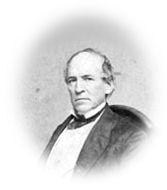
SIR: Having heard rumors that the forts and other public property in Pensacola Harbor were to be seized by troops under the orders of the governor of Florida, and having been advised of the seizure of the forts in Mobile Bay, I deemed it proper, having received no instructions from Washington, to endeavor to prevent, by all the means in my power, a like seizure here.

On the morning of the 7th ultimo, accompanied by Lieutenant Gilman, I called upon the commander of the navy-yard, Commodore Armstrong, to consult with him in reference to some plan to be adopted to insure the safety of the public property. We had a similar consultation on the evening of the same day and on the morning of the 8th. The commodore, in the absence of any orders, deemed it inexpedient to cooperate with us.

On the morning of the 8th I removed all the powder from the magazine in the Spanish battery of Fort Barrancas to the inner magazines, because, from its exposed position, it was liable to seizure at any moment. I also caused all the batteries to be put in working order, and at night placed a sergeant’s guard in the fort with the drawbridge raised. That night a body of men (about twenty in number) came to the fort with the evident intention of taking possession. The corporal of the guard caused the alarm to be given, upon which the assailants retreated precipitately. The guard was immediately strengthened by half the company, but nothing further occurred that night.

On the morning of the 9th I received through the mail a letter, of which the following is a copy:

HEADQUARTERS OF THE ARMY,
Washington, January 3, 1861.

First Lieut. A. J. SLEMMER,
……..First Artillery, or Commanding Officer Barrancas Barracks, Fla.:
SIR: The General-in-Chief directs that you take measures to do the utmost in your power to prevent the seizure of either of the forts in Pensacola Harbor by surprise or assault, consulting first with the commander of the navy-yard, who will probably have received instructions to co-operate with you.

……..I am, sir, very respectfully, your obedient servant,

…..GEO. W. LAY,……..
Lieutenant-Colonel, A. D. C.

Immediately on its reception, accompanied by Lieutenant Gilman, I called on Commodore Armstrong to consult with him. He had received orders to co-operate with me. We decided that with our limited means of defense we could hold but one fort, and that should be Fort Pickens, as it commanded completely the harbor and the forts, and also the navy-yard, and, in case of necessity, could be more readily re-enforced than either of the others, and presented the best means of defense. In order to act on this decision, the commodore promised to send the U.S. steamer Wyandotte at 1 o’clock p.m. to take us over, to give us all the men he could possibly spare, and to allow the steamer Wyandotte and the storeship Supply to anchor under the guns of the fort, in order to protect the land approach.

At 10 o’clock a.m. I came with the greater part of my command, Company G, First Artillery, to Fort Pickens to mount guns and make necessary preparations for defense, leaving Lieutenant Gilman at Barrancas Barracks with the remainder to make the necessary arrangements for removal. At 1 p.m. Lieutenant Gilman, seeing no signs of the promised assistance, called to see the commodore, and was informed by him that the only assistance he could afford would be to furnish some provisions and take the command over, which fact Lieutenant Gilman reported to me at Fort Pickens. I immediately stopped all work, sent the men back, and with Lieutenant Gilman went to see the commodore. I stated that I had been deceived by him; that he had promised me men and the co-operation of the two vessels of war, besides the mere fact of giving us provisions and taking us over; that with my command, only 46 strong, I should never dream of defending so large a work, calculated for upwards of 1,200 men; that I had been at work on that promise, and had thus lost a day’s time in the preparation of Fort Barrancas for defense; that he had distinctly promised me what I asseverated. The commodore then sent for Commander Farrand, Lieutenant Renshaw, and Lieutenant-Commander Berryman, and gave instructions for carrying out the original design.

Captain Berryman, of the steamer Wyandotte, promised to be ready to leave his wharf at 5 p.m., at which time all should be in readiness at the Barrancas wharf for removal. I immediately returned to Barrancas Barracks to make preparations. As time was very limited all means were used to place the public property on the wharf for removal. Night came, and yet no signs of assistance. The company labored until 12 m., when a heavy fog coming in rendered it highly improbable that the steamer would come that night. At 8 a.m. on the 10th a flat-boat was sent to the wharf, which was loaded, as well as all the small boats which could be had. We were landed at Fort Pickens at about 10 a.m. On the way over, Captain Berryman turned over to me thirty ordinary seamen from the yard, without arms or equipments of any kind. We labored all day until night carrying up the stores to the fort, and arranging for its defense. I directed that all the powder in Fort Barrancas should be taken out and rolled to the beach, for transportation if possible; if not, for destruction. Nearly all the powder and all the fixed ammunition for the field battery was brought over that day. All the guns bearing on the bay were spiked by my orders, in position, as I had neither means nor time to dismount them. The provisions required were, by agreement with the commodore, to be drawn from the Supply as they were wanted, instead of sending them from the yard; yet, almost the instant we landed the master of the yard came with some small stores in a barge, bringing with him an order from Commodore Armstrong to land the stores immediately and proceed to anchor off the  center wharf of the yard. As I was not ready to receive the stores, the Supply remained at her anchor that night.

On the morning of the 11th I was informed by Captain Walke that he had received another order from Commodore Armstrong to deliver the stores and return to the navy-yard. Captain Berryman also told me that he expected to sail that evening or the next morning for the south side of Cuba. I immediately caused the following note to be addressed to the commodore by my acting adjutant, Lieutenant Gilman: [click to continue…]

—The Peace Convention, at Washington, organized permanently, with Ex-president John Tyler in the chair; J O. Wright, of Ohio, secretary.—Herald, Feb. 6.

FORT SUMTER, S.C., February 4, 1861.
(Received A. G. O., February 6.)

Col. S. COOPER, Adjutant-General:

COLONEL: The South Carolinians continued to do as much work yesterday (Sunday) at Cummings Point as the storm permitted. The  work nearest to us now presents the appearance of a battery, having an inclined guard in front to glance our balls off. They are using large quantities of railroad bars in their constructions on that point. The New York steamer sailed yesterday with our women and children.

I am, colonel, respectfully, your obedient servant,

ROBERT ANDERSON,
Major, First Artillery, Commanding.

WASHINGTON, March 4, 1861.

Gov. F. W. PICKENS, Charleston, S.C.:

Do not permit any attack on Sumter without authority of Government of Confederated States. This is all important. Inaugural means war. There is strong ground for belief that re-enforcements will be speedily sent. Be vigilant.

LOUIS T. WIGFALL.

I concur, and believe this Government will act promptly.

L. Q. WASHINGTON.

—The Montgomery convention organized with Howell Cobb, president, and Johnson L Hooper, secretary.—(Doc. 32.)

—The North Carolina House of Representatives passed unanimously a declaration that if reconciliation fails, North Carolina will go with the other slave States.—Times, Feb. 6.