August 14.—Major-General Warren assumed temporary command of the Second army corps of the army of the Potomac. — A small party of rebels made a descent upon Poolesville, Md., capturing the telegraph operator and his instruments, and destroying the wires. After robbing the merchants in the village, they retired.—Brigadier-General Thomas Welch, commanding the First division of the Ninth army corps, died at Cincinnati, Ohio.
The American Civil War
August 13.—A gunboat reconnoissance from Clarendon, up the White River, Ark., was made by the steamers Lexington, Cricket, and Mariner, under the command of Captain Bodie. They returned in the evening, bringing as prizes the steamers Tom Suggs and Kaskaskia. They also destroyed two mills used by the rebel army for grinding corn, and a pontoon-bridge across the Little Red River. The casualties on the Union side were five men wounded, two of whom died.
—An expedition under the command of Lieutenant-Colonel Phillips, of the Ninth Illinois infantry, left La Grange, Tennessee, for Central Mississippi.—Major-general Burnside issued an order regulating the employment and subsistence of negro laborers.
—This night a party of rebel cavalry made a descent upon a signal station, located on Water Mountain, near Warrenton, Va., capturing every thing except the officers and one glass. Sixteen horses, several wagons, the camp equipage, together with a number of telescopes, foil into the hands of the rebels. The officers had sufficient warning to enable them to escape before the enemy reached them, but their private property was lost.—The first full regiment of colored men, raised in Pennsylvania, left Philadelphia by steamer for Morris Island, S. C., to reenforce the army under General Gillmore.
—Colonel Catherwood, commanding the Sixth Missouri cavalry, sent the following despatch to headquarters, from his camp at Pineville, Mo.:
“Colonel Coffee attacked me to-day, and was completely routed, with over thirty killed and wounded. We have a large number of prisoners, all his ammunition wagons, commissary stores, arms, horses, cattle, etc. We scattered all his force except two hundred with himself. Our force is following him closely. My horses are so worn down that they cannot move further until rested. Colonel Hirsch, just in, reports that he killed thirty-five and wounded a large number.”
August 10.—Major-general Grant, at his headquarters at Vicksburgh, Miss., issued an order, establishing camps “for such freed people of color as are out of employment at all military posts within his department, where slavery had been abolished by the proclamation of the President of the United States;” and setting forth rules for their government.
—At Chicago, Ill., the City Council unanimously passed an ordinance providing for an appropriation for raising bounties for volunteers, to act as substitutes for the drafted men who were unable to leave their homes or raise three hundred dollars for exemption.
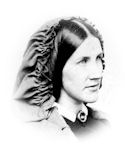
Georgeanna Woolsey to Francis Bacon.
Fishkill, Aug. 6, ’63.
Mother and I were in Gettysburg when your letter came, having hurried on immediately after the battle, under the impression, due to a mistake in telegraphing, that Charley was hurt; and, being on hand, were fastened upon by Mr. Olmsted, to take charge of a feeding station and lodge for the wounded men. So there we were, looking after other people’s boys, since our own was safe, for three weeks, coming as near the actual battle field as I should ever wish to. You know all about that fighting, how desperate it was on both sides; what loss, and what misery; the communications cut, no supplies on hand, no surgeons, or so few that they were driven to despair from the sight of wretchedness they could not help,—20,000 badly wounded soldiers and only one miserable, unsafe line of railroad to bring supplies and carry men away. We were twenty-four hours in getting from Baltimore to Gettysburg, when in ordinary times we should have been four. This was the only excuse I could think of to give the wretched rebels who, two weeks after the battle, lay in the mud under shelter tents, and had their food handed them in newspapers: “I am sorry, my man; we are all distressed at it; but you have cut our communications and nothing arrives.”
Never say anything against the Army of the Potomac again, when so few of our men, after their marching and fasting, overtook and overcame Lee’s fatted twice-their-number. I saw but very few who were slightly hurt among the wounded, and we fed all the 16,000 who went away from Gettysburg. So brave as they were too, and so pleased with all that was done for them—even the rebels. We had our station with tents for a hundred, with kitchen, surgeon and “delegation,” right on the railroad line between Gettysburg and Baltimore, and twice a day the trains left with soldiers,—long trains of ambulances always arriving just too late for the cars, and no provision being made to shelter and feed them except by the Sanitary Commission. We had the full storehouse of the Commission to draw upon, and took real satisfaction in dressing and comforting all our men. No man of the 16,000 went away without a good hot meal, and none from our tents without the fresh clothes they needed. Mother put great spirit into it all, listened to all their stories, petted them, fed them, and distributed clothes, including handkerchiefs with cologne, and got herself called “Mother,”—”This way, Mother,” “Here’s the bucket, Mother,” and “Isn’t she a glorious old woman?”—while the most that I ever heard was, “She knows how; why, it would have taken our steward two hours to get round; but then she’s used to it, you see;” which, when you consider that I was distributing hot grog, and must have been taken for a barmaid, was not so complimentary! Then those rebels too, miserable fellows; we hated them so much when they were away from us, and couldn’t help being so good to them when they were in our hands. I am, or should be, angry with myself in that I felt worse when Lieutenant Rhout of the 14th South Carolina died on my hands, singing the Lutheran chants he had sung in his father’s church before they made a soldier of him, than when E. C. writes me that “Amos” was their oldest son, and that she and his father were over sixty. . . . I am glad we helped those rebels. They had just as much good hot soup, when our procession of cans and cups and soft bread and general refreshment went round from car to car, as they wanted; and I even filled the silver pap‑cup that a pretty boy from North Carolina had round his neck, though he was an officer and showed no intention to become a Unionist. “Yes, it was his baby-cup,” and “his mother gave it to him;” and he lay on the floor of the baggage car, wounded, with this most domestic and peaceful of all little relics tied round his neck. We had lovely things for the men to eat —as many potatoes and turnips as they wanted, and almost “too much cabbages”; and custard pudding, and codfish hash, and jelly an inch high on their bread, and their bread buttered” buttered on both sides,” as the men discovered, greatly to their amusement one night, considering that the final touch had been given when this followed the clean clothes and cologne,—”cologne worth a penny a sniff.” “I smell it up here,” a soldier called to me, poking his head out of the second story window, while I and my bottle stood at the door of his hospital.
If at any time you would like to swear, call your enemy a Dutch farmer—nothing can be worse, or, if he is a man of decency, make him feel more indignant. The D— farmers of Gettysburg have made themselves a name and a fame to the latest day, by charging our poor men, who crawled out of the barns and woods where they hid themselves after they were wounded, three and four dollars each for bringing all that was left of their poor bodies, after defending the contemptible D— firesides, down to the railroad. We found this out, and had a detail from the Provost Marshal to arrest the next farmer who did it, and oblige him to refund or go to prison. The day before we came away a sleepy-looking, utterly stupid Dutchman walked into camp, having heard we had “some rebels.” He lived five miles from the city and had “never seen one,” and came mooning in to stare at them, and stood with his mouth open, while the rebels and ourselves were shouting with laughter, he “pledging his word” that “he never saw a rebel afore.” “And why didn’t you take your gun and help drive them out of your town?” Mother said. “Why, a feller might a got hit;” at which the rebels, lying in double rows in the tent, shook themselves almost to pieces.
It was a satisfaction to be in Gettysburg, though I confess to a longing to shut out the sight of it all, sometimes. The dear fellows were so badly hurt, and it was so hard to bear their perfect patience; men with a right arm gone, and children at home, and no word or look of discontent.
The authorities want us to go back again, and look after the special diet in the new and fine General Hospital for 3000 men, too sick to be moved. We can’t do so, though, as Jane and I have promised to spend the winter at Point Lookout in the Hammond Hospital. Look with respect upon your correspondent; she is at the head of the Protestant half of the women’s department of that hospital. The Sisters run half the wards, and I expect to have fun with their Lady Superior and to wheedle her out of all her secrets, and get myself invited out to tea. Why shouldn’t she and I compare notes on the proper way to make soup? I will call her “Sister,” and agree to eat oysters on Friday,—(they are particularly fine on the Maryland shore).
It will be rather jolly down there, particularly as the surgeon in charge is delighted to have us come, and we shall ride over him just as much as your dear old women, black and white, do over their particular conquest. As for gardens of oranges, and flowers—well, we shall have beds of oysters, and, as it is a military station, there will be a band there to keep up our spirits; which reminds me to give the Baltimore fireman his due, who, being one of our friends at Gettysburg, secured two bands before we came away and marched them down to camp to serenade us, which they did standing at the mouth of the long tent and refreshing themselves afterwards with gingerbread and punch, unmindful of the fact that the jolly Canandaigua “delegation,” finding its fingers inconvenienced by the sugar on them, just dipped their hands in the claret and water without saying anything! It will be a long time before Gettysburg will forget the Army of the Potomac. Their houses are battered, some of them with great holes through and through them. Their streets are filled with old caps, pieces of muskets, haversacks, scraps of war everywhere, and even the children fling stones across the streets, and call to each other, “Here, you rebel, don’t you hear that shell?” and one babe of four years I found sitting on the pavement with a hammer peacefully cracking percussion caps from the little cupful he had. . . .
What a good thing the public burying of the colored Captain has been, down where you are in New Orleans. Send me some more accounts of your hospital.
August 5.—Major-General Foster, with the iron-clad Sangamon and the gunboats Commodore Barney, General Jessup, and Cohasset made an expedition up the James River. At a point seven miles from Fort Darling, near Dutch Gap, a torpedo was exploded under the bows of the Commodore Barney, by a lock-string connected with the shore. The explosion was terrific. It lifted the gunboat’s bows full ten feet out of the water, and threw a great quantity of water high into the air, which, falling on the deck, washed overboard fifteen of the crew. Among them was Lieutenant Cushing, the Commander of the Commodore Barney. Two sailors were drowned. All the rest were saved. Major-General Foster was on board the boat when the explosion took place.
The rebels then opened upon them from the shore with a twelve-pound field-piece. The Barney was penetrated by fifteen shots, beside a great number of musket-balls; but not a man was injured except the paymaster, who was slightly wounded by splinters. The gunboat Cohasset received five twelve-pound shots, one of which passed through her pilot-house and instantly killed her Commander, Acting Master Cox, striking him in the back.—A brisk skirmish took place near Brandy Station, Va., between a party of National troops under the command of General Merritt and Colonel Davis, and a large number of rebels, resulting in the retreat of the latter, with a loss of two killed and one wounded. The National loss was one killed and two wounded.
August 2.—Five hundred rebel prisoners were taken by four companies of the “Lost Children,” New-York volunteers, on an island in the rear of Folly Island, in Charleston harbor.
A single life, even that of a distinguished general, in time of war is of slight consequence to the general result, and so in this case the battle continued in our absence, till late at night, when the Fifth corps took position on the front line.
The following day [3rd] about noon, the enemy opened fire from over one hundred guns, maintaining a terrific cannonading for over an hour, when again they attacked with extraordinary fury, making one of the most formidable charges of the war; thousands were slain, but our line was unbroken, and the Stars and Stripes defiantly floated over the line of brave men, who stood a steady, and valiant shield against all the fury and the power of the savage Confederacy. The following morning Lee withdrew, disheartened, and dismayed by his immense losses. The flower of the Southern Confederacy was left upon the bloody field, and its doom forever sealed; although they got away, they were maimed for life and beyond hope of recovery.
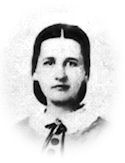
July 3rd, 1863.—Another telegram brings more news from Gettysburg—such awful news—death and destruction and perhaps defeat. God help our poor country. Holding my breath I listen and tears come, though I try to be calm. So many of our brave men, who went forward can never come back. Oh, this horrible, horrible WAR!
July 2nd, 1863.—Yesterday fighting began on Pennsylvania soil. The army of Northern Virginia, the bravest army in the history of wars, may, even now be struggling with the foe. Oh, how horrible it is to know that those you love are in such danger! There must be aching hearts at the North as well as here. I feel for all who suffer and it seems to me the bond of brotherhood, which once united the two sections, ought to make us kinder in our judgments; more merciful in our actions. But war is a monster and destroys charity.
July 2d, 1863. At daylight we were promptly under arms, and as soon as breakfast (coffee and crackers) was over, the brigade fell in and marched up the Cemetery Hill, already crowded with various bodies of troops moving into position.
Our entire corps came on the ground, and formed in order of battle, the First, our division, forming in front, the Second a very short distance in rear, connecting on the right with Howard, and on the left with Sickles, of the Third corps.
There was no firing during the formation, and as soon as it was completed, we had ample time to look about us and study the features of the field. We were posted on broad, high, open ground, gently sloping in front towards a small brook called Plum Run, some three or four hundred yards in front, running nearly parallel to our line of battle. An occasional clump of bushes interrupted the view. Towards the right, the ground was higher, completely overlooking the town of Gettysburg. On the left, arose abruptly a couple of small detached mountains, Round Top and Little Round Top, evidently the keys to the position.
The enemy lay in line of battle, some fifteen hundred yards in front of us, under cover of the woods, which fringed the open ground from right to left as far as we could see. On the whole, the field seemed worthy of the great contest now to be fought to the death upon its emerald slopes. It was an admirable field for artillery, and every gun that the army had was placed in position. Pettit’s battery of glorious memory, now commanded by Lieutenant Rhoerty, a brilliant young Irishman, lately ordnance officer of the division, was on our left; this battery and our brigade were on the best of terms, having fought together from Fair Oaks continuously till to-day. As the enemy made no movement, our men sat or lay down in their ranks, while the officers gathered in groups, and discussed the probable outlook for the day. Little, however, was said, most of the men being preoccupied by their own thoughts. About ten o’clock the enemy fired a few shots and our guns replied, and this continued till towards noon, when an ominous silence brooded over the entire field. We knew the enemy were preparing for the attack, and this time it was our turn to await the advance.
At 2 P. M. we stood to arms, on observing Sickles begin to advance and manœuver; after making several incomprehensible movements, his troops marched forward from in front of Round Top, and immediately brought on the action.
Longstreet’s corps advanced and savagely attacked the Third corps, forcing it back, after much fighting, ending in considerable confusion. From where we sat on our horses, the entire field of operations was in view, and was intensely interesting. The fighting continued by the Third corps alone until nearly 3 P. M. when Captain Tremain, of Sickles’s staff, rode up to Zook, and requested him to move to Sickles’s assistance. The general instantly put spurs to his horse and galloped directly across the field to Sickles, who, surrounded by a large staff, was in a state of great excitement; the enemy’s shot were dropping about him, and he seemed to be very much confused and uncertain in his movements. When Zook approached him, he excitedly asked him to put his command into action on his left, where he admitted Longstreet was steadily driving him back near the two small mountains. Zook declared his willingness to act, and galloped back to his command, taking the stone walls and ditches without swerving, either to the right or left. When we reached the brigade, the First and Second brigade of our division were already on the march towards the threatened left, and we promptly followed, marching by the left flank, arriving at the wooded crest adjacent to Round Top mountain; we halted and formed column of attack in two lines: the One Hundred and Forty Pennsylvania, and Fifty-seventh New York in front; the Fifty-second and Sixty-sixth New York in rear. The ground was rocky, strewn with immense boulders, and sparsely covered with timber. As soon as the formation was completed, we marched forward to the attack, at first over rising ground, and shortly received a tremenduous fire from the front; as we marched rapidly forward alongside the mountain, the tumult became deafening, the mountain side echoed back the musketry, so that no word of command could be heard, and little could be seen but long lines of flame, and smoke and struggling masses of men. We kept right on obliquing somewhat to the right, until apparently directly in front of the raging mass of combatants below, then rushed at a double quick boldly forward into the mouth of hell, into the jaws of death. Zook, accompanied by Broom, led the first line, while the second line, commanded by Morris of the Sixty-sixth, was placed in my charge; we soon came to a standstill and a close encounter, when the firing became terrific and the slaughter frightful. We were enveloped in smoke and fire, not only in front, but on our left, and even at times on the right, apparently from men posted on the mountain sides. Our men fired promiscuously, steadily pressing forward, but the fighting was so mixed, rebel and union lines so close together, and in some places intermingled, that a clear idea of what was going on was not readily obtainable. While trying to keep the lines as effective as possible, watching the situation in this pandemonium of death, I saw Zook a little towards the left, riding to the rear, supported by Broom and a mounted orderly. I rode over to him instantly, when he looked up with an expression I shall never forget, and said: “It’s all up with me, Favill.” I told Broom I would turn over the command to Morris and join him as soon as I could, but Morris was not to be found readily in the great confusion of battle. Roberts of the One Hundred and Fortieth was killed, and the troops by this time were sadly mixed up with other commands. I found Frazer, however, the lieutenant-colonel of the One Hundred and Fortieth Pennsylvania, next in rank, and notified him of the death of Zook, and directed him to assume command. He wished me to remain, but I was personal aide-de-camp to Zook, and my duty was to him, and therefore I declined. Just then Brooke came up and took command of the whole line, and relieved the situation completely. I rode off the field and overtook the general with Broom, riding very slowly towards the Baltimore pike. The General was in great pain, and Broom told me he was shot through the bowels. I went ahead to find an ambulance, but before I returned they had fallen in with one, and were driven to the field hospital. Surgeon Wood, one of our best doctors, after examining the wound, told us it was fatal, and nothing could be done; there being no shelter here, and the enemy’s shot frequently reaching the spot, we took the general on a stretcher, and carried him to a small house some distance in the rear on the Baltimore road, close to a bridge crossing a small creek. The house was already filled with men severely wounded, and the sight was most distressing; the howls of pain from the men in the hall and front room were so dreadful that we moved the general back into a small room cut off from the others, and here we spent the night, doing what we could to make our dear commander comfortable. I went out several times during the night, and looked at the ghastly scenes on the floors of the hall and parlor. As many men as could lay side by side completely covered the floors, which were streaming with blood, and the poor fellows seemed to give way completely to their misfortunes. Over twenty of them died and were carried into the yard during the night.


