Following the American Civil War Sesquicentennial with day by day writings of the time, currently 1863.

The American Civil War

June 8.—This day a scouting party under Lieut. Bonse, company A, Tenth Virginia regiment, captured, in Braxton County, Va., Ben. Haymond, Ed. Riffle and Stan. Conrad, three of the most notorious bushwhackers in Western Virginia. Haymond and Riffle had been cutting telegraph wires, robbing Union men, stealing horses, etc.—Cincinnati Gazette, June 11.

—An extension of the following military departments of the United States was made:

1. The Department of the Mississippi is extended so as to include the whole of the States of Tennessee and Kentucky. All officers on duty in those States will report to Major-Gen. Halleck.

2. The Mountain Department is extended eastward to the road running from Williamsport to Martinsburgh, Winchester, Strasburgh, Harrisonburgh, and Staunton, including that place—thence in the same direction southward until it reaches the Blue Ridge chain of mountains; thence with the line of the Blue Ridge to the southern boundary of the State of Virginia.

3. The Department of the Shenandoah is extended eastward to include the Piedmont District and the Bull Mountain range.

—General Prim, commanding the Spanish forces recently sent to Mexico, together with his suite, visited the army of the Potomac to-day.

—General Fremont attacked (Stonewall) Jackson seven miles beyond Harrisonburgh, Va., near Union Church or Cross Keys, at half-past eight this morning, and drove him from a strong position with considerable loss.—(Doc. 18.)

—The obsequies of General Turner Ashby of the rebel cavalry, were celebrated at Charlottesville, Va. “The services were performed by the Rev. Mr. Norton and Rev. Mr. Avery—the latter had been chaplin in the cavalry from the opening of the war. Both spoke of the deceased in terms of high praise as a man, a soldier, and a Christian. The brave soldiers wept as they listened to the pious exhortations of the clergymen. They had lost a host in Gen. Ashby, but they were expected to imitate him in all things, and especially in his veneration and respect for Christianity. The country looked to them for deeds of greater valor than had ever yet been accomplished by them; and there, on the dead body of their late commander, they should swear not to sheathe their swords when a hostile army polluted the soil of Virginia and the South. After the services in the chapel the remains of General Ashby were conveyed to the University cemetery and committed ‘earth to earth, ashes to ashes, and dust to dust,’ Colonel T. G. Randolph and the Professors of the University assisting in the ceremony. They grave was covered by the cavalry, and they fired several volleys over it, and there he will remain in this classic ground until the last trump shall summon all to the general judgment”—Lynchburgh Republican, June 12.

—Judge Swayne, of Memphis, Tenn., refused to open the Criminal Court in that city, after receiving an order from Col. G. N. Fitch, commanding United States forces, instructing him to confine himself to the hearing and adjudication of such cases only as are not based upon the recognition of the right of a State to secede from the Union, or upon the presumption of the establishment or existence of a so-called Southern Confederacy, or recognizing the same.

—A small force of Union troops, commanded by Capt. V. Geary, Third Pennsylvania cavalry, while on a reconnoissance in the vicinity of New Market, Va., captured a rebel spy named Hance. He was the medium by which letters were carried to and fro, giving the rebels much information concerning the movements of the Union army. When captured he had a mail made up, ready to carry into Richmond.

—A reconnoissance was this day made, under cover of eight Union gunboats, by a body of National troops, commanded by Colonel Morrow, on James Island, S. C. The Union forces drove the rebels a distance of two miles, and were at one time within three miles of the city of Charleston, and in full view of Fort Sumter. The object of the reconnoissance was accomplished, and the troops fell back to their former position, losing two killed and seven wounded.
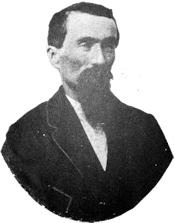
Neese predicts:  “About to-morrow Old Stonewall will show them how it is done.”  The next day will see the battle of Cross Keys.


June 7 — This morning we moved about three miles in the direction of Port Republic, then halted and remained in marching order all day, waiting for some war fruit, blooming all about us, to ripen.

Right from where I am writing I saw a signal flag on the summit of Peaked Mountain waving with a jerky fluttering nearly all day, which is generally a sure sign that a battle is getting ripe enough to open. I am not certain, but think that it is a Yank signal, and perhaps it is General Shields — as I heard to-day that he is moving up the Luray Valley — signaling to Fremont to hold the fort. About to-morrow Old Stonewall will show them how it is done.

June 7.—An enthusiastic Union meeting was held at Shelbyville, Tenn., at which speeches were made by Andrew Johnson, W. H. Wisner and Col. May —On the Chickahominy River the rebels opened fire on the pickets of Gen. Sumner, but without any effect—The rebel steam-tug Mark R. Chesk, was captured near Memphis, Tenn.

—The Paris Constitutionnel, of this day, published an article to show “the impossibility of the South being conquered,” and maintaining that foreign “mediation alone will succeed in putting an end to a war disastrous to the interests of humanity.”

—William Mumford, a citizen of New-Orleans, was hung in that city for an overt act of treason in pulling down the American flag from the United States Mint— (Doc. 65.)

—In the Missouri Convention a bill for the gradual emancipation of slaves was submitted and defeated by a vote of fifty-two to nineteen.

—Memphis, Tenn., was formally taken possession of in the name of the Government of the United States, by Col. G. N. Fitch, commanding Indiana brigade.—The schooner Rowena, formerly the Garibaldi, ran into Stono Inlet, S. C, this evening, not knowing it to be in the possession of the National forces, and was captured by the gunboat Pawnee.—Official Report.

—The rebel batteries at Chattanooga, East Tennessee, were silenced by the artillery of General Negley’s command after a bombardment of three hours.—(Doc. 64.)

June 6.—At five o’clock A.m., the United States fleet in the Mississippi river, near Memphis, engaged the rebel fleet of eight rams and gunboats, and after a two hours’ fight, seven of the rebel craft were either captured or destroyed. On the conclusion of the battle, the Mayor of Memphis surrendered the city.—(Doc. 60.)

—Gen. Fremont’s army reached Harrisonburgh, Va., at two o’clock this afternoon, and drove out the rebel rear-guard from the town. At four o’clock the First New-Jersey cavalry, after driving the enemy through the village, fell into an ambuscade, and Colonel Windham, its commander, was captured. The regiment sustained considerable loss. General Bayard subsequently engaged the rebels with his brigade, drove them from his position, capturing their camp. They then continued their retreat—(Doc. 63.)

—The tax bill was passed by the Senate of the United States, by a vote of thirty-seven to one, Mr. Powell, of Kentucky, voting in the negative.

June 5.—The Twenty-fourth regiment of Massachusetts, while on a scouting expedition on the Pactolus road, near Washington, N. C, were attacked from an ambush by a rebel regiment, and had seven men killed and several wounded.— (Doc. 59.)

—The Twelfth regiment New-York State militia, under the command of Col. William S. Ward, left New-York for Washington, D. C—The volunteer recruiting service in the United States, discontinued by General Orders No. 33, of April third, 1862, was restored, and orders to that effect were published by General Thomas.

—The rebel artillery opened upon the National forces at New-Bridge, on the Chickahominy River, Va., from five different points, attempting to prevent General McClellan’s troops from rebuilding the bridge; their fire was returned, and after an engagement of over two hours, the rebels were compelled to retire.

—A heavy storm, which had lasted two whole days, raised the Chickahominy River, Va., to an unprecedented height—President Lincoln complimented First Lieut. D. C. Constable, commanding the revenue steamer E. A. Stevens, by handing him personally a commission as captain in the revenue cutter service, in recognition of his gallantry in leading with his steamer the attacking forces in their ascent of the James River and bombardment of Fort Darling.—Second Lieutenant J. Wall Wilson was also promoted to a first lieutenancy for gallant bearing during the same action.

—Nathaniel S. Berry was inaugurated Governor of New-Hampshire, at Concord, in the presence of both branches of the Legislature and a large concourse of citizens. In his message, alluding to National affairs, the Governor says there can be but one result to the struggle in which we are engaged — submission to the first principles of the government inaugurated and established by our fathers. The base rebellious spirit which designed to reverse the free and humane policy of our fathers, must fail. The fearful lesson we have had in the conflict with slavery, its disasters to all its promoters, its evident weakness in its death-struggle with freedom, all portend a change in the estimation in which this great evil will be hereafter held, and foretell in legible characters, written in view of all the nations, that its days are numbered. For these reasons the Governor rejoices in the late message of President Lincoln, and in the abolishing of slavery in the District of Columbia, and its prohibition in the territories. But he affirms the principle that each State submitting to the provisions of the Constitution should control its own local institutions; but such submission should be regarded as a pre-requisite to the employment of the benefits of that instrument.

—Judge Birch, who was arrested at Holla, Mo., for expressing disloyal sentiments, was released from arrest and paroled, with the understanding that he was to report himself whenever required.—James Trabue, one of the principal dry-goods merchants of Louisville, Ky., was arrested to-day by the military authorities at that place. He refused to take the oath of allegiance. —Two companies of the Pennsylvania “Roundhead” regiment, on James Island, S. C, were cut off by the rebels, but after a sharp fight were rescued by the Eighth Michigan regiment.— The United States gunboat fleet and mortar fleet arrived before Memphis, Tenn., at nine P.M.

June 4.—Major-General Halleck reported to the Secretary of War that General Pope, with forty thousand men, was thirty miles south of Florence, Alabama, pushing the enemy hard; that he had ten thousand prisoners and deserters from the enemy, and fifteen thousand stand of arms captured. Also that nine locomotives and a number of cars were captured.—(Doc. 131.)

—Fort Pillow, otherwise called Fort Wright, on the Mississippi River, was evacuated by the rebels. After the occupation of the Fort, the Union gunboat fleet steamed directly to Memphis.—(Doc. 54.)

—Jeff Davis threatened retaliation in the case of Major W. Van Benthuysen, who had been arrested by Gen. Butler, at New-Orleans, “for aiding the escape of a scoundrel and spy.”

—Brig.-general J. T. Boyle, headquarters in Louisville, assumed command of the National troops in Kentucky this morning.

—A fight occurred near Jasper, Tenn., between a body of Union troops under the command of Gen. Negley, and a large force of rebel cavalry under Gen. Adams, which resulted in a complete rout of the rebels, with great loss.— (Doc. 55.)

—Sixteen hundred of Gen. Prentiss’s troops, who were taken prisoners at the battle of Pittsburgh Landing, arrived at Nashville, Tenn., they having been paroled by the rebel authorities, “in consequence of their being unable to feed them.” —Nashville Union, June 5.

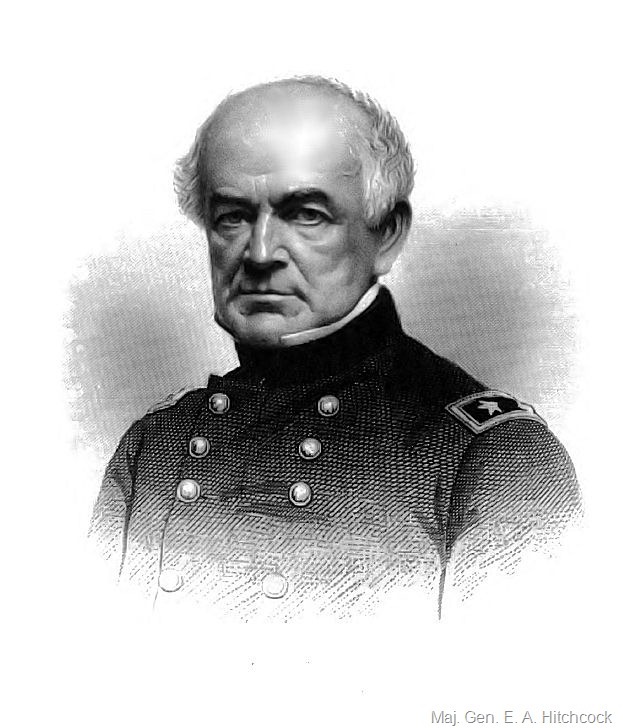
hitchcock_e_a

June 3.—Major-General Robert W. Lee was assigned to the command of the rebel army in front of Richmond, in consequence of a slight wound to General Johnston, and, upon assuming his important position, issued an address to the army, which was read at the head of the regiments. Its sentiments created the liveliest enthusiasm. The address informed them, in a very few words, that the army had made its last retreat, and that henceforth every man’s watchword must be, “Victory or death!” The response was cheers from all the regiments.—Petersburgh Express, June 5.

—The Twenty-fifth regiment of New-York volunteers, under the command of Col. Bryan, left Albany for the seat of war.—Gen. Hooker made a reconnoissance in force on the Williamsburgh, Va., turnpike, reaching a point within four miles of Richmond. The rebels were not numerous; their pickets were visible, but they fled on the approach of the National troops.

—A letter was published in the Richmond Dispatch, said to have been found in Gen. Casey’s tent at the battle of Fair Oaks. It details a plan for the occupation of the Southern States “after the war.”—(Doc. 130.)

—The sentence of death pronounced on six persons at New Orleans, La., for having violated their parole, was this day commuted by General Butler, who confined them at hard labor on Ship Island, during the pleasure of the President of the United States.


Ethan A. Hitchcock (wikipedia)

After the start of the Civil War, Hitchcock applied to return to the service, but was rejected. It was only after the intervention of his former general, Winfield Scott, that he was commissioned a major general in the U.S. Army and became special adviser to the Secretary of War from February 17, 1862. From March 17 to July 23, 1862, he served as the chairman of the War Board, the organization that assisted President Abraham Lincoln and Secretary of War Edwin M. Stanton in the management of the War Department and the command of the Union armies during the period in which there was no general-in-chief. (Maj. Gen. George B. McClellan had been relieved of his responsibilities as general-in-chief and Maj. Gen. Henry W. Halleck had not yet replaced him.) He sat on the court-martial of Maj. Gen. Fitz John Porter which convicted the general of disobedience and cowardice. From November 1862 through the end of the war, he served as Commissioner for Prisoner of War Exchange, and then Commissary-General of Prisoners until 1867.

June 2.—Jacksonport, Arkansas, was visited by a rebel gunboat, commanded by Capt. Fry. After throwing a few shot and shell on the camp-ground just vacated by the Ninth Illinois cavalry, she dropped alongside the wharf-boat and destroyed all the cotton and molasses to be found.—Jacksonport Cavalier Extra, June 7.

—An enthusiastic Union meeting was held at Columbia, Tennessee, at which speeches were delivered by Niell Brown and Andrew Johnson, with great applause.—The First regiment of Fire Zouaves, N.Y.S.V., were mustered out of service at Governor’s Island.—General John A. Dix assumed command of Fortress Monroe, Norfolk, Portsmouth, and Suffolk, Va.—General Banks recrossed the Potomac and occupied Bunker Hill, Virginia.

—Mass meetings were held at Memphis, Tenn., yesterday and to-day. Addresses were made by Jeff. Thompson and others. Resolutions were adopted never to surrender voluntarily. Though Memphis had already seventy-two companies in the field, every man capable of bearing arms was called upon to repair forthwith to Fort Pillow. A committee was appointed to collect men, money, and arms.—Memphis Argus, June 2.

—Two boats belonging to the United States bark Kingfisher, of the blockading squadron off Saint Marks, Florida, were captured as they were proceeding up the Ocilla River for water, by a party of rebels on shore. Two of the boats’ crew were killed, two wounded, and the rest made prisoners.—New-Bedford Mercury, June 23.

—Parker Spring, superintending the construction of United States Military telegraph lines, gave an account, in a letter to the Lancaster (Pa.) Express, of the services of the Morse telegraph to the army, and of General McClellan’s use of it—(Doc. 129.)

—A party of National scouts captured the mate and six seamen belonging to the rebel gunboat Beauregard, at a point nearly opposite Fulton, Missouri.

—Edward L. Pierce, Special Agent of the Treasury Department of the United States, made a report concerning the condition of the freedmen of South-Carolina. — The Union forces under Major-Gen. Hunter, operating against Charleston, S. C, this day landed on James Island, under cover of the gunboats, without opposition.

—To-day the Union fleet of gunboats (eight vessels) moved up the James River from their former position at City Point, toward the rebel batteries below Richmond, Va. When some distance up, they got aground; the rebels appeared on a bluff on the opposite shore and fired into the fleet, which returned the fire and the rebels dispersed. At flood-tide the fleet backed off and dropped down the stream.

—A slight skirmish took place near Washington, N. C, between a small scouting party, composed of a sergeant and six men of Mix’s New York cavalry, and a force of rebel infantry, resulting in the capture by the rebels of three of the Union party.—Gen. Sigel was placed in command at Harper’s Ferry, Va.

—A fight took place on the road between Strasburgh and Staunton, Va., between a portion of the Union army under Gen. Fremont and the rebels under Gen. Jackson, resulting in the defeat of the latter. The rebels in the retreat burned the bridge after they had crossed the Shenandoah River at Mount Jackson.—(Doc. 53.)

June 1.—At eight o’clock this morning the battle between the Union and rebel forces at Fair Oaks, Va., was resumed, and the rebels were defeated and compelled to fall back upon Richmond. —(Docs. 17 and 92.)

—General Fremont’s advance brigade, under Colonel Cluseret, occupied Strasburgh without resistance. A midnight reconnoissance three miles beyond Strasburgh came upon a rope barricade and ambush of Jackson’s rear-guard, and retired successfully with the loss of only three wounded. Col. Figyelmesy, of Gen. Fremont’s staff, with only fifteen men, brilliantly charged and put to flight a body of cavalry commanded by Ashby in person.

—The expedition sent out by General Pope on the twenty-eighth of June, under Colonel Elliott, with the Second Ohio cavalry, returned to Corinth, Mississippi, this day. By forced marches they reached the Mobile and Ohio Railroad, and although the rebels were guarding it with a force of five thousand infantry running up and down to prevent him reaching it, succeeded in destroying the track in many places, blowing up one ci[illegible]ert, burning the depot, locomotives, and a train of twenty-six cars loaded with supplies, destroying ten thousand stand of small arms, three pieces of artillery, and capturing two thousand prisoners, whom he released on parole, as he had not time to march them with his cavalry.—(Docs. 49 and 76.)

—The fortifications at Pig Point, Va., were destroyed to-day, together with the rebel barracks in the vicinity.—An order was issued from the War Department extending the Department of Virginia to include that part of Virginia south of the Rappahannock and east of the railroad from Fredericksburgh to Richmond, Petersburgh, and Weldon, under command of Major-Gen. McClellan. Major-Gen. Wool was assigned to the command of the Middle Department, and Major-Gen. Dix to Fortress Monroe to assume command at that point, reporting to Gen. McClellan for orders.

—Yesterday the Union forces under command of Brig.-Gen. Wright succeeded in crossing from Edisto Island to Seabrook’s Point, S. C, and today they had a skirmish with the rebel pickets in the vicinity, which resulted in the retreat of the rebels.—Official Report.

May 31.—A body of Illinois militia, numbering between two and three hundred, under command of Capt John M. Richardson, were attacked by a force of five hundred Indians and white secessionists, under Capt Coffee and Major Thomas Wright, at Neosho, Mo., and were compelled to fall back to Mount Vernon, where they were reenforced by a detachment of the Tenth Illinois cavalry. There was no general engagement, and the Federal loss was but two killed and three wounded. The rebels captured a number of guns and overcoats, together with a quantity of ammunition, camp equipage, and about fifty horses. They did not hold the town, but retreated to their camp, eighteen miles from Neosho.

—The schooner Cora was captured this day off the bar of Charleston, S. C, by the United States steamer Keystone State.—A force of Union troops, under command of Gen. Williams, arrived at Baton Rouge, La., in the gunboat Kennebec.

—A sharp fight took place on the Greenville road, eight miles above Washington, N. C, between a Union scouting party of fifteen men, of Mix’s Third New-York cavalry, under Lieutenant Allis, and a superior force of rebel cavalry, resulting in the defeat of the rebels, with a loss of three men killed, six wounded, and two taken prisoners unhurt None of the Union party were killed, and but one was wounded.

—Major-Gen. Butler, commanding Department of the Gulf, issued an order directing and authorizing the Provost-Marshal of New-Orleans, La., to execute six rebel prisoners, convicted of having violated their parole.

—Part of General Banks’s command advanced beyond Martinsburgh, Va.—A reconnoissance in force was made at Winton, N. C, by the National troops, under Gen. Viele.

—At noon to-day the main body of the rebel army near Richmond, Va., under General Joseph Johnston, attacked the left wing of the Union army at Fair Oaks and the Seven Pines, and a desperate battle ensued, which lasted till night At night the rebels occupied the camps of the Fourth corps, but their advance was completely broken.