Following the American Civil War Sesquicentennial with day by day writings of the time, currently 1863.

The American Civil War

Sunday Feb 16th 1862

Cold and wintry day but has thawed some. Out to church with family this morning. Almeron Field came up from his quarters and went to Church with us. Doct Smith preached. The air in the church abominable, no ventilation. No further news from Fort Donoldson yet.

______

The three diary manuscript volumes, Washington during the Civil War: The Diary of Horatio Nelson Taft, 1861-1865, are available online at The Library of Congress.

Headquarters 2d Brigade, S. C.

Beaufort, S. C. Feb. 16th, 1862.

My dear Mother:

Pleasant land of South Carolina! Roses blooming in the gardens, mocking birds whistling sweet notes in the forests, trees green and beautiful as dense foliage can make them — quite different from the cold winter you are spending—but Ugh, how the wind does blow here to-night though! It makes little difference to us here in the house, for the bright wood-fire blazes cheerfully, and around it is gathered by no means a dejected party smoking cigars, and good-naturedly cursing the slowness of the campaign. Out of door, the pickets perhaps, blowing their fingers, may be using deeper expressions, and may be having different motives for wishing the war to wag along a little faster. Would that our little General with his big shaggy head, were in command! I think he would set them dancing over on the mainland to the merry old tune of Malbrook, but Sherman is slow and cautious, and the biggest figure he allows us to execute is a sort of dos-a-dos performance at best.

So our little General, with nothing better to do, contents himself with having the best managed Brigade in the Command, lectures us young men occasionally on Strategy, and at times, in sheer despair, reads novels with the same energy and vigor with which he conducts his operation on the battlefield. He is, indeed, a prodigious little man, and it would rejoice many a one, were he to receive a larger, and more splendid field of action — such a one as his talents demand.

Dear, dear! I am impatient to hear from home, but our transport vessels are needed elsewhere, and we have no idea when we are to receive another mail.

I see Captain __________ quite often. He is like Sherman, very slow. I try to give him some hints about flying around more, and I trust experience will teach him the necessary lesson.

By-the-by, who is George Martin, now Quartermaster of the 79th Regiment, who talks about “Uncle Lusk” and “Uncle Olmstead ” and “Uncle Thompson” and “Henry G.,” etc? He heard me say I was from Connecticut — “What, you don’t belong to the Enfield Lusks?” I explained my relationship. . . . Wishing to ascertain the relationship existing between us, I found he was born somewhere in Suffield, and that his using the title of “Uncle” was merely intended to show that he was accustomed to mingle familiarly in the Aristocratic Circles of Enfield. Indeed we kept up quite a running talk about Enfield. While talking rapidly upon the topics suggesting themselves on finding our “relationship,” we were somewhat interrupted by a loud haw-haw from a bed in the corner of the room. Then a voice, deep and gruff, cried: “Haw-haw! Oh Lord, haw-haw! One would think there were no people in the world except those that come from Connecticut, haw-haw!” This proceeded from a drunken Captain, who was so amused at his own wit, that he continued to laugh, and roll, and shake his fat sides until the room was in a roar, and as I left, way down the street you could hear the same “haw-haw” from the jolly drunken Captain.

Love to all.

Affec’y.,

Will.

Sunday, 16th.—This morning we left home early, to be present at the funeral of Captain Wise, but we could not even approach the door of St. James’s Church, where it took place. The church was filled at an early hour, and the street around the door was densely crowded. The procession approached as I stood there, presenting a most melancholy cortege. The military, together with civil officers of every grade, were there, and every countenance was marked with sorrow. As they bore his coffin into the church, with sword, cap, and cloak resting upon it, I turned away in sickness of heart, and thought of his father and family, and of his bleeding country, which could not spare him. We went to St. Paul’s, and heard an excellent sermon from the Rev. Mr. Quintard, a chaplain in the army. He wore the gown over the Confederate gray—it was strange to see the bright military buttons gleam beneath the canonicals. Every thing is strange now!

February 16.—The ship E. W. Farley, having on board six companies of the Eighth regiment of New-Hampshire volunteers, sailed from Boston, Mass., for Ship Island, Miss.

—The Mississippi, the Organ Democrat, and Los Angelos, and California Star have been suppressed from the mails, on the ground that they have been used for the purposes of overthrowing the Government, and giving aid and comfort to the enemy now at war against the United States. —New-York World, February 17.

—Brig.-gen. Price, a son of Sterling Price, Col. Phillip, Major Cross, and Capt. Crosby were captured near Warsaw, Mo., by Capt. Stubbs, of the Eighth Iowa regiment They had some five hundred recruits with them, in charge, but they had just crossed the Osage River, and as Capt. Stubbs had but a small force, he did not follow them.—N. Y. Commercial, February 20.

—The United States gunboat St. Louis, under command of Com. A. H. Foote, proceeded up the Cumberland River, Tennessee, this afternoon, and destroyed, a few miles above Dover, the Tennessee Iron Works, which had been used for the manufacture of iron plates for the rebel government. One of the proprietors, named Lewis, was taken prisoner.—Chicago Post.

—Fort Donelson, Tenn., with from twelve to fifteen thousand prisoners, at least forty pieces of artillery, and great quantities of stores, was surrendered, this morning, to the Union forces under Gen. Grant.

A small squadron of gunboats, convoying several transport steamboats, and a large body of troops, were despatched from Cairo, Ill., on the eleventh; and, on the morning of the twelfth instant, three divisions of troops, under Generals McClernand, Smith, and Wallace, left Fort Henry, both destined for operations in front of Fort Donelson.

The latter body moved in two columns; and at noon of the twelfth, the head of Gen. McClernand’s column came to the outposts of the enemy, and drove in his pickets; the remainder of the day being occupied in assuming the positions to which the different corps had been assigned, and with occasional skirmishing on the line. Gen. McClernand’s command formed the right of the extended line, with his right resting on Dover; while the command of Gen. Smith formed the left, his left extending to the creek on the north of the Fort.

The night of the twelfth was spent quietly; and on the following day, also, but little was attempted by the army, in consequence of the nonarrival of the gunboats, and the reenforcements which had been sent from Cairo by water. The gunboat Carondelet, however, under direction of Gen. Grant, approached the Fort, on the morning of the thirteenth, and, after two hours’ steady fire, during which she expended nearly two hundred shots, she was compelled to withdraw from the action to repair damages.

The gunboats St Louis, Pittsburgh, Louisville, and Conestoga, with sixteen transports and about ten thousand fresh troops, having arrived at the place of rendezvous, preparations were made for attacking the enemy’s works; and at two o’clock on the fourteenth, the St. Louis, Louisville, Pittsburgh, and Carondelet, forming a single line in front, with the Conestoga and Tyler a quarter of a mile in the rear, moved up the river, receiving the fire of the enemy’s lower batteries. At seven minutes to three the St. Louis opened her fire with an eight-inch shell, which was kept up with great spirit during an hour and a half, bidding fair to result very favorably. The iron-clad boats took a position within three hundred yards of the batteries, silenced the water-battery, and drove its gunners from their posts; but the “plunging shot” from the batteries having entered the pilothouse of the St. Louis and shattered her wheel, and the other vessels having also suffered severely, the Commodore ordered the squadron to drop down the river; and the action ceased.

These mishaps led to the determination, by Gen. Grant, to make the investment of the Fort as perfect as possible, to strengthen his position, and to await the repair of the gunboats; but the enemy frustrated all his purposes.

Soon after daybreak, on the morning of the fifteenth, the extreme right of the Union line, near the river, below the Fort, was attacked by a heavy body of the enemy’s forces. The Eighth and Forty-first Illinois regiments, first received the shock; and they maintained their position with great coolness, until reenforcements joined the assailants, when McAllister’s and Schwartz’s batteries were also attacked and captured. The Eighteenth, Twenty-ninth, Thirtieth, and Thirty-first Illinois were quickly moved to the support of their associates; and after a desperate struggle, in which both sides displayed great daring, all but three of the pieces of the captured batteries were recovered by the Union troops. At length, overpowered by numbers and without ammunition, the Illinoians were compelled to fall back; and the enemy, with cheers, pressed forward and outflanked them on the right, when the Seventeenth and Twenty-fifth Kentucky, and the Thirty-first and Forty-fourth Indiana regiments, all under Col. Cruft, were brought up to support the failing fortunes of the Union men. An unfortunate mistake, on the part of this reenforcement, led the Twenty-fifth Kentuckians to pour a volley into the ranks of the Thirty-first Illinoians, causing terrible loss, and increasing the confusion, of which the enemy promptly availed himself by pressing forward with greater energy than before.

A few minutes afterward, Col. Wallace’s brigade, embracing the Eleventh, Twentieth, Forty-fifth, and Forty-eighth Illinois regiments, came up; but so completely had the enemy brought up his forces, that they were compelled to fall back with very heavy loss; notwithstanding, in another part of the line, another strong body of the enemy was driven back by the Forty-eighth, Fifty-eighth and Seventy-sixth Ohio, and the First Nebraska regiments and Taylor’s Chicago battery.

At this moment the prospect was gloomy enough. The Union men had been repulsed, with the loss of six pieces of artillery, and great numbers of officers and men; and the enemy held the dearly-bought position. Gen. Grant saw the emergency, and he hastened to meet it. Gen. Smith was ordered to make a strong assault on the left of the line, and to carry the position at all hazards; while preparations were also made to renew the operations on the right, with a view to recover the position which had been lost in the morning.

Gen. Smith immediately ordered Col. Cooke, commanding the Third brigade of his division, to move with his command—embracing the Seventh, Fiftieth, and Fifty-second Illinois, the Twelfth Iowa, and Thirteenth Missouri regiments—against one portion of the enemy’s lines; while, with the Fourth brigade, commanded by Col. Lauman— embracing the Second, Seventh, and Fourteenth Iowa, and the Twenty-fifth Indiana regiments–he, in person, dashed against another part of the works.

The Second Iowa regiment led the advance, followed by the Fifty-second Indiana; and the other regiments of the brigade, while the sharpshooters were deployed on either flank as skirmishers. The column of attack moved forward, without firing a gun, and charged into the work, driving the enemy before it at the point of the bayonet, and occupying the position. The colors of the Second Iowa occupied the post of honor; but the loss with which it was purchased was immense.

The successful result of this desperate struggle inspired the troops, and in every portion of the line of offence the wildest enthusiasm prevailed.

Soon afterwards Col. Smith, commanding the Fifth brigade, moved the Eighth Missouri and Eleventh Indiana regiments against the position, on the extreme right of the line, from which the Union troops had been driven, at an earlier hour of the day; and part of the First brigade, commanded by Col. Cruft—embracing the Thirty-first and Forty-fourth Indiana regiments—was moved to his support The assault was made in two columns ; and it was a complete success, the hill was carried by storm; and the enemy was driven into his works, amidst the hearty cheers of the victors.

No further movements were made during the fifteenth; both armies occupying their respective positions and preparing for a renewal of the engagement this morning. At daybreak, however, the enemy sounded a parley and displayed a white flag, to which Col. Lauman, commanding the Fourth brigade, responded; and proposals for a surrender were tendered and accepted.

Generals Floyd and Pillow, with about five thousand of the garrison, escaped in the night; and these who surrendered embraced Generals Buckner and Tilghman, some fifteen thousand prisoners, twenty thousand stand of arms, immense quantities of stores, etc.

During the action on the fourteenth, the gunboats suffered severely. The St. Louis was struck sixty-one times, and lost ten men killed and wounded. The Pittsburgh was struck forty-seven times, and lost two men, wounded; the Carondelet was struck fifty-four times, and lost thirtythree men; and the Louisville was struck about forty times, and lost nine men.—(Doc. 46.)
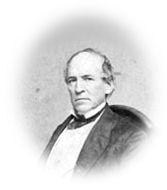
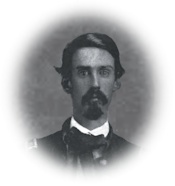
Saturday 15th

The City is quite wild with Excitement today at the reported capture of Fort Donoldson with 15000 prisoners. It is not yet confirmed. We all hope & rejoice. Good news also from Genl Lander, he has made an important capture of rebel officers & Stores near Winchester V.A.

Capt White of the 27th came over from Camp today and gave us a call, he returned this evening. Union Stock has raised astonishingly within three or four days past. We have been sometime getting ready to fight and now the “ball” is open. No obstruction now but Bad roads. Spent the evening at home, it has snowed all day.

______

The three diary manuscript volumes, Washington during the Civil War: The Diary of Horatio Nelson Taft, 1861-1865, are available online at The Library of Congress.

15th.—What a week of news, opening on us with intelligence of the capture of Fort Henry, with its list of high-bred prisoners. Scarcely had the sound of the cheers and the hurrahs died away, when Burnside startled us with an artillery discharge of news. To-day, whilst we were brushing out our “hollering organs” with alum swabs, when the startling intelligence from Fort Donelson, the most glorious of which is the capture of the arch-traitor, Floyd; and what a disappointment that not a throat in our whole Division can shout “Hang him!” loud enough for Floyd to hear it. Hold on for awhile; send us no more such news at present. As this poor old “grand-mother” of armies is to do no fighting, wait at least till the throats of our soldiers so far recover that they can do the shouting over victories in which they are denied the privilege of participating. We have lain still here till we have grown into old fogyism—gone to seed. So little advance, so little progress have we made, within the memory of any here, that should Methuselah offer us to-day a shake of his hand, we should wonder whether it was yesterday or a week ago that we parted from him, so little has been the change here since his advent, and so much would he look like all around him.

Feb. 15, 1862. (Village of X.)—We reached Arkansas Landing at nightfall. Mr. Y., the planter who owns the landing, took us right up to his residence. He ushered me into a large room where a couple of candles gave a dim light, and close to them, and sewing as if on a race with time, sat Mrs. Y. and a little negro girl, who was so black and sat so stiff and straight she looked like an ebony image. This was a large plantation; the Y.’s knew H. very well, and were very kind and cordial in their welcome and congratulations. Mrs. Y. apologized for continuing her work; the war had pushed them this year in getting the negroes clothed, and she had to sew by dim candles, as they could obtain no more oil. She asked if there were any new fashions in New Orleans.

Next morning we drove over to our home in this village. It is the county-seat, and was, till now, a good place for the practice of H.’s profession. It lies on the edge of a lovely lake. The adjacent planters count their slaves by the hundreds. Some of them live with a good deal of magnificence, using service of plate, having smoking-rooms for the gentlemen built off the house, and entertaining with great hospitality. The Baptists, Episcopalians, and Methodists hold services on alternate Sundays in the court-house. All the planters and many others, near the lake shore, keep a boat at their landing, and a raft for crossing vehicles and horses. It seemed very piquant at first, this taking our boat to go visiting, and on moonlight nights it was charming. The woods around are lovelier than those in Louisiana, though one misses the moaning of the pines. There is fine fishing and hunting, but these cotton estates are not so pleasant to visit as sugar plantations.

But nothing else has been so delightful as, one morning, my first sight of snow and a wonderful, new, white world.

______

Note: To protect Mrs. Miller’s job as a teacher in New Orleans, the diary was published anonymously, edited by G. W. Cable, names were changed and initials were often used instead of full names — and even the initials differed from the real person’s initials.

February 15.—The National batteries at Venus Point, on the Savannah River, were attacked at three o’clock this afternoon, by four rebel gunboats, with a view of effecting a passage from Fort Pulaski for the rebel steamers then at that place. After an engagement of one hour the rebels were driven off; the flag-officer’s boat being disabled and taken in tow and the steamer that attempted the passage of the river returning to Fort Pulaski. The guns were manned by the Third Rhode Island detachment, under Capt. Gould, and effectively worked. There was no loss on the National side.—Brig-Gen. Viele’s Report.

—The Ninth battery of Rhode Island Artillery, under the command of Lieut. Wightman, passed through New-York, en route for Port Royal, S. C.—N. Y. Times, February 16.

—The President, through the Secretaries of War and the Navy, returned thanks to Brig.-Gen. Burnside and Flag-Officer Goldsborough, and to Brig.-Gen. Grant and Flag-Officer Foote, and the land and naval forces under their respective commands, for their gallant achievements in the capture of Fort Henry and at Roanoke Island.

—Bowling Green, Ky., was evacuated this morning by the rebels, and occupied by the National army under command of Brig.-Gen. D. C. Buell. The National troops reached Big Barren River, opposite the city, about two o’clock this afternoon, having accomplished a difficult march of forty miles in twenty-eight hours and a half. They found the bridge across the river destroyed. Col. Turchin’s brigade crossed on a flat-boat, the artillery, under command of Captain Loomis firing shell across the river, which caused a hasty evacuation by the rebels.—(Doc. 45.)

London, February 14, 1862

Good morrow, ‘t is St. Valentine’s day

All in the morning betime.

And I a maid at your window

To be your Valentine.

Hail, noble lieutenant! I have received your letter written on board ship, and I am with you. Now that you are at work, if you see or do anything or hear something that will make a good letter to be published, send it to me and I think I can promise that it shall see the light. Thus you can do double work, and if you write well, perhaps you can get double pay. I shall exercise my discretion as to omissions. .. .

You find fault with my desponding tone of mind. So do I. But the evil is one that probably lies where I can’t get at it. I’ve disappointed myself, and experience the curious sensation of discovering myself to be a humbug. How is this possible? Do you understand how, without a double personality, I can feel that I am a failure? One would think that the I which could feel that, must be a different ego from the I of which it is felt.

You are so fortunate as to be able to forget self-contemplation in action, I suppose; but with me, my most efficient channels of action are now cut off, and I am busy in creating new ones, which is a matter that demands much time and even then may not meet with success.

Politically there is no news here. We shall be allowed to fight our battle out, I think; at least for some time yet. Parliament has met and the speeches have been very favorable to neutrality. I think our work here is past its crisis. The insurgents will receive no aid from Europe, and so far are beaten. Our victory is won on this side the water. On your side I hope it will soon be so too. . . . John Bright is my favorite Englishman. He is very pleasant, cheerful and courageous and much more sanguine than I have usually been. . . .


February 14.—The Ninety-third regiment of New-York Volunteers, (Morgan Rifles,) under the command of Colonel John T. Crocker, left Albany for the scene of active service. The regiment embraces three companies from Washington county, two from Warren, one from Essex, one from Saratoga, Fulton and Hamilton, one from Oneida and Albany, one from Alleghany, and one from Rensselaer. There are five full companies of sharpshooters, and a large proportion of the other companies are good shots. Colonel Crocker is a lawyer by profession, and a native of Cambridge, Washington county. He was for a long time Colonel of the Thirtieth regiment N.Y.S.M.

—In the British House of Lords, in reply to a question from the Earl of Stanhope concerning the stone blockade at Charleston, S. C, Earl Russell spoke as follows, declaring his approval of that measure:

“He said the government had no official information on this subject subsequent to that which had already been laid on the table of the House. However, the sinking of vessels at the mouth of a harbor was an operation of so much importance that he could not but believe that the reports which had appeared must have some foundation. He was happy to hear the noble Earl’s protest against the permanent destruction of any harbor. Considering that these were commercial harbors, and that in time of peace, when there was severe weather, vessels of all nations, even these not ultimately destined for them, ran there to find refuge, to destroy them was undoubtedly an act of barbarity. The noble Earl would have seen that the reply of the American Government was that these stone vessels were intended to be an obstruction in the channel to aid the blockade, but that they were not intended for the permanent destruction of the harbors. In conversing with the American Minister at this Court, that was the view which he took. He said that the permanent destruction of Charleston harbor was impossible; that the two rivers which formed the harbor would be sure to make a channel, and that it was impossible, even if it had been intended, to effect the permanent destruction of the harbor. That, he said, however, was not the intention. The intention was only to make a temporary obstruction, and when peace was restored that obstruction would be removed. That, he believed, was the view taken by the American government. There had been some communication between Her Majesty’s government and that of France on this subject, with regard to which the government of the Emperor took the same view as that of Her Majesty. But whether France has made any official representation on the matter to the Federal Government he was not able to say.”— London Times, February 15.

—Edwin M. Stanton, United States Secretary of War, issued an order releasing all political prisoners held in confinement, on condition that they would take an oath not to aid the rebellion, or in any way attempt to injure the Federal Government. The President also granted an amnesty to such persons for all past offences.

—General Lander made a forced reconnoissance last night and to-day, and, with four hundred cavalry, broke up the rebel nest at Blooming Gap, Va., taking seventeen commissioned officers, fifty-eight privates, and killing thirteen others, with the loss of only two men and six horses.—Colonel Carroll, of the Fifth or Eighth Ohio regiment, made a very daring reconnoissance to Unger’s Store, in Va.—General Dunning arrived at New-Creek from Moorefield, Va., at which place he captured two hundred and twenty-five beef-cattle, and dispersed the guerrillas there, with the loss of two of his men wounded. —(Doc. 36.)

—The iron-clad steam gunboat Mystic was launched at the town in Connecticut from which she takes her name. Her extreme length over all is two hundred feet, and her armor, which extends two feet below the water-line, is composed of longitudinal iron bars three and a quarter inches thick, showing four inches face, and bolted every six inches with three-quarter inch bolts. Her rig is that of a brigantine.—N. Y. Times, February 16.

—Hamilton Fish and Bishop Ames returned to Washington to-day, and made report to the Government of their mission to relieve Union prisoners in the South. They repaired to Fortress Monroe, and made known their commission to the Confederate authorities at Norfolk, by whom the matter was referred to Richmond. A reply came refusing to the Commissioners admission to the Confederate territory, but expressing readiness to negotiate for the general exchange of prisoners. The Commissioners opened negotiation, which resulted in perfect success. An equal exchange was agreed on, but the Confederates had three hundred more prisoners than the National Government; with commendable magnanimity, they proposed to release these also on parole, if the Government would agree to release three hundred of their men that may next fall into its hands.

—Three rebel schooners and one sloop, all heavily laden with rice, lying at anchor in Bull’s Bay, S. C, were destroyed by an expedition under command of Acting Volunteer Lieutenant Edward Conroy.—(Doc. 42.)

—A skirmish took place near Flat Lick Ford, on the Cumberland River, Ky., between two companies of cavalry under command of Col. Munday, and two companies of sharp-shooters from the Forty-ninth Indiana, and some rebel pickets, which were prowling around the Ford. The fight took place near some rebel batteries, and resulted in a rebel loss of four killed, four wounded, and three taken prisoners. The National troops met with no disaster.—Louisville Journal.