November 15—We had some hard thunder-showers last night, but to-day the weather was clear, with a cold northwest wind blowing all day. We marched all day and are camped this evening six miles east of Orange Court House.
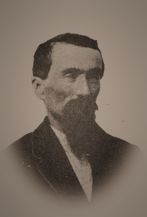
Three Years in the Confederate Horse Artillery — George Michael Neese.
November 14 — This morning we were ordered back to Orange Court House to report to the battalion of horse artillery again. We started for Orange Court House and marched about twelve miles to-day, and camped about nine miles west of Spottsylvania Court House.
November 13 — Remained in camp. This camp is nine miles southwest of Fredericksburg and right in a clearing full of dry pine brush piles and rabbits. In attempting to smoke out a rabbit some of our boys set the clearing on fire, and the whole company had to turn out and fight the roaring flames in order to save our pieces and harness from the ravages of the devouring conflagration. After the fire was subdued we took an invoice of our stock to ascertain the damages sustained, and found that we lost nothing but a few bridles and one or two horse collars.
November 12—Renewed our march this morning down the Culpeper plank road toward Fredericksburg some three or four miles, then turned off to the right and marched in a southerly course, crossed the Orange plank road and arrived at Spottsylvania Court House little before sunset; then moved down the Fredericksburg road and camped three miles below Spottsylvania Court House. The village of Spottsylvania Court House is composed of three dwelling houses, one church, the court house, and jail. The court house is brick, very small, and only one story high; a little portico at the side entrance and one at the front compose all the superfluous ornamentation on the exterior.
The country right around the village is nearly level, but the encroaching hills are not far away; from the general appearance of the land it is not very fertile. The principal part of our march to-day was through the Wilderness, a scope of country so called from its resemblance to a wild and barren waste. For miles and miles to-day we saw nothing but a vast plain nearly level, and covered with a thick growth of a kind of scrubby oak, averaging about fifteen feet in height and so thick and bushy that a man can hardly pass through the tangled mass. Here and there I saw a few cleared little patches, with a live hut in the center of each, that looked dismal, dilapidated, forlorn, and ought to be forsaken. The whole of the Wilderness is in Spottsylvania County.
November 11—We renewed our march this morning and moved down the plank road about four miles, then turned off to the left and moved in a northerly course through an almost barren section of country. About middle of the day we struck the Culpeper and Fredericksburg plank road at Wilderness Run, five miles west of Chancellorsville. We halted here and camped for the remainder of the day and to-night. We are now near the old field hospital in which General Stonewall Jackson’s arm was amputated after the battle of Chancellorsville last May. The house stands on Wilderness Run, in a lonely place about half a mile south of the Culpeper plank road; it is a good-sized farmhouse, built of wood, square, with two porticos and painted a dove color. From the apex of the roof a hospital flag still flutters in the cold November wind.
November 10 — This morning we forded the Rapidan at Rapidan Station, then moved in an easterly direction all day toward Fredericksburg. We marched on the old Fredericksburg pike, now a very rough road; at dusk this evening we struck the Orange plank road, about eighteen miles east of Orange Court House, and camped. The weather is very cold.
November 9 — Our army fell back last night and to-day to the south side of the Rapidan. All the blazing camp-fires that glowed on the fields of Culpeper last night was nothing but a programme of deceptive pyrotechnics for the special benefit and amusement of our Northern friends and visitors. We were rear guard to-day and covered the retreat of our retiring army. The Yanks advanced very slowly and cautiously all day, and we fell back just as slowly as the enemy advanced; we put our guns in position twice during the day, but did no firing. We fell back along the Orange and Alexandria Railroad. Camped to-night one mile from Rapidan Station. Very cold, with a little snow mixed with the weather. The country along the north side of the Rapidan here is low, wet, and a little marshy.
November 8 — Last night at twelve o’clock we received orders to march at daylight this morning to Culpeper Court House. The Yankees have crossed the Rappahannock and our army is falling back toward the Rapidan. At daydawn this morning we started for Culpeper Court House; we had rough road part of the way, as we came through a hilly country. As we neared Culpeper Court House we heard artillery firing in the direction of the Rappahannock. We halted at Culpeper Court House for further orders and remained there until nearly sunset; then we were ordered to Stevensburg, a little village about three miles south of Brandy Station and about six miles from the Rappahannock River.
We started for Stevensburg immediately after we received the order, but before we got to the little village we learned that the Yankees had already taken possession and were holding it, consequently we took a circuitous route and moved back toward the Court House; when we arrived within a mile of the town we were ordered to Brandy Station. It was then night and very dark, but we moved a mile in the direction of Brandy, and our horses being tired and fagged we came back to the Wallet house and bivouacked for the night. The Wallet house is near Culpeper Court House, and on the direct road to Brandy Station.
It was about eight o’clock when we arrived here and camp-fires were blazing and gleaming in every direction by the hundreds, yes, thousands, kindled by General Lee’s infantry. Here at the Wallet house all the negro quarters and outhouses are on fire and burning rapidly, which throws a dancing golden-reddish glare on the black curtain of night.
I heard cannonading on our left this evening at dusk. This evening as we were going toward Stevensburg I saw some of our infantry throwing up breastworks about a mile southeast of Culpeper Court House. From infallible indications and general appearance of all the surroundings and movements to-night I think that our army is preparing to move behind the Rapidan. Cold and windy to-night.
November 7 — Remained in camp. This is a lovely and delightful place to camp, situated among the piledup and rolling foothills of the Blue Ridge, where the roaming mountain wind that sweeps over the wooded slopes of the Blue Ridge dips down and breathes its pure, balmy, pine-laden breath around the grassy hillsides and through the winding dells.
November 6 — Renewed our march this morning with Rosser’s brigade. We crossed the Hazel, passed through Amissville, a small village on the Sperryville and Warrenton road, and arrived late this evening at Gaines’ Cross Roads, in Rappahannock County, about fifteen miles east of Front Royal.
We are camped one mile west of Gaines’ Cross Roads, in one of General Rosser’s old camps.


