February 18 — We drew new harness to-day for the whole battery.
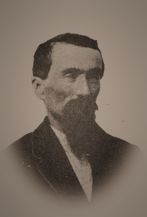
Three Years in the Confederate Horse Artillery — George Michael Neese.
January 29 — Stopped snowing last night, but this morning the snow was seven inches deep. We moved back to camp at New Market.
January 28 — Snowed last night and to-day and is still snowing this evening. Very disagreeable weather for outdoor sleeping last night, but I took my snooze in a barn. At noon to-day we moved in the Court House at Woodstock.
January 27 — Went on a scout down the Valley, to guard a forage train. Camped little below Woodstock.
February 14 — We moved camp to-day, down the Valley, to Edenburg, and are camped this evening half mile south of Edenburg, and about a quarter mile from the North Fork of the Shenandoah.
January 6 — Early this morning we renewed our march, and little before sunset we arrived at our old camp a mile east of New Market. It rained nearly all day. We traveled about one hundred and fifty miles on this little scout, and all that was accomplished on the whole expedition, discoverable by a private, is we stirred up the Yanks, and our cavalry on the night that we passed through Petersburg captured a large sheet iron bake-oven on wheels, and brought it along to camp.
January 5 — Last night we slept on the frozen ground. Service such as we have been doing for the last few days and nights is enough to kill the healthiest Indian in creation, but, strange to say, I have never felt better in my whole life.
This cold, crisp, frosty mountain air is invigorating and makes the blood leap through the veins like young spring floods, carrying health, strength, and vigor to every muscle and fiber in the human machinery and causes the inner man to call loudly for commissary supplies oftener than once in thirty-six hours. Whoop! I feel like going vigorously into action on a twenty pounder chicken pie and put myself on the outside of it, then whip my weight in wild cats.
I think it was the intention to attack the Yankees again this morning at Moorefield, but they were reinforced last night, which precluded all operations in that direction for the present. This morning we struck out for our camp at New Market. We crossed the Shenandoah mountain to-day. To-night we are camped on the headwaters of the North Fork of the Shenandoah in Brock’s Gap Settlement.
January 4 — We remained nearly two hours where we fed our horses last night, and little after midnight we renewed our march through a broken, or rather mountainous country. We forded Mill Creek at two o’clock last night. Mill Creek is a stream traversing a scope of hilly country that lies southeast of Petersburg; it empties into the South Branch two miles below Petersburg.
At about three o’clock the moon went down behind the Alleghanies; from then on until day it was very dark. Just about the time the moon set we struck Ketterman’s Mountain, which is rough, rocky, and steep, but we pressed onward and upward, and when the first golden rays of the morning sun touched the distant peaks of the Alleghanies we stood on the summit of Ketterman Mountain, looking down the tortuous mountain-bound little valley of the South Fork. We descended the mountain and arrived on South Fork at ten o’clock this forenoon, where we had left our wagons and from where we had started at two o’clock night before last.
At noon to-day we got some bread and meat, and we were surely in a fine condition for its reception, as we had not eaten a morsel for over thirty-six hours, and marching nearly all the time. Sleep is cheap, but for the last two nights we did not get even the least snatch of doze, consequently I put in a good piece of work in that line this afternoon, elegantly executed, and the soothing charms of Morpheus’ embrace were never so sweet before.
January 3 — Three o’clock this morning found us on the road down South Fork toward Moorefield. We forded the Fork some six or eight times before day.
Little after daylight we drew in sight of Moorefield, and about the first thing of moment that I noticed in particular was a skirmish line of Yankee infantry advancing through the frosty fields. Then the maneuvering commenced for taking the town, and no one knew what the day would bring forth. Our battery was ordered to the northwest of town on a hill partly timbered and about two miles from the Yankee encampment. The Baltimore Light Artillery went into position southwest of town, and the cavalry was bunched in various places ranging from the south to the northwest of Moorefield, all looking with a sort of “Oh, how near and yet so far!” spirit at the nice little group of infantry tents, with a battery of artillery in position in front, on a hill just east of town. Moorefield is situated near the South Branch in a beautiful level bottom nearly two miles in width.
To gain the position we were ordered to occupy we had to pass over the bottom and ford the river in sight of the Yankee battery, and it opened fire on us before we reached the river.
The Baltimore Lights replied to the Yankee fire and drew it from us until we gained our position, when we opened with two guns on the Yankee battery and infantry encampment, which was right in rear of their battery. We fired about thirty rounds, but the distance was nearly two miles, a little too great to do much damage.
The Yankee battery at first attempted to return our fire, but they soon found that we were beyond the range and reach of their guns, and they quit firing usward and turned their fire on the Baltimore Lights. Our line of fire was right across Moorefield, and I suppose that to-day was the first time that the citizens of the quiet little mountain town heard the war dogs growl.
Just after we ceased firing and were wondering what would be next on the programme, boom! went a cannon right in our rear, and opened the second act, scene the first.
A Yankee battery of artillery and about six hundred infantry came down from Petersburg to reinforce their comrades at Moorefield, and the first we knew of any Yanks being in that direction was when they were closing in our rear, and had already cut us off from the ford.
The Sixth and Seventh regiments of cavalry were on our side of the river and in the same fix we were — cut off from the ford. At first it looked to me as if we had another Poolesville affair on hand, only worse and more of it, as we had infantry in our rear this time, and at Poolesville it was cavalry alone.
The first thing proposed by our cavalry officers was to cut our way through the infantry. That would have been a very dangerous operation, as their infantry would have killed half of us and captured the rest. Preparations were already made for the daring, desperate charge in the face of six hundred infantrymen and a battery of artillery all waiting for us close by. Fortunately Captain Harness, of the Seventh Regiment of Virginia Cavalry, was with us, who knows every by-way and hog-path in that portion of Hardy County. He said that he could pilot us by crossing a mountain that was rough, steep, and rugged, and a little difficult for artillery passage, yet preferable to Yankee bullets and bayonets under a great disadvantage.
His proposition was accepted at once, and we struck out through the woods westward toward the mountain of deliverance, which was some four or five miles west of Moorefield. After winding through the woods a couple of hours we struck the mountain, which was rough and steep, sure enough, equally up to the full standard of Captain Harness’ representations. However, we tried the ascent. At first we followed an old wood road that was washed in gullies, and troughy, but toward the top of the mountain the road was nothing but a wide horse path, which had never been crossed by anything with wheels.
The declivities were so steep and rough that it was impossible for our horses to get the guns up without a goodly portion of extra force, consequently we fastened a long rope to the gun carriage and, with the aid of about thirty cavalrymen pulling at the rope, and as many of us pushing as could get to the wheels, we tugged up the rugged steeps a little on the Napoleon order when he crossed the Alps. Just as the sun slipped behind the Alleghanies we stood on the summit of the mountain, while the cannon were still booming at Moorefield.
We rapidly descended the mountain, which was rough and steep. The shadows of night were gathering fast, and it was dark before we reached the little valley of Luney’s Creek, stretching along the western base of the mountain.
Luney’s Creek is a small stream draining some high pasture lands, and then winds through a beautiful little valley of fertile land and empties into the South Branch a few miles below Petersburg. We crossed Luney’s Creek and soon after struck the New Creek pike seven miles from Petersburg. After we got to the pike we moved rapidly until we arrived within a mile of Petersburg, when we halted to await developments in front, as there was still danger ahead. We were not entirely on the sure side of safety yet, for we had to pass through Petersburg, which was still occupied by the enemy. Petersburg is a small and old-looking village situated on the left side of the South Branch eleven miles above Moorefield. It is situated along the New Creek pike, which is its main and only street, and runs at right angles to the river.
From the general deportment and the caution of our cavalry, I think that our cavalry officers were entirely at a loss even to guess or conjecture at the number or strength of the force that held the little village in our immediate front and right on our highway back to Dixie.
After a little careful reconnoitering our cavalry demanded the surrender of the town, which demand was granted without the least sign of resistance. There were about forty Yankee infantrymen in the place. They were left there to guard some commissary supplies. Thirty of them were made prisoners, but the rest either hid in the town or made their escape through the darkness, though not before they applied the torch to the commissary supplies which were stored in the Presbyterian church on a hill at the north end of the town.
When we entered the town with the battery the church was burning. A member of our company went to the church door to see what could be seen. He spied a large cheese a little ways up the aisle and rushed into the burning church with the intention of snatching the coveted toothsome prize from the destroying flames. He reached it, but just as he stooped to grasp it some unprincipled Union citizen that was standing near the church shouted “Powder!” and our man hastened out of the church without the cheese. The Union citizen lied, for there was no explosion. It was just natural meanness that caused him to do as he did; or perhaps he thought if our man got that cheese it would permanently establish the Southern Confederacy and destroy the Union forever.
We remained in the village about half an hour, then crossed the South Branch and moved about a mile south of town and fed our horses. It is now nearly midnight and so freezingly cold that I can hardly write. We have not eaten anything since two o’clock last night, and have nothing in that line now, but are subsisting on pure imagination, which is a slim diet in the winter time when vegetables are scarce, anyhow. The Yankee force that cut us off near Moorefield to-day left Petersburg this forenoon, under the command, I think, of General Mulligan.
January 2, 1863 — This morning we left camp at sunrise and started on a scout to Moorefield in Hardy County, West Virginia. We marched hard all day over a rather rough road and through a broken rolling country. We passed through Brock’s Gap, which is in the little North Mountain, twelve miles west of New Market. The gap is abrupt and so deep that the headwaters of the North Fork of the Shenandoah pass through it. The sloping sides of the gap are so regular that from a little distance it looks as if some giant woodman notched it with his ax for a gateway through the mountain. We passed Chimney Rock in Brock’s Gap Settlement. It is a large rock in the form of an enormous chimney, about sixty feet high, and stands isolated from the surrounding broken descent; it looks like dark limestone. It is situated about a mile from the gap in the mountain. Brock’s Gap Settlement is a small valley hemmed in by mountains. It is bounded on the west by the Shenandoah mountain. The greater portion of the little valley is in primeval forest, interspersed here and there with small farms. Most of the farms lie along the little streams that meander around the lofty foothills and wind all through the settlement searching for the Gap, where they form the Little Shenandoah and break the mountain fetters by gliding through the Gap into the open valley. The Brock’s Gap farmers seem to be a happy and contented people, and nearly all of them are born hunters. Judging from the number of deer horns I saw to-day nailed up on house or stable at nearly every little farm we passed, the farmer-hunters must be successful in the chase of the fleet-footed deer. However, some of the antlers I saw were bleached white by sun and storm, indicating that it has been many years since they went bounding over the mountain wilds.
The natural scenery throughout the settlement is strikingly grand, with its wooded, undulating ridges and steep broken hills, limpid mountain streams rushing laughingly over mossy rocks and pebbly beds, with here and there a glassy pool that mirrors in its crystal bosom the towering, piled-up, and almost overhanging bluffs and slopes that are adorned in the habiliments of nature’s richest garb of pristine glory as it came from the loom of the Great Weaver. As yet untouched by the desecrating hand of the woodman, it is the peaceful haunts of deer and grouse and the happy hunting grounds of the Brock’s Gap rifles. We crossed the big Shenandoah mountain after night. The moon hung in a cold, white, wintry sky and cast a pale light over the mountain side that dimly revealed the dark, deep ravines and the towering slopes that crowd around the narrow winding road.
It was near the hour of midnight when we reached the top of the mountain. It was freezingly cold, and the glittering hoar-frost on the mountain shrubbery glowed in the pale moonlight like crystals of silver.
Little after midnight we struck the South Fork about fourteen miles from Moorefield. South Fork is a rapid little stream winding through mountains and sweeping around hills in its whole course, and is full of bad, rough fords. It empties into the South Branch of the Potomac, near Moorefield. We moved down the Fork about two miles and halted two hours, from about one o’clock until three, and tried to eat a little midnight lunch. Our bread was frozen as hard as a bone and we had to thaw it by the fire to render it feasible for mastication.


