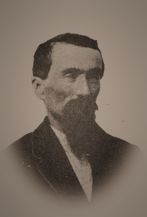
November 21 —Rained last night. I had some Yankee prisoners in charge over night.
Three Years in the Confederate Horse Artillery — George Michael Neese.
November 19 — This morning we left camp again for an all-day move. We passed through Millwood, a small hamlet in Clarke County, six miles south of Berryville, situated in a beautiful level country of fertile land that produces abundant crops. We also passed through Berryville. Camped this evening near Summit Point.
November 15 — Renewed our march at sunrise. This morning when we forded the Shenandoah, General Ewell’s infantry crossed the river to the east side. We were on the move all day and are camped this evening in Clarke County, little below White Post.
November 14 — We remained on picket at Linden till nearly night, then moved to the western base of the Blue Ridge and camped for the night near the Shenandoah River.
November 13 — To-day we moved back to Linden, to picket, so as to be In rear and command of the Flint Hill road. This is the highest picketing we ever did, and the view from here is grand and extensive. Looking east the eye skips from hilltop to hilltop until the sight is arrested by the dim outline of Bull Run mountain pictured against the eastern sky. Looking north and west the beautiful valley of the Shenandoah is spread out, a variegated map, interspersed with towns and villages, woodland and farms, hills and dales, all scattered indiscriminately over the panoramic picture that glows in the morning and evening sunshine like a vast sheet of gorgeous tapestry — the Valley bounded in the distance by the North Mountain, looking like an enormous blue wave ready to dash over the enchanting display.
November 12— This morning we went on picket one mile below Linden. Our post is in the edge of Fauquier County and on the summit of the Blue Ridge right in Manassas Gap. The general aspect of the locality and country here on the mountain top is wildly grand and picturesque. Lofty peaks here and there lift their crests toward the clouds and bathe their breezy heights in the rosy tints of morning while yet the dusky breaking shadows of night still linger in the valley below. The Manassas Gap Railroad creeps in serpentine style around the mountain hills for a few miles along the summit, then plunges windingly down the western slope of the Ridge to the bright murmuring waters of the Shenandoah. We had a regular mountain storm last night from the south, with a little rain mixed in. It howled over the mountain top and swept fiercely around the wooded peaks with a force and velocity hardly ever assumed in the low-lying valleys. It gave us a fair specimen of how the storm king travels in its royal department when it roams untrammeled through the boundless realms of its native home.
November 11—This morning we started to Linden station on the Manassas Gap Railroad, seven miles below Front Royal. The country we passed through to-day after we crossed the Shenandoah River is poor and the road rough. We passed some of General Ewell’s men that had been on the Blue Ridge destroying the railroad. We saw their work of destruction all along the road up the western side of the ridge. They burnt the ties and crooked the rails by heating them on a pile of burning ties. Camped to-night on the Blue Ridge within one mile of Linden.
November 9 — This morning we were ordered to White Post. We started at daylight and arrived at White Post before midday, but continued our march through the village, toward Front Royal. We marched till night, and camped within four miles of Front Royal. White Post is a little village in the southern part of Clarke County, near the Warren line, ten miles from Winchester. The village derives its name from a large post in the center of the place.
November 7 — Snowed all day.
November 6 — Last night was very cold, with a little rain. Six of us made a sort of sheltering shed out of rails and covered it with a tarpaulin. About midnight a horse ran over our house and played thunder with the roof. It tore a ruinous rent in the tarpaulin and came very near trampling on some of us. I never saw such crawling out of bed and house before as when the horse came through the roof.


