Following the American Civil War Sesquicentennial with day by day writings of the time, currently 1863.

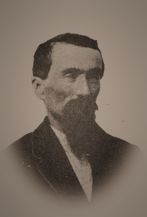
Three Years in the Confederate Horse Artillery — George Michael Neese.

September 5 — Last night at one o’clock we started for Leesburg. The road was crowded with wagons and consequently we made slow progress. We were detained three hours at Goose Creek, a small stream two miles from Leesburg, where the ford was deep and miry, and the water came near running over our guns. We arrived at Leesburg in the middle of the afternoon and fed our horses, then moved about a mile from town to a large spring, remained there till sunset, when we returned to town and camped. This evening we passed a great many infantry marching toward the Potomac. There are thousands of soldiers camped around Leesburg this evening, and all seem to be in joyous gayety, caused, I suppose, by the eager desires and bright anticipations of crossing the Potomac and entering Maryland. As I am writing I hear soldiers shouting, huzzahing all around us. Just now a brass band has struck up, which helps to swell the cheer of the merry throng.

Leesburg, the county seat of Loudoun, is situated three miles from the Potomac, in a beautiful country. From the town to the river the land is almost as level as a lake. On a little hillock south of town is a small fort, or rather earthwork, that commands all the country around town and between the town and the river. It was constructed by the militia last fall after the memorable fight at Ball’s Bluff.

September 4 — This morning we started on a scout. We went nearly to Falls Church, within about eight miles of Washington. We struck a small body of Yanks about two miles from Falls Church. We drove them back to Falls Church, where they had a considerable force, some of which were infantry. They made a bold and obstinate stand there and stood our fire much better than they usually do. We fired on them some six or eight times, when they threw out a flanking party and we had to retire with our little force, as our scouting party was small and not prepared to fight infantry.

There was a regiment of Yankee infantry packed in a narrow troughy road that was lined on both sides with large locust trees. The place was about a mile and a half from our position, and I could not discern them with the naked eye through the foliage of the trees. Some officer in our cavalry called my attention to the spot and said that there was a Yankee regiment standing in the road under the locust trees. I still could not see them until he handed me his field-glass, and told me where to look. As soon as I got the glass to bear on the place I saw about a regiment of infantry standing in close order and facing from us, ready to march. I gave them a shell, and they marched off right away, and double-quick at that.

My gun again kicked loose from its mounting today, and I had to take it off the field for repairs. We passed Vienna to-day, a station on the Loudoun branch of the Alexandria Railroad. We got back to camp at ten o’clock to-night.

September 3 — This morning we renewed our march, and were on the move nearly all day. We passed a great many troops, all marching toward the Potomac. We halted at Dranesville and remained there till nearly sunset, then moved one mile west of the village and camped. We crossed the Loudoun and Alexandria Railroad to-day.

September 2 — This morning we renewed our march and moved within six miles of Fairfax Court House. We passed a great many wagons moving toward Fairfax and also some infantry marching in the same direction. We are now in Fairfax County, and camped on the Little River pike.

September 1 — We renewed our march early this morning, passing through Salem on the Manassas Gap Railroad, in an eastern course, frequently touching the railroad, and passed the Plains, a station on the Manassas road. We came through Thoroughfare Gap, which is a rugged gorge in Bull Run Mountain and the western gate to the plains of Manassas, through which the Manassas Gap Railroad passes. At Thoroughfare Gap the Yanks had the pass blockaded a few days ago, attempting to prevent General Longstreet from reenforcing General Jackson, who, playing a bold game with a good hand in General Pope’s rear, executed smashing havoc to his haversack ammunition and general supplies at Manassas Junction.

The gorge in the mountain is very narrow and abrupt and looks as if it could be successfully defended by a few hundred determined riflemen against almost any force that would assail it. The enemy had barricaded the main road that leads through the pass with felled trees and large rocks which they had rolled from the almost perpendicular side of the gap into the narrow road; behind the barricade they had a line of infantry, and behind the rocks and trees on the mountain side sharpshooters with long-range rifles were ready to pour a deadly fire into any assaulting party that would dare to approach the dangerous gate from the west or south side. On the east side of the mountain, or rather in rear of the Gap, they had another line of infantry, ready to support and protect the men immediately behind the barricade. When Longstreet’s column, hastening to the urgent relief of Jackson, dashed like a storm-driven wave against the blockaded mountain gorge and demanded a pass with the thunder tones of artillery and the crash of musketry, his victorious column swept everything before it like a flood of rushing water and passed through the Gap and over the plains of Prince William County like a mighty stream that has overcome and swept away some opposing barrier. Directed by the deep thunder of booming cannon that came rolling from the east, Longstreet pressed on his onward way to where old Stonewall was unfolding the science of strategic war and still successfully baying the hosts of the mighty Pope. Toward evening we struck the plains of Manassas, and soon after arrived on the field where a few days ago General Jackson fought one of his hardest battles.

The first indications that I observed of a recently fought battle were hundreds and hundreds of small arms of all descriptions that had been gathered on the battle-field and piled up along the road. When we got to the part of the field where the struggle had been the most desperate and destructive the Federal dead still lay there by the hundreds. At one place I could distinguish where the enemy’s line of battle had been, by the many dead lying in line where they fell. Where their batteries had been in position dead horses lay thickly strewn around. A disabled gun and the wreck of blown-up caisson marked the spot where the fire of the Confederate batteries did its destructive work.

At one place I saw the guns of a Yankee battery that had been charged and taken by the Confederates, still in position. White flags were flying all over the field to-day, and the Citizens’ Relief Committee of Washington, with two hundred ambulances, were on the field burying the dead and gathering the wounded. I saw at one place where they were burying eighty men in one trench. Some have lain on the field four days and their upturned faces were as black as African negroes.

I saw one wounded Federal lying under a little white oak bush out in the open field. I suppose he had been there for at least forty-eight hours. He was nearly perished with thirst and begged me for a drink of water. I did not have a drop and did not know where to get any. I did not see any farmhouse near nor far, and we were under marching orders, liable to move at any moment. I told him that water was scarce in his present neighborhood, but that was sad news, poor consolation, and poverty-stricken comfort to a man who is dying for water. It was enough to cruelly crush his last hope. I told him that the Citizens’ Committee from Washington was on the field and I would tell the first man I met where to find him, and he would administer to his pressing wants. The poor wounded man exclaimed: “Oh, I have heard that for the last twenty-four hours, and they have not found me yet.” Ah, what a striking object lesson on the horrors and probable vicissitudes of cruel war! One moment a strong robust man may be wielding the saber or bayonet like a Hercules and the next instant he may be lying on the field as helpless as a babe and begging his antagonist for a drink of water.

Soon after I left the helpless soldier I met some of the Washington Relief men and told them of his critical condition and exactly where to find him. As a couple of us were passing over the battle-field we met a well dressed, fine-looking man, probably he was a surgeon belonging to the Relief Corps. He stopped and in a snappish manner, remarked, “Well, you have defeated us again, and this is the second time on this field, but it will have to be tried over.” We replied, “All right, give us a fair shake and we will thrash you again.” That shot was a surpriser and silenced his mouth-piece.

He drove on then, looking as sour as if his mother-in-law had drenched him with double-proof crab apple vinegar for a month.

Late this evening we were ordered to move toward Fairfax Court House. When we had marched about four miles in that direction it grew pitchy dark and we dropped by the roadside and camped.
August 31 —Last night at nine o’clock we received marching orders, and half an hour afterwards found us on the move through the dark. The sky was overcast with thick clouds, and the night all through was as dark as black could make it. We went to within a mile of Amissville, then turned to the left and moved in a northeastern direction over a rough road until we crossed the Rappahannock. Then the road was smoother. We forded the Rappahannock just before day. The ford was very rough and the Fauquier side was very slippery and steep, consequently some of the army wagons that were in front of us stalled, and we were detained some little time before we cleared the river. We marched till night, and camped one mile west of Salem in Fauquier County.

August 29— We are still in camp at Gaines’ Crossroads, waiting for ammunition. We have no ammunition at present suitable for our Blakely gun, and there is none in the brigade ordnance train. This morning we heard heavy cannonading in the distance toward the east.

August 26 — Last night at one o’clock our old bugle bleated around camp and waked us from a very sweet sleep to weary marching, and I felt very much like choking the man that dares to make such a blasted blowing noise at the stilly hour of midnight; but such is war when well followed. Whenever our haversacks are loaded with three days’ rations we may look for marching orders at any moment, day or night. Soon after the bugle sounded we were on the march toward the Blue Ridge. At daylight we arrived at Amissville, a small village in the southeastern edge of Rappahannock County. We halted there for the brigade wagons, which came up at nine o’clock. Then we renewed our march and moved to Gaines’ Crossroads, and camped. Gaines’ Crossroads is in Rappahannock County, twelve miles west of Warrenton. A great many of Jackson’s wagons are camped here.

August 25 — The sharpshooters were firing at one another across the river all night. The Yanks made three attempts during last night to burn the bridge, but our sharpshooters drove them back every time.

This morning the Yanks on the hill near the bridge were firing swivels at us. A swivel is a species of young cannon, light, and mounted on a tripod that looks something like a surveyor’s compass. The barrel is fixed on a swivel or turning point. The ones the Yanks fired at us this morning threw a shot about the size of a walnut. However, I did not see any of them. I judge the size only by the keen whiz they made as they sped past us. I wonder what these Pope Yanks will try on us next — shoot a blacksmith shop or a buzz saw at us, I expect.

This forenoon we moved back to our wagons, about three miles from Waterloo bridge. When we left, the sharpshooters were still firing at one another across the river. In coming back to camp we passed some of General Hill’s infantry going toward the bridge. This evening we cooked three days’ rations.

August 24 — This morning we went up the river to a ford a few miles below Waterloo bridge and crossed the river. All our cavalry that were on the dangerous side of the Rappahannock crossed to the safe side. This morning after we forded the river I took my gun to a blacksmith’s shop and had it repaired.

This afternoon we moved up the river to Waterloo bridge, in order to protect it from Yankee incendiarism. It seems they have marked it for destruction by the torch. If I were a Yankee general and had made the bombastic announcement, just three weeks ago, that I had never seen anything of the Rebels but their backs, I would certainly be ashamed to resort to bridge burning to keep the Rebels from getting to me. When we arrived at Waterloo the Yanks had a battery in position on the Fauquier side of the river, on a hill commanding the bridge and its approaches on this side of the river. They also had three regiments of infantry near the bridge. One of our guns and one of Captain Pelham’s guns went into position and fired on the Yankee battery. They returned our fire forthwith, and the Yankee artillery must be getting cross as they fired solid shot at us, trying to break our guns; but unless they get better gunners than they had this afternoon we will never receive much damage from such wild, scatter-gun shooting as they did to-day from all the solid shot in Uncle Sam’s pocket.

Late this evening we were ordered to put the first gun into position in a direct and raking line with the road that approaches the bridge on the Fauquier side of the river. We did it rather clandestinely, by winding through a thick brushy woods, in the edge of which we planted our gun unobserved by the enemy. Yet they were in full view of our position. The Yanks had a battery in position bearing on the bridge and two companies of infantry in column in the road fronting toward the bridge also.

I aimed my gun at the infantry in the road and loaded it with a percussioned shell and was ready to open and awaiting orders to fire. After waiting about fifteen minutes General Fitzhugh Lee came riding through the brush. When he got up to our position he dismounted and looked over the sights of the loaded gun and observed its line and range, then said: “Who aimed this gun?” After being told who did it, he remarked that it was very well done, and if fired with its present aim and range it would kill some of that infantry over there in the road.

He then called me up to the piece and said, “I do not want to hurt anybody; turn your gun on that battery and open fire on it,” which I did. The infantry referred to were the two hundred Yanks standing in the road in columns of fours, and the battery we fired on was on the left of the infantry in a field and a little higher up the hill. When we opened on the battery the infantry broke and flew for the woods. In two minutes after we fired the first shot every single one of the infantrymen were in the woods and out of sight. The Yankee battery promptly returned our fire, with four guns. We fired three shell at their battery, then withdrew from our position. At sunset we were ordered by General Fitzhugh Lee to take a position to rake the bridge in case the Yanks should attempt to burn it during the night. We got a commanding position and aimed the gun right at the bridge. At dark we loaded our piece and lay down and slept by it. However, we kept a sentinel on post near the gun to report alarms and receive orders during the night.