August 13 — This morning we went on picket. First we went east of Orange Court House, on a high hill where the Seventh Regiment of Virginia Cavalry was. We remained there about two hours, when Colonel Jones ordered us west of town just in rear of the town lots. We got a splendid position on a hill commanding the Culpeper road. We remained there till nearly night, but no Yanks appearing we returned to camp. I saw General Longstreet to-day for the first time.
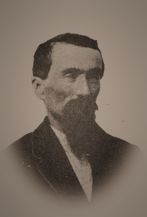
Three Years in the Confederate Horse Artillery — George Michael Neese.
August 12 — Last night the infantry were all ordered to make camp-fires, and just after dark a thousand bright beacons blazed over the plains and along the hillsides all around our camp, yet I thought it strange that so many fires were necessary on a hot and sultry August night so soon after nightfall. Jackson’s infantry began to move back toward the Rapidan soon after the camp-fires were in full blaze, and of the thousands of troops that were camped around us when we lay down to sleep last night not a single man was in sight this morning when we awoke, and the camp-fires were all dead. The camp-fire business last night was some of old Stonewall’s sleight-of-hand performances, and the fire trick was a sort of transformation exeunt scene — now you see it and now you do not — for the special benefit and amusement of General Pope.
Early this morning we moved to General Robinson’s headquarters, which was about a quarter of a mile from where we camped. We remained there in an orchard an hour, when the first gun was ordered out to check some Yankee infantry that were seen advancing. We had moved Yankeeward with the first piece but a short distance when the Yanks halted, spied our gun and saw that we meant business, then about-faced and left the patch.
We remained in the road about half an hour to see whether the Yankees had anything else that they intended to try soon, but it seems that they were satisfied for the time being, and were willing to settle down.
We returned to Robinson’s headquarters, and soon after took up the line of march for Orange Court House, but before we left I saw a Yankee line of battle formed nearly at the same place where Pope had his line on the 9th.
General Pope received heavy reinforcements since the recent battle, and I suppose he was ready cocked and primed to-day to receive a charge from Jackson’s campfires that he (Pope) saw last night, for when he formed his line of battle this forenoon Jackson was on the safe side of the Robinson River with all his movables except the ashes of his fires.
As we slowly fell back a few Yankee cavalrymen followed us at a safe distance, until we crossed the Robinson, when we went in battery and waited a while for the Yanks to come in range, but they saw the preparation we had made for their special reception and heedfully concluded not to venture within reach of our guns. We then limbered up and renewed our march unmolested. Before we got to the Rapidan a heavy thunder-shower that drenched us to the skin poured water all over us. It even washed out my haversack.
We forded the Rapidan at Madison Mills and moved one mile south of Orange Court House, where we are camped this evening. Jackson’s whole army is on the south side of the Rapidan.
August 11 — Remained inactive all day. The Yanks came over under a flag of truce, asking permission to bury their dead, which was granted; and their burial parties were at work on the field under the friendly flutterings of a white flag, packing away their comrades for dress parade when Gabriel sounds the great Reveille.
Ah, my silent friends! you came down here to invade our homes and teach us how to wear the chains of subordination and reverence a violated constitution. In the name of Dixie we bid you welcome to your dreamless couch under the sod that drank your blood, and may God have mercy on your poor souls and forgive you for all the despicable depredations that you have committed since you crossed the Potomac.
Our troops are gradually falling back toward the Rapidan.
August 10 — This morning when I awoke the wounded Federals were still lying on the field. Little after sunrise we started with Ashby’s old brigade of cavalry, now commanded by General Robinson, on a general reconnoissance to the right of Pope’s army. We moved off to the right of the battle-field and passed around the end of Cedar Mountain to the east side, then moved out on a beautiful level plain traversed by the Orange and Alexandria Railroad. After we went about three miles we struck the railroad and followed it about a mile and a half. We were then near General Pope’s army, and some of our cavalry that were scouting through the woods not very far from where we halted with the battery ventured unawares near Pope’s headquarters. I do not know whether our scouting party was discovered by the enemy or not, nor how close we were to the Yanks; but we were ordered to go into position with as little noise as possible and were even not allowed to talk above a whisper. Danger must have lurked near; however, I did not see it.
When we fell back from the advanced position we did it by sections; one section remained in battery until the other one retired and went into position. There must have been something dangerously close around that caused such a silent and cautious movement. When we had fallen back about a mile we remained in battery about half an hour, then returned to the hill south of the battle-ground where we were yesterday when the battle opened. We did not come back over the same route we went this morning, but flanked farther east and had to cross Cedar Mountain to get back, as the Yankee cavalry were looking and feeling for us along our morning track. I heard this morning that General Pope is getting heavy reinforcements from the direction of the Rappahannock.
I know now that the main object of our reconnoissance was to ascertain what is transpiring in Pope’s rear just at this particular time, after receiving his first military object lesson as taught by Stonewall Jackson.
We are camped this evening on a hill south of and overlooking yesterday’s fighting ground.
August 9 — The band that played last night belongs to General Anderson’s Brigade.
This morning we were ordered to the front, which lies in the direction of Culpeper Court House. We started early, and even then the road was already crowded with baggage and ordnance wagons all headed toward Culpeper. At nine o’clock we crossed the Rapidan River, which is the boundary between Orange and Madison counties. We forded the Rapidan at Madison Mills, and passed through a corner of Madison County, then crossed the Robinson River into Culpeper County.
About three o’clock this afternoon we sighted the enemy nine miles from Culpeper Court House. Jackson’s batteries were ordered to the immediate front, took position and opened fire on the enemy right away. I think this initiatory fire was for the sole purpose of inducing this great and pompous man, Pope (who is just from the West, and boasts that he has never seen anything of the Rebels but their backs), to disclose his intentions and feel his front. The enemy was prompt in replying to Jackson’s batteries, and the cannonading soon after became general along the front, and opened the battle of Cedar Mountain.
From the way the trains were running last night and bringing troops from the direction of Richmond, and from the bustle and stir in the infantry camps, I thought that Jackson was fixing to butcher, but I had no idea that the eventful sword measuring that of the mighty Pope would be drawn so soon. I have no idea what kind of timber is in the make-up of this military giant from the West who has been feeding on eagle meat, but unless he is awfully superior to the Yankee generals that operated in the Shenandoah Valley a few months ago and butted up against old Stonewall, he will find that by the time he bumps against the sticking qualities of Jackson’s bayonets, and receives a few practical object lessons in flanking from the master of that art, he will be ready to soar to Washington and whisper to the Secretary of War that he (Pope) believes and is under the serious impression that he has had a peep at something of the Rebels on the fields of Virginia that did not exactly look altogether like their backs.
The field where the battle of Cedar Mountain was fought is a plain about two miles long and half a mile wide, skirted on each side with woods. On the southeast side is a large hill, or rather a little mountain, covered with timber. Nearly at the summit of the little mountain Jackson had a battery which did good and effective work during the fight.
At the northern extremity of the plain General Pope had his line of battle, at the edge of a beautiful field rather sloping to the south. Our infantry was thrown out on the right and left in the woods, and advanced on the enemy’s line at least a part of the way under shelter of the woods.
Our infantry debouched from the woods about half a mile from Pope’s battle line and drove in the heavy skirmish line in its front, then advancing in splendid order and battle array on the enemy’s main line, and soon after the storm of musketry began to rage furiously along both lines with the same fearful, terrific roar, only more of it, that I heard at Port Republic.
In the meantime our infantry on the extreme left advanced in quick time and promptly assaulted the enemy’s right, which was composed of splendid troops that fought well and stubbornly clung to their position with obstinate tenacity and such undaunted courage that eventually they charged Jackson’s left with a determined onslaught that caused an Alabama regiment to waver and about ready to do that which would permit them to fight some other day. They had already commenced to let Pope have a sly glance at their backs, which was a dangerous exhibition just at this juncture, as it came very near stampeding our whole left wing. I was near the place where this mixing affair occurred, and saw our men come rearward in a sort of wild, conglomerate, stampedy mass.
Just then, and in time to prevent a disastrous wavering and general stampede, General D. H. Hill, with drawn sword, appeared among the apparently disorganized troops, and with urgent appeals and persuasive demeanor he succeeded in rallying the wavering and started it in order toward the front.
After a strengthening plaster had been applied to the weak and shaky place in his line, by the ubiquitous and invincible Stonewall in person, the left wing again advanced with redoubled courage, and in turn swept back the Yankee line beyond its first position. The battle was now in full bloom all along the line. Jackson’s batteries on the mountain side were still thundering away and doing good work, while on our right a continued blaze of fire flashed along the opposing lines of infantry and the musketry raged with terrifying fury. The surrounding air was full of flying messengers that gathered in with a dull thud many inhabitants for the silent city of the dead. I saw our wounded pass to the rear. . Some were able to walk and others were carried back on stretchers — among the latter General Winder, who commanded the old Stonewall Brigade, mortally wounded.
The battle lasted till about sunset, when the musketry ceased; but there was some artillery firing till nearly midnight. Our forces drove the enemy about four miles, and we held the battle-field.
At dark the first gun was ordered forward, and we went down on the field and bivouacked right where an Ohio regiment that was charged by a North Carolina regiment this afternoon occupied the Yankee line. Before the terrible fire of the Yanks slackened and their line began to waver and sullenly fall back under the severe pressure of Jackson’s war machine, here the conflict had been desperate and severe; but as the gallant North Carolinians debouched from the woods they fired a volley into the Ohioans at close range, then rushed down, the hill firing as they went, and before they reached the Ohioans close enough to work on them with cold steel the Buckeye boys had retired with thinned ranks.
The Federal dead lay all around our bivouac, and I heard the pitiful groans of the wounded and the low weakly murmurs of the dying. When I lay down on blood-stained sod to snatch a few hours of sleep it was then two hours after midnight, and the desultory artillery fire that was kept up in the fore part of the night had fully died away and the dogs of war were silent once more.
The sudden and abrupt vicissitudes of sanguinary war rush a man rough-shod from one end of the scale of human experience to the other. Last night I was lulled to sleep, as it were, by the enlivening and inspiring strains of a band playing “Home, Sweet Home”; to-day I heard the hideous roar of battle, and to-night I am kept awake by the constant and pitiful murmur of the wounded and groans of the dying without any “Sweet Home ” in it.
If this cruel war lasts seventy-five years, and the, Yanks don’t kill me before it ends, I hope that I will never be compelled to bivouac on another fresh battlefield.
The same silvery moon that flooded the hills of Orange last night hangs again in an unclouded sky and bathes the plains of Culpeper with a sea of mellow light, and the battle-field lies in a weird silvery glow nearly as light as day. The moonbeams that played last night with velvety fingers, penciling with silvery sheen the silent hieroglyphics of Hope that flashed over the cheeks of sleeping soldiers as they dreamed of home and loved ones far away, to-night silently falls and lingers on many upturned faces that are as cold as marble and wearing the pallid and ghastly hue that can alone be painted by the Angel of Death.
I wonder where that band is that played “Home, Sweet Home” last night. I wish it would come right here and play “Come, Ye Disconsolate,” so as to drown this constant wailing of the wounded.
Our battery was not engaged to-day, but we were under fire of the enemy’s batteries about twenty minutes.
August 8 — To-day we moved to Orange Court House. We passed through Summerset, a little hamlet eight miles west of the Court House. Orange Court House is a small town situated on the Orange and Alexandria Railroad, about nine miles from Gordonsville. We are camped in a field east of town. There are a great many infantry camped around here, and from all appearances the butcher business will be flourishing in a few days, and war that is budding for bloom will soon break out in a fresh place.
This is a beautiful night. The moon hangs like a great refulgent shield in a clear sky and bathes the dewy hills with a flood of silvery light. Not a speck of cloud stains the cerulean dome through which the brilliant night queen marches among the silent stars that glow along her pathway like tiny islands of gold floating in a pale blue sky. As she leads her shining train toward the crimson couch of dying day, the soft still air that breathes over the pasture fields and creeps through the shadowy woodlands and along the grassy hillsides, then plays over the cheeks of a thousand sleeping soldiers couched on nature’s carpet, is as soothing and delightful as the zephyrs that play when the ocean storms cease.
At midnight a brass band which I think came on an incoming train played some five or six pieces, the last of which was “Home, Sweet Home.” As the familiar strains of the grand old piece stole through the midnight air they seemed to me like sweet echoes from the bending skies which wake a thousand thoughts of other days, of home and friends far away, that perhaps I will never see again; of happy scenes in the peaceful days of childhood that now return no more; all rushed in solemn troops through my memory as sadly as a weird night wind that sighs and moans through the strings of a broken harp. I know that there are hundreds of men lying on the silent hills around me who will never see home again nor hear the friendly voices of loved ones that are dreaming far away.
I tried to banish the reverie, but it sticks to me even after the music has died away, and I wish for the power and might to rise and shell off my blanket and smash to atoms every implement of war in all creation, so that we could all go home satisfied and gratified and dwell in peace forevermore with all mankind.
August 7 — We remained in camp all quiet until dark; then were ordered out toward Ruckersville, which is northwest of Barboursville. After we went about two miles it was reported that the Yanks were crossing the Rapidan five miles below us. Then we returned to camp and settled down for all night.
August 6 — Remained in camp yesterday, but this morning we renewed our march toward Gordonsville. When we arrived within two miles of the town we turned to the left and went to the Madison Court House pike, marched about a mile on that road, then moved across the country to the Orange Court House road and marched about a mile on that road, then moved to the Standardsville road. We passed through Barboursville after dark, and are camped one mile west of it on the Standardsville road. Barboursville is a small village in Orange County, about five miles northwest of Gordonsville. To-day we passed General Hill’s division, which was on the march toward the Rapidan.
August 4; — Renewed our march. We passed Ivy Depot, a station on the Central Railroad, seven miles from Charlottesville. We passed through Charlottesville, the county seat of Albermarle. It is a considerable town. It has one street that has the appearance of something like a small piece of city dropped there among the foothills of the Blue Ridge. Nearly a mile west of town on a beautiful eminence is situated the University of Virginia, one of the most renowned institutions of learning in the South. Two miles southeast of town is Monticello, a conical shaped hill of considerable altitude. Right on the apex of the cone is a large brick house, where Thomas Jefferson lived and died.
There are some six or eight large hospitals in Charlottesville, for Confederate sick and wounded.
We halted in town about half an hour, then renewed our march toward Gordonsville in Orange County, and about a mile east of Charlottesville we crossed the Rivanna River. Camped near Keswick Depot on the Central Railroad, about eight miles from Charlottesville.
August 3— Remained in camp. A train laden with soldiers passed here to-day, going to Gordonsville.


