Following the American Civil War Sesquicentennial with day by day writings of the time, currently 1863.

Three Years in the Confederate Horse Artillery — George Michael Neese.

December 31 — The men were a little slow in bunching this morning, but eventually we all got together and proceeded to an old stone church at the eastern edge of town on the Berryville pike, which was used as an arsenal. There we got a new gun, ammunition, harness—a full equipment for a new detachment. Heretofore we had but two pieces in the battery, both rifled guns. This new one is a twelve-pound howitzer, a valuable and necessary adjunct to the battery, as howitzers are very effective at close range, and especially adapted for grape and canister.

After we got everything arranged in good condition we struck out for Martinsburg, where we arrived this evening, New Year’s Eve.

December 30 — Late this afternoon a squad of men was detailed to go to Winchester after a new gun for the battery. I was one of the detail, and at dusk we left Martinsburg, nearly all of us riding bareback. It was about ten o’clock when we arrived at Winchester. We hitched our horses in the depot yard and the men scattered over town seeking quarters for the night. As I have recently taken practical lessons at Dam No. 5 in roughing it, I did not put myself to any inconvenience nor waste any time in searching for quarters, but wrapped my blanket around me and crept into a stack of baled hay in the depot yard, and there wooed Nature’s sweet restorer. It was a little coolish, but I slept well. A horse eating hay near my head when I went to sleep was my slumber song.

December 23 — Moved into winter quarters, in a good house in the southeastern suburbs of town, and near a good spring.

December 21 — To-day we came back from Dam No. 5 to our old camp in Martinsburg.

December 20 — Went to the highland near the dam, and had a spirited and lively duel with a Yankee battery across the river. We had one man slightly wounded. After the firing we fell back a little distance and bivouacked in a field.

December 19 — This morning we went on a little reconnoissance to a large field that slopes away from the river a little distance below the dam. The edge of the field and the river is fringed with a dense thicket, and is much higher ground than the Maryland side. Here and there were small open spaces in the undergrowth, and from one of these we plainly saw the Yankees’ infantry and a battery of artillery. In a very few moments after we spied them we had impressive information that they saw us about as plainly as we saw them, for they sent us their compliments in the form of a few shell from rifled guns. These were the first shell that ever flew over me. Though oblivion may blot all else from my memory, its darkest waters can never erase the remembrance of the tremor of fear that rushed all over me, and crept into every little corner about me, from my hat to my shoes, when I heard the frightful screaming whiz of the first shell. Somebody remarked that it was a twelve-pounder. Of course I am not used to hearing these things, but from the way it sounded to me I think it was about the size of a nailkeg — or a little larger.

It is wonderful how close to Mother Earth a raw recruit can get when he hears the “Hark from the tomb” of the first shell. When, the first shell passed over our heads to-day I laid so close to the ground that it seems to me I flattened out a little, yearning for a leave of absence. Our battery was not in position when the Yanks opened on us, and they did not even see our guns; but four of us Rebel curiosity-seekers had stuck our heads above the bank, which was the sole object that drew the enemy’s fire, with the expectation, I suppose, of finding bigger game behind the bushes.

The Second Regiment of Virginia Infantry was bivouacked in a field back of the one we were in, and in range and line of the Yankee shell. The men had their arms stacked, and were grouped around their fires, a great many with their blankets spread in the sunshine, but when the Yankee shell screamed across the field— one of which exploded over the regiment—it created a lively scene for a while, and caused a general stir among the men. Bivouac, equipage, and spread out blankets were ready to move in a very few moments after the report of the shell died away.

We did not reply to the fire of the Federal battery, but remaining on the field about an hour after they ceased firing, went back to camp about a mile from the dam.

This evening after dark we went above the dam on a hill for the purpose of firing on the riflemen and battery, while Jackson’s destroyers were working on the dam, but with their artillery the Yankees set a mill on fire on this side of the river near the dam. The burning mill threw a light on the dam almost as bright as day, which made it too hazardous for the destroyers to operate.

The light of the burning mill had no effect on our position, as a hill covered with thick woods screened us, and we were in perfect darkness, and a good distance from the mill. Yet I heard a bullet whiz over my head, and I have been wondering what the man was shooting at that fired it; and have come to the conclusion that it must have been fired by one of these angelic philanthropists of the North who has been taking lessons in religion from ” Uncle Tom’s Cabin” and has come down here to gratify his saintly prejudice by shooting at the Southern Confederacy in the dark.

We remained in position until we learned that the work on the dam had been abandoned, then we fell back a little distance and slept in a wood, without fire.
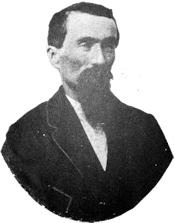
December 18 — General Carson, who has command of a militia brigade, came to the battery to-day and stated that he had a picket of twelve men in a mill down the river near Falling Waters, and that the Yankees had placed some artillery in position on the opposite side of the river, and were firing on the mill, and his men were afraid to venture out. He seemed to be very anxious about their safety in their, what he deemed, perilous predicament, and asked Captain Chew to take his battery down and drive the Yankee battery away, and let his picket out.

A few moments after General Carson requested our services found us on the way to Falling Waters, which is about five miles from Dam No. 5. Before we got to the mill that held the captive picket we saw the Yankee artillery in position. They had but one piece in a large field that slopes toward the mill, about half a mile from the river. We opened at a mile distance, with one gun, and fired six rounds. These were the first shots I helped to fire; Heaven only knows where the last ones will be. The enemy hastily left the field after we opened, without making any pretension to return our fire. General Carson came riding up to the field where we were in position, and thanked Captain Chew for the service rendered in rescuing his pickets, and said that his men were certainly very glad to make their escape from what they considered a dangerous situation. This evening we came back to Dam No. 5 and arrived at seven o’clock.

December 17 — Left Martinsburg at noon and marched to Dam No. 5, which is one of the dams on the Potomac that feeds the Chesapeake and Ohio Canal, and seems to be one of the objects that General Jackson has marked for destruction. We are camped in the woods about half a mile from the dam, without tents or fire. This is my first night of roughing it, and a rather cheerless opening of a campaign for a raw recruit, as the night is cold and no friendly campfire casts its genial gleam athwart the chilly darkness.

This seems to be one of Jackson’s secret moves, and camp-fires would betray our presence. After we had repaired for the night to our blankets and the ground, I heard a great rustling among the dry leaves right in our camp. When I raised from my blanket bed to ascertain its cause I saw Jackson’s infantry marching through the woods, close by our camp, going toward the dam. Soon after Jackson’s men passed toward the river a desultory firing commenced between our men and the Yanks, shooting at each other across the river.

December 13 — This morning I bade farewell to my militia comrades, took the stage at the fair ground, and came to Martinsburg. James H. Williams, who is recruiting for the battery and who induced me to join it, came with me. I arrived in Martinsburg this afternoon, and at once came to the camp of the company, which is near the railroad shops. Everything is strange to me, town, country, people, officers, and not a man in the company that I have ever seen or heard of before.

I had an introduction to Captain Chew, who is sick in his tent, but from the little conversation that I had with him, and from the soldier-like appearance of his environments and his gentlemanly deportment, together with the courteous welcome he gave me as a stranger to his command, I am almost convinced already that what I have done to-day will in the end prove to have been a prudent act, as I will be under the immediate command of one who has studied the art of war.

R. P. Chew is from Jefferson County, a young man, and a graduate of the Virginia Military Institute, the latter fact being the great incentive that induced me to join a company of entire strangers.

The principal part of the men in the company are from Jefferson County, with a few members from Loudoun and Berkeley counties.

For the last two weeks I, with four militiamen, have been on detached duty guarding a siege gun in position at the Smithfield house, on the eastern outskirts of Winchester. But to-day, December 11, 1861, in the Smithfield house I volunteered to join Chew’s Battery, an artillery company that was organized in Jefferson County about the first of November, for the express purpose of operating with Colonel Ashby’s regiment of cavalry.