April 23. — It rained all day, thus putting off any movement for some days. General Benham, I hear, is blamed for not sending down the material with the canvas boats, for making a bridge at Port Royal. His orders, however, were to send the boats only. The teams were ordered to be returned from the pontoon trains, and the trains parked. Everything looks as if the whole plan for the movement was changed. I went over to headquarters in the afternoon. John Perry and Henry Abbott were over here in the afternoon.
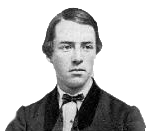
War diary and letters of Stephen Minot Weld
April 22. — Rode down to the river, and saw the places where it is intended to cross the river. Three bridges are to be where Franklin formerly crossed, and two a mile below. Two also at Bank’s Ford, where I did not go. The report is that our cavalry all crossed at Rappahannock Station to-day and that the Orange and Alexandria R.R. is running. The general and Captain Clapp and Major Hewitt and myself formed the party that went out this morning. A division of General Reynolds’s corps went clown to Port Royal with some of our canvas pontoons. They came back again without crossing.
April 21. – Captain Falley’s train moved from Major Spaulding’s this afternoon to Major Beers’s camp. Rode over to Major Spaulding’s and to General Couch’s headquarters with General Benham. Went ahead with a road party to repair road, etc. The Regulars moved their train to a point near the river. Major Cassin also moved his train some hundred feet or so. The only mule teams that arrived at the time they were ordered were Major Cassin’s. The others were from an hour to two hours late.
April 20. – It rained to-day, and I had to start with Waterman’s train to go over to Major Spaulding’s. I moved it to a point a mile the other side from the railroad, where I was relieved by an officer from Major Spaulding. The Regular battery reported to General Benham, and had Captain Wood’s old train assigned them.
April 19. — The general had some of the new pontoon boats of Waterman’s put together, and sent for General Hooker to see them, but the general could not come. A detail of eight or ten men was made from each regiment, composed of the best mechanics, to see the boats put together. The general and Captain Comstock went down to the river, where General Franklin crossed in December. This is the first time we have had any hint in regard to the army’s crossing at this place. General B. says we have got to butt against the enemy somewhere, and that we might as well cross here as anywhere. Major Cassin’s trains moved to near the Wallace House. John Perry and Abbott were here to-day.
April 18. — Started from Stafford with my wagons a few minutes past six A.M. Reached General Howard’s quarters myself about 8. Asked him for a new detail of 100 men to relieve the 100 obtained early in the morning from the 82d Ohio. He was very pleasant and obliging, and ordered the men to meet me at Brook’s Station, where I arrived with train about 10 o’clock. Found my detail and pushed on to our headquarters, which I reached about 2.30 P.M., without meeting with any accident except having a team run away and tumble into Potomac Creek. We had a tough time getting up the hill near the creek, but after that everything went straight. There was a Captain Mensel of General McLean’s staff who had charge of the fatigue party of 100 men. He lunched here with me, and was very agreeable.
April 17. — General sent me down early in the morning to Hope Landing with an order to Mr. Waterman to send up the train immediately, and also ordered me to direct the train. I reached Hope Landing at about o’clock and started the train by 12. Such a miserable, green, balky, God-forsaken set of horses I never saw before in my life. All the 23 teams utterly refused to draw except one, which went ahead very well. To make matters worse, there was a corduroy road leading up a very steep hill which we had to go over in the first part of our journey. After getting all the teams up the hill, I rode on to Stafford Court House to see Colonel Asmussen, General Howard’s chief of staff. I got a detail of 100 men from him and went back to the wagons with them. On my way to Colonel A.’s I stumbled on General Slocum’s headquarters, and found Charles Horton, Morse, and Motley. I got my wagons as far as Stafford Court House by 8 P.M., having gone some three miles in 8 hours. Colonel Asmussen gave me a bed, a stable for my horse, etc., and treated me very kindly indeed. In the evening I had a guard placed over my wagons, having first telegraphed for permission to park at Stafford Court House for the night, which was granted. I went to General Slocum’s in the evening and passed a pleasant hour with Morse, Horton, and Motley. Day pleasant. Cloudy part of time.
April 16.— Day was pleasant. Rode over to General Howard’s headquarters, and showed him an order from General Benham to inspect the pontoon train. He was very polite and sent an aide with me to Hope Landing, where the train was. Got down there and saw Captain Lee, Quartermaster, and Mr. Waterman, a civilian, who has charge of the train. The train consists of 22 wagons, with 8 boats, which are taken apart on the march and put together again when needed. One boat consists of some 35 to 40 pieces. The pieces are all tongued and grooved, and then bolted together. The stringers arc 33 feet long, and the bays 25 feet in length. The chess are common plank, and average some 15 inches in width, and 15 feet in length. The boats are 18 feet long and 8 feet wide. I should think that they would be liable to leak on account of the numerous joints. It takes some fifteen minutes to put a boat together. The horses are very poor indeed, and very green. The train is in charge of Mr. Waterman, who receives $150 a month, and 16 mechanics, who have from $2 to $2.50 [a day]. Got back to camp about 2 P.M.
April 15. — It rained heavily during the night, and also this morning, putting an effectual check on all movements for some time. The rain continued all day. Supplies were forwarded to the cavalry. Had an order to inspect the pontoon train in General Howard’s corps as soon as the rain held up, but had no chance to go as the rain continued all clay. Every one feels blue on account of the cavalry, whose movements the rain must seriously interfere with.
April 14. — Rode out to Bank’s and United States fords this morning with Generals Hooker, Benham, and Warren, Captain Cadwalader, Major Ludlow, and Captain Comstock. Before going went to Colonel Stuart with an order from General Benham to send an officer out to examine the roads from White Oak Church to Schenker’s Neck. Officer started, but could not get through the picket line. On the way to Bank’s Ford we passed over the road repaired by Mr. Van Brocklin. At Bank’s Ford we found three lines of rifle-pits. At United States Ford, some five or six miles above Bank’s Ford, they had a line of rifle-pits, and a line of redoubts. At both fords the banks on our side are very high, and command the opposite shore. At Bank’s Ford the ground is low on the enemy’s side, and rises gradually. At United States Ford, the rise on the enemy’s side is very much less. I do not think that General Hooker liked either place as a crossing for the army. Coming back, we saw a working party leaving Bank’s Ford. At United States Ford we saw about half a regiment behind the rifle-pits. Some of them called out to us, and asked us to come over. Our cavalry, which moved last .Monday (that is, yesterday), crossed the river at Kelly’s Ford. On my way back I stopped in Falmouth and saw John Perry, who arrived this afternoon. The morning was warm and pleasant, but towards evening it clouded up, and became chilly, and in the middle of the night it began raining.


