20th. Reveille at 2 A. M. Marched at 4 A. M. Left Co. “A” to keep up communications. Encamped after 12 miles march. Major Burnett left with an escort for Leavenworth with orders and papers about Wier’s arrest.
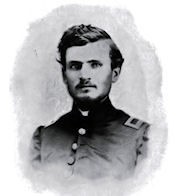
War Diary of Luman Harris Tenney.
19th. Kept up after eleven and packed up. The circumstances of the trouble with Wier are these: On account of drunkenness and his seeming determination to starve us out, Col. S., all the officers in his brigade and most of the others approving, concluded to arrest him; sent the adjutant with a detail of 100 men who ordered him under arrest. He refused the order. The detail presented bayonets and took him prisoner. Took him to Col. S.’s tent, where were officers representing most of the regiments. When he saw Capt. Allen of the Battery, he said, “And are you here?” and burst into tears. I never saw so much excitement. All were glad. Before this Col. S. had determined if rations did not come by Monday to march his brigade north. Left the Indians there, marched 39 miles to our old second camp, slept on the prairie as usual. Nettleton came along slowly during the day. Officers began to be frightened after 4 or 5 hours, and ordered an ambulance to go back for him. Just then he came up.
18th. Ordered to commence on half rations. Visited Capt. Nettleton. Sick since going to Fort Gibson, weak. At 11 P. M. orders came to march at 2 A. M. Second Battalion in advance. Colonel Wier under arrest and a prisoner, Colonel Salomon commanding.
17th. Played a little chess. Wrote to Aunt Luna. Slept on the prairie. All the horses of the regiment were out.
16th. Wednesday. Boys returned from Fort Gibson, no enemy there. Enemy four miles below on the south side of the Arkansas, at Fort Davis. Expecting artillery. Boys rested.
15th. Stayed in camp and read “Guy Mannering,” good story. Pastured my horse and Brownell’s.
14th. Monday. Read in “Guy Mannering.” Rained very heavily most all day. Thunder. Got wet in tent. An alarm. Large detachment sent out. 1st and 2nd Battalions went, Archie and Thayer too. Major was angry that they went. Major, field officer of the day.
13th. Awoke early and found my horse. Took him out to graze. Issued rations to the whole command. Tired at night. Slept out with the pickets, with Charlie Fairchild.
12th. Saturday. Wrote a letter to Uncle and Aunt Branch. My horse got away suddenly and I did not find him until morning.
In a letter dated Camp Flat Rock, Ind. Ter., July 11, 1862, he says:
The Fourth of July was duly celebrated at Cabin Creek Camp. We did no marching, and perfect license was given to all to drink and carouse as much as they chose.
One officer even told his men that the one who wasn’t drunk that night should be ducked in Grand river.
When the 1st Brigade had their fight near here, Col. Weir, our commander, was so intoxicated that he could neither receive the report of the battle or give any orders.
One reason everybody liked Col. Doubleday so well was, that he never drank.
It seems good to get settled down again. While marching, the middle of the day was so very hot, that we commenced marching at three o’clock in the morning, so we had to get up very early to have breakfast out of the way and get ready.
The greatest trouble so far has been the scarcity of water.
Had we come down the other side of the river—people say—there would have been an abundance of water. But water has been very scarce—and mostly stale creek water for which we would have to go quite a distance.
One Q. M. Sergeant was reduced to the ranks day before yesterday for going to a spring almost in our line of march.
I feared there would be a mutiny that day, so many boys hadn’t water and weren’t permitted to leave the ranks to get any. Hereafter any member of the cavalry losing a horse, save in battle, must go afoot, by order of Col. Wier.
Well, Charlie seems to have had his fill of grass, so I must go back to camp. I have been sitting here on my blanket while he has been grazing. We have to go quite a distance from camp for good grass. . . You don’t know what melting weather we have had.
The thermometer has been as high as one hundred and twelve in the shade I believe.
Several men have been sunstruck. There has been no rain of consequence for about two months.


