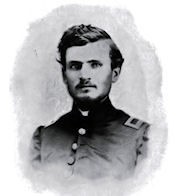
8th. Spent the day in camp. Thede came over and we made a little sugar candy. Read some in “Currents and Countercurrents,” by O. W. Holmes. Wanted to read Motley, but Charlie had sent the book back home. Thede and I wished we could be at home two or three hours. A dark and cloudy day.
War Diary of Luman Harris Tenney.
Saturday, 7th. Finished my letter to Ella. Col. Abbey went to town and sent a barrel of flour to mother. Good. A Democratic mass meeting to consider the best way for democrats to protect their property. Finished “Mistress and Maid.”
6th. In the morning the colonel called the officers together and stated in tears that he should resign if the thing were not ferreted out. I was in Case’s tent. C. and H. burned their property. Officers feigned a search but found nothing. In the evening officers held a meeting and passed resolutions. Medary received at the cars by democrats.
5th. My back quite well. Not much going on during the day. In the evening the boys mostly went out to town and mobbed the “Crisis” and then went to the “Statesman” but did no damage. Medary and the press were in Cincinnati. The boys carried off all the books, etc., they could find.
Note: The episode briefly referred to under date of March 5, 1863, was of this nature: At that time Samuel Medary, formerly a state official of considerable prominence, was conducting a weekly newspaper called “The Crisis” at Columbus. This periodical was perhaps the most bitter and dangerous and disloyal “Copperhead” sheet published in the North. Its utterances distinctly encouraged the Rebellion, instigated desertions of Union soldiers and thus promoted disunion, prolonged the war and increased the slaughter of Union troops. On the night of March 5th, a considerable number of Second Ohio boys mysteriously got through the guard line of the Camp Chase encampment, went quietly down town, threw out pickets for protection from the police, entered “The Crisis” office and thoroughly gutted it, throwing the type, presses, paper, etc., out of the back windows into the Scioto River. Then as quietly as they came they returned to camp, still unobserved by the sentinels on guard at camp, and went to bed. As mentioned in the subsequent entries in the diary, it proved impracticable to identify any of the participants and nobody was punished. The then Colonel of the Regiment, August V. Kautz of the Regular Army, and a son-in-law of then Governor Tod, was naturally greatly wrought up over the circumstance.—A. B. N.
4th. After the work in the morning repaired to headquarters and heard Andy Johnson of Tennessee and Gov. Wright of Indiana. Both spoke well, said much to encourage us soldiers and discourage traitors. Received good letters from Sarah Felton, Ella Clark and home. Went over to see Charlie. Wrote a line to Delos.
3rd. The Convention of Govs. took place. I was too lame to venture out. It stormed awfully, snow and rain, and the boys suffered considerably. 2nd Ohio out en masse, as escort. No letter from Fannie. Finished her letter and wrote to Lucy Randall. Played checkers with McAulis.
2nd. Helped about the meat and bread. My back gets worse. Mason has given me some liniment which he warrants sure cure. Invited to Mr. Rice’s. Charles, Tully, and Theodore went. M. and I couldn’t. Commenced a letter to Fannie Andrews and wrote a short letter to Fred.
1st. Stayed at home in the morning. Snow. Chester came in. Made a little taffy and ate apples. Read the Independent and Cincinnati Commercial. Col. Abbey was in and told his usual number of stories. Knew Pa well. Wrote a short letter home.
28th. Got up the rations and issued for ten days. Overlifted and strained my back and sides, makes me lame. After we got through I cleaned up. Charlie Crarey came down, got all the business straightened up, thinking I would go home Monday morning.
27th. After breakfast played two games of chess with Case. Got beaten. Ordered to move to Covington immediately, then countermanded. Wrote to the boy William. God bless him and lead him. Thede came over. Went down and looked at a horse he thought of taking. Read in Scott’s “Waverly.” Music in Q. M. D.


