
Chattanooga, Wednesday, Feb. 22. The rain has not yet come but it still threatens, cloudy. A detail is put at clearing off a new camp ground, where Hospital No. 2 is now. Axes sharpened, etc. To-morrow they say we begin to put up permanent quarters. In the afternoon on wood detail. Went three miles to Mission Ridge, got wood. To-day is the anniversary of Washington’s birthday, and a grand salute was fired in honor, 12 M. Commenced from Old Lookout, followed by all the principal forts. A big pile of mail received to-day, none for me.

22nd. Spent the day in camp. Read Scott’s “Heart of Midlothian.” Much interested. Smith and I studied our lesson together. Capt. Barnitz in class. Got the bundle from home. Am pleased with the new clothes. Good friends.

February 22 — The Yanks fired thirty-four guns today somewhere close outside of the prison wall, in celebration of Washington’s Birthday.
February 22d. Routed out early this morning to prepare for a review and inspection by General Crook and staff. Report came to camp that Company I, at Duffield Station, had been attacked, but succeeded in driving the guerillas away.

February 22d.—Bright and frosty. A fine February for fruit .
Yesterday the Senate postponed action on the Negro bill. What this means I cannot conjecture, unless there are dispatches from abroad, with assurances of recognition based upon stipulations of emancipation, which cannot be carried into effect without the consent of the States, and a majority of these seem in a fair way of falling into the hands of the Federal generals.
The House passed the bill to abolish quartermasters and commissaries in a modified form, excepting those collecting tax in kind; and this morning those officers in this city under forty-five years of age advertise the location of their places of business as collectors of tax in kind, Capt. Wellford, a kinsman of Mr. Seddon, among the rest, the very men the bill was intended to remove! Alas for Breckinridge and independence!
The following dispatch has just been received from Gen. R. E. Lee:
“Headquarters, February 22d, 1865.
“From dispatches of Gen. Bragg of 21st, I conclude he has abandoned Cape Fear River. He says he is embarrassed by prisoners. Enemy refuses to receive or entertain propositions. I expect no change will be made by Gen. Grant. It is his policy to delay. Have directed prisoners to be sent to Richmond by rail or highway, as may be most practicable; if wrong, correct it.
“R.E. Lee.”
This looks like the speedy fall of Wilmington, but not of Richmond.
To-day is the anniversary of the birth of Washington, and of the inauguration of Davis; but I hear of no holiday. Not much is doing, however, in the departments; simply a waiting for calamities, which come with stunning rapidity. The next news, I suppose, will be the evacuation of Wilmington! Then Raleigh may tremble. Unless there is a speedy turn in the tide of affairs, confusion will reign supreme and universally.
We have here now some 4000 or 5000 paroled prisoners returned by the Federal authorities, without sufficient food for them, and soon there maybe 10,000 Federal prisoners from Wilmington, which it seems cannot be exchanged there. Is it the policy of their own government to starve them?
Mr. Burgwyn, of North Carolina, writes to the President (11th inst.) that some 15,000 bales of cotton are locked up in Wilmington, belonging to speculators, awaiting the coming of the enemy, when the city will certainly fall into their hands. He says Gen. Bragg’s orders regarding its removal are wholly disregarded; and he implores the President to prevent its falling into the enemy’s hands, and disgracing his State as Georgia was disgraced by the cotton taken at Savannah. He says these speculators have an understanding with the enemy. The President indorses, simply, “For attention.—J. D.”
I bought quarter ounce early York cabbage-seed to day at $10 per ounce.
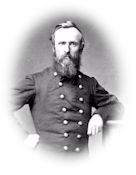
Camp Hastings, Near Cumberland, February 22, 1865.
Dear Mother: — I suppose you have heard of the kidnapping of General Crook and General Kelley. . . . The exchange of prisoners is now so prompt that the matter is not regarded as a very serious calamity. General Crook’s reputation is so good that it will not affect him much. Besides, such bold attempts may be successful in any town where a general is likely to have his quarters.
The success of Sherman’s splendid operations gives us all reason to hope that we are getting near the end of the Rebellion. As long as Lee’s fine army remains, there is, of course, a chance that he may succeed in doing something that will postpone the final blow. But no defeat or disaster now could long delay our triumph. . . . Love to all.
Affectionately, your son,
R.
Mrs. Sophia Hayes.
Shriver Mansion, Wednesday, January 22.1— Sherman took Columbia Friday, the 18th. Rebels evacuated Charleston Tuesday, 15th. Today at noon national salute here and everywhere because “the old flag floats again over Sumter.”
__________
1This date should be February 22. General Hayes was on furlough in Ohio on January 22. — M. Goad; October 13, 2013
February 22nd, 1865.—Washington’s birthday I used to read of the War of the Revolution and wondered if it could be true; it seemed so unbelievable. I admire General Washington very much but I never once imagined war could ever be so real to me. I wonder when it will end? Some wars last so long and perhaps this one may last for thirty years. If it does I hope I will not live through all those years.
February 22d.—Isabella has been reading my diaries. How we laugh because my sage divinations all come to naught. My famous ”insight into character” is utter folly. The diaries were lying on the hearth ready to be burned, but she told me to hold on to them; think of them a while and don’t be rash. Afterward when Isabella and I were taking a walk, General Joseph E. Johnston joined us. He explained to us all of Lee’s and Stonewall Jackson’s mistakes. We had nothing to say—how could we say anything? He said he was very angry when he was ordered to take command again. He might well have been in a genuine rage. This on and off procedure would be enough to bewilder the coolest head. Mrs. Johnston knows how to be a partizan of Joe Johnston and still not make his enemies uncomfortable. She can be pleasant and agreeable, as she was to my face.
A letter from my husband who is at Charlotte. He came near being taken a prisoner in Columbia, for he was asleep the morning of the 17th, when the Yankees blew up the railroad depot. That woke him, of course, and he found everybody had left Columbia, and the town was surrendered by the mayor, Colonel Goodwyn. Hampton and his command had been gone several hours. Isaac Hayne came away with General Chesnut. There was no fire in the town when they left. They overtook Hampton’s command at Meek’s Mill. That night, from the hills where they encamped, they saw the fire, and knew the Yankees were burning the town, as we had every reason to expect they would. Molly was left in charge of everything of mine, including Mrs. Preston’s cow, which I was keeping, and Sally Goodwyn’s furniture.
Charleston and Wilmington have surrendered. I have no further use for a newspaper. I never want to see another one as long as I live. Wade Hampton has been made a lieutenant-general, too late. If he had been made one and given command in South Carolina six months ago I believe he would have saved us. Shame, disgrace, beggary, all have come at once, and are hard to bear—the grand smash! Rain, rain, outside, and naught but drowning floods of tears inside. I could not bear it; so I rushed down in that rainstorm to the Martins’. Rev. Mr. Martin met me at the door. “Madam,” said he, “Columbia is burned to the ground.” I bowed my head and sobbed aloud. “Stop that!” he said, trying to speak cheerfully. “Come here, wife,” said he to Mrs. Martin. “This woman cries with her whole heart, just as she laughs.” But in spite of his words, his voice broke down, and he was hardly calmer than myself.
Tuesday, 21st—We left camp about noon and moved forward another ten miles. The First Brigade took the railroad, destroying it as they went.


