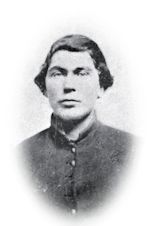
Nashville, Monday, Jan. 9. Rain, rain!—all day without cessation. Was on detail all the forenoon chopping wood. Got quite wet and felt unwell. Symptoms of dumb ague.

Green Square, Savannah, Ga.
January 9, 1865.
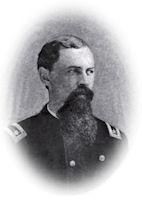
Thinking we for once in the service had a chance to enjoy quiet life, two of our number were sent to Hilton Head for a full supply of men’s apparel for the outer man, and of refreshments substantial and fancy for the inner. They returned to-day just in time to receive marching orders. The men’s clothing was packed in valises, and all the eatables sold to parties who remain here, save one barrel of Irish potatoes. We leave to-morrow morning. Major Willison’s resignation was accepted to-day, and this evening the officers unanimously agreed to recommend me to fill the vacancy. There was not a hint towards any one else. I take it as a high compliment. I am the youngest captain in the regiment, and this recommendation made by men whom I have campaigned with for two and a half years, and not one of whom has been accused of failing to do his duty in the service, makes me feel a little proud. I will value the recommendation more than the commission, if I get it.

9th. Monday. Put up picket poles and policed ground.
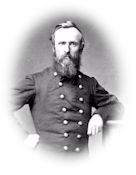
Monday, January 9. — Spent the day getting ready to visit home, signing approval of applications for furloughs and leaves, and reading Heine. His wit not translatable; ratherish vulgar and very blasphemous.

Monday, 9th—We remained in camp all day.[1] It rained most of the day. No news of any importance.
[1] I had been suffering with the doc tor some days when on this day it became so bad that I made up my mind to go to the doctor and have the tooth extracted. I arrived at the doctor’s tent, he directed me to an ancient chair and asked me to show him the tooth. I pointed out the exact tooth, he hooked on, at the same time telling me to hold on to the chair, and pulled. He succeeded in bringing the tooth, but it was not the aching one. I however, concluded that one tooth at a time was enough, even it it was the wrong one, and returned to my rancho with the hope that it would soon quit aching. But the last state of that tooth was worse than the first.—A. O. D.

January 9th.—Bright, clear, and cold.
It is said the government depot at Charlotte, N. C, has been burned (accidentally), consuming a large amount of corn.
We have nothing further of the movement of Grant’s troops.
We have Hood’s acknowledgment of defeat, and loss of 50 guns before Nashville.
The papers contain the proceedings of a meeting in Savannah, over which the Mayor presided, embracing the terms of submission offered in President Lincoln’s message. They have sent North for provisions—indicating that the city was in a famishing condition. Our government is to blame for this! The proceedings will be used as a “form,” probably, by other cities—thanks to the press!
The Examiner is out this morning for a convention of all the (Confederate) States, and denouncing the President. I presume the object is to put Lee at the head of military affairs.
The rumor of the death of Gen. Price is not confirmed.
Gen. Pemberton has been relieved here and sent elsewhere.
The Piedmont Railroad has been impressed. A secret act of Congress authorizes it.
Miers W. Fisher writes that if the cabinet indorses the newspaper suggestions of giving up slavery and going under true monarchies, it is an invitation to refugees like himself to return to their homes, and probably some of the States will elect to return to the Union for the sake of being under a republican government, etc. He says it is understood that the Assistant Secretary often answers letters unseen by the Secretary; and if so, he can expect no answer from Mr. S., but will put the proper construction on his silence, etc.
Flour is $700 per barrel to-day; meal, $80 per bushel; coal and wood, $100 per load. Does the government (alone to blame) mean to allow the rich speculators, the quartermasters, etc. to starve honest men into the Union?

8th. — Some persons in this beleaguered city seem crazed on the subject of gayety. In the midst of the wounded and dying, the low state of the commissariat, the anxiety of the whole country, the troubles of every kind by which we are surrounded, I am mortified to say that there are gay parties given in the city. There are those denominated “starvation parties,” where young persons meet for innocent enjoyment, and retire at a reasonable hour; but there are others where the most elegant suppers are served— cakes, jellies, ices in profusion, and meats of the finest kinds in abundance, such as might furnish a meal for a regiment of General Lee’s army. I wish these things were not so, and that every extra pound of meat could be sent to the army. When returning from the hospital, after witnessing the dying scene of a brother, whose young sister hung over him in agony, with my heart full of the sorrows of hospital-life, I passed a house where there were music and dancing. The revulsion of feeling was sickening. I thought of the gayety of Paris during the French Revolution, of the “cholera ball” in Paris, the ball at Brussels the night before the battle of Waterloo, and felt shocked that our own Virginians, at such a time, should remind me of scenes which we were wont to think only belonged to the lightness of foreign society. It seems to me that the army, when it hears of the gayety of Richmond, must think it heartless, particularly while it is suffering such hardships in her defence. The weddings, of which there are many, seem to be conducted with great quietness. We were all very much interested in a marriage which took place in this house a short time ago. Our sweet young friend, Miss A. P., was married to a Confederate States’ surgeon from South Carolina. We assembled in the parlour, which was brilliantly lighted, before the dawn of day. The bride appeared in travelling costume; as soon as the solemn ceremony was done the folding-doors were thrown open, revealing a beautifully spread breakfast-table in the adjoining room. Breakfast being over, the bride and groom were hurried off to the cars, which were to bear them South. But, as usual in these war-times, the honeymoon was not to be uninterrupted. The furlough of the groom was of short continuance—the bright young bride will remain in the country with a sister, while he returns to his duty on the field. As soon as the wedding was over and the bridal party had gone, the excitement of the week had passed with us, leaving a blank in the house; but the times are too unquiet for a long calm—the gap was closed, and we returned to busy life. There seems to be a perfect mania on the subject of matrimony. Some of the churches may be seen open and lighted almost every night for bridals, and wherever I turn I hear of marriages in prospect.
“In peace Love tunes the shepherd’s reed;
In war he mounts the warrior’s steed,”
sings the ” Last Minstrel” of the Scottish days of romance; and I do not think that our modern warriors are a whit behind them either in love or war. My only wonder is, that they find the time for the love-making amid the storms of warfare. Just at this time, however, I suppose our valiant knights and ladies fair are taking advantage of the short respite, caused by the alternate snows and sunshine of our variable climate having made the roads impassable to Grant’s artillery and baggage-wagons. A soldier in our hospital called to me as I passed his bed the other day, ” I say, Mrs. ——, when do you think my wound will be well enough for me to go to the country?” “Before very long, I hope.” “But what does the doctor say, for I am mighty anxious to go?” I looked at his disabled limb, and talked to him hopefully of his being able to enjoy country air in a short time. “Well, try to get me up, for, you see, it ain’t the country air I am after, but I wants to get married, and the lady don’t know that I am wounded, and maybe she’ll think I don’t want to come.” “Ah,” said I, ” but you must show her your scars, and if she is a girl worth having she will love you all the better for having bled for your country; and you must tell her that
“‘It is always the heart that is bravest in war,
That is fondest and truest in love.’ “
He looked perfectly delighted with the idea; and as I passed him again he called out, ” Lady, please stop a minute and tell me the verse over again, for, you see, when I do get there, if she is affronted, I wants to give her the prettiest excuse I can, and I think that verse is beautiful.”
Chapin’s Farm, Va.,
January 8, 1865.
My Dear Father:—
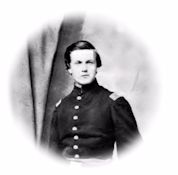
On New Year’s my friend Richardson, late captain in the Eighth (resigned), arrived and put up with me. He is from Roscoe, Ill., and has just come from home, where he had been to recover from wounds. He has resigned and come down to settle up his business, and we had many things to talk of while he was here, so that I had little time to write. When he left Lieutenant Burrows went with him “on leave” and I was appointed brigade quartermaster.
The clothing for the brigade had just arrived and I had it all to issue. I suppose there was forty thousand dollars worth of it and it behooved me to be careful in my issue, for a small proportion of it unaccounted for would absorb the little four months’ pay due me now. After attending to that I had the clothing to issue to my regiment, for as I do not expect to be brigade quartermaster permanently, I preferred doing the duties of both positions to turning over my property. I got through it all in good shape; did not lose anything. I have now over a hundred horses and mules to feed and a large train to care for, and that includes a deal of care, for in these roads shoes will get off the mules, and wagon tongues and axles will break and something needs attention constantly. I rather like the extra labor and responsibility. It gives me an opportunity to exercise all my powers, and it has always seemed to me before that I had not that. You will see, however, that I have not much time for writing, and excuse short letters on that account.
I am very glad to know that S’s statement of your health was too strong. I did feel quite anxious on that account. And you really are doing better than I could expect. You support your family on a deal less money than I support myself. I’m afraid I should find it hard to get so prudent a wife, or a wife who could make my money go as far as yours does. I am not spending much money now, I notice, for the excellent reason that I cannot get it to spend.
I shall look for the remainder of what you have to say on the subject of my last letter in your next. I suppose you would laugh to hear us young fellows discuss this matter. Richardson, Burrows and I are about of an age, and very similarly situated, and we have been discussing the matter in all seriousness.

St. Helenaville, January 8, 1865.
I have a great and troublesome commission for some of you. When H. gave me the one hundred dollars last fall, I instantly thought, “Now I can get my bell,” but afterwards I was afraid I might need funds to finish the inside of our school-house and so I deferred getting the bell. Now it is all finished nicely, everything we want complete, and we have had two days of delightful comfort in it. While Mr. Tomlinson is here, I can get the belfry put up free of charge, and properly attended to. He talks of going away soon, and has said he wished the bell, which I promised, had come. So I want you to buy me one.
Miss Ware has bought a bell for her school-house, and it came down in one of the Philbrick schooners. It rings already all over the island. She has also presented her school-house with an eight-day clock. Her bell is smaller than mine must be, for she calls only one plantation, and we five or six to school. They say it is exquisite in tone. There is great choice in bells of the same size and apparent quality; one will ring clearly and be heard at a great distance, while another will be soft and sweet and deep, but not resonant, and the sound will not travel far. A dollar a pound is the price, or was the price of Miss Ware’s. It will take at least a fifty-pound bell and may take a larger one. You had better ask how far such a bell carries sound. Ours should be heard three miles if possible. Miss Ware calculated that a twenty-five pound bell would be heard a mile and a half. Our children come from five and six miles, but I think no bell could be heard so far. I suppose that the wheel for ringing it comes with it — that and a rope would be necessary. Our building is one story high and raised on piles. We should want a rope to go through the floor and be pulled from beneath.
I think you can get a chance to send the bell by Mr. Winsor’s schooners, which are coming often for cotton. I had rather have freight paid on it than have it come by Mr. Philbrick’s favor. If it cannot come by schooner, I think the Philadelphia Committee would get the New York Committee to forward it.
Another great crowd of negroes has come from Sherman’s army. They are utterly wretched in circumstances — clothes all torn to rags; in some cases children naked. A steamboat load came to the village to-night, and they are crowded in the church and into all the people’s houses. It is astonishing with what open-hearted charity the people here — themselves refugees from Edisto two years ago — have received these newcomers right into their houses, and to that most jealously guarded place — their “chimbly.” A “chimbly” here is a man’s castle, and the privileges of this coveted convenience are held sacred. To lend a “chimbly” to a neighbor is to grant him a great favor, yet these people are welcomed to the “chimblys.” I asked our Brister if he found any friends among the refugees from Georgia. “All friends to-night,” he said, “but I hain’t found no family,” which means relatives.
Pierce Butler’s slaves have just arrived among this lot. We have no clothes to give these poor shivering creatures, and I never felt so helpless. Rina has on her biggest pot and I have just been putting in some of Mr. Wright’s tea, and Ellen and I are going to sally out and give each of the sick a cup of it to warm them up this cold, raw night. Very many come sick: indeed, nearly all are broken down with fatigue, privation of food, and bad air at night.
To-day General Saxton at church announced his intention to reoccupy Edisto pretty soon and fill it with these refugees. . . .
10.45 P.M.
Just returned from giving out the tea to the sick. Such a weary, sick, coughing set! I wish our church would send along some clothes. I have written to the Commission for some, and contributions to their boxes would do.
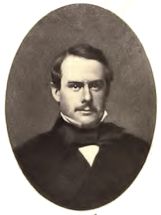
Charles Francis Adams, Jr., to his mother
Camp of 5th Maw. Cav’y
Point Lookout, Md., January 8, 1865
You drew a wrong impression from my description if you concluded that our prisoners were harshly treated. War is cruel in all its parts — a horrid blessing sent on mankind in a shape curiously like a curse; and in all wars the purest form of squalid misery to which God’s image is anywhere reduced has ever been found in the depots of prisoners. Our war is no exception to the rule, and yet our prisoners are treated with all reasonable tenderness and care. Their lives are not thought precious, but neither are those of our soldiers, and my experience and observation lead me to state as the conclusion of my best judgment that our prisoners of war at this point are, on the average the year round, as little exposed and as well fed and the wear and tear on their vital powers is as bearable, as is the average with our own soldiers in active campaign. As to that pile of coffins which so harrowed you, it is almost gone now, but I must say I think your sympathies were most unduly excited. Nelson, you know, for years carried his coffin round in the cabin of his ship. If the sight of a pile of coffins is going to shock a man he’d better keep out of the Army. And, by the way, that very pile of coffins was the best possible evidence that men did not die fast; for where men die fast the prejudice in favor of coffins does n’t last long. For instance, do you suppose coffins would be used if they were needed at the rate of ten a day?
However, impelled by your letter I thought on Friday I would look into the matter of our prisoners’ condition. Accordingly I said to myself: “In Hospitals one sees misery, and so to the Hospitals I will go,” and to them I went at once. I must confess, having done so, to a strong sense, when I got through, of pleasure and pride in the Christian spirit and forbearance of our Government. There was neither want nor misery there! I went through ward after ward, passing up and down the long rows of little beds on each of which lay a sick prisoner, with the long matted hair and wild look so peculiar to southern men. The wards were long, wooden buildings, one story high, whitewashed inside, warmed by stoves and scrupulously clean —regular military hospitals. The beds were small and of iron, and each bed had its mattress, coarse white sheets and pillow-case, and two blankets. Among all these thousands the deaths average two or three a day, and I saw but few men who seemed very sick and but one who was dying. The ward-masters and attendants were themselves prisoners and in answer to my inquiries (for I came, you see, officially) all told me that they were very comfortable and had everything which could be expected. Evidently there was no misery or’ suffering there. I confess what I saw greatly surprised me. We could hardly take more tender care of our sick soldiers. After the horrors of the southern prisons, I doubt if our countrymen (well as I think of them) would support the treatment I have described. It is too much in the spirit of Christ for common men; but abroad it should be known in justice to this much libelled country. There was more for a liberal American to be proud of in that hospital than in the greatest achievement of our armies. There was to be found, and that too under circumstances of cruel aggravation, the true spirit of Christianity infused into war. . . .


