30th. Went to work cutting wood for quarters.

Friday, 30th—The Twentieth Army Corps was reviewed by General Sherman at 9 a. m. They came out with their flying colors and brass bands, making a big showing. But when there’s a fight on hand they are not as forward as they might be; it suits them better to garrison a place after it has been taken. We have company drill once a day, and the substitutes have to drill twice a day when in camp. The Thirteenth and Sixteenth Iowa and the Thirty-second Illinois, moved their camps this afternoon to make room for the fortifications planned. Sherman has ordered Savannah to be strongly fortified. Heavy guns will be mounted so that no enemy can get close enough to do any harm with the ordinary field guns. The engineers went to work today laying out the places where the forts are to be built.

December 29th.—Rained all night; spitting snow this morning.
Although Gen. Bragg announces that the enemy’s fleet has disappeared off Wilmington, still the despondency which has seized the croakers remains. It has probably sailed against Charleston, to co-operate with Sherman. Sherman says officially that he got, with Savannah, about 1000 prisoners, 150 heavy guns, nearly 200 cars and several locomotives, 35,000 bales of cotton, etc. etc. And Gen. Foster says the inhabitants (20,000) were “quiet, and well disposed.” Most people believe Charleston will fall next, to be followed by a sweep of the entire sea-board; and grave men fear that the impetus thus given the invader cannot be checked or resisted.
The great want is fighting men, and they are mostly exempted or detailed under that portion of the “War Department” which is quietly worked by Judge Campbell, who is, of course, governed by his own great legal judgment. Well, the President has been informed of this, and yet waits for Mr. Secretary Seddon to suggest a remedy. I have often thought, and still think, that either the Bureau of Conscription must be abolished or the government must fail. The best generals will not avail without sufficient men to fight.
Gen. Beauregard telegraphs from Charleston, December 26th, that there is a conflict of authority at Mobile as to which branch of the service, navy or army, shall command the torpedo boat. The two Secretaries are referring it to commanders, and I fear that, by the time the question is settled, some calamity will befall the boat, and the city, and the country.
Grant is said to be moving troops to the north side of the river again, fearing an attack from us, or intending one himself.
Colonel Lyon’s Letters.
Dec. 29, 1864.—We have finally got a mail through up to the 15th. Huntsville is rapidly resuming its old appearance, and the citizens generally profess to be pleased with our return. The rebels did but little mischief during our absence.
We know but little of army movements except those that pass under our immediate notice. I suppose Sherman is in Savannah, and I think the rebels are right when they say that the loss of that city is of but little consequence to them; but the destruction of their railroads on his march, and the capture of their cannon and locomotives by Sherman, is a serious disaster, almost irreparable.
Hood will lose half of his army, and the balance is powerless for mischief for many months. This is the worst blow the Confederacy has had, but it all avails but little towards closing the war so long as Lee sits defiantly in the gates of Richmond. When that army is routed and destroyed, and not till then, can we begin to look for the war to close.
I am glad to see a call for 300,000 more men. They will be needed, for the term of enlistment of half the army expires next summer and fall.
Nashville, Thursday, Dec. 29. Last night was bitter cold. Most of us suffered severely, being but poorly fixed, but the sun came out a little this morning, warming us a little. To-day has presented another of those [scenes] that can nowhere be found outside the soldiers’ camp, when everybody is busy acting as his own carpenter, mason, cabinet maker. All have to meet their own wants and busily have we all worked. We have got our bunks up, one above the other. I went to town this afternoon after an additional length of pipe to reach through the tent. Everybody is in good spirits over the good news. Rumors prevalent that we are soon to start for Sherman.
29th. Field officer of the day. Moved over upon the Romney pike. Visited the picket line.
Thursday, 29th—The weather continues pleasant but cool. The glorious old Seventeenth Army Corps was reviewed at 9 a. m. by Major-General Sherman. The corps performed nicely and looked fine considering the campaign through which they have gone, and also considering the fact that they have not yet drawn new clothing. We formed our lines in the streets down in the city and the general rode along the lines to inspect them. We then marched along Front Street, where the general was stationed to review us. General Foster was also present as we passed in review. We got back into camp at 2 o’clock, having had a fine day for the review. Things are very quiet and there is no news of any importance. Small boats come up the river every day to bring rations and other army stores.
December 28th.—Rained all night; warm.
A large stable burned down within sixty yards of our dwelling, last night, and not one of the family heard the uproar attending it.
Gen. Bragg telegraphs the President that the enemy failed to reduce Fort Fisher, and that the troops landed above the fort have re-embarked. But he says the enemy’s designs are not yet developed; and he is such an unlucky general.
We found a caricature in the old black chest, of 1844, in which I am engaged in fight with the elder Blair. Calhoun, Buchanan, etc. are in the picture.
It is still believed that Gen. Lee is to be generalissimo, and most people rejoice at it. It is said the President and Gen. Jos. E. Johnston have become friends again.
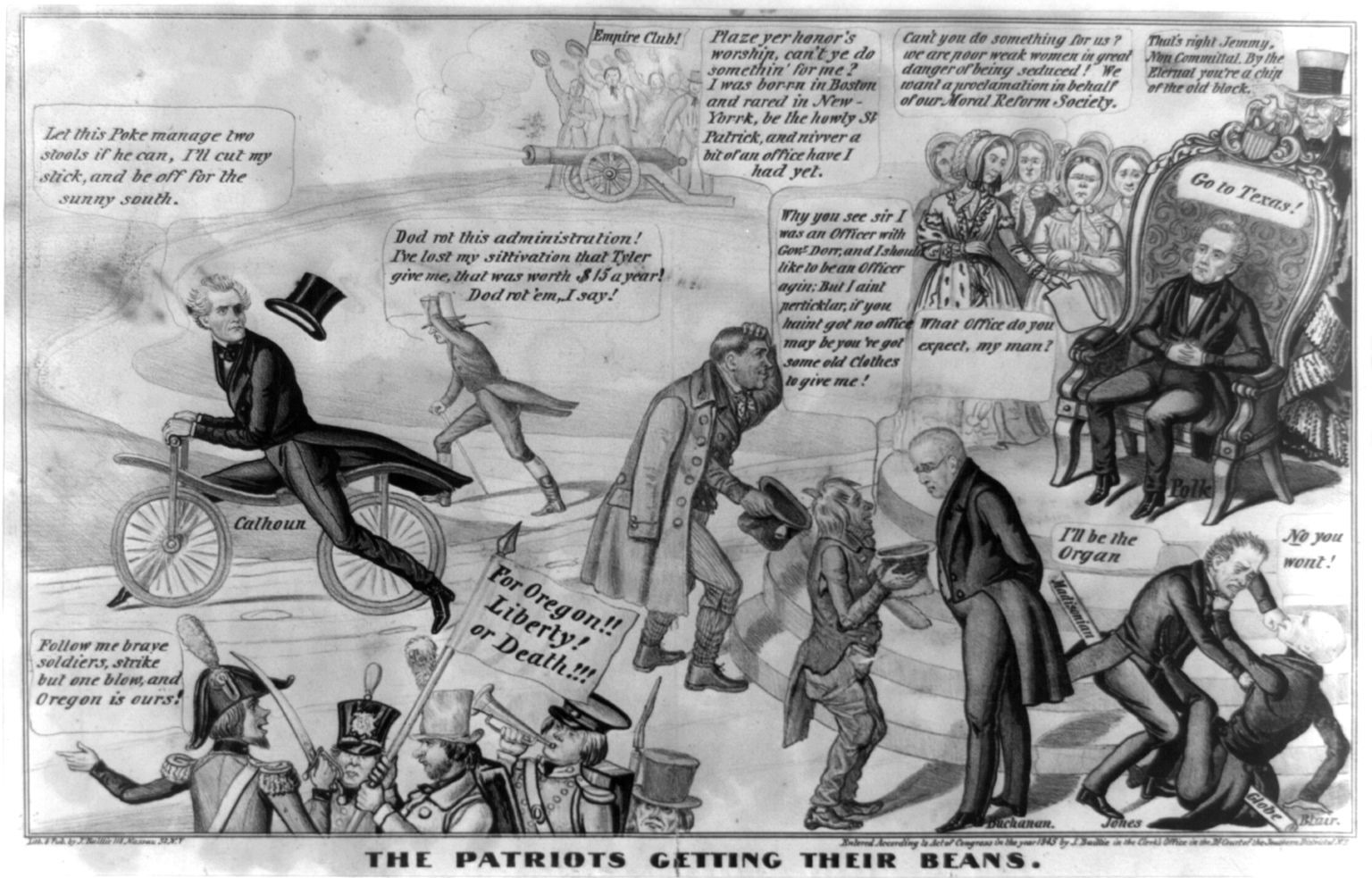
Library of Congress image.
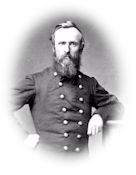
Wednesday, 28. — Thawing and muddy. General Crook and staff go by railroad to Cumberland. We hope to follow soon. Rain this eve. Attack on Fort Fisher by Porter, etc.; no results as yet. We hope Wilmington will be closed — but?

28th.—A bright spot in our military horizon. The enemy’s fleet of more than thirty gun-boats made a furious attack on Fort Fisher, near Wilmington, N. C., on the 24th, (last Saturday;) they kept up an average fire of thirty shots per minute until night. On the 25th the attack was renewed, and on the 27th, after being three times repulsed, the enemy abandoned his position above Fort Fisher, and re-embarked. The damage done to us was very slight—only two guns disabled, and but few other casualties. Thus failed utterly this great expedition of land and sea forces, from which the Federal authorities and the whole North confidently expected such grand results. And so may it ever be; the Lord help us, and deliver us in every such hour of need.
Yesterday we had a pleasant little dinner-party at Dr. G’s—so rare a thing now, that I must note it in my diary. Many nice things on the table were sent by country friends. What would we do without our country friends? Their hearts seem warm and generous to those who are not so well off as themselves. They set a good example, which .I trust will not be lost on us. Our relatives and friends, though they have been preyed upon by the enemy almost to exhaustion, never seem to forget us. Sausage from one, a piece of beef from another, a bushel of dried fruit, a turkey, etc., come ever and anon to our assistance. One can scarcely restrain tears of affection when it is remembered that these things are evidences of self-denial, and not given from their abundance, as at the beginning of the war. The soldiers are not forgotten by these country friends— those who remember the refugees are never forgetful of the soldiers. Take our people as a whole, they are full of generosity and patriotism. The speculators and money-makers of these trying times are a peculiar class, of which I neither like to speak, think, nor write; they are objects of my implacable disgust. They do not belong to our noble Southern patriots. They are with us, but not of us! I should think that a man who had made a fortune during the war would, when the war is over, wish to hide it, and not own his ill-gotten gains. I trust there are not many such. The year 1864 has almost passed away. Oh, what a fearful account it has rendered to Heaven! What calamities and sorrows crowd into its history, in this afflicted country of ours! God help us, and guide us onward and upward, for the Saviour’s sake!


