Following the American Civil War Sesquicentennial with day by day writings of the time, currently 1863.

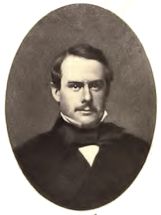
Charles Francis Adams, Jr., to his father, U.S. Minister to the U.K.

Camp of the 5th Mass. Cav’y
Point Lookout, Md., December 18, 1864

I did however meet Wilson [in Washington] and some of Grant’s staff, and picked up some reliable military news which it is my object now to let you have. Wilson was in a state of great excitement over the Wilmington expedition and “confidentially” told me, as he was telling every one else, how two hundred tons of powder were going to blow all Wilmington and its forts high and dry; how Butler had 20,000 picked men, including Weitzel’s black division; and how Grant had told him that, for assaulting works, black troops were inferior to none, if indeed not the best in the world. All that he had to say, however, you will get with its results in the papers. I met at the same time, however, Colonel Sharpe, chief of secret information on Grant’s staff and an old acquaintance of mine. I told him I wanted material for a letter to you and then had a long talk with him. All that he tells me is reliable. In answer to my questions he told me, that Lee had now 55,000 men in Richmond and that Grant, now that Butler was gone, confronted him with 75,000. Lee is so “dug-in” that Grant cannot assault him and he has not sufficient preponderance of force to send a suitable moveable column round into his rear. Lee is hard up for supplies. The Danville road is used only for Army supplies and on it they bring in about forty-five carloads a day, and the balance needed for the Army has been waggoned round our flank from Weldon. The citizens of Richmond depend wholly for supplies on the Central Railroad and hence the absolute necessity of Lee’s holding the valley. On hand in Richmond there are about fourteen days’ supplies and this amount cannot be increased. Meanwhile our friends in Richmond inform Sharpe that the rebel rolling stock is so reduced that on the Danville road they have some twenty-five engines and are never able to keep more than five in running order at any time; and they further say that if we can destroy the Central Railroad for thirty miles thoroughly, the material to repair the damage cannot be obtained in the South and Richmond must starve. Meanwhile Lee has sent two Divisions to oppose Sherman and replaced them by two small Divisions from Early, and Grant within forty-eight hours had ordered Sheridan to attack Early and, if successful, to try and press down and seize the Central Railroad. Meanwhile Grant, Sharpe says, considers that the Army of the Potomac has done its work for the year and that now it will observe Lee, and his (Grant’s) winter occupation will be to take Savannah, Charleston and Wilmington, shut the confederates up, and organize a cooperative force to overwhelm Lee in Richmond in the spring, should he remain there. But he does not believe that he can remain there. Said Sharpe: “A few days ago I was reading him my letters from Richmond and expressed my belief that Lee must dig out during the winter. You know how Grant sits and lets you talk and usually expresses no opinion? Then, however, he quickly looked up and said, ‘Do you think so, colonel? Well, I think so too.'”

We then went on to the constitution of Lee’s Army and in reply to my questions he told me: “Lee’s present 55,000 is not at all the old material. It is all that he can rake and scrape — clerks, Government employees, detailed men and all. Of his old fighting stock he has about 22,000 left. Those men we must kill before the country can have peace. They are old soldiers and fierce slave-holders. Those men have got to be used up.” For the rest, he told me Lee’s Army does not amount to much. All the regiments from the South are maddened at being kept in Virginia while Sherman is loose at their homes. Accordingly the desertions come in about thirty a day from Georgians, Floridians and Mississippians. “Now,” said Sharpe, “Lee’s difficulty is this: Virginia has raised sixty-two regiments; of these Lee has in his Army fifty-five, and the rest of his Army is largely made up of North Carolinians. If he gives up Virginia and North Carolina, we shall then get the soldiers from those states, and those are the men he can’t lose.”

I asked him about Lee’s means of recruiting his Army. He told me he had none; our armies overran the South and no more men were to be had. “As to their arming the negroes,” he said, “that’s out of the question. In the first place, let me tell you, in two years I have examined thousands of our men who have escaped from them to us, and I never yet heard of the first case where a black man could n’t be relied on to help them escape, and if they put arms in their hands, by —, those devils would paddle over to us so quick they could n’t catch them. Besides this arming the blacks would just disarm the 22,000 fierce rebels that Lee has left, for those are the remains of the men who fought for slavery.”

Grant he assured me was now in excellent spirits. He wants more men, but he considers that, except in his present defences, Lee has n’t got one week’s fight left in him. Sherman has demonstrated that the rebellion is a shell. Thomas’ victory leaves Lee only to contend with, and Lee’s destruction is a question only of material and time, unless he leaves Virginia and retreats into the Gulf states. There he might yet, by rallying around his Army the remnant of Hood’s, make a new front. Accordingly it is just as well to prevent his getting out of Virginia. Of forage, the enemy has none. Their cavalry has been sent down dismounted to Georgia. Of iron they have been so short as to be unable to manufacture shot requiring to be made of malleable iron. Finally, said he, “Lee can keep his Army just where it is, but he can’t attack, nor can he fight a battle. Victory or defeat would be alike ruinous. As for Hood, they’ve got to get rid of him anyhow; for even if he wins, he is killing the rebellion by his very loss of men.” The Army of the Potomac, he told me, was sadly reduced from what we had once known. “But people say it has accomplished nothing! This year in ruining itself in nine pitched battles, it ruined Lee and one week’s more fighting would have left him nothing to fight with. Meanwhile Sherman’s Army is intact, and Thomas has made a new Army which can not only hold Hood, but has destroyed him.”

Thus, you see, I have cast for you the military horoscope. What I have told you, you may rely upon, as it was told me by a man as well informed as Grant himself, and from it you may safely draw your inferences of the future. Charleston is left to Sherman, and Butler, if successful, is to press into the interior and operate on Lee’s communications on one side, while Sheridan presses them from the other — the Army of the Potomac meanwhile watching him in his works. . . .

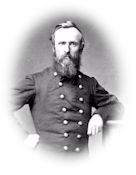
Camp Russell, Virginia, December 18, 1864.
Sunday morning before breakfast.

Dear Mother: — We have as yet received no orders as to winter quarters. I begin to suspect I shall not get home during the holidays.

We are feeling very happy over the good news from the other armies. Salutes were fired yesterday and the day before in all our camps in honor of General Thomas’ victory at Nashville.

We are living on the fat of the land now. The sutlers are now again allowed to come to the front and they bring all manner of eatables, wholesome and otherwise, but chiefly otherwise.

I wish you could visit our camps. I know what you would exclaim on coming into my quarters, “Why, Rutherford, how comfortably you are fixed. I should like to live with you myself.” I am getting books and reading matter of all sorts against rainy weather. Unless the weather is atrocious, I take a ride daily of a couple of hours or more. We yesterday had an inspection of my brigade. The Twenty-third was in the best condition. Notwithstanding our heavy losses, we have managed to get so many new men during the summer that the regiment is about as large as it was in the spring. It is larger than it was at this time last year.

A large number of men and officers who fell into Rebel hands, wounded, are now coming back, having been exchanged. They are all happy to be back and full of determination to fight it out.

I have been made a brigadier-general, but it is not yet officially announced. It was on the recommendation of Generals Crook and Sheridan.

Affectionately, your son,

R.

Mrs. Sophia Hayes.

Fort Gillem, Sunday, Dee. 18. Rained all night last night, very warm and oppressive. We lay in our new bunk, a decided improvement on lying on the wet ground. Griff and I visited a squad of 2,800 prisoners this morning, of which Nashville is nearly full. They look as well as any I have ever seen, clothing not as bad as I expected to see. Could not converse with them for the guards. Our little boy with Unions sold out before he reached us, so we have not the details of yesterday’s work. Our headquarters are at Franklin. They must be skedaddling very fast. Moved the picket rope as our horses were fast disappearing in the mud, which is beyond grammatical comparison. This morning everybody is all mud from head to foot. We eat it and drink it, and the air we breathe is muddy.

18th. Sunday. A good letter from Prof. Peck. A beautiful picture of Melissa and the darling baby (Carrie Nettleton Thurber). Letter from home. Wrote to the Prof.

From his letter to Prof. Peck.

Everybody in the 2nd Ohio is familiar with the name and services of Prof. Peck, of Oberlin, the man who has always done so much for the Ohio soldiers, both the sick and well, and who had an article in the paper a short time ago about the 2nd Ohio.

The boys are delighted with your praise of the Regiment. I have told a good many what you wrote in regard to us. All say, “Well, if he says that he does not know a regiment which has done better than ours, we ought to feel proud, for he is well acquainted with Ohio troops.”

Our Regiment has been sadly depleted during the campaign. It has not been recruited, but we hope to have it filled up, if another call for troops shall be made. Perhaps a portion of the records of Company C, with which I am serving will interest you. On the 1st day of May, 1864, the Company left Washington with forty-eight men, all told. During the summer, seven recruits joined it, making a total of fifty-five. From May 1st until this date, the losses foot up as follows: Five killed—all brave and good—thirty wounded and seventeen missing. Today we number for duty, eleven enlisted men, every one good soldiers.

Theodore is robust and always ready for duty. He is well-fashioned for a soldier, having a hardy constitution and a jolly temperament. He was pleased to be remembered by you.

Yesterday I received a beautiful Christmas gift from my friends, Will Hudson, Fred Allen, Delos Haynes and Charley Fairchild, a pair of shoulder-straps. The Col. received a very cunning picture today of Sister Melissa, with her little treasure Carrie in her arms.

The glorious news from Gen’ls Thomas and Sherman has just been read to us. We gave three hearty cheers. We hope that the end is not far distant.

Yours truly,                        

Lumen H. Tenney,

Capt. 2nd O. V. V. C.

image

Sunday, 18th.—Camped near Columbia.

Sunday, 18th—This morning, as yesterday, there was a very heavy fog, continuing till about 9 o’clock. We drew one day’s rations of hardtack, having been without bread of any kind for six days, during which time rice was almost our sole diet. Our company was partially reorganized today by promotions. Lieutenant Spencer was promoted to captain, J. A. White to second lieutenant, and I was made fifth sergeant. J. Tomlinson is to be made first lieutenant, but the promotion was not made today because his commission had not yet arrived.

17th.—The military movements are important, but to what they tend we know not. More troops have been added from Sheridan to Grant, and Early to Lee, and Sherman has crossed Georgia with little opposition or loss. Our last news is, that he has taken Fort McAllister, some miles below Savannah. What fate awaits that city we tremble to think of. A raid on Bristol and up the railroad, towards Saltville, has alarmed us for the salt-works; but General Breckinridge having turned up in the right place, suddenly appeared in their front and drove them off, to the great relief of the public mind.

December 17th.—Warm and cloudy.

Quiet below.

The President was reported better, yesterday, to my wife, who called.

It is said Gen. Cooper, R. Ould, etc. etc. have never taken their compensation in Confederate States Treasury notes, hoping at a future day (which may not come) to draw specie or its equivalent!

It was reported on the streets, to-day, that the President was dead. He is much better; and will probably be at his office today.

The following telegram was sent over by the President this morning:

“Savannah, Ga., December 16th, 1864.—Sherman has secured a water base, and Foster, who is already nearly on my communications, can be safely and expeditiously reinforced. Unless assured that force sufficient to keep open my communications can be sent me, I shall be compelled to evacuate Savannah.—W. J. Harder, Lieut.-Gen.”

Alas for President Davis’s government! It is now in a painful strait. If reinforcements be sent from here, both Savannah and Richmond may fall. Gen. Bragg will be crucified by the enemies of the President, for staying at Augusta while Sherman made his triumphant march through Georgia; and the President’s party will make Beauregard the scape-goat, for staying at Charleston— for sending Hood North—which I am inclined to think he did not do, but the government itself.

Capt. Weiniger (government clothing warehouse) employs about 4000 females on soldiers’ clothes.

Some people still believe the President is dead, and that it is attempted to conceal his death by saying he is better, etc. I saw his indorsements on papers, to-day, dated the 15th, day before yesterday, and it was a bold hand. I am inclined almost to believe he has not been sick at all! His death would excite sympathy: and now his enemies are assailing him bitterly, attributing all our misfortunes to his incompetence, etc. etc.

Saturday, 17. — An inspection of First Brigade. [The] Twenty-third looked well, but alas! very few of the old men. I shed tears as I left the line. It never looked better. Abbott, wounded at Cloyd’s Mountain and a prisoner for months, joined us today. General Thomas completed his victory at Nashville. One hundred guns fired here. General Crook fears that one division will go to Grant.

Camp Russell, December 17, 1864.

My Darling: — No certainty about things yet. We fired fifty guns yesterday and one hundred more today over General Thomas’ great victories. How happy our men are. We had an inspection today of the brigade. The Twenty-third was pronounced the crack regiment in appearance, etc. It looks very finely — as large as you used to see it at Camp White, but so changed in officers and men. A great many new ones at Camp White; then three hundred of the Twelfth in July; and three hundred conscripts, volunteers, and substitutes since. I could see only six to ten in a company of the old men. They all smiled as I rode by. But as I passed away I couldn’t help dropping a few natural tears. I felt as I did when I saw them mustered in at Camp Chase.

Captain Abbott joined us today— a prisoner since Cloyd’s Mountain. He is very happy to be back. He looks in good health, his arm not perfectly well.

Lieutenant McBride, the brave fellow who took Lieutenant-Colonel Edgar and forty-two others at Winchester, is here again. Sweet and Snyder are back. Hastings is in capital spirits; says he will be well long before next spring campaign. Heiliger writes me that he wants to get a commission in Hancock’s Veterans.

The band is playing its finest tonight. It contains all the old members and some good additions.

I have written the boys. I asked them how they would like to call the little soldier George Crook; they don’t reply. — Love to all.

Affectionately ever,

R.

Mrs. Hayes.