Following the American Civil War Sesquicentennial with day by day writings of the time, currently 1863.

Cross Lanes, Virginia, Sunday,
September 22, 1861.

Dear Mother : — … We are waiting for good weather to go in pursuit of the enemy. Unless some calamity occurs to us at Washington, so as to enable the Rebels to reinforce Wise and Floyd, I do not think they will fight us again. We shall probably not pursue more than forty miles to Lewisburg or White Sulphur Springs, and then our campaign closes for the season. You see, probably, that I am appointed judge-advocate for the department of the Ohio. This includes the State of Ohio, and, should I continue to hold the place, I shall probably be required to go to Columbus and Cincinnati in the course of my duties. But I shall get out of it, I hope, in a month or so. It will separate me from my regiment a good deal, and the increase of pay, about forty or fifty dollars per month, and increase of honor, perhaps, is no compensation for this separation. I have acted in all the cases which have arisen in General Rosecrans’ army. I shall be with my regiment soon again, I hope. While the general is in the same army with them, we are together, of course. I am constantly interrupted. I am today in command of the regiment, Colonel Matthews being unwell, so I am perpetually interrupted. Good-bye.

Affectionately,

R. B. Hayes.

Mrs. Sophia Hayes.

Cross Lanes, Virginia, September 22, [1861].
Sunday morning, before breakfast.

Dearest: — It is a cold, drizzly, suicidal morning. The equinoctial seems to be a severe storm. Part of our force has crossed [the] Gauley to operate in conjunction with General Cox who is near us. The enemy have retreated in a broken and disheartened condition twenty or thirty miles to near Lewisburg. Unless largely reinforced, they will hardly make another stand. The first fair day our regiment will cross [the] Gauley and the rest will follow as weather permits. We have such a long line of transportation and as the wet fall months are at hand, I suspect we shall not attempt to go further than Lewisburg, possibly to the White Sulphur Springs, before we go into winter quarters.

You know I am ordered to be attached to headquarters. As soon as my regiment moves they will leave me. This is hard, very. I shall feel badly enough when they march off without me. There are some things pleasant about it, however. In the first place, I shall probably not be kept away more than a month or two before I shall be relieved. Then, I shall be in much more immediate communication with you. I can at any time, if need be, dispatch you; so you are within an hour of me. I shall travel a good deal and may possibly go to Ohio. I began my new duties by trying to do a good thing. I have sent for Channing Richards to be my clerk. He is a private in the Guthries. Enough said. If he comes as he is ordered to by the general, and as no doubt he will, I can easily see how his education, brought to notice as it will be, will get him into the way of promotion. I have also a soldier of the Twenty-third, who has been a sailor, an ostler, and a cook, and will be able to look after me in his several capacities. . . .

The wounded are all doing well. The number now in the hospital is small. The doctor has been getting discharges or furloughs for our sick. The rest are getting hardened to this life and I hope we shall continue healthy. Colonel Matthews has been slightly, or even worse, sick, not so as to confine him to his quarters except one morning. His health generally has been excellent. The “poor blind soldier,” as Birtie called him, is perfectly well again. . . .

It is coming out a bright warm day. Weather is a great matter in camp. A man so healthy and independent of weather as I am can keep up spirits in bad weather; but [to] a camp full, on wet ground, under wet tents, hard to get food, hard to cook it, getting homesick, out of money, out of duds, weather becomes an important thing.

Speaking of duds, I ought to have a neckerchief, a pair of officers’ thick gloves, two soldiers’ shirts with collars, flannel collars same as the shirt. I have worn but one white shirt in two months, and as only one of my thick shirts has a collar, I am more or less bored for the want of them. I shall get soldiers’ shirts by the first arrival.

Love to the dear boys. I am hoping to send you money soon. If the paymaster will only come! Love to all the rest as well and bushels for your own dear self.

Affectionately,

R. B. Hayes.

P. S. — Dr. Clendenin arrived today and is brigade surgeon of our (Colonel Scammon’s) brigade. This pleases Joe and all. We are lucky in doctors. Colonel Scammon says, “No doubt Dr. Clendenin is a good man, but I would prefer Dr. Webb.”

Mrs. Hayes.

September 22. Sunday. — Cold, raw, and damp — probably will rain. I must get two flannel or thick shirts with collars, also one or two pairs of thick gloves.

SUNDAY, SEPTEMBER 22, 1861.

Went to ch. this morning with wife and the three boys. Wife & Julia went in the afternoon. Edd Dickerson called in the evening and took tea. Chas & Sallie also called about the same time. Went down to the camp to hear the music of the Regimental Band. It performs every night from 1/2 past 8 till 9 o’clock, a large crowd usualy attends. Everything remains quiet over the River and nothing but the long wagon trains today would indicate anything unusual going on in or near the City.

______

The three diary manuscript volumes, Washington during the Civil War: The Diary of Horatio Nelson Taft, 1861-1865, are available online at The Library of  Congress.

22nd. In the morning Lt. Nettleton and I went over to the Cathedral. In the afternoon visited at Uncle’s. Returned to camp and found thousands of visitors. Such a Sunday. Prayer meeting in the evening.

Sept. 11th, 1861.

Where do you think I am writing? In the Patent Office, where we heard the other day that a large number of sick men had been brought from the 19th Indiana regiment. We found them in a dirty and forlorn condition and have come to do what we can. The whole regiment, nearly, is down with sickness from great exposure when they first arrived, they say. The assistant-surgeon of the regiment and the matron are here all the time, and a number of Washington women come in to help every day.

From G’s letter to the Sanitary Commission Fair’s paper this account of the hospital is taken:—

“One of the first extemporized hospitals of the war was in the top story of the Patent Office, where the 19th Indiana regiment was brought, nearly every man of them. The great, unfinished lumber room was set aside for their use, and rough tables—I can’t call them beds—were knocked together from pieces of the scaffolding. These beds were so high that it was impossible to reach them, and we had to make them up with brooms, sweeping off the mattresses, and jerking the sheets as smooth as we could. About six men could be accommodated on one table. These ran the whole length of the long room, while on the stacks of marble slabs, which were some day to be the floor, we spread mattresses, and put the sickest men. As the number increased, camp-beds were set up between the glass cases in the outer room, and we alternated —typhoid fever, cog-wheels and patent churns —typhoid fever, balloons and mouse-traps (how many ways of catching mice there are!)—typhoid fever, locomotives, water-wheels, clocks,—and a general nightmare of machinery.

Here, for weeks, went on a sort of hospital picnic. We scrambled through with what we had to do. The floors were covered with lime dust, shavings, nails, and carpenters’ scraps. We had the rubbish taken up with shovels, and stacked in barrels at one end of the ward. The men were crowded in upon us; the whole regiment soaked with a malignant, malarial fever, from exposure, night after night, to drenching rains, without tents. There was so much of this murderous, blundering want of prevision and provision, in the first few months of the war—and is now, for that matter.

Gradually, out of the confusion came some system and order. Climbing up to the top of the Patent Office with each loaf of bread was found not to be an amusing occupation, and an arrangement of pulleys was made out of one of the windows, and any time through the day, barrels of water, baskets of vegetables and great pieces of army beef, might be seen crawling slowly up the marble face of the building.

Here, for weeks, we worked among these men, cooking for them, feeding them, washing them, sliding them along on their tables, while we climbed up on something and made up their beds with brooms, putting the same powders down their throats with the same spoon, all up and down what seemed half a mile of uneven floor;—coaxing back to life some of the most unpromising,—watching the youngest and best die.

I remember rushing about from apothecary to apothecary, in the lower part of the city, one Sunday afternoon, to get, in a great hurry, mustard, to help bring life into a poor Irishman, who called me Betty in his delirium, and, to our surprise, got well, went home, and at once married the Betty we had saved him for.

By-and-by the regiment got through with the fever, improvements came into the long ward, cots took the place of the tables, and matting covered the little hills of the floor. The hospital for the 19th Indiana became the “U. S. General Hospital at the Patent Office,” and the “volunteers for emergencies” took up their saucepans and retired.”
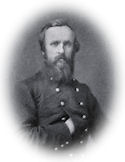
Sunday, 22d.—In the saddle early, we marched some twenty-eight miles, and halted for the night in Claiborne County, within three miles of Cumberland Gap.

“Mountain View,” September 22.—Came down here with Mr. _____, a few days ago. Spent this day not quite so profitably as I desired. The ride to the “old chapel,” where we had service, is so long, that we spent a great deal of time upon the road. Bishop Meade delivered a most interesting address. He mentioned with great feeling the death of Mr. John A. “Washington, of Mount Vernon, who fell at “Cheat Mountain” a few days ago, while, with some other officers, he was observing the movements of Rosecranz. It is heart-rending to hear of the number of valuable lives which are lost in this cruel war.

SEPTEMBER 22D.—Harris and Magraw, who were taken on the field of Manassas, looking for the remains of Col. Cameron, have been liberated by Gen. Winder, on the order of the acting Secretary of War. This is startling; for Mr. Benjamin was the most decided man, at the time of their capture, against their liberation. Per contra, a Mr. G., a rich New York merchant, and Mr. R., a wealthy railroad contractor, whom I feared would break through the meshes of the law, with the large sums realized by them here, have been arrested by the Secretary’s order, on the ground that they have no right to transfer the sinews of war to the North, to be used against us.

Sept. 22.—This evening, eight pickets of the Iowa Seventh regiment, out at the Cross Roads, a mile and a half from Eliott’s Mills, eight miles above Columbus, Ky., were suddenly approached by fifty or sixty rebel cavalry. The pickets fired, when the rebels turned and fled. Two or three of their number were seen to fall, but were carried off on their horses. One of their horses was killed. The accoutrements and pistols fell into the hands of the Iowa boys, and a riderless horse from among them also fell into their hands. Their wounded and dead were carried away. The rebels returned the fire before fleeing, but did no damage.

—A skirmish took place near Hunter, Mo., four miles below Norfolk. Three of the National troops and four horses were lost—N. Y. Tribune, Sept, 24.

—General A. S. Johnston, of the Confederate Army, having assumed command at Memphis, Tenn., issued a proclamation relative to the armed occupation of Kentucky.—(Doc. 57.)