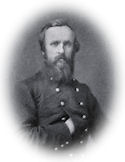
September 20.— I am ordered to the place of judge-advocate and to be attached to headquarters. I dislike the service but must obey, of course. I hope to be released after a few weeks’ service. In the meantime I will try to qualify myself for an efficient discharge of my new duties. I agree with General Rosecrans that courts-martial may be made very serviceable in promoting discipline in the army. I shall try to introduce method and system into the department. I will keep a record of cases, collect a list of sentences proper for different cases, etc., etc.

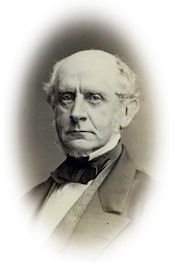
London, September 20, 1861
I deeply sympathise with you in your trials about the part you ought to play in the war. Much as I value your assistance during my absence on this side, I should be very reluctant to continue it at the cost of your own convictions of your duty. If you feel that the crisis demands it, I pray that you set aside every other consideration at once. .. . Whichever way you determine, you will know that I appreciate your motives, and that you will have under every circumstance my sympathy and my prayers.
The late modicum of good news has helped us here a good deal. People were beginning to believe that the slaveholding generals were demigods, on Aristotle’s or Longinus’s principle (I forget which), that mystery is a source of the sublime. The London Times at last frankly admits that if split up we shall no longer be a terror to Europe so that there is no need of going any farther for a reason to explain its crooked policy. Mr. Russell’s last letter went far to justify your inference. He has seen a little light and is willing to admit that we are not so badly off after all. . . .
Friday, 20th.—Being ordered to move his battalion to Cumberland Ford, Colonel McNairy set out from Camp Cummings, near Knoxville, about six P. M., with Harris’s (A), Payne’s (D), and Allison’s (E) companies, and after a march of thirteen miles he camped for the night. The other two companies (B and C) were ordered to follow in about three days.¹
______
¹ As I was yet quite feeble, having just recovered from an attack of measles, brother Ben and I put up only three miles from town.

Friday, 20th. Received appointment of Com.-Sergt.
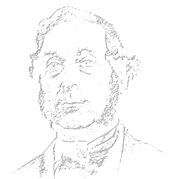
SEPTEMBER 20TH.—Col. J. A. Washington has been killed in a skirmish. He inherited Mount Vernon. This reminds me that Edward Everett is urging on the war against us. The universal education, so much boasted of in New England, like their religion, is merely a humbug, or worse than a humbug, the fruitful source of crime. I shall doubt hereafter whether superior intelligence is promotive of superior virtue. The serpent is wiser than the dove, but never so harmless. Ignorance is bliss in comparison with Yankee wisdom.
September 20.—At Lexington, Mo., Colonel Mulligan surrendered to the rebel general, Price, after a fifty-nine hours’ fight without water; the only supply—from the river—having been cut off by the rebels, after a severe fight. The camp ground contained no springs or wells, and embraced ten acres, with breastworks around it, except the river front. The rebels procured bales of hemp and rolled them in advance, and under their cover succeeded in securing a position in the rear. They made but few assaults, their object being to surround the fort and cut off supplies of water, and this accomplished, wait till necessity compelled Mulligan to yield. Previous to the surrender, Colonel Mulligan offered to take a position on a level spot of ground and give General Price the odds of four to one in a fair open fight, but he declined. After the surrender the rebels mounted the breastworks, mad with joy, and trailed the National flag in the dust. A large amount of gold, supposed to be a quarter of a million, fell into the possession of the rebels. It had previously been buried by Colonel Mulligan, but was unearthed by the enemy. The brave Colonel wept like a child when he found himself compelled to surrender. —(Doc. 33.)
—The rebels troops evacuated Mayfield, Ky., this day. They numbered about seven thousand, under the command of General Cheatham, were nearly all armed, but poorly clothed and indifferently fed.
Mayfield is a small town, the seat of Graves County, on the railroad from Paducah to Union City, and midway between the two places. It is about thirty-six miles east of Columbus, Ky. —Chicago Tribune.
—A Federal scouting party from the Thirty-fourth N. Y. regiment at Darnestown, Md., went across the Potomac near the mouth of the Seneca, and were attacked by a superior party of the rebels. One of the Nationals was killed outright and several were wounded; one of the latter was shot through the cheek, but fled, pursued by the attacking party; on reaching a creek he threw off his gun and plunged in himself laying on his back and resting his head upon a stone with his mouth and nostrils above the water. He avoided his pursuers, and after three hours’ submersion he crawled to the shore of the river; his companions, who were concealed on the Maryland side, discovered and rescued him while making a vain attempt to swim across.
A skirmish took place below Fort Holt near Cairo, Ill., between company I, of the Tenth regiment, and a small party of rebels, in which the latter were routed.—Ohio Statesman, September 24.
—Colonel Crittenden, from Indiana, who was the first to bring a regiment from another State into Western Virginia in aid of the Federal Government, and the first to come to the aid of Kentucky, passed through Louisville, with his regiment well armed and equipped. The troops were enthusiastically received at different points on the route—Baltimore American, September 21.
—Two changes have been made in Jeff. Davis’s Cabinet; Robert M. T. Hunter, of Virginia, has been made Secretary of State in place of Robert Toombs, of Georgia; and Braxton Bragg, of Louisiana, has succeeded Leroy P. Walker, of Alabama, as Secretary of War.—N. Y. World, September 21.
—A Grand Union meeting was held at Newark, N. J. Speeches were made by Daniel S. Dickinson and others. Large delegations from the surrounding towns were present. Resolutions were adopted, deprecating party movements as unpatriotic and prejudicial to the public interest; and proposed an inauguration of a people’s Union movement throughout the State. A committee was appointed for that purpose.
Notwithstanding Kentucky had been claiming to be neutral, she had not only allowed Federal soldiers to camp upon her soil, but her citizens were organizing and arming themselves to aid the Federal Government.
On the 10th instant General G. H. Thomas assumed command of a Federal brigade which had been previously assembled at Camp Dick Robinson, in Garrard County, Kentucky.
General U. S. Grant, with two regiments of infantry and four pieces of artillery, had taken possession of Paducah, Kentucky, as early as the 6th of September.
Owing to the menacing movements of the Federals down the Mississippi River, the Confederates (by order of General L. Polk, who was then in command of the Second Department) landed at Hickman, Kentucky, on the night of the third, and at Columbus about the 5th.
It had been, and was still, the policy of the Confederacy to respect the neutrality of Kentucky so long as the same was respected by the Federal Government, as the following dispatches will show:
Richmond, September 4, 1861.
General Polk, Memphis, Tennessee:
News has reached here that General Pillow has landed his troops at Hickman, Kentucky. Order their prompt withdrawal from Kentucky.
L. P. Walker, Secretary of War.
After explaining to the President that a previous movement of the Federals down the Mississippi River had been the cause of his ordering General Pillow into Kentucky, General Polk received the following dispatch:
Richmond, September 4, 1861.
General Polk:
The necessity justifies the action.
Jefferson Davis.
The following dispatches and replies will explain themselves:
Nashville, September 13, 1861.
To His Excellency Jefferson Davis:
On the 4th instant I sent John Marshall, Andrew Ewing and Dr. Rowling as commissioners from Tennessee to Kentucky. They returned last night, and think it of the highest importance that our troops be withdrawn They say withdrawal secures to us majority in the State. If not withdrawn, overwhelming majority against us and a bloody contest. They think our withdrawal secures withdrawal of Federal troops and saves the State. They are able and reliable men. I submit their report for your consideration.
Isham G. Harris.
_____
Richmond, September 13, 1861.
Governor Harris, Nashville, Tennessee:
Movement to Columbus was reported to me as a defensive measure, rendered necessary by the descent of Federal troops. As a necessity it was sanctioned. If they can be safely withdrawn, it would conform to my declared policy of respect for the neutrality of Kentucky. General A. S. Johnston has been directed to confer with you at Nashville. Security to Tennessee and other parties of the Confederacy is the primary object. To this all else must give way.
Jefferson Davis.
_____
Knoxville, September 14, 1861.
Adjutant-General Cooper, [Richmond]:
Governor Harris and General Buckner telegraphed me if possible to arrest the movement of which I apprised you on the 10th. It is too late to arrest. To withdraw would be unfortunate, unless the Federal forces which menace us will agree to withdraw. I have informed Governor Maguffin (of Kentucky), through Governor Harris, I will withdraw on this condition.
F. K. Zollicoffer,
Brigadier-General.
_____
Richmond, September 14, 1861.
General Zollicoffer, Knoxville. Tennessee:
Your letter of the 10th received. The military consideration clearly indicates the forward movement which you propose. The political condition of Kentucky affects the determination of this question. Of that you are better informed than ourselves, and as you are supposed to have conferred with General A. S. Johnston, the matter is left to your discretion.
S. Cooper,
Adjutant and Inspector- General.
The following is an extract from a letter, dated Clarksville, September 15th, written by the Hon. G. A. Henry and addressed to President Davis:
The neutrality of Kentucky has been all the time a cloak to enable the Lincoln party there to hide their real designs to arm the friends of Lincoln and to disarm the Southern Rights party. We ought to strike now. A step backward would be fatal, in my opinion.
While at Knoxville our battalion was transferred from the State to the Confederate service.
Some of Allison’s Company, who went home from Camp McGinnis and Livingston, returned to camp at Knoxville on the 18th.
Having set out from Knoxville on the 17th, General Zollicoffer arrived at Cumberland Ford, or Camp Buckner, on the 19th, and on the same date he wrote to General A. S. Johnston, Columbus, Kentucky, thus:
An advance force set out last night [under Colonel J. A. Battle], about eight hundred strong, entered liarboursville, eighteen miles from here, about daylight, where they found about three hundred of the enemy, and a fight ensued, in which we killed twelve and took two prisoners. We lost one killed, Lieutenant Powell, of Colonel Cummings’ Regiment, one fatally wounded, and three slightly wounded. The enemy fled precipitately. The number of his wounded unknown.
Cross Lanes, Near Gauley River,
South of Summersville, Virginia,
September 19, 1861.
Dear Mother: — I am in the best possible health. Since the retreat of the enemy I have been too busy to write. You must look in the correspondence of the Commercial or Gazette for my welfare. If I should lose a little toe, it will be told there long before a letter from me would reach [you]. Their correspondents send by telegraph and couriers every day from this army. Their accounts, making proper allowance for sensational exaggeration, are pretty truthful.
Dr. Joe and his assistant performed their duty and the duty of about half a dozen other surgeons during and after the fight. Everybody was well cared for — even the enemy. The number of killed and badly wounded did not exceed twenty-five; other wounds about seventy-five, mostly very slight. The suffering is not great. Gunshot wounds are accompanied with a numbness which relieves the wounded. Laura’s bandages figured largely.
We are now enjoying ourselves very much; beautiful weather; fine fruit, vegetables, and other food, also pretty nights. Love to all.
Affectionately your son,
R. B. Hayes.
P. S. — You must excuse my short letter. I have a prodigious amount of writing to do. I am acting judge-advocate and have tried five cases lately. — H.
Mrs. Sophia Hayes.
Cross Lanes, September 19, 1861.
Dearest: — It is a lovely moonlight evening. I mailed you a letter this morning, but as Lieutenant Wall of Captain McIlrath’s company has resigned to go with the navy, and will go to Cincinnati tomorrow, I thought I would say a word further while our band plays its finest tattoo tunes. They are sweet, very. You see by the enclosed the scrape I am in. I have tried four or five cases on general orders, and here comes an order making me permanently a J. A. [judge-advocate]. It is not altogether agreeable. I shall get out of it after a while somehow. For the present I obey. It is pleasant in one respect as showing that in my line I have done well. Lieutenant Wall will, I hope, call and see you. He is a good soldier and we are sorry to lose him. If this reaches you before other letters from here and Birch River, you may know that two older and longer ones are after you.
One thing in the new appointment: If I can’t get out of it, you may see me one of these days, sooner than you otherwise would, as it confers some privileges, and that would be sweet. Love to all.
Affectionately,
R. B. Hayes.
P. S. — We hear tonight of the death of Colonel Lorin Andrews at Kenyon.[1] We feel it more deeply than in most cases. He was my classmate — a fellow student of Colonel Matthews. He took a great interest in our efforts to get a place in the war, and rejoiced with us when we got a fine regiment. McCook gave me Andrews’ spurs when he left for home, to wear until his return. Alas! we are not to see him. He was an earnest, true man. Hail and farewell! We have been so full of humor tonight and this saddens us. Good-bye again, dearest.
Mrs. Hayes. R.
[1] Lorin Andrews born at Ashland, Ohio, April 1, 1819. Studied law, but soon gave up the practice to devote himself to work of education. He was President of Kenyon College at the outbreak of the war and was the first man in Ohio to offer his services to the country. He was colonel of the Fourth O. V. I. in the first campaign of the war and “died, a martyr to the Union, September 18, 1861.”
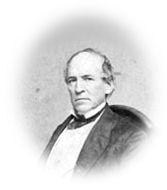
THURSDAY, SEPTEMBER 19, 1861.
Weather continues delightful. I spent some time at the Pat office. Saw the Comr, could get no decisive answer as to the precise time that I could go back into the office. It would not be long. Saw the Auctioneer in regard to my sale of furniture. Next Tuesday is the day, 1/2 past 10 a.m. Varnished over some of my furniture. Spent the evening with Julia at Chas rooms, Capt Kendig and Dr John [Bulkley?] there. K is a fine singer.

______
The three diary manuscript volumes, Washington during the Civil War: The Diary of Horatio Nelson Taft, 1861-1865, are available online at The Library of Congress.


