Tuesday, November 22. — Day cold and cloudy. Major Filler was missed this morning while we were at breakfast. Lieutenant Belcher came in here and tried to find out how he escaped. They are very much puzzled about it. We told them that he had escaped up the chimney. Sherman reported at Union Point.

White Hall, two miles west of Atlanta,
November 13, 1864.
We made 15 miles to-day very easily. Coming through Atlanta the smoke almost blinded us. I believe everything of any importance there is on fire. Understand that all the large buildings are to be burned. Tremendous smoke also rising over the site of Marietta. It is said that we will lie here two or three days. We are only one-half mile from where we did our hard fighting “before Atlanta.”
Sunday, November 13. — Wrote home. Answered Miss K.’s letter. Day pleasant.
Sunday, 13th—We started early this morning for Atlanta and after marching twenty miles went into camp for the night. A detachment of the Twentieth Army Corps is stationed at the railroad bridge crossing the Chattahoochee river. They will soon destroy the bridge, and also the track clear to Atlanta. All is quiet in the front. We burned everything in our camp yesterday that we did not need, and it seems that everything in sight is being burned. Every man seems to think he has a free hand to touch the match. The nice little town of Marietta which we left behind this morning will doubtless be burned before the last of Sherman’s army leaves the place.
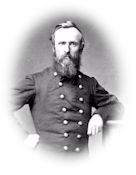
Camp Four Miles South Of Winchester, Virginia,
November 13, 1864. — Sunday.
My Darling: — You see we have made one day’s march towards civilization, and, as we hope, towards our much wished for winter quarters. The weather has been and still is very favorable for the season — cold and windy to be sure, but very little rain. We do not know how far north we shall go. No doubt as far as some railroad and telegraphic communication. We have halted here for four days past, probably on account of reports that the Rebel army, reinforced and reorganized, is following after us. We do not know how it is, but if they wish to try conclusions with us again, it is likely General Sheridan will meet them.
My first brigade went to Martinsburg a week ago. It was hoped that they would not have to come back, but the probability now is that they will return. If so, I shall assume command of them again. General Duval has returned cured of his wound. I could perhaps keep a division, but under the circumstances I much prefer my old brigade. It has been greatly improved by the addition of the Ninth Virginia Veterans, who now with the Fifth form the First Virginia Veterans under Lieutenant-Colonel Enochs — a splendid regiment.
We are rejoiced that Captain Hastings is improving; he is still low but decidedly improving. His sister, whom you know, and a brother are with him.
Lincoln’s election was so confidently expected that it does not cause so much excitement as we sometimes see, but it gives great satisfaction here.
Generals Sheridan and Crook both voted for him. It was General Sheridan’s first vote!
I have no decided feeling about the little soldier’s name. But I can’t help thinking, suppose he should die after living long enough to become very dear to all of you. Would it not be awkward to think of the dear lost ones by the same name? And is not the idea of death now associated with the nickname “Little Jody”? But I am quite indifferent. Decide as you wish, or leave it to be decided by the boys.
Give my love to the kind friends.
Captain Reed, who sent you the dispatch, is an officer on Colonel Thoburn’s staff — who was thoughtful enough to contradict the false report.
Affectionately ever, your
R.
P. S. — Doctor and I rode to the front this P. M., a very cold, windy, raw day. From the best information I can get, nothing but cavalry has been seen. I think the Rebel army is not a-going to disturb us again. General Powell took two guns, two flags, and two hundred prisoners from General McCausland last night. A very handsome affair. The Second Virginia Cavalry is getting as good as any of them under General Powell.
Sunday, November 13. — Windy and very cold. General Powell on Front Royal road captures from McCausland two guns, two colors, and two hundred prisoners! A fine affair. Rode to the front. Rebels gone.
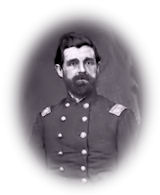
Colonel Lyon’s Letters.
Nov. 13, 1864.—I have been to Stevenson, changing troops on the railroad. Was out all Tuesday night and came back last night very tired. A ten-hours’ sleep straightened me up, however, and today I am as good as new.
I think things are sufficiently settled now for you to come here, and I have just forwarded an application to General Thomas for leave. If granted, I can get it to you soon after the first of December, and if we have any trouble at all this winter it will likely come before that time; but I fear that we shall fail to obtain the permission. An application of the same kind made by the pilot of a gunboat to General Sherman has come back refused, with a statement that the General has prohibited women from coming south of Nashville. Yet the Chaplain got permission for his wife to come and she arrived at the regiment yesterday. This permission came from General Thomas. I think I shall move into another house where there are furnished rooms and where we can have better kitchen accommodations.
I will tell you now what I have kept still about. I expected that Hood would cross the river and move in this direction, and I had orders from General Thomas what to do in case his army came here. I was ordered to fall back towards Stevenson, resist him at the streams, obstruct roads and retard his movements as much as possible. I think that danger is pretty much passed, at least it will be by the time you get here. With such orders in my pocket, and while there was any prospect of an occasion arising for executing them, I knew that it would be folly to ask General Thomas to let you come.
I have taken the female college, a treasonable Methodist concern here, for a general hospital; and have had several interesting sessions with the lady proprietors about it. Dr. Evans will move here in a few days to take charge of it.
I have had some nice presents lately. My chief scout gave me a gold watch, which he took from the dead body of a rebel Colonel killed by him in some fight before Atlanta. An artist here, Mr. Fry, gave me a beautiful picture of General McPherson, worth $30, and the chief clerk of our post Q. M. gave me a gold pen.
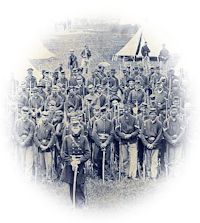
November 13th. 1864.
It has been growing cold all day, and toward night the wind increases to a gale, bringing a few flakes of snow with it. Tomorrow we begin building winter quarters, by order of the General commanding. So the vexed question of moving seems to have been settled. Mail matter came in freely last night.
The election returns are very gratifying to me. The people, with a unanimity never equaled, have decided in favor of a united government. President Lincoln is now, emphatically, the chosen of the people, he having received a majority of all the votes cast. Supported by the moral force of the Nation, he can now proceed, untrammeled, with the great work before him.
There is much talk in the newspapers of a Thanksgiving dinner which is to be given the Army of the Potomac and the James by volunteer contributions of the people of the North. It is a gigantic undertaking, but can be accomplished by the aid of Adams Express Company, who, I understand, have offered to deliver free of charge.
The new railroad is completed to within a half mile of Ninth Corps Headquarters, on the extreme left of the line. Wagon loads of express boxes arrive at Division Headquarters nearly every day. Nearly every man in our regiment has received a box filled with “creature comforts.” I had the pleasure of testing the quality of some Michigan butter today, sent to a Mr. Hopkins, of Oakland County. He was so unfortunate as to get a furlough on the day of its arrival, and left it in care of his tent mates, enjoining them to be sure and not let it spoil. They are doing all in their power to prevent it, with fair prospects of success. About one-fourth of the sixteen pounds is already saved.
An incident just occurred that created some excitement. A man who claims to have once belonged to the Eleventh New York Cavalry, now a cripple in both arms, has been through camp selling papers, songs, etc. One of our men, thinking he recognized him as a Rebel spy whom he had seen in Frederick City, Maryland, reported him as such to the Provost Marshal. He was able to give a good account of himself, however, producing a pass signed by the Secretary of War, and a letter of recommendation from General Phil Sheridan.
November 13th.—Bright and cold; ice on the porch. All quiet below, save the booming of bombs every night from our iron-clads, thrown at the workmen in the canal.
There is a dispatch from the West, relating to Gen. Forrest’s operations in Tennessee, understood to be good news. I did not wait to see, knowing the papers will have it to-morrow.
Mr. Hunter was with Mr. Secretary Seddon, as usual, this Sunday morning, begging him not to resign. This is flattery to Mr. Seddon.
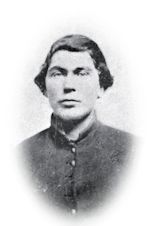
En route, Sunday, Nov. 13. Griff and I made our bed in the open air, and slept as of old while on the march, warm and cozy though our blankets in the morning were stiff with frost. Had to wait till noon for the wreckers to get the track in repair, when we started on our way rejoicing, as it was very cold. Passed through Bridgeport without stopping. Waited at Stevenson thirty minutes, when we took the Nashville Railroad, 112 miles long. This route being new to me, consequently more interesting. The first thirty miles was through a low swampy country with but few traces of civilization. A few station houses, lightly garrisoned, until we neared the Cumberland Range, which we had to cross. Here on a sidetrack we found small coal-burning engines ready to help us over, small driving wheels but capable of great power. Coupled on behind us with vigorous puffs and dense clouds of coal smoke. It propelled us up a grade of two hundred feet to a mile, through cuts in the solid rock fifty feet high, now running along a narrow shelf hewed in the side of an ancient slope with a deep canon below us and the eternal rocks above us. Finally we entered the tunnel, three-fourths of a mile long, drilled in solid rock. Three ventilating shafts run down from above. We could see nothing, the hot smoky air tending to warm our chilled systems. Daylight found us on the west side of the mountain, having passed over one of the greatest pieces of internal improvement I have ever seen, North or South. Darkness was fast approaching, and we once more crawled into our den to seek rest and warmth in broken slumbers, regretting that it was not yet daylight so I could see the remainder of the line which was wrenched from traitors’ hands by the gallant Rosecrans.


