
Friday, 28th—Weather still pleasant. The Seventeenth Army Corps was reviewed by General Mower. We were out in full dress with knapsacks, haversacks and canteens on. There is to be only one battery to each division of the Fourteenth, Fifteenth, Seventeenth and Twentieth Army Corps. The remainder of the artillery, with all defective wagons, horses and mules, is being sent back to Chattanooga. All things quiet in camp. We received orders to be ready to march in the morning at daylight.

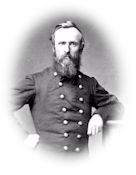
Friday, October 28. — Rained hard last night; gusty and cold this A. M. Mem.: —Buy Lowell’s “Fireside Travels.” Barry, of Hillsboro, and West, of Cincinnati, bring poll-books for all and tickets for both sides. General Crook anxious to have Comly write our side of battle of Cedar Creek.

28th. Friday. Regt. came in and drew clothing. Wrote to Will, Fred and C. G. and D. R. H. Letter from Will, one month on way.
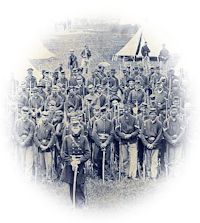
Peebles House, October 28th, 1864.
Contrary to expectations, we are back again in our old camp. I confess I am disappointed. I can form no idea, at present, of the result of the movement, as I know nothing of Butler’s operations the last two days. I conclude it was only a feint, on our part, to draw part of Lee’s forces from Richmond, out of Butler’s way. Be that as it may, to me it was a failure. The “Fighting Second,” commanded by the “invincible Hancock,” was to have the honor of attacking, while the Fifth and Ninth were to draw their attention to other points. The attack was made, and the Rebels were driven before them, like chaff before the wind, until our forces struck the railroad. Then they rebounded like a rubber ball.
October 8th, 1864.
I received a letter from home this evening, freighted with love and wifely endearments. As I read that comforting letter, my heart overflowed with gratitude to the Giver of all Good for the bestowal of this, His most precious gift to man. I rejoice at the safe arrival of my “relic.” I valued it more than money. I had marked several pieces which were my favorites. Among them was one entitled “We Miss Thee at Home.” The first time I sang it was in company with Mr. Collier and two other good singers. I was never in better trim for singing than on that night. We had sung several of my favorite pieces and were passing the otherwise tedious hours very pleasantly. But this was too much for me. My voice, before so clear, suddenly thickened and became hoarse. My eyes, before so strong, refused to trace the “mystic words.” I could only see my poor, grief-stricken wife, as, solitary and alone, she mourned her absent mate.
But I must return from these “dreamy wanderings” to record the rugged scenes of cruel war. The Ninth Corps is again on the “war path.” It started this morning, at daylight, on a reconnoissance toward the South Side Railroad. When I last heard from them —at 3 p. m.—they had advanced one mile, driving the enemy before them, which brings them to within one mile of the road. Yesterday I could plainly hear the engines whistle defiantly. The Seventeenth remained in camp to receive pay. I have drawn for eleven months, which will relieve the most urgent needs of my family and enable them to tide over “the coming winter.” One might infer, from what I have written this summer, that I had been a “man of business.” Well, I have had a hand in nearly everything that floats. My parole bars me from “regular duty,” and, taking advantage of it, I have followed my inclination in the main, only being careful to “keep within the lines.” My Captain commands the regiment, and this makes me some extra work, as I do all his writing. Our business relations are satisfactory. He treats me with unvarying kindness.
We have drawn our fall clothing today. It came in good time, for most of our men were thinly clad. The weather, which only three days ago was very hot, has suddenly taken cold—so cold we actually had a frost this morning; hardly discernible, ’tis true, but still a frost, and we were fain to get up early to “gather ’round the fire, and we piled the rails on higher” until we fairly turned night into day. All to little purpose, however, for, like “poor Harry Gill,” my teeth did “chatter, chatter still.”
Our recruits who came to us recently say it is not nearly as cold here as in Michigan when they left. The General and his staff are having brick fireplaces built in each of their tents. Privates cannot afford this luxury, as brick houses are scarce in this part of the country. Unfortunately for us, the houses are all of wood, and their chimneys, when torn down, will not supply the officers with brick. Most of the houses, too, are occupied by their owners, they not having been notified of our contemplated visit.
But hark! what causes all this uproar? More good news, I think, for I seldom have heard such cheering. “What is it, Amos?” “Don’t know; guess Burnside’s come, er the boys ‘ave scart up a rabbit.” “More good news from Sheridan,” says Charley. “He’s had another big fight with Early, whipped him, took nineteen pieces of artillery, seven thousand prisoners, most of his supply train, and, at last accounts, was following him up close, bound to capture his whole army or follow him into Richmond.” I expect this is slightly exaggerated, but the news is good. I wonder if the noise disturbs the Johnnies?

Henry Adams, private secretary of the US Minister to the UK, to his brother, Charles.
London, October 28, 1864
The results of the October elections are just beginning to make themselves clear to us. They indicate precisely what I have always most dreaded, namely a closely contested Presidential vote. I only judge by the Pennsylvania election, where the Democrats seem to have carried everything. How it may be in Ohio and Indiana I do not know, but I fear a similar result. They gain just enough to place Lincoln in a very weak position if he is elected. These ups and downs have been so frequent for the last four years that I am not disposed to put too much weight on them. At the same time I cannot help remembering that a down turn just at this moment is a permanent thing. It gives us our direction for a long time. But I must see our papers before I can fairly understand what is to happen. Meanwhile there appears to be a hitch in army affairs and some mysterious trouble there. This is also rather blue. . . .
In fact we are now under any circumstances within four or five months of our departure from this country. I am looking about with a sort of vague curiosity for the current which is to direct my course after I am blown aside by this one. If McClellan were elected, I do not know what the deuce I should do. Certainly I should not then go into the army. Anyway I’m not fit for it, and to come in when the anti-slavery principle of the war is abandoned, and a peace party in power, would be out of my cards. I think in such a case I should retire to Cambridge and study law and other matters which interest me. Once a lawyer, I have certain plans of my own. I do not however believe that McClellan’s election can much change the political results of things, and although it may exercise a great influence on us personally, I believe a little waiting will set matters right again. So a withdrawal to the shades of private life for a year or two, will perhaps do us all good. If that distinguished officer would only beat us all to pieces! But if Lincoln is elected by a mere majority of electors voting, not by a majority of the whole electoral college; if Grant fails to drive Lee out of Richmond; if the Chief is called to Washington to enter a Cabinet with a species of anarchy in the North and no probability of an end of the war — then, indeed, I shall think the devil himself has got hold of us, and shall resign my soul to the inevitable. This letter will reach you just on the election. My present impression is that we are in considerable danger of all going to Hell together. You can tell me if I am right.
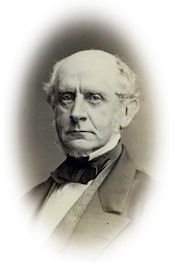
London, October 28, 1864
Our life in the country[1] has at last settled down into very profound repose. I have perambulated the whole neighborhood, visited every spot that I could remember, and come to the conclusion that my range must have been very limited in my boyhood. The old school house is down and every trace of it, even to the old trees in the playground, is effaced. Last Sunday I went to the old parish church, which looked ugly enough when I attended it as a boy, but which now appeared more so than I had fancied it. There was nothing pleasant associated with it. As the school was large, only a portion of the boys attended at one time, and as I was among the small ones, our turn was generally in the afternoon, when nobody else was there, and the service was much more coldly and mechanically performed than it is now. Indeed I may say that all my school experience here comes back to me with a dreary sort of chill. I find Dr. Nicholas, the head of it, dimly remembered as an indifferent scholar and rather an animal man. Indeed there were stories about him current among the boys at the time, which were not over creditable. He had however quite a family of daughters who were intimate at our house. I do not find a trace of a single one of them. Fifty years make a pretty big hole even in the oldest established society. General Clitheroe remains to be sure, but whether the same who in 1816 was a colonel is dubious. Anyhow the name continues, which is something in the midst of the vacuum. Change is over the whole surface. . . .
[1] Hanger Hill House, Ealing.

Oct. 28th. Moved back to our old camp in the rear.

October 28th.—Rained all night, but bright this morning.
We have no clear account yet of the fighting yesterday; but we know the enemy was repulsed on this side of the river. It is thought that the operations on the south side were of greater magnitude, where we lost a brigadier-general (Dearing) of cavalry. We shall know all in a few days. The fighting was not resumed this morning.
It is rumored that Mr. Seddon will resign, and be succeeded by Gen. Kemper. I am incredulous.
The “dog-catchers,” as the guards are called, are out again, arresting able-bodied men (and sometimes others) in the streets, and locking them up until they can be sent to the front. There must be extraordinary danger anticipated by the authorities to induce a resort to so extreme a measure.
Two P.M. No news from the field—no cannon heard to-day.
Large amounts of cloth from Europe for the army have recently arrived at Wilmington, N. C.; but the speculators occupy so much space in the cars, that transportation cannot be had for it. The poor soldiers are likely to suffer in consequence of this neglect of duty on the part of the government.
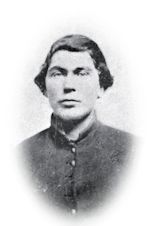
Etowah Bridge, Thursday, Oct. 27. Rained all night and cloudy through the day. Grazed forenoon as usual. Wrote to sister Hannah in the afternoon. A small mail received. None for me.


