
23rd. Sunday. Rode to Army Hdqrs. and to fortifications. Artillery parked near Hdqrs. Read Independents. Splendid sermon by Rev. R. W. Hitchcock. “Blessed be the Lord who teacheth my hands to war and my fingers to fight.”

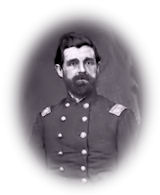
Colonel Lyon’s Letters.
Huntsville Landing, Ala., Sunday, Oct. 23, 1864.— I go on a tour of inspection up the railroad tomorrow and expect to be gone two days. Lieut.-Colonel Horner, 18th Michigan Provost Marshal here, will command in my absence. We expect some more troops here soon, and if we remain here I shall probably retain my railroad defense command and move headquarters to Larkinsville. That arrangement will suit me very well. I hope matters will settle down before a great while so that I can form some idea where I shall be the coming winter.
Lieutenant Bowerman’s resignation has been accepted and I hear that he has gone home. A new order from the War Department holds in the service all those officers who had a veteran furlough with their regiments. It affects several of our officers who were intending to leave.
Fifty or sixty recruits came to the regiment the other day, and we sent up to find a clerk amongst them. They sent us one, and it was George Larson. I was taken completely by surprise.
Colonel Chapman has gone to Nashville to see about mustering out the non-veterans. The health of the regiment is improving.
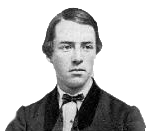
Sunday, October 23. — No additional news from the Valley. Weather pleasant. Day as dull as usual. Wrote Father and Livy. Captain Senn is going to put another mess of 14 in our cook-house. Sent Dr. Marks’s books to Captain Senn’s house.
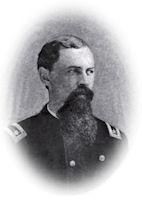
October 23, 1864.
A day of rest and washing. The cavalry was out some dozen miles southwest, and report the enemy intrenched and in force.
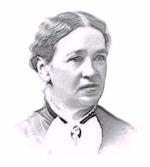
St. Helena, Sunday Evening, October 23, 1864.
Last night there came a knock at the door, which I answered, and there, standing like an apparition, was Mr. Sumner, who came in and stayed until after breakfast to-day, evidently enjoying our Northern appearance, but being as funny and as cynical by turns as he always is. He is now a landed proprietor, or a planter, as he calls himself, and he takes a planter’s view of all things.
For some unexplained reason all of Mr. Philbrick’a superintendents, except Mr. Ruggles and Mr. Wills, are going away this winter. I shall probably find out the reason when I see Mr. Tomlinson. Some say it is because they disapprove of Mr. Philbrick’s management, others that he is not going to allow them a share of crop, but only a salary, and this they will not stay for. Some miserable “middle-men” overseers will come, it is likely, to take their places and soon we shall see this island in just such a state as Ireland is, with its absentee owners and lessees or managers to grind down the people.
To-day while we were at church General Saxton and Tilly came to see us, and when they heard that we had gone down to the Baptist church, they did not wait, but went away without seeing us. I am too sorry. It was very kind and very complimentary for General S. to come all the way over here for a call. It takes a whole day, and he has not so many leisure days that he can afford to spend them visiting in this fashion. He never does it, I may say, excepting this once or twice.
Rina is delighted at Tilly’s sending me by her any quantity of love and “respecks.” Rina is just as much of a jewel as ever, but she is very funny at times. Did I tell you of the death of little Friday? Kit, the boy who wears the blue roundabout and not another stitch, yet is so fully apparelled in his own estimation, — a little fellow of three, — came home one day saying repeatedly that “Fish carried Friday.” No one noticed his words till night, when Friday did not come home and it began to be feared that he had got into the creek. His body was found there after a few days. Kit had supposed him carried off by a fish, but he was probably “bogged.” Rina was lamenting his death; she “missed him too much. He was the bandy-leggedest little fellow most, that lived to de village, and she did love and look ‘pon top him.”
We began school in the church again last Wednesday and have had a full number of scholars, one hundred and ninety-four last Friday. They are generally good, and eager to come back, pretty quiet and inclined to study, but a few have grown rebellious and riotous, owing to peculiar surroundings. These I dismiss summarily until they come in more subdued. I enjoy the return to teaching highly and am quite returned to my usual good health and vigor. I think we shall find Fanny Murray a great assistance, for she comes steadily and does regular work. We hope soon to get into our new building,[1] which looks exceedingly pretty, but has not half seats enough in it, and wants other improvements.
Yesterday Uncle Robert and old Aunt Scilla, with her two children, came up in a cart to see us, and to-day at church all old friends and patients came up with greetings that did me good. The eggs and vegetables pour in in abundance and we live pretty well. We pay now for our milk ten cents a pint and are thankful.
[1] The school-house sent by the Freedmen’s Aid Society of Pennsylvania.

Sunday, October 23d.—Bright and frosty.
From the United States papers we learn that a great victory is claimed over Gen. Early, with the capture of forty-three guns!
It is also stated that a party of “Copperheads” (Democrats), who had taken refuge in Canada, have made a raid into Vermont, and robbed some of the banks of their specie.
The fact that Mr. McRae, who, with Mr. Henley (local forces), fell into the hands of the enemy a few miles below the city, was permitted to return within our own lines with a passport (without restrictions, etc.) from Gen. Butler, has not been mentioned by any of the newspapers, gives rise to many conjectures. Some say that “somebody” prohibited the publication; others, that the press has long been misrepresenting the conduct of the enemy; there being policy in keeping alive the animosities of the army and the people.
The poor clerks in the trenches are in a demoralized condition. It is announced that the Secretary of War has resolved to send them all to Camp Lee, for medical examination: those that have proved their ability to bear arms (in defense of the city) are to be removed from office, and put in the army. One-half of them will desert to the enemy, and injure the cause. About one hundred of them were appointed before the enactment of the act of Conscription, under the express guarantee of the Constitution that they should not be molested during life. If the President removes these, mostly refugees with families dependent upon their salaries, it will be a plain violation of the Constitution; and the victims cannot be relied on for their loyalty to the government. If the government wastes precious time in such small matters, while events of magnitude demand attention, the cause is fast reaching a hopeless condition. The able-bodied money-changer, speculator, and extortioner is still seen in the street; and their number is legion.
The generals in the field are sending back the poor, sickly recruits ordered out by the Medical Board: the able-bodied rich men escape by bribery and corruption; and the hearty officers— acting adjutant-generals, quartermasters, and commissaries—ride their sleek horses through the city every afternoon. This, while the cause is perishing for want of men and horses!
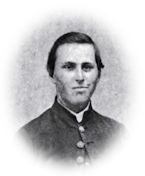
October 22d. Report comes to us of the death of our Brigade and Division Commander at Cedar Creek. We are all sorry that he was killed. He was one of the best officers in our corps. Colonel Thoburn, 1st West Virginia Regiment, a good friend to our regiment, a medical doctor by profession.
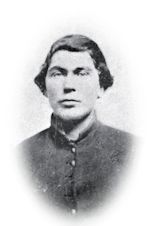
Etowah Bridge, Saturday, Oct. 22. A council was held this morning to know whether we should put up our chimney or wait to see whether we would leave. Decided to do all we could for our comfort, and let marching take care of itself. By night we had the satisfaction of sitting by a fire and knowing that the chimney smoked out of the right end.
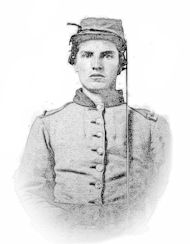
Saturday, 22d.—Came through Gadsden yesterday. Circular from General Hood that Yanks had evacuated Atlanta. (Well, yes, that was true, but not for fear of Rebs.)

Saturday, 22d—We lay in camp all day for the purpose of resting. But it appears to the rank and file of the men that Sherman must have given up trying to catch Hood, or else we would not remain so long at one place. The supply trains were all sent back to the main railroad line for provisions. I went out on picket this morning. The non-veterans of the Eleventh and Thirteenth Iowa Regiments were mustered out this morning, and left for Chattanooga, from which place they will start for home. All of the non-veteran officers from each regiment, except two or three, went out with the privates. It is fine weather for marching. No news from the Eastern army.


