Etowah Bridge, Tuesday, Oct. 18. Three teams and six men gone a-foraging with two days’ rations. They go up into Cherokee County. Our horses have nothing, only what is foraged for them and grazing once a day, but the grass is getting dry. McCook’s Cavalry that have laid here for several weeks, broke camp this morning and marched northward. Worked this forenoon. In the afternoon wrote to my old comrade E. W. E., but there is no prospect of it reaching him soon. Weather beautiful.

October 18th.—Ten pleasant days I owe to my sister. Kate has descended upon me unexpectedly from the mountains of Flat Rock. We are true sisters; she understands me without words, and she is the cleverest, sweetest woman I know, so graceful and gracious in manner, so good and unselfish in character, but, best of all, she is so agreeable. Any time or place would be charming with Kate for a companion. General Chesnut was in Camden; but I could not wait. I gave the beautiful bride, Mrs. Darby, a dinner, which was simply perfection. I was satisfied for once in my life with my own table, and I know pleasanter guests were never seated around any table whatsoever.
My house is always crowded. After all, what a number of pleasant people we have been thrown in with by war’s catastrophes. I call such society glorious. It is the windup, but the old life as it begins to die will die royally. General Chesnut came back disheartened. He complains that such a life as I lead gives him no time to think.
Tuesday, 18th—We started early this morning and reached Lafayette at 9 o’clock. We lay there for two hours when we took up our march for Summerville, Georgia, and went into bivouac within four miles of the town. The rebels are still moving to the north through the Blue mountains. We had two days’ rations left in our haversacks this morning, when we received orders from the quartermaster that they would have to run us four days, as we could not draw any before that time. No news from the Eastern army.
18th. Tuesday. All quiet. 2nd Ohio returned.
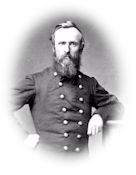
Tuesday, October 18. — A letter from Stephenson congratulating- me on my election by twenty-four hundred majority. Iln the] First District, Eggleston has seventeen hundred majority. Still busy on entrenchments.
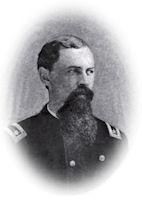
La Fayette, October 18, 1864.
Our brigade was marching through Cane Creek Valley yesterday until 4 p.m., when we struck out for this place five miles, which we made in one and one-half hours. Nice little town almost surrounded with half-mountains. There has been a pair of cavalry fights here, the fruits whereof can be seen in an addition to the cemetery, near which we are bivouacked, some 25 Rebel graves, and half as many Yankees. Divers fair creatures can be seen here, chiefly Rebels; I have thought though, to-day, much Union. We are now bound for Rome.
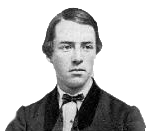
Tuesday, October 18. — Captain Amory received his box from home, with several Northern papers and books. Gave me a shirt and a pair of drawers, which Major Anderson sent me. There was a large meeting in town last night to consider Mr. Boyce’s letter. Had a drunkard in the lock-up who amused us. I was measured yesterday for a pair of shoes, to be finished by Saturday, by one Flannigan. Colonel Marshall received a letter saying he would be exchanged.
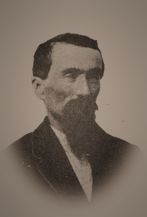
October 18 — I slept very little last night, as we camped near the railroad and almost under a trestle, and train after train passed over the trestle and kept up a fussy rumbling all night. This morning our friends of the One Hundred and Third New York Infantry put us in a train and shipped us to Harper’s Ferry. We were shipped in box cars, with sentinels with fixed bayonets on each side of the doors, to keep us from jumping off and breaking our necks. We are now quartered in an old factory building that stands right on the bank of the Shenandoah, in the suburb of Harper’s Ferry.

October 18th.—Cloudy and cool.
Quiet below, but it is rumored that the enemy has erected one or two sand batteries, mounted with 400-pounders, bearing on our fleet of gun-boats.
The following dispatch was received from Gen. Hood to-day:
“9 Miles South of Lafayette, Ga.,
“Oct. 15th, via Selma, Oct. 17th, 1864.
“Gen. Bragg.
“This army struck the communications of the enemy about a mile above Resaca on the 12th inst., completely destroying the railroad, including block-houses, from that point to within a short distance of Tunnel Hill, and about four miles of the Cleaveland Railroad, capturing Dalton and all intermediate garrisons, with their stores, arms, and equipments, and about 1000 prisoners.
“The main body of Sherman’s army seems to be moving toward Dalton.
J. B. Hood, General.”
The following was received from Gen. Lee yesterday:
“Headquarters Army Northern Virginia,
“Oct. 16th, 1864.
“Hon James A. Seddon, Secretary of War.
“On the 14th instant, Col. Moseby struck the Baltimore and Ohio Railroad at Duffield, and destroyed a United States mail train, consisting of a locomotive and ten cars, and securing twenty prisoners and fifteen horses.
“Among the prisoners are two paymasters, with one hundred and sixty-eight thousand dollars in government funds.
“R. E. Lee.”
It is reported also that Gen. Early has gained some advantage in a battle; not authentic.
Gen. Bragg is going away, probably to Wilmington. The combination against him was too strong.
But “the Bureau of Conscription” is pretty nearly demolished under his blows. Order 81 directs the generals of Reserves to appoint inspecting officers for all the Congressional Districts, to revise all exemptions, details, etc., with plenary powers, without reference to “the Bureau.”
The passport checks on travel Northward are now the merest farce, and valuable information is daily conveyed to the enemy.
Etowah Bridge, Monday, Oct. 17. Volunteered to go out with Sergeant Dziewanowski and twenty men, eight of them armed with muskets issued by the ordnance sergeant for the occasion, to the rolling mills for brick, stone, etc. Teams returned immediately, but the mounted men rode over the country till late in the evening. I stayed and took a home-like dinner with Grandma Williams for fifty cents.


