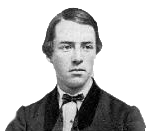
Thursday, September 29. — No news for the navy as yet. Good news still from Sheridan, and gold reported down to 200. More escaped prisoners brought in. Wrote to Mr. Saunders for money. Had my letter to Father, which was to run the blockade, returned me to-day. Captain Senn on as officer of the day.

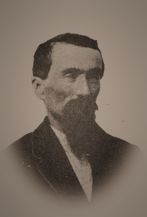
September 29 — Rained last night, which put some of us to soak. There is evidently an important inroad or raid threatened by the enemy at some point some where south of us, for this morning we were ordered to Lynchburg by rail. We left camp early this morning and marched to Charlottesville, where we put our guns, horses, and men all on a train, and moved to Lynchburg by steam, where we arrived this evening little after sunset. Moving by steam is quite an improvement on the ordinary marching business, both for man and horse.
Lynchburg is situated on the south side of the James River, about sixty miles southwest of Charlottesville, and about one hundred and ten miles — the way the bird flies — west of Richmond.
The city is located in a very hilly country, and some of the encroaching hills are bold enough to stick their feet under some of the streets and bend them skyward. Most of the country along the railroad between Charlottesville and Lynchburg is very hilly, rendered so by the spreading out eastward of the foothills of the Blue Ridge. The railroad winds among and around the hills and ridges in a serpentine manner, and is as full of curves as a snake track, with cut and fill following each other in a thousand places. At one place — I think it is in Nelson County — the road passes through a considerable stretch of beautiful level country and good land. We are camped to-night in Lynchburg, with our guns still on the cars.
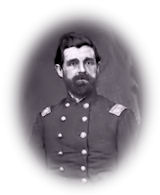
Colonel Lyon’s Letters.
Huntsville, Ala., Thurs., Sept. 29,1864.—I suppose you learn from the newspapers that Forrest is playing smash in here. He first struck the railroad at Athens. His coming was a complete surprise. He captured the garrison there (a colored regiment) without much of a fight. Just as the surrender took place, reinforcements from Decatur reached there, the most of whom were captured. The 18th Michigan loses 300 and the 102d Ohio, 150 men. He then went north to a heavy trestle work a few miles from Athens and captured two regiments, burning the trestle. Then he moved on to Elk river bridge and captured and destroyed it; after which he pressed forward to Pulaski, where he encountered General Rousseau with reinforcements. They have been fighting, but we do not know the result.
This morning I received dispatches from Decatur that Forrest moved on Tuesday night towards the Nashville and Chattanooga R. R., in the direction of Fayetteville. His force is 6,000 to 8,000 strong, with plenty of artillery. I keep scouting parties in the direction of Fayetteville constantly. I do not think he will come this way, although when he was at Athens I felt a little squally.
Heavy reinforcements have come up from the front and have gone toward Nashville, and more are expected. So I think we are out of the woods. Colonel Chapman, with a part of the regiment, is still at Decatur.
Just at this point I received the following telegram from General Granger at Decatur: ‘Strengthen Huntsville all you can. Use every available cotton bale for traverses in fort to defend against enfilading fire. Thoroughly barricade the streets. Defend all approaches to the fort as completely as possible.’
I had been doing all this for several days, but, to be certain that everything is right, I started out and made a thorough examination of the works. I do not know whether the General thinks that Forrest is coming this way or not. I keep out scouting parties fifteen or twenty miles towards Pulaski and Fayetteville constantly, but as yet can hear nothing of his moving this way. If he comes, I have a good fort, some artillery and a gallant little garrison, and hope to be able to make a good fight. I think, however, that the order is merely precautionary, as this is the first time that he has said anything about the defenses. If he had information that we were in danger of attack he would have said so. His family are here and have had no communication from him on the subject. Then we can be reinforced in a few hours, if attacked, both from Decatur and Stevenson. The General is feeling very badly. He was surprised. The railroad under his charge is seriously injured and he has lost 3,000 to 4,000 of his command. These are hard blows for any officer to stand up under.
No doubt you will know the result of operations here before you receive this. I am confident that a vigorous effort is being made by General Sherman to head off and destroy the force engaged in this raid, and I shall expect in a day or two to see large reinforcements moving this way. How fortunate that it did not happen before the capture of Atlanta, when no troops could have been spared!
I have been much broken of my rest for four or five nights, and am very busy all the time. I am a good deal worn and fatigued with labor, anxiety and loss of sleep, but am well. If any one is ambitious for an important military command in times of peril, or thinks it is a soft thing to be an officer, I am perfectly willing that he should have a chance to try it on. Oh, it will be paradise, indeed, if I am permitted to sit down at home once more with wife and children, family and friends, and know that the war is over, the flag triumphant, and my duty as a soldier done. Will not that be a happy day for us all?

Sept. 29th. Lay as support, all the time ready to re-enforce any part of the line. Butler took 3000 prisoners and 15 guns.
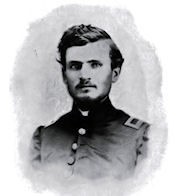
29th. Thursday. Marched on back road to Bridgewater.
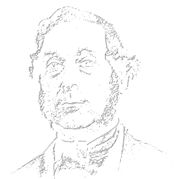
by John Beauchamp Jones
SEPTEMBER 29TH.—Bright and beautiful.
As I walked down to the department, heavy and brisk cannonading below assailed the ear. It was different from the ordinary daily shelling, and to my familiar senses, it could only be a BATTLE. The sounds continued, and even at my desk in the department the vibrations were very perceptible.
About 10 o’clock, when walking down Main Street (the cannon still heard), I met Robert Tyler and Mr. Foote, member of Congress, the latter in some excitement, denouncing the management of affairs by the Executive. He said if Richmond were lost, he should move that the people take matters in their own hands, and proclaim a DICTATOR. Mr. Tyler, commanding his temper, banteringly told him that he ran some risk of being arrested, tried by drum-head court-martial, and shot—before night. Mr. Foote whirled away, repeating his desperate purpose; and Tyler repeating, more gravely, that he might be arrested for treasonable language—and ought to be.
Mr. Tyler then invited me to join him at breakfast at a neighboring restaurant, where we had each a loaf of bread, a cup of coffee with milk (but brown sugar), and three eggs. The bill was sixteen dollars!
When I returned to the department, information came that the enemy had captured FortHarrison (Signal Hill), near Chaffin’s Bluff, and were advancing toward the city. From that moment much excitement sprung up (the greatest I have ever known here), and all the local organizations were immediately ordered out. Not only this, but squads of guards were sent into the streets everywhere with orders to arrest every able-bodied man they met, regardless of papers; and this produced a consternation among the civilians. The offices and government shops were closed, and the tocsin sounded for hours, by order of the Governor, frightening some of the women.
At 2 P.M. the fight was nearer, and it was reported that the enemy were at the intermediate fortifications—three miles distant.
From the observatory on the War Department we could see the puffs of white smoke from our guns; but these were at the intermediate line, several miles distant, and the enemy were, of course, beyond. We could see our cannon firing from right to left at least a mile in length; and the enemy had evidently made much progress toward the city. The firing then ceased, however, at 3 P.M.., indicating that the enemy had withdrawn from that point; but the booming of artillery was still heard farther to the right on or near the river. And this continued until the present writing, 5 P. M. We have no particulars; but it is reported that the enemy were handsomely repulsed. Clouds of dust can be seen with the telescope in that direction, which appears to the naked eye to be smoke. It arises no doubt from the march of troops, sent by Gen. Lee. We must soon have something definite from the scene of action.
Half-past five P.M. Gen. Ewell dispatches that the enemy’s attack on FortGilmer (five miles below the same we saw) was handsomely repulsed.
A dispatch from Gen. Pemberton, on Williamsburg Road, says there is no immediate danger there.
Another dispatch from Georgia says Forrest has captured 800 more men somewhere in Alabama, on the railroad.
At night, distant cannon heard. Gen. Ewell said in his last dispatch that as soon as certain reinforcements came up he would take the offensive, attacking the enemy. The conflict recedes, and I presume he is driving the enemy back.
Mr. Foote intimates that the President will not return to Richmond, and did not intend to return.

28th.—Mr. P. came home, and at once decided that we were entitled to the rooms. By this arrangement we are greatly relieved. The family who occupied them have moved off, and Mr. —— having convinced the third party of his mistake, has taken off his hands the coal and flour which he had stored away, and now all is straight. The “Colonel” and ourselves moved our goods and chattels to these rooms yesterday. The M’s will be here in a day or two. We have a long walk to our offices, but it is very near my hospital. Mr. ——‘s hospital is very far from every point, as it is on the outskirts of the city; but he thinks the walk is conducive to his health, so that we are, upon the whole, very comfortable.
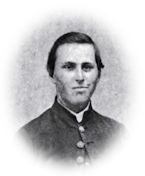
September 28th. A provost guard of our regiment is on duty in town to preserve the peace and protect the business interest, which is improving. Service is now held in all the churches. All is quiet. Many seem to think that the war is about over. The rebel sympathizers do not, say they will never give in.
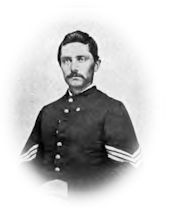
Wednesday, 28th—Cloudy with some rain today. I went on picket this morning for the first time since coming back from the hospital. I was on a lookout post on the right of the picket lines of the brigade with four other men out of our brigade. All is quiet in front of the lines. I miss the four boys killed in battle while I was absent from the company—they were all good men, three of them being veterans.
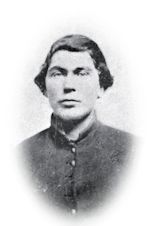
Etowah Bridge, Wednesday, Sept. 28. On guard, second relief. Everything so very quiet that it was very lonesome. Lieutenant Simpson is steadily but firmly tightening the reins, and instituting strict discipline. Guards instructed to walk their beats. If caught seated to be punished. Only ten minutes allowed to turn out at reveille. Heavy details at work all day cleaning out stables, etc. Camp policed. Griff left us to cook in hospital. Railroad again severed somewhere. Our Brigade ordered to erect winter quarters. Long train sent out for lumber ten miles down the river. Our teams went along.


