Following the American Civil War Sesquicentennial with day by day writings of the time, currently 1863.

New Creek, West Virginia, April 16, 1865.

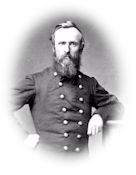
Dear Uncle: — I am in receipt of yours of the 11th. My mountain expedition is given up. If I go at all from here, it will be directly up the valleys to occupy Staunton. In any event, I think I shall see no more active campaigning.

I have been greatly shocked by the tragedy at Washington. At first it was wholly dark. So unmerited a fate for Lincoln! Such a loss for the country! Such a change! But gradually, consolatory topics suggest themselves. How fortunate that it occurred no sooner! Now the march of events will neither be stopped nor changed. The power of the Nation is in our armies, and they are commanded by such men as Grant, Sherman, and Thomas, instead of McClellan, Hooker, or, etc., etc. Lincoln’s fame is safe. He is the Darling of History evermore. His life and achievements give him titles to regard second to those of no other man in ancient or modern times. To these, this tragedy now adds the crown of martyrdom.

Sincerely,

R.

S. Birchard.

Sunday Night.—The Episcopal churches being closed, we went to the Rev. Dr. Hoge’s church. The rector was absent; he went off, to be in Confederate lines; but the Rev. Dr. Read, whose church is in ruins, occupied the pulpit.

Strange rumours are afloat to-night. It is said, and believed, that Lincoln is dead, and -Seward much injured. As I passed the house of a friend this evening, she raised the window and told me the report. Of course I treated it as a Sunday rumour; but the story is strengthened by the way which the Yankees treat it. They, of course, know all about it, and to-morrow’s papers will reveal the particulars. I trust that, if true, it may not be by the hand of an assassin, though it would seem to fulfil the warnings of Scripture. His efforts to carry out his abolition theories have caused the shedding of oceans of Southern blood, and by man it now seems has his blood been shed. But what effect will it have on the South? We may have much to fear. Future events will show. This event has made us wild with excitement and speculation.

General Lee has returned. He came unattended, save by his staff—came without notice, and without parade; but he could not come unobserved; as soon as his approach was whispered, a crowd gathered in his path, not boisterously, but respectfully, and increasing rapidly as he advanced to his home on Franklin Street, between 8th and 9th, where, with a courtly bow to the multitude, he at once retired to the bosom of his beloved family. When I called in to see his high-minded and patriotic wife, a day or two after the evacuation, she was busily engaged in her invalid’s chair, and very cheerful and hopeful. “The end is not yet,” she said, as if to cheer those around her; “Richmond is not the Confederacy.” To this we all most willingly assented, and felt very much gratified and buoyed by her brightness. I have not had the heart to visit her since the surrender, but hear that she still is sanguine, saying that “General Lee is not the Confederacy,” and that there is “life in the old land yet.” He is not the Confederacy; but our hearts sink within us when we remember that he and his noble army are now idle, and that we can no longer look upon them as the bulwark of our land. He has returned from defeat and disaster with the universal and profound admiration of the world, having done all that skill and valour could accomplish. The scenes at the surrender were noble and touching. General Grant’s bearing was profoundly respectful; General Lee’s as courtly and lofty as the purest chivalry could require. The terms, so honourable to all parties, being complied with to the letter, our arms were laid down with breaking hearts, and tears such as stoutest warriors may shed. “Woe worth the day!”
April 16th, 1865.—We have seen no more of McCook’s men. It took a long, long time for the dusty column in blue to pass our place. The officers were very strict with the men and did not allow them to straggle nor did they let the men come inside the enclosure for any purpose; we were so afraid of them at first. Aunt Sue wants me to go to spend the night with her but I am not willing to leave the home folks just now.

This morning Father sent for all the men on the plantation to come up in the yard. They came and they seemed ill at ease and I wondered what Father sent for them to do. Well, my curiosity has been gratified. When they had filed into the back yard and stood silently around, Father said: “My people, I have sent for you to tell you that you are my people no longer; the fortunes of war have taken you out of my hands—you are free men now.

“It is no longer your duty to work for me and it is no longer my duty to feed and clothe you but I shall continue to do this until suitable arrangements can be made. I hope each of you will stay on at his accustomed work and I can assure you that my feelings toward you have known no change and will not unless you give me cause. We are no longer master and slave but we can still be friends.”

Father’s face was pale and his. voice almost gave out once but he got through it splendidly and the negroes seemed much impressed. Some of the men cried, some spoke regretfully, Uncle Ben came and stood near by, then others crowded around and found their tongues. Only two looked surly and had nothing to say, Luke and Tup. They went off muttering to themselves, a habit so many have. Mother says she is not going to say anything to them, she will let events shape themselves.

Tonight Lulu came as usual to see me safe in bed and when she had said “goodnight,” she came back and, leaning over me, she said, “I’m always goin’ to love my child,” then she was gone. It makes me feel queer; life has changed.

Raleigh, April 15, 1865.

To-day makes four years soldiering for me. It is a terrible waste of time for me who have to make a start in life yet, and I expect unfits me for civil life. I have almost a dread of being a citizen, of trying to be sharp, and trying to make money. I don’t think I dread the work. I don’t remember of shirking any work I ever attempted, but I am sure that civil life will go sorely against the grain for a time. Citizens are not like soldiers, and I like soldier ways much the best. We were to have moved out this morning but did not. Logan went out with our 4th division, report says, to confer with Johnston. Big rumors going that our campaign is over, and that Johnston’s men are going home. We have been having heavy showers during the day, but the boys feel so good over the prospect ahead that they raise the most tremendous cheers right in the midst of the hardest rains. We think Johnston is in as tight a place as Lee was, and if he don’t surrender we will go for him in a way that will astonish him. We consider our cause gained and are searching each other’s records to see who was ever doubtful of success. I don’t remember at any time of being despondent over the war or being doubtful of the issue. Was I? I did think the war might last for years yet, but take that back. I have not been in town since we came through, and think no one from the brigade has. Curiosity over captured cities is “old.”

Baltimore, Md.,
April 15, 1S65.

Dear Brother and Sister:—

I am only so far on my way as yet, and take the opportunity afforded by my detention till this afternoon to drop you a line. I bought my ticket to Philadelphia, via Elmira, and arriving at Elmira found I could not get through that way. I return the ticket to you, Charlie. It was nothing less than a swindle to sell it to me. Take it back to the office there and demand the fare from Elmira to Philadelphia. They are obliged to take it up, as they knew that no trains had run over that road for two weeks.

I went to New York, stopped over night, got my pictures and went on to Philadelphia. Stopped there to get my pay for March and went up to Camp William Penn. Came on here yesterday and leave for Richmond this afternoon.

The news of Lee’s surrender is true. Better than all my hopes was the prospect of the end of the war. It was ended on the 9th and every one admitted it. New York, Philadelphia and Baltimore were jubilant. Joy on every face and tongue. I could not see or hear of a secession sympathizer. At the theater last night a band from Lee’s army was present and played “Hail Columbia” and the “Red, White and Blue,” and here in Baltimore those tunes were vociferously cheered. I went to bed happy, thinking of the glorious change, and came down this morning to be astounded by the news that President Lincoln was assassinated last night at Ford’s Theater in Washington and Secretary Seward and his son were stabbed at almost the same hour. The Secretary will perhaps recover, but his son cannot live. The President was shot through the head by a man who entered his private box from behind, shot him and then leaped upon the stage brandishing a dagger and disappeared behind the scenes, escaping at the back of the theater before the audience knew what had occurred. The President died at 7:22 this morning.

It is too terrible to think of, and I cannot imagine the consequences. We could have spared him better at almost any other time. What can we do with such a President as Andy Johnson? What effect will it have on the question of peace?

Well, we can do nothing but wait. The nation’s joy is changed to mourning and to mutterings of vengeance on the cowardly assassins and the infamous plotters who arranged the murders. J. W. Booth, the actor, is said to be the assassin of the President, and it is hoped he will be arrested to-day.

Saturday, 15th—We started at 7 a. m., marched only four miles and went into camp again. News came from the front that Johnston had stopped fighting for the purpose of surrendering his army to General Sherman. It rained hard all day, but we don’t mind that when hearing such glorious news as the surrender of Johnston. The Third and First Divisions remained in camp.

15th. Wrote several letters and read the papers. Yesterday put in application for leave of absence. I am very anxious to see my dear mother. Would that Johnston would be wise and surrender. Think he will be. Thank God that peace is so near and a united country will live to advance religion, justice and liberty. Forage detail. Virginians thoroughly submissive.

Chattanooga, Saturday, April 15. ‘Tis night, a beautiful day has just closed. But alas! a dark pall hangs over our camp. The soldier mourns the loss of the noblest American of the day. President Abraham Lincoln has fallen by the hands of a traitorous assassin. 2 P. M. we started out to graze, each and all lighthearted and merry. But lo! while out near the foot of Mission Ridge, the stars and stripes over Fort Creighton were seen to descend to half-mast, and the news reached us as if by magic of the fall of our noble president. A gloom was cast upon every one, and silently we returned to camp, still hoping for a contradiction. But it was too true. The scene that followed was one very seldom seen in the tented field. But a soldier is not, as many think, wholly void of feeling. All regarded the loss of him as of a near and dear relative. Terrible were the oaths and imprecations uttered through clenched teeth against the vile perpetrators. The black flag of extermination would be hailed with joy by the soldiers this moment as a just retaliation. Never before did I feel in favor of such measures, but now I think they deserve no other. The “extra” containing the short account of the occurrence has gone the rounds, read in each shanty. Traitors everywhere will rejoice over this, the crowned heads of Europe will greet it with joy, but their joy will come to grief. Republican principles will vindicate their superiority, and pass through this trial wiser and better for the tribulations they undergo.

April 15th. Early morning news from the pump. Reported the assassination of our beloved President. At first it could not be believed. I saw an orderly galloping into camp, going right to the Colonel’s quarters. He brought the official report. It was soon known through camp. It was a great shock and cast a great gloom over our camp. How sudden the change. Joy turned to sorrow, when we were rejoicing over the prospects of peace and the end of the cruel war. At first it was reported that he might recover. Later report he was dead. We could not do anything but talk over the sad event. We all became angry and hated the South worse than ever. Thought all the leaders should be condemned to death. Indignation and rage was expressed alike by citizens and the soldiers. We wondered who could do such an awful thing. Later we were informed who the assassin was. Excitement continues in our camp as this sad day comes to a close.

New Creek, Saturday, April 15.—8 A. M. startled by report that Lincoln, Seward and —— were assassinated. Somehow felt it was true.