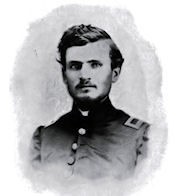
29th. The whole night occupied in paying off the regt. Got very little money myself. Up early after a little nap. Boys sent their money home by Dr. Smith and Adj. Pike, who have mustered out of service. Went to Army Hdqrs. Moved out. Joined Div. near old picket line. Marched 4 miles beyond Reams and camped. Rained—awful roads.

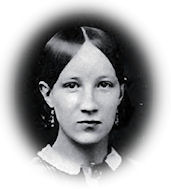
March 29.—An officer arrived here from the front yesterday and he said that, on Saturday morning, shortly after the battle commenced which resulted so gloriously for the Union in front of Petersburg, President Lincoln, accompanied by General Grant and staff, started for the battlefield, and reached there in time to witness the close of the contest and the bringing in of the prisoners. His presence was immediately recognized and created the most intense enthusiasm. He afterwards rode over the battlefield, listened to the report of General Parke to General Grant, and added his thanks for the great service rendered in checking the onslaught of the rebels and in capturing so many of their number. I read this morning the order of Secretary Stanton for the flag raising on Fort Sumter. It reads thus: “War department, Adjutant General’s office, Washington, March 27th, 1865, General orders No. 50. Ordered, first: That at the hour of noon, on the 14th day of April, 1865, Brevet Major General Anderson will raise and plant upon the ruins of Fort Sumter, in Charleston Harbor, the same U.S. flag which floated over the battlements of this fort during the rebel assault, and which was lowered and saluted by him and the small force of his command when the works were evacuated on the 14th day of April 1861. Second, That the flag, when raised be saluted by 100 guns from Fort Sumter and by a national salute from every fort and rebel battery that fired upon Fort Sumter. Third, That suitable ceremonies be had upon the occasion, under the direction of Major-General William T. Sherman, whose military operations compelled the rebels to evacuate Charleston, or, in his absence, under the charge of MajorGeneral Q. A. Gillmore, commanding the department. Among the ceremonies will be the delivery of a public address by the Rev. Henry Ward Beecher. Fourth, that the naval forces at Charleston and their Commander on that station be invited to participate in the ceremonies of the occasion. By order of the President of the United States E. M. Stanton, Secretary of War.”
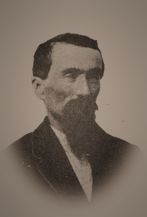
March 29 — The Second United States Artillery band from Washington was in our prison camp to-day and played for us. The members of the band are all finely uniformed, make a showy appearance, and play very well. After playing a few pieces some Rebel called for “Dixie,” and the band at once struck up old “Dixie” and played it as well as I ever heard it. As the first sweet strain swelled over the listening throng the prisoners all over camp gave a regular Rebel yell that shook the prison wall and made the welkin ring. As soon as the band got through with “Dixie” they quickly covered it up with ” Hail Columbia.”
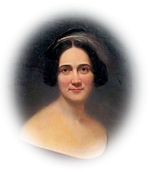
March 29th.—I was awakened with a bunch of violets from Mrs. Pride. Violets always remind me of Kate and of the sweet South wind that blew in the garden of paradise part of my life. Then, it all came back: the dread unspeakable that lies behind every thought now.
Thursday.—I find I have not spoken of the box-car which held the Preston party that day on their way to York from Richmond. In the party were Mr. and Mrs. Lawson Clay, General and Mrs. Preston and their three daughters, Captain Rodgers, and Mr. Portman, whose father is an English earl, and connected financially and happily with Portman Square. In my American ignorance I may not state Mr. Portman’s case plainly. Mr. Portman is, of course, a younger son. Then there was Cellie and her baby and wet-nurse, with no end of servants, male and female. In this ark they slept, ate, and drank, such being the fortune of war. We were there but a short time, but Mr. Portman, during that brief visit of ours, was said to have eaten three luncheons, and the number of his drinks, toddies, so called, were counted, too. Mr. Portman’s contribution to the larder had been three small pigs. They were, however, run over by the train, and made sausage meat of unduly and before their time.
General Lee says to the men who shirk duty, “This is the people’s war; when they tire, I stop.” Wigfall says, “It is all over; the game is up.” He is on his way to Texas, and when the hanging begins he can step over into Mexico.
I am plucking up heart, such troops do I see go by every day. They must turn the tide, and surely they are going for something more than surrender. It is very late, and the wind flaps my curtain, which seems to moan, “Too late.” All this will end by making me a nervous lunatic.
Yesterday while I was driving with Mrs. Pride, Colonel McCaw passed us! He called out, “I do hope you are in comfortable quarters.” “Very comfortable,” I replied. “Oh, Mrs. Chesnut!” said Mrs. Pride, “how can you say that?” “Perfectly comfortable, and hope it may never be worse with me,” said I. “I have a clean little parlor, 16 by 18, with its bare floor well scrubbed, a dinner-table, six chairs, and—well, that is all; but I have a charming lookout from my window high. My world is now thus divided into two parts—where Yankees are and where Yankees are not.”
As I sat disconsolate, looking out, ready for any new tramp of men and arms, the magnificent figure of General Preston hove in sight. He was mounted on a mighty steed, worthy of its rider, followed by his trusty squire, William Walker, who bore before him the General’s portmanteau. When I had time to realize the situation, I perceived at General Preston’s right hand Mr. Christopher Hampton and Mr. Portman, who passed by. Soon Mrs. Pride, in some occult way, divined or heard that they were coming here, and she sent me at once no end of good things for my tea-table. General Preston entered very soon after, and with him Clement Clay, of Alabama, the latter in pursuit of his wife’s trunk. I left it with the Rev. Mr. Martin, and have no doubt it is perfectly safe, but where? We have written to Mr. Martin to inquire. Then Wilmot de Saussure appeared. “I am here,” he said, “to consult with General Chesnut. He and I always think alike.” He added, emphatically: “Slavery is stronger than ever.” “If you think so,” said I, “you will find that for once you and General Chesnut do not think alike. He has held that slavery was a thing of the past, this many a year.”
I said to General Preston: “I pass my days and nights partly at this window. I am sure our army is silently dispersing. Men are moving the wrong way, all the time. They slip by with no songs and no shouts now. They have given the thing up. See for yourself. Look there.” For a while the streets were thronged with soldiers and then they were empty again. But the marching now is without tap of drum.
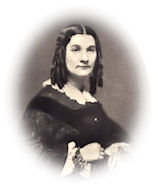
Mrs. Lyon’s Diary.
March 29, 1865.—After the march of yesterday it took some courage to get started. The Adjutant and Jerry went with us. The Adjutant went to town for a conveyance for us, and we had to say good-bye to our husbands. The Adjutant found a mule team and double wagon, and we all got in with our traps and went to the depot. We waited there for the train, but it did not come on time. After a while we learned that it had run through a bridge and would not be in for several days. The Adjutant then found a place in town where we might stay a few days. We are making ourselves as comfortable as we can. We are staying with a Union family who are Quakers.

Chattanooga, Tuesday, March 28. Last night when darkness spread her protecting veil over us, Griff, D. Evans and myself started out and appropriated some of Uncle Sam’s lumber for Uncle Sam’s benefit, or at least his boys. Returned with enough to make our bunks. Makes no difference where we got them. Cloudy and rained a little this forenoon. On duty all day with Sergeant Goodwin covering stables. Somewhat tired. Have caught a bad cold, mouth and throat sore. Sergeant James and Van Brocklin taken sick very sudden about 4 P. M. James will not live long if no change takes place.

March 28th.—Cloudy and sunshine; but little wind. Too ill to go to the department, and I get nothing new except what I read in the papers. Some of the editorials are very equivocal, and have a squint toward reconstruction.
The President, and one of his Aids, Col. Lubbock, ex-Governor of Texas, rode by my house, going toward Camp Lee. If driven from this side the Mississippi, no doubt the President would retire into Texas.
And Lee must gain a victory soon, or his communications will be likely to be interrupted. Richmond and Virginia are probably in extreme peril at this moment.
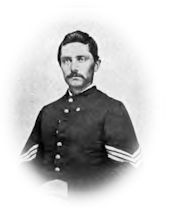
Tuesday, 28th—We have had pleasant weather for several days, but today it is cloudy, with some rain. The men drew new clothing today just as fast as the quartermaster could receive the supply from the general quartermaster. Nearly every man in the regiment is drawing a full suit, out and out. Some of the men have to get new knapsacks, canteens and haversacks, while all are getting new shoes. I drew a pair of pants and a blouse, a pair of drawers and a pair of socks. Our regiment out on dress parade has the appearance of a new regiment.
28th. Rested in the morning. Charley Smith, Sergt., came over from the 60th Ohio. Went down to Hancock Station. Troops passing to the left. Orders to march tomorrow morning at 6. Work ahead. Broke up mess. In with Stearns.
March 28 — Worse and more of it. A telegraphic dispatch was received here at headquarters last night from General Grant, stating that there are no more prisoners to be exchanged until after the summer campaign, which means after the war is over, for if all accounts be true the star of the Confederacy will set in eternal night before the summer will be half over. Sherman’s march to the sea cut a deadly swath right through the heart of Dixie, which will cause the lifeblood of the Southern Confederacy to ebb quickly away.


