Following the American Civil War Sesquicentennial with day by day writings of the time, currently 1863.

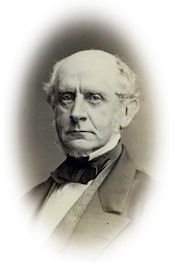
Charles Francis Adams, U.S. Minister to the U.K., to his son, Charles.

London, March 24, 1865

ON this side my situation seems at last to be getting easy and comfortable, so far as freedom from anxiety is concerned. A great change of opinion has been going on in the last few months, in regard to the chances of the issue. People feel the power of our position and the weakness of that of the rebels. They are also not without some embarrassment respecting the possible consequence to themselves of their indiscreet betrayal of their true sentiments towards us. This has led to a singular panic in regard to what will be done by us, after a restoration. A week or two since you could not drive the notion out of their heads that we were not about to pounce at once upon Canada. This was corrected by the first debate that took place in Parliament on that subject. Last night there was another, the burden of which was absolute faith in our desire to remain on the most friendly relations. At the same time £50,000 was voted for the purpose of fortifying Quebec in case of accidents. The case then stands logically thus. If they do believe what they say, the money is thrown away, as no fortification can be necessary. If on the other hand they do not believe it, and that opinion is a just one, £50,000 will not go very far to putting Canada out of our reach. The fear that is implied is far more of a provocative than a resource in the dilemma.

Be this as it may, one thing seems for the present to be settled! That is, that no hope is left for any aid to the rebel cause. England will initiate nothing to help them in their critical moment. So far as any risk of an aggressive policy is concerned, it is over. Mr. Seward may now rely upon it, that if troubles supervene, it must happen very much by his own act. He has a right to exult in the success of his policy in carrying the country in its hour of peril clear of the hazards of foreign complications. The voluminous intrigues of the rebel emissaries have been completely baffled, their sanguine anticipations utterly disappointed. They have spent floods of money in directing the press, in securing aid from adventurers of all sorts, and in enlisting the services of ship and cannon builders with all their immense and powerful following, and it has been all in vain. So far as any efforts of theirs are concerned, we might enter Richmond tomorrow. This act of the drama is over. . . .

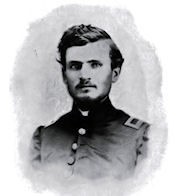
24th. Tuesday. Wrote home and to several friends. Went to the landing and procured some little eatables and paper. Paymaster in camp. Saw him. Busy with the Michigan Brigade and 1st Vermont. Marching orders.

March 24th. The past few days have been windy, with a cold rain, turning to hail and snow. The wind howling through our camp, coming from the North Mountain. Winter is hanging on. Every day we are led to believe that the war is about over with. No enemy has been reported in this vicinity for a long time. Picket duty is kept up.

Camp Hastings, March 24, 1865.

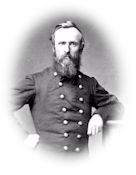
Dear Uncle: — Crook was all right with Grant, but Stanton was angry. Grant however rules matters where he really attempts it. Stanton refused to make an effort for a special and privileged exchange. Grant, however, had it done. Crook stopped at Grant’s headquarters. Grant wanted him to stay and take an important active command in his army before Richmond. Crook told him he wanted to be restored to the Department of West Virginia, if for only one day, to show the public that he was not in disfavor. It was accordingly so arranged. Crook returned here, took command, came out to my camp and had a happy meeting with the men, and the next day left for Grant’s Army. It is supposed he will take the cavalry of the Army of the Potomac. It is probably better for his reputation that it is so.

Hancock is a very fair man, but nervous, excitable, and hasty. Would not act badly except from want of reflection.

Your suggestion as to Mother is, I think, correct. She is probably happier than her letters would indicate. As people get along in life, their feelings and mode of talking and writing get into channels; they have habits of talking, etc., which do not mean much. If mother was perfectly happy she would write in a strain of melancholy. She is in the habit of thinking that she would like to be with her grandchildren all the time. This is a mistake. Their noise and childish acts and talking would in one week weary her into greater discomfort than she is now in for want of them. For a litle while she enjoys them very much. My only effort is to treat her affectionately and try to turn her thoughts in some incidental way into pleasanter paths. If I were keeping house, I know she would soon become more tired of my home than she is now of Mrs. Wasson’s. Her intellect is twisted into a habit of thinking and meditating too much on herself instead of occupying her mind with external affairs. It can’t be helped. Indirectly we may do a good deal to contribute to her happiness, but scarcely anything in the common way. Suppose I should say, “What do you prefer as your mode of life?” and she should reply, I would do her no favor by complying exactly with her wishes.

I shall try to go to Washington [for] a few days soon.

Sincerely,

R. B. Hayes.

S. Birchard.

Mrs. Lyon’s Diary.


Huntsville, March 24, 1865.—William and I went to see the city. It is a beautiful city, the pride of the South. It is beautifully situated. There are a great many very handsome homes here, and every appearance of luxurious living. The colored quarters are all separate from the main house. A great many residents have left their homes and left their houses filled with furniture, carpets and everything, just as they were living here. William has taken the Academy again for a hospital. The citizens do not like it, but there seems to be no other place. We have orders to start for East Tennessee in the morning.

March 24th.—I have been ill, but what could you expect? My lines, however, have again fallen in pleasant places. Mrs. Da Vega is young, handsome, and agreeable, a kind and perfect hostess; and as to the house, my room is all that I could ask and leaves nothing to be desired; so very fresh, clean, warm, and comfortable is it. It is the drawing-room suddenly made into a bedroom for me. But it is my very own. We are among the civilized of the earth once more.

Chattanooga, Thursday, March 23. Quite a pleasant night to stand guard in last night, but to-day it has blustered very disagreeably, filling our eyes with dust. Did not work to-day.

March 23d.—Clear, with high wind. Nothing further from North Carolina. A dispatch from Gen. Lee states that he has directed Gen. Cobb to organize an expedition into Tennessee, to cut the enemy’s communications. Gen. Wafford, of Kentucky, is in Georgia, with 2000 mounted men, etc.

Beef in market this morning sold at $12 to $15 per pound; bacon at $20, and butter at $20.

The parade of a few companies of negro troops yesterday was rather a ridiculous affair. The owners are opposed to it.

Gen. Rains sends in an indorsement, alleging that owing to the deception of Quartermaster Rhett (not furnishing transportation), he failed to arrest the approach of the enemy on a narrow causeway; and Columbia, S.. C., and his shells, etc. fell into the hands of the enemy.

A dispatch from Lee states that Gen. Thomas is at Knoxville, and that the enemy has commenced his advance from that direction—is repairing railroads, etc. The same dispatch says Gen. J. E. Johnston is removing his wounded to Smithsville from Bentonville; that the intrenchments of the enemy and greatly superior numbers of Sherman render further offensive operations impracticable.

Grant’s grand combination is now developed. Sherman from the Southwest, 70,000; Grant himself from the South, 70,000; Thomas, from the West, 40,000; and Sheridan, with 15,000 cavalry from the North—some 200,000 men converging toward this point. To defend it we shall have 120,000 men, without provisions, and, without some speedy successes, no communications with the regions of supply or transportation! Now is coming the time for the exercise of great generalship!

Gen. Early has been sent to the West—Tennessee.

Thursday, 23d—An order from General Sherman was read this morning, stating that the campaign was over,[1] and that we should now prepare to take a short rest. We left the rifle pits at 7 o’clock, marched fifteen miles, and bivouacked within five miles of Goldsboro. Our army is concentrating there, and we are to get supplies, rest up, and prepare for another campaign.


[1] This battle proved to be our last, and it is known as the battle of Bentonville. We took part later in the surrender of Johnston’s army at Raleigh, N. C. but there was no battle then, or before the surrender, only a little skirmishing.—A. G. D.

23rd. Sun shines out in its fullness. Dreamed of being at home last night. It was Sunday and I at church. Mail came. Glorious news. A child born, a nephew. (Albert Ellis.) Joy is in the household. Prosperity and happiness to the father and mother. Received Tennyson’s “Enoch Arden.” A sweet, sad story. Any number of old papers. Spent the day feasting upon good things. Splendid day.