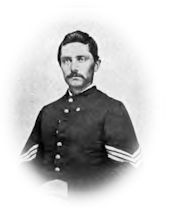
Tuesday, 21st—We advanced our line of battle a half mile, driving in the rebel skirmishers. Our loss was quite large in killed and wounded. All our artillery was brought into action and at times this afternoon the roar of cannon was fearful; but the rebels made no reply. Their loss in killed and wounded was large. There was some hard skirmishing on both sides. The Fifth and Twenty-fourth Corps under command of General Ord joined us this afternoon, thus reinforcing General Sherman’s army. The army is in fine spirits for all that the men are poorly clothed and short of rations; but anything that General Sherman wants done now, they are willing to do. All know that when we gain this battle, we will have a short rest and a chance to draw some clothing, besides securing rations, for forage is scarce.

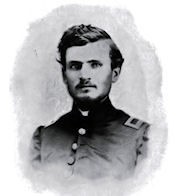
21st. Clear and beautiful day. Warm. Cleaned up. Went to the landing. Could find nothing which I wanted. Rained. Papers of the 20th received. Everything seems to be moving off prosperously. God grant us an early peace. Dreamed of little Carrie.
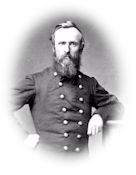
Camp Hastings, March 21, 1865.
Dearest: — You would have boiled over with enjoyment if you had been here today. General Crook came out to my quarters. Both bands were out and all the men. We had about forty rousing cheers, a speech from Chaplain Collier, a good talk from the general, a little one from me, and lots of fun. It is four weeks today since the capture.
We are having the finest possible time. The Twenty-third is not camped with me now. It is two and one-half miles off in the prettiest camp they ever had the other side of town. But the brigade is a unit now. The mountain scenery is glorious; the men happy and well behaved. Chaplain Little and his wife get up something good at the log chapel daily. . . .
Affectoinately
R.
We have an old fellow, hard-looking and generally full of liquor, who brings in our wood and builds fires — of the Thirteenth. He says, “I was glad to see old Uncle George.”
Mrs. Hayes.
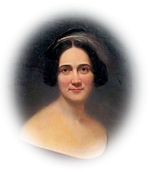
Chester, S. C, March 21, 1865. — Another flitting has occurred. Captain Ogden came for me; the splendid Childs was true as steel to the last. Surely he is the kindest of men. Captain Ogden was slightly incredulous when I depicted the wonders of Colonel Childs’s generosity. So I skilfully led out the good gentleman for inspection, and he walked to the train with us. He offered me Confederate money, silver, and gold; and finally offered to buy our cotton and pay us now in gold. Of course, I laughed at his overflowing bounty, and accepted nothing; but I begged him to come down to Chester or Camden and buy our cotton of General Chesnut there.
On the train after leaving Lincolnton, as Captain Ogden is a refugee, has had no means of communicating with his home since New Orleans fell, and was sure to know how refugees contrive to live, I beguiled the time acquiring information from him. “When people are without a cent, how do they live?” I asked. “I am about to enter the noble band of homeless, houseless refugees, and Confederate pay does not buy one’s shoe-strings.” To which he replied, “Sponge, sponge. Why did you not let Colonel Childs pay your bills?” “I have no bills,” said I. “We have never made bills anywhere, not even at home, where they would trust us, and nobody would trust me in Lincolnton.” “Why did you not borrow his money? General Chesnut could pay him at his leisure?” “I am by no means sure General Chesnut will ever again have any money,” said I.
As the train rattled and banged along, and I waved my handkerchief in farewell to Miss Middleton, Isabella, and other devoted friends, I could only wonder if fate would ever throw me again with such kind, clever, agreeable, congenial companions? The McLeans refused to be paid for their rooms. No plummet can sound the depths of the hospitality and kindness of the North Carolina people.
Misfortune dogged us from the outset. Everything went wrong with the train. We broke down within two miles of Charlotte, and had to walk that distance; which was pretty rough on an invalid barely out of a fever. My spirit was further broken by losing an invaluable lace veil, which was worn because I was too poor to buy a cheaper one—that is, if there were any veils at all for sale in our region.
My husband had ordered me to a house in Charlotte kept by some great friends of his. They established me in the drawing-room, a really handsome apartment; they made up a bed there and put in a washstand and plenty of water, with everything refreshingly clean and nice. But it continued to be a public drawing-room, open to all, so that I was half dead at night and wanted to go to bed. The piano was there and the company played it.
The landlady announced, proudly, that for supper there were nine kinds of custard. Custard sounded nice and light, so I sent for some, but found it heavy potato pie. I said: “Ellen, this may kill me, though Dover’s powder did not.” “Don’t you believe dat, Missis; try.” We barricaded ourselves in the drawing-room that night and left the next day at dawn. Arrived at the station, we had another disappointment; the train was behind time. There we sat on our boxes nine long hours; for the cars might come at any moment, and we dared not move an inch from the spot.
Finally the train rolled in overloaded with paroled prisoners, but heaven helped us: a kind mail agent invited us, with two other forlorn women, into his comfortable and clean mail-car. Ogden, true to his theory, did not stay at the boarding-house as we did. Some Christian acquaintances took him in for the night. This he explained with a grin.
My husband was at the Chester station with a carriage. We drove at once to Mrs. Da Vega’s.

Mrs. Lyon’s Diary.
March 20, 1865.—I started for Huntsville with Minerva at 2 p. m. Mrs. Granger and her sister were with the General. I had met him before. I found both ladies very agreeable. We had quite a jolly night of it. Our sleeper was a caboose, and our easy chairs were cracker boxes. There were two chairs in the car, which we occupied alternately. Of course, we had to do something to keep awake, as we could not lie down. I thought the General’s special car would have a few more conveniences. He apologized for the accommodations, but I was glad enough to go if the accommodations were poor. The road was very rough. It has not been balasted since it was repaired, and this is the first train that has been over it.
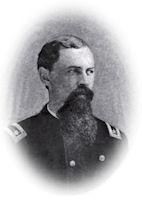
One and one-half miles from Neuse River,
March 20, 1865.
We moved about a mile north and then west for five miles. Pushed some Rebel cavalry before us all the time. Our brigade was in advance and lost about 25 men. We are about two miles east of where the battle was fought yesterday by the 14th and 20th corps, and right where the Rebel hospital was. The Rebels are now due west of us, our line running north and south, and I think there can be no difficulty in communicating with Schofield. Goldsboro is undoubtedly evacuated. In the fight yesterday one division of the 14th was worsted at first and driven some distance, but rallied, repulsed the enemy, and the corps getting into line, charged four to six times, and slaughtered the Rebels awfully. Their loss was far greater than ours.
Ten p.m.—A Pennsylvania man, who was wounded in the fight yesterday, and carried in by the Rebels who took off his leg above the ankle, came in to us a few minutes ago. He crawled nearly half a mile, part of the way through a swamp. It seems that the Rebels had a hospital there they evacuated and left him and a half dozen other wounded, two of whom the man saw killed by the skirmish firing. We are on the skirmish line to-night. I suppose it is 400 yards to the Rebel skirmishers, and not a very dangerous line.
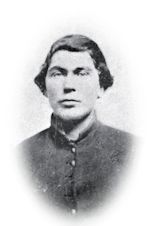
Chattanooga, Monday, March 20. Did not sleep much last night owing to a terrible toothache. This morning orderly wanted me to go to the woods again to pilot the teams there. Helped load sixteen logs. One wagon capsized. Reached camp 3 P. M. hungry and quite tired. Found Milt H., Marden and Reed just from furlough. Look as fresh as recruits.
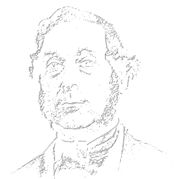
March 20th.—Sunny and pleasant, but hazy in the south.
Cannon heard, quite briskly, south of the city. The papers report that Gen. Hardee repulsed Sherman on the 16th. But the official dispatch of Gen. Johnston says Hardee retired, and Sherman advanced after the fighting was over.
Congress adjourned sine die on Saturday, without passing the measures recommended by the President. On the contrary, a committee of the Senate has reported and published an acrimonious reply to certain allegations in the message, and severely resenting the “admonitions” of the Executive.
When the joint committee waited on the President to inform him that if he had no further communication to make them they would adjourn, he took occasion to fire another broadside, saying that the measures he had just recommended he sincerely deemed essential for the success of the armies, etc., and, since Congress differed with him in opinion, and did not adopt them, he could only hope that the result would prove he was mistaken and that Congress was right. But if the contrary should appear, he could not be held responsible, etc. This is the mere squibbing of politicians, while the enemy’s artillery is thundering at the gates!
The Secretary of War visited Gen. Lee’s headquarters on Saturday afternoon, and has not yet returned. Breath is suspended in expectation of some event; and the bickering between the President and the Congress has had a bad effect—demoralizing the community.
Governor Vance writes (17th instant) to the Secretary of War, that he learns an important secret communication had been sent to Congress, concerning probably his State, and asks a copy of it, etc. The Secretary sends this to the President, intimating that the communication referred to was one inclosing a view of our military “situation” by Gen. Lee, in which he concurred. The President returns Gov. V.’s letter, stating that he does not know his purpose, or exactly what he refers to; but [red tape !] until Congress removes the injunction of secrecy, no one can have copies, etc. Yet he suggests that Gov. V. be written to.
Flour is held at $1500 per barrel.
Senator Hunter publishes a card to-day, denying that he is in favor of reconstruction, which has been rumored, he says, to his injury, and might injure the country if not denied.
A correspondence between Generals Lee and Grant is published, showing that Gen. Longstreet has misunderstood Gen. Ord (Federal) in a late conversation, to the effect that Gen. Grant would be willing to meet Gen. Lee to consult on the means of putting an end to the war. The President gave Lee full powers; but Gen. Grant writes Gen. Lee that Gen. Ord must have been misunderstood, and that he (Grant) had no right to settle such matters, etc. Sad delusion!
Assistant Secretary Campbell has given one of his clerks (Cohen, a Jew) a passport to return home—New Orleans—via the United States.
The government is still sending away the archives.
Monday, 20th—Reveille sounded at 1 a. m. At 3 o’clock with the Fifteenth Corps in front, we took up the line of march and moved forward twenty-one miles, where we found the rebels fortified on the west side of the Neuse river near Bentonville. We drove them back inside of their works, and forming a line of battle moved up as close to their works as we could, and then built a line of rifle pits. We left our wagon trains far in the rear under guard. The rebels’ force is reported to be about thirty-five thousand men under the command of General Johnston. General Schofield has been moving up this way from the coast, and we just learned that he reached Goldsboro and took possession of the place this afternoon. We are informed that General Sherman will now open up communications from Goldsboro southeast to Newbern.
20th. Relieved by the 2nd N. Y. about noon. Returned to camp near W. House. Drew rations and forage. Inspection of horses. Estimates for clothing, C. and Garrison equipage. A very hot day. Seemed like Petersburg. Read old file of papers. Dreamed of Fannie.


