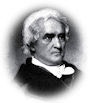
1860. July 24.—Judge Longstreet has issued a letter addressed to the International Statistical Congress about their gross conduct in applauding Lord Brougham. It is printed in the Morning Chronicle, and evinces considerable ability and tact. I shall not be surprised if, on this sensitive topic, my countrymen, who never can be rational about it, should consider me as having too tranquilly submitted to the remark of Brougham. One of them here wishes I had “jumped to my feet and knocked the old blackguard down!” This is not “ma manure d’agir.” First, it would have been great folly to imply, by word or act, that the question of slavery in the United States could legitimately be discussed before the American Minister at a European Congress of any sort. Second, the Congress was unanimously and vociferously hostile; the words of Brougham were cheered loudly; it was palpable that the act was the result of a contrivance between Brougham and his associate to get up an altercation between the latter and myself, which was defeated by my treating the movement with silence. Third, quitting the room was impossible, because my doing so was physically impeded, and would instantly have been followed by loud and prolonged indignities. Fourth, to attempt, at a moment of sudden astonishment and indignation, to vindicate the United States from the slur thrown out, would have been extremely imprudent and AT hazardous; no man is authorized to commit his country in a manner so unprepared. Fifth, my individual opinion as to the races being unequal in intellect is strong, but the point has never been studied, and could not be handled in the slightest manner without exhibiting weakness. Sixth, a foreign Minister cannot be justified or excused in taking the attitude of a public declaimer in a Congress where he was only an invited guest, and where such a topic was not only not to be anticipated, but wholly out of order. Indeed, such are my convictions that I have thanked Heaven frequently and profoundly that I had presence of mind enough to take the course I did. Brougham has attempted in the very Congress itself, and only two days after his extravagance, a feeble and unsatisfactory apology; he has sought me that he might apologize in person, and has been turned from the door. He is now perpetually inculcating that what he did was not intended to be disrespectful to me or the United States, and that it should be regarded as insignificant.
July 2010
1860. July 21.—The Peers don’t approve their troublesome “chartered libertine” Brougham. Shaftesbury writes. Lansdowne comes to make impressive assurances. And Overstone denounces ore rotundo.
1860. July 20.—Lord Brougham called at ten A.M. I had just time to tell my servant to refuse me. He is so old, and has been so remarkable a man in his day and generation, that I have to remind myself of his offence, and of his aggravating it by the form and manner of his pretended explanation, or I could scarcely screw my mind up to the point of turning him from the door. He came a second time, between twelve and one. I was then at the Kensington Museum, and my secretary, receiving him with the utmost deference, was, nevertheless, silent. He said once or twice, “You know who I am? Lord Brougham, Lord Brougham!” He went to the front door, and then returned in the front office, and remarked, “You know you don’t treat your negroes as well as they are treated in the Brazils!”
The treat I enjoyed at the Kensington Museum was one of the richest I have had in England. The Turners, the Hogarths, the Leslies, etc., are all delightful.
What an admirable reply to Lord Grey is that Fourth of July speech of Everett’s. He has literally overwhelmed Grey in the spirit of truth and moderation.
Received a note from Lord Shaftesbury, hoping that I won’t report to my government the “very foolish and very unwarrantable conduct of Lord Brougham”! This advice is about as silly as Lord Harry’s act, and perhaps much less excusable.
1860. July 18.—Judge Longstreet, the United States Delegate to the International Congress, sent yesterday his written withdrawal, in consequence of Lord Brougham’s conduct.
There is no telling to what this outrage may lead. Brougham is already feeling the weight of a unanimous public opinion. He attempted to-day to make an explanation or apology; said he meant no disrespect to me or my government, and then, with a fatuity scarcely comprehensible, went on to make the matter worse. Is he, on this question of slavery, deranged?
Dr. J—, the delegate sent by the Statistical Association of Massachusetts, called upon me. He said he came from Lord Brougham, and was by him authorized to remove any impression that I might have imbibed that he intended to wound my feelings. I interrupted Dr. J—, and said that I could receive nothing from Lord Brougham at second-hand; if he wished to do what was right and restore the state of things his folly had disturbed, he must make an ample and distinct apology for the insult upon the United States; he must do this in the very body where he had made the attack, and what he said should be sanctioned and approved by that body; if this was satisfactorily done, the personal indignity to myself would melt into nothing before the infirmities of his great age. Alas! that an American citizen should have witnessed, as Dr. J— did, this outrage upon his country, and yet be so bent upon his wretched statistical essay or report as to prefer reading this last to resenting the former. Dr. J— distinguishes: says Lord Brougham’s act don’t touch him, because he is from a free State! “Out upon such half-faced fellowship!”
SPRINGFIELD, ILLINOIS, July 18, 186o.
My dear Sir: It appears to me that you and I ought to be acquainted, and accordingly I write this as a sort of introduction of myself to you. You first entered the Senate during the single term I was a member of the House of Representatives, but I have no recollection that we were introduced. I shall be pleased to receive a line from you.
The prospect of Republican success now appears very flattering, so far as I can perceive. Do you see anything to the contrary?
Yours truly,
A. Lincoln
186o. July 16.—The International Statistical Congress opened its fourth session to-day in this city. I had declined being a member, when invited a month ago by the President of the Board of Trade, Mr. Milner Gibson. On Saturday last the Committee of Organization sent special cards to the members of the Corps diplomatique, and, in order to manifest my respect for the Prince Consort, I went to hear his opening address. Lord Brougham took the opportunity, after the delivery of the address, which was really very good, abruptly to call out to me by name, and hoped I would observe that there was “a negro in the assemblage!” I perceived instantly the grossness of the act, and, seeing the black in the very centre of the philosophers, hadn’t a doubt that it was a premeditated contrivance to provoke me into some unseemly altercation with the coloured personage. I balked that by remaining silent and composed. The gentleman of colour, however, rose, and requested permission of the Prince Consort, as chairman, to thank Lord Brougham for his notice, with an emphatic conclusion, “I am a man.” Query: Is not the government answerable for this insult? Or must it be regarded as purely the personal indecency of Lord Brougham? Curia advisare vult.
SPRINGFIELD, ILLINOIS, July 4, 1860.
My dear Doctor: Your very agreeable letter of May 25th was received three days ago. We are just now receiving the first sprinkling of your Oregon election returns—not enough, I think, to indicate the result. We should be too happy if both Logan and Baker should triumph.
Long before this you have learned who was nominated at Chicago. We know not what a day may bring forth, but to-day it looks as if the Chicago ticket will be elected. I think the chances were more than equal that we could have beaten the Democracy united. Divided as it is, its chance appears indeed very slim. But great is Democracy in resources; and it may yet give its fortunes a turn. It is under great temptation to do something; but what can it do which was not thought of, and found impracticable, at Charleston and Baltimore? The signs now are that Douglas and Breckinridge will each have a ticket in every State. They are driven to this to keep up their bombastic claims of nationality, and to avoid the charge of sectionalism which they have so much lavished upon us.
It is an amusing fact, after all Douglas has said about nationality and sectionalism, that I had more votes from the southern section at Chicago than he had at Baltimore. In fact, there was more of the southern section represented at Chicago than in the Douglas rump concern at Baltimore!
Our boy, in his tenth year (the baby when you left), has just had a hard and tedious spell of scarlet fever, and he is not yet beyond all danger. I have a headache and a sore throat upon me now, inducing me to suspect that I have an inferior type of the same thing.
Our eldest boy, Bob, has been away from us nearly a year at school, and will enter Harvard University this month. He promises very well, considering we never controlled him much.
Write again when you receive this. Mary joins in sending our kindest regards to Mrs. H., yourself, and all the family. Your friend as ever,
A. LINCOLN.
July 4th, 1860.—We went to Tallahassee to attend a celebration of our country’s birthday. Brother Amos belongs to the Governor’s Guards, most of the younger men and boys about grown belong to it too. They have handsome blue uniforms and a brass band to play for them to march. It is a cavalry company and all have fine horses; it is needless to say they make a splendid appearance. The color-bearer carried a large silk flag and I was so proud of The Star-spangled Banner. Francis Scott Key, who wrote that beautiful song, was a friend of Grandpa’s and sent him one of the very first copies ever printed; it is bound in Mother’s music book, and she is so proud of it. Today when the company paraded the band played Hail Columbia first but the crowd clamored for The Star-spangled Banner, showing which they loved best. After the parade there was a picnic dinner and a dance on a platform built for the occasion.
All are tired but me, I am so excited over the day’s proceedings that I cannot sleep, so I am writing it up. Some fine speeches were made and politics were left in the background for once. We came home in the cool of the evening and as we rode along the quiet country road we woke the echoes with one patriotic song after another. When I studied English History it seemed to me that our history was not near so interesting as it was and Scotch History was more entertaining than either English or French. Will there ever come a time when the history of the United States of America will fill one or more big volumes?


