Sept. 7th.—Yes; “Jeff. Davis must be dead.” There are some touching lamentations in the obituary notices over his fate in the other world. Meanwhile, however, his spirit seems quite alive; for there is an absolute certainty that the Confederates are coming to attack the Capitol. Lieut. Wise and Lord A. Vane Tempest argued the question whether the assault would be made by a flank movement above or direct in front; and Wise maintained the latter thesis with vigour not disproportioned to the energy with which his opponent demonstrated that the Confederates could not be such madmen as to march up to the Federal batteries. There is actually “a battle” raging (in the front of the Philadelphia newspaper offices) this instant—Populus vult decipi—decipiatur.
Wednesday, September 7, 2011
Saturday, 7th—We had a big picnic dinner in camp today, given for the soldiers by the ladies of Scott county. There was fried chicken, bread, pie and cake by the wagon load, free to all who were hungry. The food was placed on a long table and each man could walk up and help himself. There must have been as many as five thousand who enjoyed the dinner. It was a beautiful day for the occasion.
7th.—On the high land overlooking the Potomac, about six or seven miles above the Navy Yard at Washington, we have, since our arrival here, thrown up a small fort, formed extensive abattis, and made redoubts and fortifications to command the turnpike leading down the river, and the bridge over which any enemy must pass from any direction above here to reach Washington. This looks like business. The earthwork fort is small, but very strong, and its large siege guns, from twelve to eighteen feet long, with their sullen faces watching up and down the road in every direction, give it a most formidable appearance. A brigade (I have not learned what one) has just advanced beyond us to commence another fort, about two miles to the southwest of us. Neither fort has yet been officially named, but the one just finished is called by the soldiers Fort Mott; the one about to be built they will for the present distinguish by the name of Fort Ethan Allen. In this manner we are closing on the enemy by slow approaches, or parallels. Let Dupont and Butler, from North Carolina, advance to meet us, whilst Fremont takes care of the Mississippi, and we shall have an early closing up of the war. Every day’s observation more and more satisfies me that the enemy will not fight us here.
9 p. M.—Our fort is completed, and we have just received orders to cook three days rations, and be ready to move at a moment’s notice.
I will here note, once for all, the manner of the soldiers taking care of themselves in a storm, when they have no tents. They all have “rubber blankets.” Two forks are set, and a pole laid from one to the other, some four or five feet from the ground. A kind of lean-to roof is made by placing brush or poles against this, one end resting on the ground, the other end resting on the pole. To make this roof water-proof, the rubber blankets are stretched, like tiles on a roof, and no water gets through. In moderate weather the men cuddle together under this, and are reasonably comfortable. In cold weather they make large log fires in front of these “bivouacs,” and pass the nights without freezing.
An order was received to-day from the War Department, that in future no labor shall be required of soldiers on the Sabbath, except what is absolutely necessary for our defence.
SATURDAY, SEPTEMBER 7, 1861.
Very hot sun today and the atmosphere oppressive. I was down to the P.O. Pd my gas bill for the month 95 cts. Came home about noon and found Doct David. Went to market before dark. Went with Julia down to the Camp (the Doct and wife had gone to the Presidents). Have been drawing some with Pencil, studying upon a self cocking and self loading gun with the rotary trigger. No news yet from over [there?]. The Union cause now looks much brighter and we are looking for success all round.

______
The three diary manuscript volumes, Washington during the Civil War: The Diary of Horatio Nelson Taft, 1861-1865, are available online at The Library of Congress.
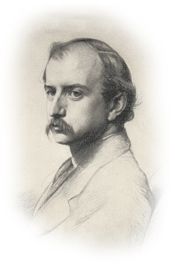
London, September 7, 1861
Yours in answer to mine written after the Bull’s Run arrived last night and I answer it at once. Whatever weight your arguments might have had on me in ordinary times, just now they are entirely superseded by the new turn things have taken since that letter was written. I could not go home now if I would, nor would if I could. Work has increased to such an extent since our return from our excursion that I am absolutely necessary here. Things have taken a turn which makes it every day more probable that we must sooner or later come into collision with England, and of course with that prospect I can’t leave the Chief and the family in the lurch. So you need not at present feel any alarm about my blundering home, as you call it, for I promise you fair warning so that you may be down at the wharf to receive me with the towns-people.
Warning you to preserve it a profound secret, I will disclose to you some of the horrors of the prison-house. Remember, your finger ever on your lip.
You may or may not be informed that among the first instructions to the Chief from the Department was one directing him to offer to the British Government the adhesion of the United States to the four articles of the Treaty of Paris. They related as you know to privateering, neutral goods, neutral flags and blockades. The Chief obeyed instructions and ever since we have been here this matter has dragged its slow length along through strange delays, misunderstandings, and discussions that in so simple a matter were very curious and inexplicable. At last the Chief acting under repeated instructions, broke through all objections and brought it to such a point that he and Mr. Dayton were agreed to sign the Convention on the same day at Paris and London, with Earl Russell and with Mr. Thouvenel. The day alone remained to be fixed.
Such was the condition of the negotiation when we went off on our excursion. Before we had returned a note was received from the Foreign Office suggesting a convenient day for signing, but transmitting also the draft of a declaration outside the treaty itself, which Earl Russell proposed to read before signing. It ran as follows:
“In affixing his signature to the Convention of this day between H. M. the Queen of Great Britain and Ireland and the U.S. of A. the Earl Russell declares by order of H. M. that H. M. does not intend thereby to undertake any engagement which shall have any bearing direct or indirect on the internal differences now prevailing in the United States.”
On receiving this Note the Chief sat down and wrote an elaborate reply. It was in his best style and was certainly an admirable paper. After tearing the whole thing up and placing, as it seems to me, the British Government in a very awkward and untenable position, he ended by breaking off the negotiation until further instructions from home should command him to resume it. This Note Earl Russell has never replied to. A few days after he sent an answer which sounded to me rather like an apology than anything else, but in this Note he said that he should defer the answer to another time.
So that passed away, but only to give place to a greater excitement. Last Monday a special messenger arrived from Seward bringing the package taken on Mure, directed to Lord Russell. But besides this, which was legitimate, or might be, as coming from the British Consul at Charleston, a great quantity of letters were found on Mure, and among others one that very gravely compromised the British Government. It seems that the British and French Consuls at Charleston have acted in concert in making a treaty with Jeff Davis, and that treaty nothing less than this very Convention of Paris.
Here was a pretty to-do. Whatever we might suspect, there was no direct proof against England or France nor was it our interest to make a quarrel. So the Chief sits down and writes a long despatch to Lord Russell complimenting very highly the perfect confidence to which the British Government were entitled, and returning to them the bag of despatches. In another short Note he quoted the letter I have mentioned, and demanded the Consul’s recall.
To these Notes no answer has yet been returned. No doubt the graveness of the matter will make a Cabinet meeting necessary, and just now every one is out of town. Lord John however was in Paris on Sunday. Was it to consult with the French Government? You see what a dreadfully tight place they’re in and how inevitably the inference of bad faith of a very gross nature is against them.
These are the signs of the times and will no doubt alarm you enough. I am myself more uneasy than I like to acknowledge in my public letters, but hope we shall worry through yet. They won’t like the idea of our privateers here when it gets near them.
As for your recommendation to set up here as letter-writer to the Times, you know not what you say. In the first place, all that I know comes from my position and without it I were nothing. In the second place, there are few beings lower in the social scale in England than writers to newspapers. I should destroy myself beyond a hope of redemption.
No, I am very well as I am. I shall gradually make way and worry along. London does not satisfy all my longings, but enfin it is an exciting, hard-working life here, and the Chief and I are as merry as grigs, writing in this delightful old study all day long, opposite to each other. When I say delightful I stretch a point, but it is not bad. . . .
Saturday, 6 [7].–Marched to Birch River.
SEPTEMBER 7TH.—The Jews are at work. Having no nationality, all wars are harvests for them. It has been so from the day of their dispersion. Now they are scouring the country in all directions, buying all the goods they can find in the distant cities, and even from the country stores. These they will keep, until the process of consumption shall raise a greedy demand for all descriptions of merchandise.
Col. Bledsoe has resigned, but says nothing now about getting me appointed in his place. That matter rests with the President, and I shall not be an applicant.
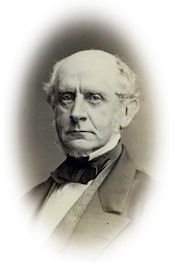
London, September 7, 1861
The feeling here which at one time was leaning our way has been very much changed by the disaster at Bull’s run, and by the steady operation of the press against us. Great Britain always looks to her own interest as a paramount law of her action in foreign affairs. She might deal quite summarily with us, were it not for the European complications which are growing more and more embarrassing. There are clouds in the north and in the south, in the east and in the west, which keep England and France leaning against each other in order to stand up at all. The single event of the death of Napoleon, perhaps even that of Lord Palmerston, would set everything afloat, and make the direction of things in Europe almost impossible to foresee. Hence we may hope that these two powers will reflect well before they inaugurate a policy in regard to us which would in the end react most fatally against themselves. . . .
September 7.—The Grand Jury of Westchester County, N. Y., in session at White Plains, presented to the Judge of the Circuit Court, the Yonkers Herald, the Highland Democrat, the Eastern State Journal of that county, and the Staats Zeitung and the National Zeitung of New York City, as disseminators of doctrines, which, in the existing state of things, tend to give aid and comfort to the enemies of the Government, and to prevent a vigorous prosecution of the war by which alone the supremacy of the Government is to be maintained, and National peace and prosperity again witnessed in the land. And they called upon the District Attorney of that county to prosecute the editors and proprietors of these journals if, after public notice, they should continue in their evil courses; and they also requested that a copy of the presentment be forwarded to Mr. E. D. Smith, the United States District Attorney in New York, that he might commence proceedings against the two German papers presented published there, and further requested that a stop might be put to the circulation of these papers in Westchester County.— N. Y. Commercial, September 9.
—Generals Pillow and Polk occupied Columbus, Kentucky, with seven thousand rebels. Jeff. Thompson was in Missouri, directly opposite, with the balance of Pillow’s forces. A reinforcement of Federal troops were sent today to Paducah, and another regiment follows immediately.—Baltimore American, Sept. 9.
—The Knoxville (Tenn.) Whig of to-day contains the following from Parson Brownlow, designed to correct some erroneous notions that prevail in regard to his position on the war question.
He says he entertains the same opinions he always has of “the heresy of secession and the leading men who brought about a dissolution of the Union, and of the motives that prompted them.” He “can never sanction the one nor confide in the other.” He wishes it understood, however, that, inasmuch as he is not a “candidate for martyrdom, or imprisonment” during the war, and has been overpowered by the action of the State at the ballot-box, and by the strong arm of the military, he has determined to “moderate in his tone,” to “cease the course of warfare” he has waged, and to “yield to the necessity upon us—a necessity none of us can avert.” After pledging himself to devote more attention hereafter to giving his readers the current news than abusing the South, he says: “I have fought, editorially, as long as I could accomplish any thing by lighting, and in my retirement to a position of neutrality, I carry with me my unchanged principles, and shall cherish them to my latest hours of life.” He further adds:
“So far as I am individually concerned, I will not be a party to any mad scheme of rebellion, gotten up at this late day, or to any insane attempt to invade this end of the State with Federal troops. And any portion of the Union men of East Tennessee who may be crazy enough to embark in either enterprise, and offer utter ruin, as they are bound to do, shall not, when “the times of these calamities be overpast,” reflect on me for having advised such a course.
I have many old friends and co-laborers in the Union cause, dispersed throughout East Tennessee, who think that I ought weekly to pitch into the State and the Confederate Governments, and into every thing and everybody connected with secession, regardless of consequences; and the more so, as I conduct the only Union paper left in the Southern Confederacy. Not being impressed with any such sense of duty, I most respectfully decline the honors and hazards of so brave and independent a course. And if there is any gentleman in the Union ranks in this end of the State who is desirous to try his hand in it, I will cheerfully yield him my position. But before he embarks, as a new beginner, I will apprise him of the fact that we are in the midst of a fearful revolution—that the civil law has given way to the military rule—and that, if he is fool enough to attempt such a course, the military authorities in the South are not fools enough to tolerate it. I come down from my extreme position, not of choice, but of necessity, and I frankly confess that I have not the courage to meet, in open combat, unarmed as I am, eleven States in arms and in full uniform.”
—At New York City, Algernon S. Sullivan, a lawyer, was arrested at his residence, No. 89 West Fourteenth street, by Sergeant Lefferts, of the detective police. The arrest was in compliance with an order from Secretary Seward. Mr. Sullivan is a prominent lawyer, and well known as one of the counsel of Capt. Baker, of the pirate ship Savannah. He is a western man by birth, and has a brother who is colonel of the Thirteenth Indiana regiment, who was at the battle at Rich Mountain, under Gen. McClellan, and another brother said to be colonel of an Ohio regiment. He admits having written some letters South connected with the Savannah pirates, but claims that they were strictly professional, and that there was nothing in them designed to reflect on the General Government or furnish intelligence prejudicial to its interests in the present rebellion.—-N. Y. World, September 9.
—Joseph A. Wright, ex-Minister to Berlin, arrived at Indianapolis, Ind. he was greeted by a large crowd of citizens, and escorted to the State House square, where be was welcomed in a patriotic speech by Gen. Dumont, Mr. Wright said he did not come to talk about parties or political platforms, when the institutions of his country were assailed. He had nothing to do with them. The Constitution must be preserved and this great rebellion would be put down. He would sustain Mr. Lincoln and the Administration in every effort to sustain the Government. He would never agree to a division of this country. We must be one people. He was for his country first, last, and all the time, and for the prosecution of the war to a successful termination, and for such a purpose would put forth every exertion. —Buffalo Courier, September 9.
—At Louisville J. S. Jackson issued a spirited call for a regiment of Kentucky cavalry, under authority of the United States, for three years or during the war.—(Doc. 39.)
—A Union meeting, called by four hundred men of all parties, who believe in a vigorous prosecution of the war and sustaining the Administration, was held at Danville, Conn., this afternoon. About fifteen hundred persons were present. Strong resolutions were adopted, with great cheering. A prudential committee of ten was appointed. Speeches were made by Hon. R. Averill and Samuel T. Seely, D. D., of Albany.—N. Y. Times, Sept. 9.
—At Newark, New Jersey, Edward P. Wilder, engineer, aged forty-five, was arrested to-day and sent to Fort Lafayette. Intercepted letters exposed him. He was making a rifle battery to send South, and expressed a willingness to fight the horde of northern abolitionists. —Newark Mercury, September 9.


