Following the American Civil War Sesquicentennial with day by day writings of the time, currently 1863.

September 2011

THURSDAY 12

This has been a delightful day. I was at the Pat office and at the Treasury Dept, did not see Mr Chase. The fight near the Chain Bridge yesterday proved to be only a rather severe skirmish, two of our soldiers killed. Went with Julia after dinner up to Camp Cameron to see the “Anderson Zouaves,” visited the Head Qrs, the old (“Madison House”), with Capt Meeks. Capt Lafarta of the French Zouave Company was very polite. He is an Italian. 1500 Cavalry passed our door last evn’g. Long trains of army wagons pass all day, 4 horse teams.

______

The three diary manuscript volumes, Washington during the Civil War: The Diary of Horatio Nelson Taft, 1861-1865, are available online at The Library of  Congress.

12th.—Part of the truth relating to the story of yesterday’s fight has come to light. The fact is, these “great fights,” “great victories,” “great number of prisoners,” “great numbers killed,” are the greatest humbugs of the times, and as a specimen I put on record here the stories with the facts of yesterday. At 8 o’clock A. M. a body of soldiers passed up the turnpike. They were followed by batteries of artillery, and a few companies of cavalry. What does all this mean? was asked. And everyone wishing to be wise, an answer was soon manufactured satisfactory “to all concerned.” “Four thousand infantry and artillery had passed (Lie No. 1, there were only 2,000), to take a fort about seven miles off.” (Lie No. 2, there was no fort near.) About 12 o’clock we began to hear frequent reports of artillery, and by 2 P. M. the firing was brisk, and we could see the smoke of the shells exploding in the air from four to five miles away. About 3 o’clock we got orders to march on double-quick to the support of our troops, who were said to be retreating. (Truth No. 1.) Off we went on a full run, all vieing to see who could get there first. We had gone about a mile, when we were told to push forward, that one of our regiments was surrounded and being cut to pieces. (Lie No. 3.) On we went for another half mile, when “Halt, the rebels are retreating,” (lie No. 4,) and in a few minutes, “We must change our position, for the rebels were flanking us.” (Lie No. 5.) A few minutes later, our officers ordered us back to camp; we had gained a great victory. (Lie No. 6.)

Now these are the generalities of statements of the “great victory” of yesterday, which are being proclaimed to-day loud-mouthed. Let me put here the particulars, that in future when I hear of our great victories, I may refer to these, and draw some conclusion as to the probability of their truth.

In the morning, about two thousand men from Gen. Smith’s division, with a few pieces of artillery, passed up the pike to reconnoitre, in other words to examine the country and to ascertain what they could of the whereabouts of the enemy. They made their reconnoissance and started for camp. When they had marched about a quarter of a mile on their return, the rebels opened fire on them from a masked battery. Our artillery replied quickly and with spirit, our shot and shell mowing down hazels, oak grubs and saplings. These’ were all the enemy they saw. But above the heavy brush, in which the enemy’s batteries were masked, the smoke from their guns could be distinctly seen, and into this brush we fired without knowing the effects of our shot, though it is said that we silenced their battery. After about an hour thus spent our force retired, with the loss of some twenty or thirty men in killed and wounded, without capturing the battery which they had silenced, or without taking time to bring away even our own killed and wounded! What a “glorious victory!” So glorious that we must rush back to camp to announce it, leaving the enemy to look after our killed and wounded! A few such victories would ruin us. Gen. McClellan visited us to-day; made a speech, and promised us the luxury of a fight soon unless the rebels run. The appreciation of his kind promise was manifested by most unmistakable signs of joy.

SEPTEMBER 12TH.—Gen. Pillow has advanced, and occupied Columbus, Ky. He was ordered, by telegraph, to abandon the town and return to his former position. Then the order was countermanded, and he remains. The authorities have learned that the enemy occupies Paducah.

Lenox, Sept. 12, 1861.

To-day has been very beautiful. Such floating clouds and corresponding shadows, such liquid blue on the distant hills and such gold green on the nearer meadows! We saw it to advantage at sunset, from Mrs. Sedgwick’s house. Only Miss Catherine was at home, and we saw her in her own little parlor, hung with photographs and engravings and one or two old choice portraits. But the picture from the window was best of all. . . . We had a charming drive one day with the Warners (of the “Wide, Wide World”) to Tyringham, the Shaker settlement below Lee, which name reminds me of the story we heard of the loyalty of that little village. It had already sent its full proportion to the army. But that dreadful night when the news of disaster at Bull Run came, the baker told the Warners “Nobody couldn’t eat nothin’ and nobody couldn’t sleep none.” That very midnight sixty men of Lee started in the cars for New York and enlisted for the war. … I had a chance of seeing Mrs. Kemble to-day as she drove by, silks and lace and birds of paradise, several I should think by the size. She is the great woman of the place here. Her daughter, Mrs. Wistar, was with her—strikingly like her, and yet young, fair, simple and beautiful. She came back yesterday from New York with Julia Butler the sister. They had been down to see their father in Fort Lafayette.

.  .  .  .  .  .

In consequence of complaints made of the treatment of the political prisoners, Dr. Bellows, the President of the Sanitary Commission, inspected Fort Lafayette and reported to the Secretary of State Oct. 31, 1861 —” Every man has his own cot, plenty of blankets and abundance of food. They were in better condition in all respects than our own men in the field. They have many acres for play-ground. They complained of nothing though I gave them abundant opportunity.”

.  .  .  .  .  .

Sarah C. Woolsey, writing from Lenox, says;

. . . I was highly diverted by a story Mrs. Kane told Jenny Yardley of Mrs. Kemble. She was playing whist the other night with Mrs. Ellery Sedgwick as a partner, and became really furious because Mrs. Sedgwick played so badly. Finally, just as her rage had reached its height, Mrs. Sedgwick remarked, “I do not know what is the matter with me! somehow I can’t play well, or talk straight, or do anything right this evening, and it is strange, for I certainly do know how to play whist.” Whereupon the majestic Fanny exploded: “Well, I am glad to hear that. It is a comfort to know that one has for a partner an inattentive genius and not a born fool!”

Mrs. Kemble was most friendly with the various members of the family, though unexpected at times, as for instance when she remarked to Harry Yardley, while Lilly Woolsey was his guest, “Mr. Yardley, you have a very handsome young woman at your house; I do not refer to Mrs. Yardley.” However, the people in Lenox seemed used to these little bursts. They never resented them and only made a good story of it all, which they enjoyed.

Sept. 12th.—Yesterday was the wedding of our dear _____.  The marriage of a child is always melancholy when it involves separation, but particularly so under such circumstances. But surely never were refugees so blessed with friends. Our plan was to have the ceremony in the church, and then to proceed to Winchester, where the bridal party would take the stage for Strasburg, and thence by the cars to Richmond; but we were overruled by Mr. P., who invited his and our friends for the evening, and a beautiful entertainment was prepared for them. We all exercised our taste in arranging the table, which, with its ices, jellies, and the usual etceteras of an elegant bridal supper, made us forget that we were in a blockaded country. A pyramid of the most luscious grapes, from Bishop Meade’s garden, graced the centre of the table. The bridesmaids were three, and groomsman one, and he, poor fellow, had to go off in the storm of last night, because his furlough lasted but forty-eight hours, and his station is Culpepper Court-House. The groom had a furlough of but three days, to come from and return to Richmond. The Bishop and Mrs. J. arrived in the morning. The party consisted of ladies, and gentlemen too old for the service. Bishop J. performed the ceremony. Bishop Meade professed to be too old for such occasions, and declined coming. We feel very lonely this morning, and turn to the newspapers more than we have done for some time.

I saw a young soldier the other day, who told me he could see the top of our house distinctly from “Munson’s Hill.” Oh, that I could know what is going on within those walls, all encompassed by armies as it is. With my mind’s eye I look into first one room and then another, with all the associations of the past; the old family Bible, the family pictures, the library, containing the collection of forty years, and so many things which seemed a part of ourselves. What will become of them? Who are now using or abusing them?

September 12.—Captain Kid’s Cavalry company from New Creek, and a company of Infantry from Fort Pendleton, made a descent upon a camp of secessionists at Petersburg, Hardy County, Virginia. One shot from a twelve-pounder scattered the rebels like chaff. Several of them were killed and wounded and a number of prisoners taken. The camp and all its equipage destroyed. Three six-horse teams, twenty horses, six thousand bushels of corn, and a lot of guns and uniforms were captured. The expedition was entirely successful and gallantly conducted.

—A skirmish occurred at Black River, twelve or fifteen miles southwest of Ironton, Mo., between three companies of Indiana Cavalry under Major Gavitt, and a body of secessionists under the notorious Ben. Talbot, in which five of the rebels were killed and four taken prisoners, and thirty-five horses and a quantity of arms captured. The balance scattered in all directions, and being familiar with the county, eluded pursuit.

—The anniversary of the battle of Baltimore was celebrated in that city to-day with more than ordinary demonstrations on the part of the loyal citizens. The National flag was displayed from the public buildings, hotels, and all loyal newspaper offices, numerous private houses, shipping, etc., and the various camps. Gen. Dix issued an order for firing salutes and dress parades in honor of the day at the various camps at three o’clock. The New York Fifth regiment, Zouaves, made a grand dress parade from their fortified camps on Federal Hill through the city, passing around the different monuments. The Association of Old Defenders made their usual parade with their old flag, which they have not deserted as yet. The only demonstration of a character contrary to the patriotic spirit of the day was in the manner in which a few secession storekeepers arranged their goods to indicate their Southern principles, such as hanging out rolls of red and white flannel, or, as in one instance, displaying three flannel shirts—two red ones with a white one in the centre.—N. Y. Tribune, Sept. 13.

—The city authorities of Louisville, Ky., seized a large number of the concealed arms recently in possession of the State Guard.— N. Y. Tribune, September 13.

—General Buckner, at Russellville, Kentucky, issued an address to the people of that State, calling upon them to rally for their own defence against the usurpations of Abraham Lincoln and the “insane despotism of Puritanical New England.” The address abounds in misrepresentation, as to the policy of the National Government.—(Doc. 44.)

—A meeting of prominent citizens was held at the Astor House, New York, with a view to “organize some plan to advance the movement for the abolition of slavery.”—N. Y. Times, September 13.

—The following despatch was received tonight at the head-quarters of the Army at Washington, D. C.:

St. Louis, September 12, 1861. Col. E. D. Townsend, Assistant Adjutant-Gen.: The report of Gen. Pope to-day from Hunneville, says he made night marches on Green last Sunday, who, however, got notice of his approach, but was successful in completing the dispersion of three thousand rebel forces, leaving behind them much baggage, provisions, and forage; also the public property seized by Green at Shelberne. Gen. Pope’s infantry was too much fatigued to pursue. The horsemen, however, followed in pursuit ten or fifteen miles, until the enemy scattered. The railroad east of Brookfall is open, and no more secession camps will be made within twenty miles. Gen. Grant telegraphs that the first gun is in position at Fort Holt, Kentucky.

J. C. Fremont,

Major-General Commanding.

—The Legislature of Kentucky passed a series of resolutions, authorizing the governor to call out the military force of that State to expel and drive out the Southern invaders.— (Doc. 45.)

—A detachment of three hundred men from the Fourteenth Indiana, and Twenty-fourth and Twenty-fifth Ohio regiments, dispersed three Tennessee regiments under General Anderson to-day, on the west side of Cheat Mountain, Va., completely routing them, killing eighty and obtaining most of their equipments. The National loss was eight killed.—N. Y. Herald, Sept. 17.

—Two slaves, the property of Thomas L. Snead, a secessionist of St. Louis, Missouri, were manumitted this day in accordance with, the proclamation of General Fremont of August 30th.—(Doc. 46.)

—A resolution passed the Board of Aldermen of Louisville, Ky., providing for the appointment of a committee from both boards of the General Council with instructions to inquire into the loyalty to the Union of the members of that department of the city government.— Louisville Journal, September 13.

—An order was issued prohibiting the carrying of the Baltimore Exchange in the United States mails. It is the worst secession sheet in America, and ought to have been stopped long before the Journal of Commerce and News were touched.—N. Y. World, September 13.

Wednesday, 11th.—Marching on through Jamestown, thence south-east, we encamped for the night near one Mr. Hurst’s. We had camped at the same place as we passed up about one month previous to this.

September 11th.—A soft-voiced, round-faced, rather good-looking young man, with downy moustache, came to my room, and introduced himself this morning as Mr. H. H. Scott, formerly of Her Majesty’s 57th Regiment. “Don’t you remember me? I often met you at Cathcart’s Hill. I had a big dog, if you remember, which used to be about the store belonging to our camp.” And so he rattled on, talking of old Street and young Jones with immense volubility, and telling me how he had gone out to India with his regiment, had married, lost his wife, and was now travelling for the benefit of his health and to see the country. All the time I was trying to remember his face, but in vain. At last came the purport of his visit. He had been taken ill at Baltimore, and was obliged to stop at an hotel, which had cost him more than he had anticipated; he had just received a letter from his father, which required his immediate return, and he had telegraphed to New York to secure his place in the next steamer. Meantime, he was out of money, and required a small loan to enable him to go back and prepare for his journey, and of course he would send me the money the moment he arrived in New York. I wrote a cheque for the amount he named, with which Lieutenant or Captain Scott departed; and my suspicions were rather aroused by seeing him beckon a remarkably ill-favoured person at the other side of the way, who crossed over and inspected the little slip of paper held out for his approbation, and then, taking his friend under the arm, walked off rapidly towards the bank.

The papers still continue to abuse me fante de mieux; there are essays written about me; I am threatened with several farces; I have been lectured upon at Willard’s by a professor of rhetoric; and I am a stock subject with the leaden penny funny journals, for articles and caricatures. Yesterday I was abused on the ground that I spoke badly of those who treated me hospitably. The man who wrote the words knew they were false, because I have been most careful in my correspondence to avoid anything of the kind. A favourite accusation, indeed, which Americans make against foreigners is, “that they have abused our hospitality,” which oftentimes consists in permitting them to live in the country at all at their own expense, paying their way at hotels and elsewhere, without the smallest suspicion that they were receiving any hospitality whatever.

To-day, for instance, there comes a lively corporal of artillery, John Robinson, who quotes Sismondi, Guizot, and others, to prove that I am the worst man in the world; but his fiercest invectives are directed against me on the ground that I speak well of those people who give me dinners; the fact being, since I came to America, that I have given at least as many dinners to Americans as I have received from them.

Just as I was sitting down to my desk for the remainder of the day, a sound caught my ear which, repeated again and again, could not be mistaken by accustomed organs, and placing my face close to the windows, I perceived the glass vibrate to the distant discharge of cannon, which, evidently, did not proceed from a review or a salute. Unhappy man that I am! here is Walker lame, and my other horse carried off by the West-country captain. However, the sounds were so close that in a few moments I was driving off towards the Chain Bridge, taking the upper road, as that by the canal has become a sea of mud filled with deep holes.

In the windows, on the house-tops, even to the ridges partially overlooking Virginia, people were standing in high excitement, watching the faint puffs of, smoke which rose at intervals above the tree-tops, and at every report a murmur—exclamations of “There, do you hear that?”—ran through the crowd. The driver, as excited as any one else, urged his horses at full speed, and we arrived at the Chain Bridge just as General McCall—a white haired, rather military-looking old man—appeared at the head of his column, hurrying down to the Chain Bridge from the Maryland side, to reinforce Smith, who was said to be heavily engaged with the enemy. But by this time the firing had ceased, and just as the artillery of the General’s column commenced defiling through the mud, into which the guns sank to the naves of the wheels, the head of another column appeared, entering the bridge from the Virginia side with loud cheers, which were taken up again and again. The carriage was halted to allow the 2nd Wisconsin to pass; and a more broken-down, white-faced, sick, and weakly set of poor wretches I never beheld. The heavy rains had washed the very life out of them; their clothing was in rags, their shoes were broken, and multitudes were foot-sore. They cheered, nevertheless, or whooped, and there was a tremendous clatter of tongues in the ranks concerning their victory; but, as the men’s faces and hands were not blackened by powder, they could have seen little of the engagement. Captain Poe came along with dispatches for General McClellan, and gave me a correct account of the affair.

All this noise and firing and excitement, I found, simply arose out of a reconnaissance made towards Lewinsville, by Smith and a part of his brigade, to beat up the enemy’s position, and enable the topographical engineers to procure some information respecting the country. The Confederates worked down upon their left flank with artillery, which they got into position at an easy range without being observed, intending, no doubt, to cut off their retreat and capture or destroy the whole force; but, fortunately for the reconnoitring party, the impatience of their enemies led them to open fire too soon. The Federals got their guns into position also, and covered their retreat, whilst reinforcements poured out of camp to their assistance, “and I doubt not,” said Poe, “but that they will have an encounter of a tremendous scalping match in all the papers to-morrow, although we have only six or seven men killed, and twelve wounded.” As we approached Washington the citizens, as they are called, were waving Federal banners out of the windows and rejoicing in a great victory; at least, the inhabitants of the inferior sort of houses. Respectability in Washington means Secession.

Mr. Monson told me that my distressed young British subject, Captain Scott, had called on him at the Legation early this morning for the little pecuniary help which had been, I fear, wisely refused there, and which was granted by me. The States have become, indeed, more than ever the cloacina gentium, and Great Britain contributes its full quota to the stream.

Thus time passes away in expectation of some onward movement, or desperate attack, or important strategical movements; and night comes to reassemble a few friends, Americans and English, at my rooms or elsewhere, to talk over the disappointed hopes of the day, to speculate on the future, to chide each dull delay, and to part with a hope that to-morrow would be more lively than to-day. Major-General Bell, who commanded the Royals in the Crimea, and who has passed some half century in active service, turned up in Washington, and has been courteously received by the American authorities. He joined to-night one of our small reunions, and was infinitely puzzled to detect the lines which separated one man’s country and opinions from those of the other.
WEDNESDAY 11

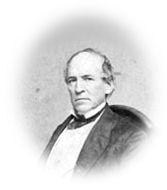
Was at the Pat office this morning with Doct D, visited the Hospital there. Called upon Mr Seward, got letter of introduction from him to Mr Chase, could not see Mr C today. There has been heavy firing over the river all the afternoon. The report tonight is that there has been a very smart skirmish near the chain Bridge which is three miles above Georgetown. I was at Willards this evening but could hear no definite account, but large bodies of troops have gone up that way and we may have a battle tomorrow.

______

The three diary manuscript volumes, Washington during the Civil War: The Diary of Horatio Nelson Taft, 1861-1865, are available online at The Library of  Congress.

Gauley River, 8 Miles South Of Summersville,

September 11, 1861.

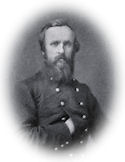
Dear Lucy: — Well, darling, we have had our first battle, and the enemy have fled precipitately. I say “we,” although it is fair to say that our brigade, consisting of the Twenty-third, the Thirtieth (Colonel Ewing), and Mack’s Battery had little or nothing to do, except to stand as a reserve. The only exception to this was four companies of the Twenty-third, Captains Sperry, Howard, Zimmerman, and Woodward, under my command, who were detailed to make an independent movement. I had one man wounded and four others hit in their clothing and accoutrements. You will have full accounts of the general fight in the papers. My little detachment did as much real work — hard work — as anybody. We crept down and up a steep rocky mountain, on our hands and knees part of the time, through laurel thickets almost impenetrable, until dark. At one time I got so far ahead in the struggle that I had but three men. I finally gathered them by a halt, although a part were out all night. We were near half an hour listening to the cannon and musketry, waiting for our turn to come.

You have often heard of the feelings of men in the interval between the order of battle and the attack. Matthews, myself, and others were rather jocose in our talk, and my actual feeling was very similar to what I have when going into an important trial — not different nor more intense. I thought of you and the boys and the other loved ones, but there was no such painful feeling as is sometimes described. I doubted the success of the attack and with good reason and in good company. The truth is, our enemy is very industrious and ingenious in contriving ambuscades and surprises and entrenchments but they lack pluck. They expect to win, and too often do win, by superior strategy and cunning. Their entrenchments and works were of amazing extent. During the whole fight we rarely saw a man. Most of the firing was done at bushes and log and earth barricades.

We withdrew at dark, the attacking brigades having suffered a good deal from the enemy and pretty severely from one of those deplorable mistakes which have so frequently happened in this war — viz., friends attacking friends. The Tenth and Twenty-eighth (Irish and Second German of Cincinnati) fired on each other and charged doing much mischief. My detachment was in danger from the same cause. I ran upon the Twenty-eighth, neither seeing the other until within a rod. We mutually recognized, however, although it was a mutual surprise. It so happened, curiously enough, that I was the extreme right man of my body and Markbreit the left man of his. We had a jolly laugh and introductions to surrounding officers as partners, etc.

The enemy were thoroughly panic-stricken by the solid volleys of McCook’s Ninth and the rifled cannon of Smith’s Thirteenth. The Tenth suffered most. The enemy probably began their flight by a secret road soon after dark, leaving flag, ammunition, trunks, arms, stores, etc., etc., but no dead or wounded. Bowie knives, awful to look at, but no account in war; I have one. One wagon-load of family stuff — a good Virginia plain family — was left. They were spinning, leaving rolls of wool, knitting, and making bedquilts. I enclose a piece; also a pass — all queer.

They [the enemy] crossed the Gauley River and are said to be fortifying on the other side. We shall probably pursue. Indeed, Colonel Matthews and [with] four of our companies is now dogging them. We shall probably fight again but not certainly.

I have no time to write to other friends. The men are now talking to me. Besides, I want to sleep. Dearest, I think of you and the dear ones first, last, and all the time. I feel much encouraged about the war; things are every way looking better. We are in the midst of the serious part of a campaign. Goodbye, dearest. Pass this letter around — bad as it is. I have no time to write to all. I must sleep. On Sunday last, I rode nineteen hours, fifty to sixty miles, crossed a stream with more water than the Sandusky at this season at Mr. Valette’s from thirty to forty times — wet above my knees all the time and no sleep for thirty-six hours; so “excuse haste and a bad pen”, as Uncle says.

Affectionately,

R. B. Hayes.

P. S. — Joe and his capital assistants are trumps.

Mrs. Hayes.