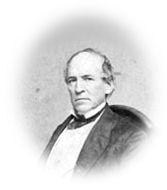
September 27.—To-day Major-General Dix and staff, Brig.-General Duryea and Major Belger proceeded to the Relay House, Md., for the purpose of reviewing and presenting the Fourth Wisconsin regiment, Col. Paine, with a stand of colors. The regiment was drawn up in line and presented a truly martial appearance. When the presentation was about to take place, the divisions on each flank of the battalion were wheeled to the left and right, forming a three-sided square. The color guard was marched forward from the line, the colors then brought forward, when Gen. Dix addressed the regiment in the most patriotic and impassioned language. Col Paine replied in the same lofty sentiments and with burning eloquence, which spontaneously drew from his regiment acclamations of eternal fidelity to the emblem of our country’s glory—after which the colors took their place in line.—Baltimore American, Sept. 28.
——-
Late addition to Volume 3:
September 27.—A battle was fought near Shanghai, in Benton County, Missouri, between a body of Kansas troops, under Montgomery and Jamison, and the advance guard of Ben. McCulloch’s army and some of the State Guard, under Judge Cheneault. The rebels were driven back with considerable loss, and pursued forty miles, when Montgomery fell back on Greenfield. Great alarm was felt by the rebels in Springfield lest Montgomery should attack that place, and the troops there rested on their arms for several nights.—(Doc. 75.)
26th. Fast day. In the morning Thede and I had our pictures taken for Aunt Rhodilla and one of Thede alone for Lizzie Cobb. Went to camp. Worked in the Quartermaster’s barracks. Services at two. Aunt and Uncle were over.
Sept. 26. Being the first company on the ground, and not having tents, we bivouacked last night in Agricultural Hall. Sleeping on a hard pine board was new business to most of us, and Morpheus was courted in vain. The boys, however, made a frolic of the night, and more unearthly noises and sounds never greeted my ears. I think the rebels would never need hear the sound of our guns to frighten them, if they could hear sounds like those. Several other companies arrived on the ground this morning, and this afternoon all hands are busy pitching tents.
Thursday, 26th—We had no drill today. Instead of drilling all went to meeting. President Lincoln issued a proclamation asking that the day be observed as a day of fasting and prayer, and our company attended service twice today, in a body. The war has cast a gloom over the whole country; people are beginning to believe that it will be a long siege before it is over with.
THURSDAY 26
We have thought considerably today of taking another house and remaining in the City. But decent houses for rent are extremely scarce now. Two months ago half the houses (almost) were empty and for rent. I was at the “White House” last evening. Saw Maj Watt and called at the residence of Gov Chase. He was not at home. Today have nearly finished packing up. It has been the National Fast day, business suspended all over the City & stores closed. Julia has gone to stay with Matty Hartly. Chas & Sallie called just at Dusk.

______
The three diary manuscript volumes, Washington during the Civil War: The Diary of Horatio Nelson Taft, 1861-1865, are available online at The Library of Congress.
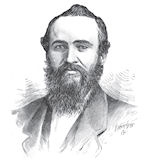
Thursday, 26th.—According to Zollicoffer’s orders of yesterday, the several detachments named (except Companies B and C of McNairy’s Battalion that did not move to Barboursville till the next day), marched (sixteen miles) from Camp Buckner to Barboursville, the county seat of Knox County, Kentucky, leaving their tents at the former place.
It was said that only three families remained in town, and this showed the strong “Union sentiments” of that town. Our men put up in deserted houses. 1
______
1 The larger portion of the household furniture was left in many of the dwellings; therefore, the writer, as well as a good many others, had the pleasure of occupying a good Kentucky feather bed the two nights that we remained in Barboursville.
SEPTEMBER 26TH.—Had a conversation with the Secretary to-day, on the policy of sending Union men out of the Confederacy. I told him we had 15,000 sick in the hospitals at Manassas, and this intelligence might embolden the enemy to advance, capture the hospitals, and make our sick men prisoners. He said such prisoners would be a burden to them, and a relief to us. I remarked that they would count as prisoners in making exchanges; and to abandon them in that manner, would have a discouraging effect on our troops. He said that sending unfriendly persons out of the country was in conformity with the spirit of the act of Congress, and recommended me to reperuse it and make explanations to the people, who were becoming clamorous for some restriction on the egress of spies.
September 26.—Capt. Stewart’s cavalry, numbering seventy-five men, to-day encountered forty rebel cavalry at Lucas Bend, Ky., whom they pursued into Jeff. Thompson’s camp at Belmont. Four rebels were killed, five captured, and many wounded. The remainder escaped to the woods. The Federal troops captured all the guns and pistols they could bring away with them. No Federal troops were injured.
—the Thirty-fifth regiment of Ohio Volunteers took possession of Cynthiana, Kentucky.
—at Louisville, Ky., W. G. Querton, formerly one of the editors and proprietors of the Courier, was arrested for aiding the Southern rebellion.—The turnpike bridge over Green river, near Mumfordville, was burned by rebels.
—J. B. Archer, Captain of the steamboat Commercial, was arrested, but bailed in ten thousand dollars. The beat was also seized, but released on security being given to surrender her on demand to the Federal Government.— Louisville Journal, September 28.
—The Twenty-first regiment of Ohio Volunteers, left Findlay for Camp Dennison.—Ohio Statesman, October 2.
—Is accordance with the recommendation of the President of the United States, published August 12th, this day was observed as a day of fasting and prayer.
25th. In the morning went over to camp. Commenced work. Thede went over to Uncle’s after dinner. Went to tea. Called on Lizzie Cobb. Had a fine time.
Sept. 25. Under escort of the Milford Brass Band, we marched through a few of the principal streets to the depot. Here a large concourse of citizens had collected to give us their best wishes, and see us off. We now began to realize some of the discomforts of a soldier’s life. There not being passenger cars enough to accommodate us, we were crowded into two box freight cars for South Framingham, where we changed to passenger cars for Worcester. Arriving there, we marched to the city hall, where we took dinner. From there we marched to the agricultural grounds’ west of the city, where we are to encamp. This camp is named Camp Lincoln, in honor of Ex-Governor Lincoln of Worcester.