Saturday, 21st.—After a short march of about sixteen miles, the three companies bivouacked in Union County, four and a half miles north of Maynardville.
September 2011
SEPTEMBER 21ST.—The Secretary has authorized me to sign passports “for the Secretary of War.” My son attends to his letters. I have now an opportunity of seeing more. I have authority to order transportation for the parents of soldiers, and for goods and provisions taken to the camps.
September 21.—General Lane’s command surprised a superior force of rebels at Papinsville, Missouri, and, after a severe engagement, routed them, losing seventeen killed, and a large number wounded. The rebels lost forty killed, and one hundred prisoners, and all their tents, wagons, and supplies.
The gang of rebels who recently sacked the town of Humboldt, Kansas, was defeated by a force from Fort Scott, and their leader, Mathias, killed. On his person was found an order from Ben McCulloch for the enrolment of the Quapaw Indians.—National Intelligencer, Sept. 28.
—The British schooner Revere, of and from Yarmouth, N. S., with a cargo of salt fish, arrived at Boston, Mass., in charge of Henry W. Wells, master’s mate, and a prize crew from the United States steamer Cambridge. The Revere was captured while attempting to run the blockade at Beaufort, N. C.—N. Y. World, Sept. 23.
—The steamer War Eagle returned to Jefferson City, Mo., from an expedition on the Missouri River this evening. This steamer, together with the steamer Iatan, with the Indiana Twenty-second and Eighteenth regiments aboard, accompanied the steamers White Cloud and Des Moines, with the Indiana Twenty-sixth, as high up the river as Cambridge, where they captured the steamer Sunshine, seized a short time since by Green. They encountered no rebel troops. Union flags were flying at Glasgow. The White Cloud and Des Moines went on up the river to reinforce Lexington. While all four boats were lying up for the night, a short distance below Glasgow, two detachments were sent out to reconnoitre. They encountered each other, each mistaking the other for the enemy, fired, and before their mistake was discovered, four men were killed and several wounded. Among the wounded was Major Gordon Tanner, of the Twenty-second.—(Doc. 55.)
—A Large and enthusiastic meeting of the citizens of Westchester County, in favor of maintaining the integrity of the Union, was held at Lake Mohican. The Hon. John B. Haskin made a most eloquent and stirring speech to the assemblage, and declared his determination to sink all party differences and to support the Government in all honorable acts for a vigorous prosecution of the war and the preservation of the best Government ever vouchsafed to man. Eloquent speeches were also made by Messrs. Depew, Bailey, and Ferris.
—Edward D. Baker, United States Senator from Oregon, was appointed a Major-General of Volunteers in the National army.
—This morning John Bateman, a citizen of Portland, Maine, arrived at New York in custody of the deputy marshal. The prisoner charged with high treason, with using seditious language against the United States of America and the President thereof, treasonable complicity with Southern rebels and their agents in Liverpool and other parts of Europe. It is stated that letters and papers were found in the baggage and on the person of the accused, justifying the vigorous measures adopted. He was sent to Fort Lafayette.—N. Y. Times, September 22.
—Gen. Robert Anderson assumed command of the State and Federal troops in Kentucky and issued a spirited proclamation, calling upon Kentuckians of all parties to assist in repelling the invaders of the State. Gov. Magoffin also issued a proclamation, directing Gen. Thomas L. Crittenden to call out the State troops to resist the invasion of the State, and Gen. C. accordingly called out the militia.—(Doc. 56.)
—The Fourth regiment of Vermont Volunteers, under the command of Colonel Edwin H. Stoughton, left its encampment at Brattleboro for the seat of war. The regiment numbers one thousand and eighty rank and file. Colonel Stoughton is a native of Vermont, and a West Point officer, having graduated from the Military Academy in 1854, and being breveted Second Lieutenant in the Forty-second Infantry, July 1, 1859.
Friday, 20th—Captain Stearns of Company A of the Eighth Iowa arrived today from Davenport, coming to encourage enlistments. Several new men enrolled today. We have a fine drillmaster in John F. Compton of New Liberty, Scott county. He is an Englishman, and has served five years in the Queen’s Guards of England.
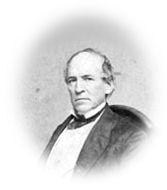
FRIDAY 20
At the Indiana Hospital (Pt office) today, 100 Patients. Made Box for Piano. Got a Deed from the Land Office for Mr Pollok of Lyons. Attended the Parade with Julia of the Regulars on F[ranklin] Square. Called with her upon the Woodburys, 12th St, refined educated people and much devoted to the sick soldiers. Troops are pouring in rapidly now, from five to six Regiments pr day arrive by the Cars. Large numbers have gone over the river this week. An attack on the City expected.

______
The three diary manuscript volumes, Washington during the Civil War: The Diary of Horatio Nelson Taft, 1861-1865, are available online at The Library of Congress.
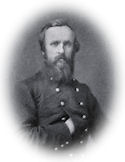
September 20.— I am ordered to the place of judge-advocate and to be attached to headquarters. I dislike the service but must obey, of course. I hope to be released after a few weeks’ service. In the meantime I will try to qualify myself for an efficient discharge of my new duties. I agree with General Rosecrans that courts-martial may be made very serviceable in promoting discipline in the army. I shall try to introduce method and system into the department. I will keep a record of cases, collect a list of sentences proper for different cases, etc., etc.
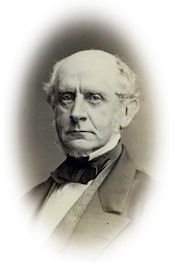
London, September 20, 1861
I deeply sympathise with you in your trials about the part you ought to play in the war. Much as I value your assistance during my absence on this side, I should be very reluctant to continue it at the cost of your own convictions of your duty. If you feel that the crisis demands it, I pray that you set aside every other consideration at once. .. . Whichever way you determine, you will know that I appreciate your motives, and that you will have under every circumstance my sympathy and my prayers.
The late modicum of good news has helped us here a good deal. People were beginning to believe that the slaveholding generals were demigods, on Aristotle’s or Longinus’s principle (I forget which), that mystery is a source of the sublime. The London Times at last frankly admits that if split up we shall no longer be a terror to Europe so that there is no need of going any farther for a reason to explain its crooked policy. Mr. Russell’s last letter went far to justify your inference. He has seen a little light and is willing to admit that we are not so badly off after all. . . .
Friday, 20th.—Being ordered to move his battalion to Cumberland Ford, Colonel McNairy set out from Camp Cummings, near Knoxville, about six P. M., with Harris’s (A), Payne’s (D), and Allison’s (E) companies, and after a march of thirteen miles he camped for the night. The other two companies (B and C) were ordered to follow in about three days.¹
______
¹ As I was yet quite feeble, having just recovered from an attack of measles, brother Ben and I put up only three miles from town.
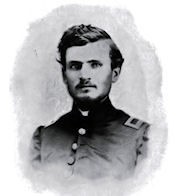
Friday, 20th. Received appointment of Com.-Sergt.
SEPTEMBER 20TH.—Col. J. A. Washington has been killed in a skirmish. He inherited Mount Vernon. This reminds me that Edward Everett is urging on the war against us. The universal education, so much boasted of in New England, like their religion, is merely a humbug, or worse than a humbug, the fruitful source of crime. I shall doubt hereafter whether superior intelligence is promotive of superior virtue. The serpent is wiser than the dove, but never so harmless. Ignorance is bliss in comparison with Yankee wisdom.


