Following the American Civil War Sesquicentennial with day by day writings of the time, currently 1863.

October 2011

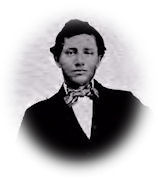
Camp Tompkins, October 27, 1861.

Dearest : — I have had a week’s work trying twenty cases before a court-martial held in one of the fine parlors of Colonel Tompkins’ country-seat. I have profaned the sacred mansion, and I trust that soon it will be converted into a hospital for our sick. My pertinacity has accomplished something towards that end. My week’s work has had painful things, but many pleasant ones. I trust no life will be lost, but I fear it. Still I have done my duty kindly and humanely.

The weather generally has been good. The paymasters are here and general joy prevails. I expect to remain at this camp about a week or ten days. Whether I shall return to my regiment or go around to Grafton is not yet certain, probably the latter.

I see that the Sixth Street ladies are at work for the Tenth. All right. Clothing, but blankets and bedding comforts, etc., still more, will be needed this winter. Army blankets are small and are getting thin and worn-out. As cold weather comes on the well, even, will need all they can get. As yet, in this region, nobody but sick men have any business to complain.

Dr. Joe has an order from General Rosecrans to Jim to come out and assist him. If he comes let him bring a good blanket or comfort for me. If I am away it can be kept for me till I return or used by somebody else. During the next ten days I shall get money plenty to send you for all debts, etc., etc.

I can quite certainly make you a visit, but I hardly know when to do it. Dr. Joe will want to visit home sometime this fall or winter and you better “maturely consider,” as the court-martial record says, when you would prefer him to come. Of course he must wait for Dr. Clendenin and I for Colonel Matthews. My preference is about December.

Mother and Jim both seem to think letters never reach us. We get all your letters now, and quite regularly. There was a period after Carnifax when we were out of reach, but now we are in line again. We see Cincinnati papers of the 24th on the 26th. By the by, you need not renew my subscription to the Commercial. No use to send papers. We get them from the office sooner in another way.

If Jim comes let him get an assortment of late papers, Harper’s, Atlantic, etc., etc., and keep them till he gets to our camp. We are the outermost camp and people are coaxed out of their literature before they get to us. . . .

I dined in a tent with fourteen officers and one lady on Wednesday. Her husband was formerly a steamboat captain, now a major in [the] First Kentucky. She evidently enjoyed her singular position; bore her part well. . . .

Affectionately, your

Rutherford.

Things I would like before winter sets in — I am not sure that Dr. Jim better bring them — there is no hurry:

1. A good large blanket; 2. An India-rubber coat, common black, — Dr. J—’s size; 3. A pair of gloves, riding, buckskin or such; 4. A thick dark blue vest, military buttons and fit; my size at Sprague’s; 5. Enough blue cord for seams of one pair of pants; Dr. Joe’s poem, “Lucile”; 6. Two blank books, size of my diaries — good nice ruled paper, 6 or 8 inches by 4 or 5; 7. A pocket memorandum book. I could make a big list, but I’ll quit.

Mrs. Hayes.
Sunday morning before breakfast,

Tompkins’ Farm, Three Miles from Gauley Bridge,

October 27, 1861.

Dear Uncle: — It is a bright October morning. Ever since the great storms a month ago, we have had weather almost exactly such as we have at the same season in Ohio — occasional rainy days, but much very fine weather. We are still waiting events. Our winter’s work or destination yet unknown. Decided events near Washington will determine our course. We shall wait those events several weeks yet before going into winter quarters. If things remain there without any events, we shall about half, I conjecture, build huts here and hereabouts, and the rest go to Ohio, and stay there, or go to Kentucky or Missouri as required. I hope and expect to be of the half that leaves here. But great events near Washington are expected by the powers that be, and it looks, as you see, some like it.

I have been occupied the whole week trying cases before a court-martial. Some painful things, but on the whole, an agreeable time. While the regiment is in camp doing nothing, this business is not bad for a change.

The paymasters are here at last, making the men very happy with their pretty government notes and gold. The larger part is taken (seven-eighths) in paper on account of the bother in carrying six months’ pay in gold. Each regiment will send home a very large proportion of their pay — one-half to three-fifths.

The death of Colonel Baker is a national calamity, but on the whole, the war wears a favorable look. Lucy says you are getting ready to shelter us when driven from Cincinnati. All right, but if we are forced to leave Cincinnati, I think we can’t stop short of the Canada line. There is no danger. These Rebels will go under sooner or later. I know that great battles are matters of accident largely. A defeat near Washington is possible, and would be disastrous enough, but the Southern soldiers are not the mettle to carry on a long and doubtful war. If they can get a success by a dash or an ambuscade, they do it well enough, but for steady work, such as finally determines all great wars, our men are far superior to them. With equal generalship and advantages, there is a perfect certainty as to the result of a campaign. Our men here attack parties, not guerrillas merely, but uniformed soldiers from North Carolina, Georgia, South Carolina, etc., of two or three times their number with entire confidence that the enemy will run, and they do. They cut us up in ambuscades sometimes, and with stratagems of all sorts. This sort of things delays, but it will not prevent, success if our people at home will pay the taxes and not tire of it. Breakfast is ready.

Sincerely,

R. B. Hayes.

P. S. — You hear a great deal of the suffering of soldiers. It is much exaggerated. A great many lies are told. The sick do suffer. A camp and camp hospitals are necessarily awful places for sickness, but well men, for the most part, fare well — very well. Since I have kept house alone as judge-advocate, my orderly and clerk furnish soldiers’ rations and nothing else. It is good living. In the camp of the regiment we fare worse than the rest, because the soldiers are enterprising and get things our lazy darkies don’t.

Warm bedding and clothing will be greatly needed in the winter, and by troops guarding mountain passes. The supply should be greater than the Government furnishes. Sewing Societies, etc., etc., may do much good. The Government is doing its duty well. The allowance is ample for average service; but winter weather in mountains requires more than will perhaps be allowed.

S. Birchard.

Saturday, 26th—We drilled with our new arms this morning for the first time. Some of the men are awfully awkward in shouldering arms and using the ramrod and returning it to its place. It is also quite amusing to hear some of the officers give orders when we are going through the manual of arms.

Camp Leslie, Hall’s Hill,

Fairfax County, Va., Oct. 26, 1861.

Friend P—s.:—

To-day has been a great day with us. General McClellan and staff reviewed General Porter’s Division, of which we form a part. Five brigades were reviewed. We are attached to General Butterfield’s Brigade. Our regiment was very highly complimented by the General, as one of the best, if not the best, on the field. We had a sham battle, an exciting time.

My health is still good. I feel the effects of severe drill some. It is as much as I can stand, but, while many are getting sick, I am all right yet. One poor fellow in our regiment died last night. The first one that has died since we left home.

Many seem to think that this war is soon to close. I am fully satisfied, however, that it cannot be ended without the emancipation proclamation, and I think that will be made next winter. I am in for thorough work while we’re at it, but I shudder for the results of the continuance of the war.

To-morrow we do guard duty. It is tiresome work. No sleep nights. Almost every time some fun occurs to relieve the monotony. An Irishman challenged a party the other night with, “Halt! Who goes there?” Ans.—”Grand rounds.” “Och, to the divil wid yez grand rounds; I thought it was the relafe guard.”

SATURDAY 26

A dark cloudy day but no rain. Was down to the post office. Called at the office of Fenwick & Lawrence Pat Agts. Have spent most of the day at home reading the news &c. Wood being $8.00 pr cord I cannot afford to hire it sawed so I saw it myself. The boys carry it in & split the kindlings. There is no war news afloat today. Heavy firing has been heard nearly all day, practicing at the Camps, I presume. Julia saw Sec’y Smith at the Presidents today, introduced by Maj Watt.

______

The three diary manuscript volumes, Washington during the Civil War: The Diary of Horatio Nelson Taft, 1861-1865, are available online at The Library of  Congress.

October 26th.—More reviews. To-day rather a pretty sight—12 regiments, 16 guns, and a few squads of men with swords and pistols on horseback, called cavalry, comprising Fitz-John Porter’s division. McClellan seemed to my eyes crest-fallen and moody to-day. Bright eyes looked on him; he is getting up something like a staff, among which are the young French princes, under the tutelage of their uncle, the Prince of Joinville. Whilst McClellan is reviewing, our Romans in Washington are shivering; for the blockade of the Potomac by the Confederate batteries stops the fuel boats. Little care these enthusiastic young American patriots in crinoline, who have come to see McClellan and the soldiers, what a cord of wood costs. The lower orders are very angry about it however. The nuisance and disorder arising from soldiers, drunk and sober, riding full gallop down the streets, and as fast as they can round the corners, has been stopped, by placing mounted sentries at the principal points in all the thoroughfares. The “officers” were worse than the men; the papers this week contain the account of two accidents, in one of which a colonel, in another a major, was killed by falls from horseback, in furious riding in the city.

Forgetting all about this fact, and spurring home pretty fast along an unfrequented road, leading from the ferry at Georgetown into the city, I was nearly spitted by a “dragoon,” who rode at me from under cover of a house, and shouted “stop ” just as his sabre was within a foot of my head. Fortunately his horse, being aware that if it ran against mine it might be injured, shied, and over went dragoon, sabre and all, and off went his horse, but as the trooper was able to run after it, I presume he was not the worse; and I went on my way rejoicing.

McClellan has fallen very much in my opinion since the Leesburg disaster. He went to the spot, and with a little—nay, the least—promptitude and ability could have turned the check into a successful advance, in the blaze of which the earlier repulse would have been forgotten. It is whispered that General Stone, who ordered the movement, is guilty of treason—a common crime of unlucky generals—at all events he is to be displaced, and will be put under surveillance. The orders he gave are certainly very strange.

The official right to fib, I presume, is very much the same all over the world, but still there is more dash about it in the States, I think, than elsewhere. “Blockade of the Potomac!” exclaims an official of the Navy Department. “What are you talking of? The Department has just heard that a few Confederates have been practising with a few light field-pieces from the banks, and has issued orders to prevent it in future.” “Defeat at Leesburg!” cries little K_____, of McClellan’s staff, “nothing of the kind. We drove the Confederates at all points, retained our position on the right bank, and only left it when we pleased, having whipped the enemy so severely they never showed since.” “Any news, Mr. Cash, in the Treasury to-day?” “Nothing, sir, except that Mr. Chase is highly pleased with everything; he’s only afraid of having too much money, and being troubled with his balances.” “The State Department all right, Mr. Protocol?” “My dear sir! delightful! with everybody, best terms. Mr. Seward and the Count are managing delightfully; most friendly assurances; Guatemala particularly; yes, and France too. Yes, I may say France too; not the smallest difficulty at Honduras; altogether, with the assurances of support we are getting, the Minister thinks the whole-affair will be settled in thirty days; no joking, I assure you; thirty days this time positively. Say for exactness on or about December 5th.” The canvas-backs are coming in, and I am off for a day or two to escape reviews and abuse, and to see something of the famous wild-fowl shooting on the Chesapeake.

OCTOBER 26TH.—Immense amounts of patriotic contributions, in clothing and provisions, are daily registered.

October 26. — At Mill Creek, five miles from Romney, Gen. Kelley’s force came upon the rebel’s outposts, which they drove in, and advanced to the Indian Mound Cemetery, to the west of the town, where the rebels made a stand and opened fire with a twelve-pound rifled gun, placed in a very commanding position in the cemetery, and with a mountain howitzer from the high grounds on the east bank of the river, which point commanded our approach for a distance of over a mile. At the east end of the bridge the enemy had also thrown up intrenchments, from which they kept up a constant fire of musketry upon the head of the column. One twelve-pounder and two six-pounders responded to the artillery on Kelley’s post until the General was enabled to fully comprehend the enemy’s position, when he soon gave the command to charge upon their batteries and intrenchments. The cavalry under the lead of Capts. Keys and McGhee, dashed across the river, (which was fordable at this point,) while the infantry, under Cols. Mason and De Puy, Lieut.-Col. Kelley, and Major Swearingen, rushed over the bridge to encounter the foe, at the very muzzles of his guns. No sooner did the rebels perceive this movement, than they immediately abandoned their positions, and commenced a precipitate retreat, rushing “pell-mell” through the town, and directing their flight toward Winchester.

General Kelley captured some four hundred or five hundred prisoners, among whom was Colonel E. M. Armstrong, late a member of the Richmond Convention, two hundred horses, three wagon loads of new rifles, three cannon, a large quantity of corn, tents, and, in fact, every thing they had. The loss on the Federal aide was but one man killed and five wounded. When about one and a half miles from Springfield the rear of Col. Johns’ column (ordered to make the feint from the north) was attacked from the heights by the enemy, severely wounding two men and detaining the column about an hour. The march was then resumed through Springfield, and on arriving within half a mile of the bridge crossing the south branch of the Potomac, Col. Johns discovered the enemy on the opposite bank, when a brisk firing commenced. An attempt to force the passage of the bridge was ineffectual, the rebels having destroyed a portion of it. Captain Shaw marched his company upon the bridge with a view to carry the position, but lost one killed and six wounded. At this time, hearing nothing further of the firing at Romney, and concluding that Gen. Kelley had carried the place, and that the object desired had been accomplished, Col. Johns withdrew his force to Oldtown, Md., after a march of twenty-five miles.—(Doc. 107.)

—A large meeting was held at Elkton, Cecil County, Maryland, by the Union men. Speeches were made by Henry Winter Davis, Edwin U. Webster, Alexander Evans, S. S. Maditt, Esq., and others. There were several hundred ladies on the ground, and the display was grand.—N. Y. Tribune, October 30.

—Parson Brownlow has been forced to suspend the publication of his paper, the Knoxville (Tenn.) Whig. He gives his readers a farewell address, in which he says that he will neither give a bend to keep the peace, nor will he take an oath to support the Jeff. Davis Confederacy, and he informs the authorities that he is ready to go to jail. He has been indicted by the Grand Jury for treason, because, as he says, he has refused to publish garbled accounts of skirmishes in Kentucky, and other articles, the insertion of which in his sheet was insisted upon by the rebels.—(Doc. 108.)

—A wagon train was established between Baltimore, Md., and Washington, D. C. Fifty wagons were employed in the service. This was rendered necessary by the closing of the Potomac and the great amount of freight thus thrown upon the railroad.—Baltimore American, October 26.

—Generals Fremont and Sigel arrived at Springfield, Missouri, and were received with a display of National flags and every demonstration of joy.—National Intelligencer, Nov. 1.

—The Charleston Mercury, of this date, declares that the Northern army “has broken its ranks forever;” that “no trumpet will call them to battle again;” and that “however new forces may be mustered, and new generals commissioned, the decree of Manassas cannot be reversed;” that therefore Southern “independence is assured,” and it accordingly gives some space to the consideration of what the relations of the new Government “with the world are to be.” It describes the late prosperous and happy condition of the United States, and its present condition, and fears that Europe will not understand the South when it looks upon it as the active agent in the destruction of so much good. (Doc. 110.)

—Three companies of the Ninth Illinois regiment went to Saratoga, Ky., on the Cumberland River, and attacked a body of rebels, whom they routed, killing thirteen, taking twenty-four prisoners, and capturing fifty-two horses. They had two wounded on their side. These affairs, though not important in their results, in one sense, do nevertheless show in a clear light the spirit and bravery of the National troops, and add new proof to the evidence already gathered that the rebels are sure to be defeated in a fair fight with equal numbers, or with numbers not greatly inferior to theirs.— (Doc. 111.)

—This day a scouting party of thirty men of the Eighth Illinois regiment, under the command of their colonel, Johnson, left for Fort Holt, near Cairo, Ill., and proceeded several miles in the direction of Columbus, Ky. An advance guard was sent out to keep their way clear. They returned to their command and reported to Col. Johnson that a large force of the enemy’s cavalry was advancing upon them; whereupon Col. Johnson ordered his men to a turn in the road, and directed them to lie in ambush for the enemy, who, upon coming up, were confronted by Col. Johnson and ordered to surrender, to which they replied by opening a fire upon him, which he escaped. At this moment the men of his command fired a volley into the midst of the rebels, from the brush, killing their captain and lieutenant, and several others, which so astounded and surprised the rebels that they broke and ran in a promiscuous retreat, leaving their lieutenant dead in the road.—Louisville Journal, November 1.

25th.—We have moved our camp about one hundred rods, are out of the mud, on high dry ground, where the tents can be ventilated and the streets kept clean. I look for a great improvement in the health of the regiment from this.

Friday, 25th—We got our equipments today. Our guns are the old-fashioned muskets made by working over the old flintlock gun, so as to use a cap in place of the flint. The musket is loaded with a cartridge containing powder, ball, and three buckshot in front of the ball. Each man is to carry forty rounds or more of ammunition all the time.