OCTOBER 28TH.—The most gigantic naval preparations have been made by the enemy; and they must strike many blows on the coast this fall and winter. They are building great numbers of gun-boats, some of them iron-clad, both for the coast and for the Western rivers. If they get possession of the Mississippi River, it will be a sad day for the Confederacy. And what are we doing? We have many difficulties to contend against; and there is a deficiency in artisans and material. Nevertheless, the government is constructing a monster at Norfolk, and several similar floating batteries in the West. But we neglect to construct casemated batteries! Our fortifications, without them, must fall before the iron ships of the enemy. The battle of Manassas has given us a long exemption from the fatigues and horrors of war; but this calm will be succeeded by a storm.
October 2011

October 28.—On the night of the 25th, the boats of the U. S. gunboat Louisiana made a reconnaissance of the Virginia shore for a number of miles, and discovered in Chincoteague Inlet, about two miles from its mouth, a number of rebel vessels undergoing repairs; and this night an expedition, under command of Lieutenant Alfred Hopkins, consisting of three boats, with twenty-five men, well armed, proceeded to the inlet with the intent to cut out or destroy the aforesaid rebel vessels. Proceeding cautiously up the narrow inlet, on the banks of which the rebel sentries could be heard, the boats at last reached the rebel fleet; but, finding the channel so intricate and so well guarded, they were unable to bring any of the vessels out. Preparations were, therefore, made to fire them, and at a given signal the match was applied to three large vessels, and as the flames broke forth in the darkness of the night, brilliantly illuminating the skies with lurid glare, the men sprang to their boats, while the enemy, in confusion at the suddenness of the attack, were quite dumbfounded, and unable to offer any resistance or fire a single shot at the brave fellows who made so gallant a dash into their very midst. As the boats shot out of the inlet the troops sent up rockets to announce to their comrades on board the steamer the complete success of the expedition. At daylight the boats arrived alongside the Louisiana without having lost a man. The only casualty was received by Lieutenant Hopkins, who had his right hand severely burned while applying a torch.—Philadelphia Press, Nov. 14.
—Gen. John B. Henderson, of the Missouri State Militia, made a compromise with the rebels at Dyer’s Mills, near Concord, Missouri, by which he agreed that the United States would not make any arrests if the rebels would lay down their arms and return to their homes. Gen. Prentiss acquiesced in the compromise. The rebels were four hundred strong, and Gen. Henderson’s force numbered one thousand five hundred. The proposition for compromise came from the rebels.— National Intelligencer, Nov. 1.
—General Kelley issued a proclamation from Romney to the people of Hampshire County and the Upper Potomac, in which he assured them of protection to their persons and property.—(Doc. 112.)
—Asa T. Pratt, of Braintree, Mass., who expressed strong secession sentiments at a Democratic Convention at Dedham, was ridden on a rail by several of his town’s people.—In accordance with orders received from the War Department, Gov. Curtin, of Pennsylvania, issued marching orders to eight regiments in addition to these already at the seat of War.—Gov. Andrew, of Massachusetts, has written a letter in reply to an inquiry from Hon Geo. S. Boutwell, whether the Fifteenth regiment, which behaved so gallantly in the action at Leesburg, was sent into the field with inferior arms. He says that rifled muskets have been given all the regiments to which it was possible to supply them. Some of the commanders, however, have preferred smooth-bore muskets as decidedly preferable for close action, and these Col. Devens’ men had.—N. Y. Times, Oct. 30.
—By direction of the President of the United States, a Commission was appointed, consisting of David Davis, of Illinois; Joseph Holt, of Kentucky, and Hugh Campbell, of St. Louis, to examine and report upon all unsettled claims against the Military Department of the West, which might have originated prior to the appointment of General Fremont, at which time the order was issued that all money must be disbursed by the regularly appointed agents of the Government.— N. Y. Times, Oct. 28.
—The Fifth New Hampshire regiment, Col. Edward E. Cross, left its camp, near Concord, for Washington. It numbers one thousand and thirty-three men, and is armed with the Enfield rifle.—N. Y. Commercial, Oct. 30.

Sunday, 27th—We had regular preaching today, both morning and afternoon, by the chaplain. There was a large attendance from outside the camp at the meetings. The mornings are becoming quite frosty.
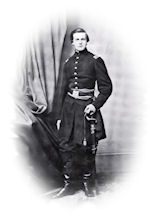
Camp Leslie, Hall’s Hill,
Fairfax County, Va., Oct. 27, 1861.
Dear Sister L.:—
It is a beautiful Sabbath morning and I am on guard. I suppose you are now at church, but have you thought of me this morning and wondered where I was and what I was doing, whether I was well or sick, and how long since I heard from you, and when you meant to write to me again?
Have you thought that I have been gone from home just two months, and, in that time, I have had just one letter from you? Have those two months seemed long or short to you? Have you missed my society at all in that time? Have you known how close I am to the rebel rifles, and how many times I have been ordered to be ready to go at a moment’s notice, and how many nights I have slept on my gun with my equipments buckled on, to be ready to fall in instantly? Have you thought of my standing guard at night in the rain when my clothes were soaked and my shoes full of water, and so tired I dare not stop walking lest I should fall asleep, which would be certain death? That is the way I live, and do you think I would like to hear from you often? You used to write when I was in Camp Wright, but lately I get no more letters. I don’t know why. Can it be that you have to write so many letters to C. that you have no time to write to me? I am not jealous, but it seems to me that there might be room enough in your heart for a little love for me, if you do love him very much. There, I won’t write in that strain any more. I know you will write, and often, too. And you want to hear from me, but what shall I write?
We are right here in the same camp that we have occupied for the last month nearly. We have received marching orders every three or four days, but they are always countermanded before we start. We are drilling very severely almost all the time. Two hours every morning with our knapsacks on, which is very hard work, and the rest of the day is mostly spent in battalion and brigade drill. Every time we go out we have some twenty or twenty-five pounds weight to carry, and carrying it so long is no boy’s play.
I have not been sick but one day. I felt dizzy then and left the ranks. I was threatened with a fever, but I used a little cold water and drove it off. I am growing poor, I can’t deny that, but still I am bony and tough. Many much larger men are giving out, while the small and slight ones endure best. H. is complaining considerable of the time. If he should live at home with his mother till he was gray, he would never be anything but a baby, but I guess we will break him of his notions here, partially, at least. He gets a letter almost every day, and isn’t satisfied then. D. is tolerably well, though he and H., too, are troubled some with the prevailing disorder in camp, diarrhea. I am case-hardened; that don’t affect me in the least. I can eat salt horse and wormy crackers and drink swamp water with impunity, the only fault being it don’t give strength enough for our severe exercise. We expect our pay the 1st of November, which will be soon now.
Yesterday we had a grand review. General McClellan and staff reviewed General Porter’s division, of which we form a part. Some eighteen regiments were present, besides several companies of artillery. We had breakfast at light, and had nothing to eat again until 4 p. m., and most of the time we were exercising pretty hard. I cannot tell you much about the parade, as the description would necessarily include many military terms which you would not understand. The troops were drawn up in three long lines and the artillery at one end of the lines. Each line wheeled into column and marched round in front and passed the general once in quick and once in double quick time, and the general and his staff rode along in front of, and in the rear of each line, each band playing as he passed its respective regiment. The review closes with a sham battle on one side. Our regiment was very highly complimented by the general, who said it was one of the best, if not the very best, on the whole field.
Everything is done with the strictest discipline. I cannot go to my quarters to-day or to-night without leave of the officer of the guard, nor can I take off a single article of clothing, but I must be here at the guard tents ready to fall in any time.
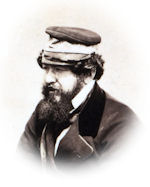
October 27th.—After church, I took a long walk round by the commissariat waggons, where there is, I think, as much dirt, bad language, cruelty to animals, and waste of public money, as can be conceived. Let me at once declare my opinion that the Americans, generally, are exceedingly kind to their cattle; but there is a hybrid race of ruffianly waggoners here, subject to no law or discipline, and the barbarous treatment inflicted on the transport animals is too bad even for the most unruly of mules. I mentioned the circumstance to General McDowell, who told me that by the laws of the United States there was no power to enlist a man for commissariat or transport duty.
SUNDAY 27
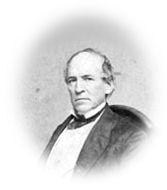
This has been rather a still Sunday. I have not been to church, I have rather too much of a cough left. I have written a number of letters, one to E P Taft, to Doct J Taft, and one to Lieut Swan. Almeron Field called this evening. He belongs to the Co F 8th Regt of Regulars. Long rows of Army wagons continue to rumble through the streets to remind us that a terrible war is raging.

______
The three diary manuscript volumes, Washington during the Civil War: The Diary of Horatio Nelson Taft, 1861-1865, are available online at The Library of Congress.
Hampton Roads, Oct. 27th.
We still loiter here in a seeming imbecile way, waiting now for weather and now for nobody knows what. Meanwhile patience and strength are ebbing in twelve thousand men. The condition of some of the regiments on shipboard is said to be very bad. Ours is fortunate in its ship, and they say is in better order than any other. A villain of a division-commissary, supplied fifteen days’ rations of pork and no beef, for the entire expedition! Finding this out just as we were leaving Annapolis, I felt that we could never stand it, and we have behaved so cantankerously about it, that we have secured beef enough, fresh and salt, to greatly mitigate the Sahara of pork, for this regiment. God help the others! Oh to have a Division-commissary’s head in a lemon-squeezer!
Bird’s Point, October 27, 1861.
I haven’t written for a full week because I really had nothing to write and in fact I have not now. Although soldiering is a hugely lazy life, yet these short days we seem to have but little spare time. We are up nearly an hour before sun up, have breakfast about sunrise, drill (company) from about 8 to 10. Cards until dinner time, 12; lounge or read until 2; battalion drill untill 4:30 or 5, supper, and then dress parade at 4:45; from candle lighting untill bedtime (taps), 10, we have cards mixed with singing or some awful noises from Sam Nutt and Fred Norcott. Those two boys can make more noise than three threshing machines. Our boys are all in excellent health and prime spirits. Fred and Sam and Sid are fatter than the Canton folk ever saw them. There are but four regiments at the Point now, so we have to work on the entrenchments every fourth day two hours or cut down trees the same length of time. We are clearing away the timber within 500 yards of the earthworks. It is mostly Cottonwood and very heavy. They stand so thick that if we notch a dozen or so pretty deep and then fell one it will knock three or four down. Lin Coldwell and I are going to get a set of chess to-morrow. That gunboat, “New Era,” that the papers blow so much about is of no account as a gunboat. She is laid up at Mound City for a battery. The men on her have told me that she wouldn’t half stand before a land battery that amounted to anything. We are beginning to have some frost here, but I don’t believe we’d suffer a bit lying in these tents all winter. The sickly season is over now and the health is improving very much. We had 18 on the sick list in our company three weeks ago and now we have but three, and they are only diarrhoea or the like. I tell you I feel as strong as two mules and am improving. I haven’t been the least unwell yet. Our boys are perfectly sick for a fight so they can be even with the 17th. We are sure that the 17th doesn’t deserve to be named the same day with us for drill or discipline, with all their bragging. They are an awful set of blowhards. Sid., Theo., Ben Rockhold and John Wallace are on picket out of our mess to-night. The picket was fired on last night where they are posted to-night.
OCTOBER 27TH.—Still the Jews are going out of the country and returning at pleasure. They deplete the Confederacy of coin, and sell their goods at 500 per cent profit. They pay no duty; and Mr. Memminger has lost hundreds of thousands of dollars in this way.
The press everywhere is thundering against the insane policy of permitting all who avow themselves enemies to return to the North; and I think Mr. B. is beginning to wince under it. I tremble when I reflect that those who made the present government, and the one to succeed it, did not represent one-third of the people composing the inhabitants of the Confederate States.
October 27.—Brigadier-General Wm. H. T. Walker, of the Confederate States Army, resigned his position this day, because, despite all his claims as a soldier who has seen service, and as among the first to offer themselves to the South, he finds that he is continually “overslaughed” by new appointments.—Richmond Whig.
—A fight took place at Plattsburgh, Clinton County, Mo., fifteen miles south of the Hannibal and St. Joseph Railroad. A force of seven hundred Union men attacked and captured a camp of rebels, killing eight of them, capturing twelve prisoners, one cannon, and a lot of small arms.—Leavenworth Conservative.


