NOVEMBER 22D.—We have information that the enemy have invaded and taken possession of the Eastern Shore of Virginia, Accomac and Northampton Counties. They invaded the two counties with a force of 3000 men, and we had only 800 to oppose them. Of course there could be no contest against such odds. They carried my tenant to Drummondtown, the county seat, and made him (I suppose) assist in raising the United States flag over the court-house.
November 2011
November 22.—This morning, at New Orleans, Lieut. Morel, of the Third District Police, upon information received, arrested a German named Frenzel, who lived on Charles street, in the Second District, charging him with being an incendiary and a traitor to the State and Southern Confederacy. It appears that Frenzel, who was quite an intelligent man, had excited Lieut. Morel’s suspicions, by remarks that he was reported to have made in favor of Lincoln and his dynasty; he was watched—the result of which was, that he was heard to boast that there was a powerful organization in New Orleans—at least five thousand strong—which, the moment that the Lincoln army made its apance (sic) there, or on the coast, would rise and help them to the best of their ability.—New Orleans Crescent, November 23.
—Charles Macbeth, Mayor of the city of Charleston, S. C., issued a proclamation calling upon the citizens to assist the military and civil authorities in putting the city in a proper state of defence, by promptly contributing all their unemployed laborers for that object.—(Doc. 183.)
—General Huger, of the rebel army, at Norfolk, replies as follows to an inquiry made by Gen. Wool, as to whether United States soldiers, prisoners in the South, would be permitted to receive clothing and other necessary articles:
“I consider myself fully authorized to reply at once to the inquiry made in your letter of the 8th inst. My Government will allow blankets and articles of clothing necessary for the comfort of prisoners of war to be sent to them. Such articles as you may send to me will be promptly forwarded by the Southern Express Company, and money may be sent to pay the freight here, (at Norfolk, Va.,) or it may be paid on delivery.”—N. Y. Commercial Advertiser, November 25.
—Price’s rebel army crossed the Osage River at Hoffman’s Ferry, Mo., and began a further march northward toward Sedalia.—Baltimore American, Nov. 26.
—On information obtained from a deserter, an expedition consisting of two gunboats, left Fortress Monroe late this evening, and proceeded to the junction of the James’ and Warwick Rivers, Va., about five and a half miles above Newport News, where they shelled the camp of the Second Louisiana regiment, completely destroying it, and causing much havoc among the rebels.—(Doc. 184.)
—The Second regiment of cavalry N. Y. S. V., “Black Horse Cavalry,” under the command of Colonel A. J. Morrison, left Camp Strong, near Troy, for the seat of war. Previous to their departure the troops were presented with an elegant stand of colors. Col. Morrison is an officer of considerable military experience. He served in the Mexican war, in the expeditions of Lopez and Walker, and with Garibaldi in Italy. On his return to the United States he was authorized to raise a regiment of cavalry, which he has designated the “Black Horse Cavalry,” and which is now the second regiment of volunteer cavalry of New York.
—Fort Pickens opened fire upon the rebel steamer Time, just as she entered the Navy yard at Warrington, Fla., and was answered by the rebels at Forts Barrancas and McRae. The firing continued upon both sides nearly all day.
Thursday, 21. — Colonel Ewing bent on a quarrel with Avery about an old secesh horse; a nice gentleman, Colonel Ewing, but so “set in his way.” Lieutenant Hunter returned Lieutenant Warren gone to headquarters to be captain of ordnance.
21st. Visited Uncle Washington’s boat “The Rawson.” Heard Gough lecture.
21st. Moved after a picked up breakfast to the fair grounds.
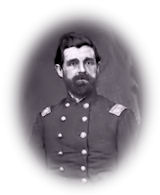
Extract from letter to the Racine Advocate.
“Pilot Knob, Mo., Nov. 21, 1861.—On the 5th inst., in company with the 21st Regiment of Illinois Volunteers, the 1st Indiana Cavalry, and Capt. Manter’s Battery of artillery, we left our camp on an expedition to disperse a body of armed rebels said to have collected in Bloomfield, in Stoddard county, about 100 miles southeast of this place.
“We marched through Greenville, Wayne county, to the Indian Ford across the St. Francis river, in the northeast part of Butler county, and about 25 miles west of Bloomfield, where we learned that the rebels had already been dispersed by a force from Cape Girardeau. We accordingly took our our line of march for this place, where we arrived on the 15th inst.
“The country through which we passed is very wild and mountainous, and but thinly settled. The majority of the people are very stupid, ignorant, dirty, and, of course, poor. They are probably a fair specimen of the ‘poor whites’ of the South. It was rarely that we found one outside of the villages who could read and write. Many of them had been made to believe that the Federal troops wherever they went indulged in indiscriminate rapine, violence and murder, and, of course, these deluded people were secessionists; but when they found themselves kindly treated by our troops, their property and all of their rights protected, they straightway became good Union people. With the exception of a few leaders, there is no inveterate hostility to the Government in the minds of the inhabitants here; and when they are disabused in relation to the objects .of this war and the purposes of the Government, they return readily and cheerfully to their allegiance.
“We see much discussion in the papers relative to the removal of Major-General Fremont, some of them predicting disaster and ruin to the Union cause as the result of it. It is proper for me to say that, so far as I can judge (and I have some opportunities to learn the feeling of the army in Missouri on that subject) the army acquiesces in the action of the Government without complaint. We believe here that the success of our cause does not depend upon the rise or fall of any man or set of men, but, under God, upon the justice of our cause and the courage and fortitude of the hundreds of thousands of men who are now in the field defending that cause. In those we trust, and not in the genius of any one man; and we are ready to do battle under such commanders as the Administration of our own choice may place over us.
“In closing this rather desultory communication, I will only add that the men are in excellent spirits and in good fighting trim, and their most earnest desire is that they be sent where they can do their part towards crushing out this rebellion. When the record of this war is made up, be assured that it will be found that the 8th Regiment has done its whole duty.
Respectfully yours,
Wm. P. Lyon.”
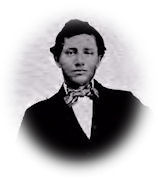
Thursday, 21st—We took up our regular company and regimental drills again, and have a very fine drill ground.
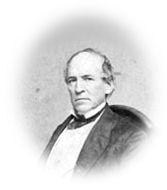
THURSDAY, NOVEMBER 21, 1861.
Cloudy morning but rather a pleasant day. I have been engaged most of the day at home, heard the boys recite their lessons. Went to the Ave, bot some oil cloth for our Parlor stove and cut it down to fit. Wife went up to the Presidents to see Mrs Lincoln, did not see her. She however got a strong letter from the President to the Sec’y of the Interior in my favor. I shall present it tomorrow. Maj Watt acted for her in the matter with the Prest.

______
The three diary manuscript volumes, Washington during the Civil War: The Diary of Horatio Nelson Taft, 1861-1865, are available online at The Library of Congress.
NOVEMBER 21ST. —My mysterious lieutenant was arrested this morning, on the western route, and proved, as I suspected, to be a woman. But Gen. Winder was ordered by the Secretary to have her released.
November 21.—The Legislature of Mississippi upon hearing that more troops were needed at Columbus, Ky., in view of an apprehended attack from the enemy, immediately passed a bill authorizing the Governor to “call out an optional number of volunteers for such time as their services may be needed, as an auxiliary force to our army up the river.” A half million dollars were also voted to maintain these troops at the expense of the State while in the field.— Richmond Dispatch, November 28.
—Col. Cavanaugh’s Sixth Illinois Cavalry regiment left Camp Butler, at Springfield, Ohio, for Shawneetown, to act as a garrison at that place, which is on the Illinois side of the Ohio River. This makes the sixth regiment of cavalry that Illinois has sent into active service, besides two independent squadrons. Illinois has now sent forty-seven thousand men into the field, (two thousand six hundred more than her quota,) and some half-a-dozen other regiments are ready for marching orders.—N. T. Times, November 27.
—Colonel Philip St. George Cooke was appointed Brigadier-General in the regular army of the United States.—Captain John M. Schofield, of the First Artillery, and Major Thomas J. McKean, of Iowa, were appointed Brigadier-Generals of volunteers.—The Eighty-fifth regiment of Pennsylvania Volunteers, under the command of Colonel Joshua B. Howell, left Harrisburg for the seat of war.
—Since the negotiation of the new loan on the 15th Nov., Secretary Chase has placed to the credit of disbursing officers in Boston, New York, and Philadelphia, over five and a half millions of dollars, to be paid to contractors and other Government creditors.
—Fourteen Hundred cavalry, four regiments of infantry, and two batteries of artillery, were reviewed by Gen. Love and Gov. Morton and staff this afternoon, on the large common west of Camp Vajen, at Indianapolis, Ind. The column was nearly a mile in length, and altogether it was one of the grandest sights ever witnessed in the West. Several thousand people were in attendance. The coffee mill guns were objects of great curiosity, and performed to the satisfaction of the admiring crowd.—Cincinnati Commercial, November 22.
—The Fifteenth regiment N. Y. S. V., this afternoon made the first attempt at pontoon bridge building, near their camp, on the Eastern Branch of the Potomac. The pontoons of India rubber were inflated, and a bridge one hundred and eighty-eight feet long laid in thirty-three minutes. Fifty men crossed at ordinary and double-quick time, and on the run, and horses walked over. The regiment is supplied with a pontoon train and tools for constructing bridges and fortifications.


