
JANUARY 20TH.—Mr. Memminger advertises to pay interest on certain government bonds in specie. That won’t last long. He is paying 50 per cent. premium in treasury notes for the specie, and the bonds are given for treasury notes. What sort of financiering is this?
January 2012
January 20.—The Confederate schooner Wilder, from Havana, was captured in Mobile (Ala.) Bay, three miles below Fort Morgan. The schooner, seeing the Union cruiser approach, made for the beach, but had no time to save any thing before the cruiser came within range.
The Unionists lowered their launches, boarded the schooner, lowered the colors, and commenced discharging the cargo into their launches within three hundred yards of the beach. Capt. Ward, of the Wilder, says he had set English colors before he left. As regards the fight, he says that the enemy came up in their launches. Some of Capt. William Cottrill’s scouts met them and fired a few volleys, but did little or no damage. A despatch was sent to the Captain, who came down at about eight o’clock in the evening with reinforcements, and went into the engagement in good earnest, killing about twenty-five or thirty, that is, all that were in one launch, and some others in another launch. The Unionists fired several rounds of shots and shells from the steamer, and also several rounds from the howitzers on the launches and musketry, but not doing the slightest damage to any one on our side. One of the steamers drew off, and her place was filled by another, which also took part in the engagement, but with no effect. At night the steamer came alongside and towed the schooner off. Afterward, Captain Cottrill’s men picked up one of their small-boats which was pierced from stem to stern with bullets.—Mobile Tribune.
— Dr. George Blackball, a surgeon in the rebel navy, died at Norfolk, Va., this day. He was, before his death, in charge of the general hospital at the above place.
—The Secretary of War, at Washington, this day issued the following:
This Department recognizes as the first of its duties to take measures for the relief of the brave men who, having imperilled their lives in the military service of the Government, are now prisoners and captives. It is, therefore, ordered that two Commissioners be appointed to visit the city of Richmond, in Virginia, and wherever else prisoners belonging to the army of the United States may be held, and there take such measures as may be needful, to provide for the wants and contribute to the comfort of such prisoners at the expense of the United States and to such extent as may be permitted by the authorities under whom such prisoners are held.
—The Eighty-first New-York regiment, Colonel Edmund Rose, left Fort Ontario this morning for Albany, en route to the seat of war.
—The Richmond Examiner, of this day, has the following:
The times when the cat-o’-nine-tails was the instrument of naval discipline, and soldiers were strapped to the ground, and their backs mangled with the scourge, have passed, for us at least, into the traditions of another generation. We arc shocked, however, to hear that a navy punishment has been invented in our army which surpasses the horrors of the scourge, and has borrowed its suggestion from the punishments of the Inquisition. It is the thumb torture.
The mode of punishment is to hang the soldier by stramps on the thumb, so that his toes may scarcely touch the ground, and the weight of his body depend from the strained ligaments. We are informed, by testimony that does not admit of question, that this horrid punishment has been practised in a portion of the army on the Potomac, and has been witnessed in the case of two or three men subjected to the torture.
Fayetteville, Virginia, January 19, Sunday A. M. — It rained almost all night; still falling in torrents. A great freshet may be expected. . . .
Great war news expected. Burnside’s expedition sailed; near Cairo, a great movement forward; Green River, ditto. What we need is greater energy, more drive, more enterprise, not unaccompanied with caution and vigilance. We must not run into ambuscades, nor rush on strongly entrenched positions. The battle of New Orleans and many others in our history teach the folly of rushing on entrenchments defended by men, raw and undisciplined it may be, but all of whom are accustomed to the use of firearms. Such positions are to be flanked or avoided.
19th. Moved over the river in afternoon, found our barracks (Benton) occupied and unfit. Camped out in the fair grounds. Men occupied the amphitheatre.
Jan. 19. Witnessing boat collisions and wrecks is getting old, and the boys are amusing themselves by writing letters, making up their diaries, playing cards, reading old magazines and newspapers which they have read half a dozen times before; and some of them are actually reading their Bibles. Of all the lonely, God-forsaken looking places I ever saw this Hatteras island takes the premium. It is simply a sand-bar rising a little above the water, and the shoals extend nearly 100 miles out to sea. The water is never still and fair weather is never known; storms and sea gulls are the only productions. Sometimes there is a break in the clouds, when the sun can get a shine through for a few moments, but this very rarely happens. The island extends from Cape Henry, Virginia, to Cape Lookout, North Carolina, with occasional holes washed through it, which are called inlets. It is from one-half to two miles wide, and the only things which make any attempt to grow, are a few shrub pines and fishermen. I don’t think there is a bird or any kind of animal, unless it is a dog, on the island, not even a grasshopper, as one would have to prospect the whole island to find a blade of grass, and in the event of his finding one would sing himself to death. The inlet is very narrow, not over half a mile in width, and the channel is still narrower, consequently it makes an indifferent harbor. Still it is better than none, or as the sailors say, any port in a storm. But as bad as it looks and bad as it is, it is, after all, a very important point, perhaps as important in a military point of view as any on the coast. It is the key or gate-way to nearly all of eastern North Carolina, and places us directly in the rear of Norfolk, Va. This island is not without its history, if we may believe all the fearful and marvelous stories that have been written of it, of its being the habitation of wreckers and buccaneers in ye good old colony times.
Theatricals.
The boys are up to all sorts of inventions to kill time. In the amusement line the officers have started an exhibition or theatre up in the saloon. It is a clever device to break the dull monotony; to cheer up the loneliness and homesickness which seem to prevail. The exercises consist of recitations, dialogues, singing and music, and make a very good evening’s entertainment. A limited number from each company are nightly admitted, and I can see no reason why it will not prove a success, as there seems to be no lack of talent, music or patronage. For a comic performance, one should be down in the after-cabin of an evening, especially about the time the officer of the day, who is a lieutenant, comes around to silence the noise and order the lights out. This after-cabin is a sort of independent community, having its own by-laws, and throwing off pretty much all restraint and doing about as it pleases. The officer of the day is pretty sure to keep out of the cabin during the day, but comes to the head of the stairs in the evening, and gives his orders. Very little attention will be given them, until finally he will venture down stairs, when he will be greeted by an hundred voices with, “Officer of the day! turn out the guard!” And a hundred more will respond, “Never mind the guard!” and this will be kept up until they finally drive him out. Sometimes, after the officer of the day has failed to restore order, the colonel will come to the stairs and say, “Boys, it is getting late; time to be quiet.” That is the highest known authority, and order will come out of confusion immediately. Without any disparagement to the lieutenants, the boys have a great respect for Col. Upton; he has only to speak and his wishes are cheerfully and instantly complied with.
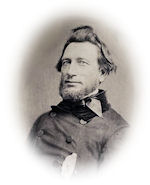
19th.—I confess to myself to-night, that deeply as I am I interested in the cause for which we fight—the question of government against anarchy—what I have witnessed today has cooled much of the enthusiasm with which I entered the service of this government, which I find so tardy in doing justice to those who are fighting for its preservation: This is a stormy day in mid-winter. Whilst going my rounds of camp to see what was needed for the health and comfort of the men, I passed the guard house of the regiment, and stepped in to see the condition of things. I there found soldiers—formerly my neighbors—sons of my friends, imprisoned in a pen where pigs could not have lived a fortnight without scalding the hair off them, (this is not figurative language) and in which these men had been kept for three months, awaiting the decision of a court martial which had tried them for some trivial offence, the extremest penalty of which would have amounted to some three to six days’ confinement! at all events, under the extremest limit of the law, its punishment could not have exceeded in severity a sentence of three days’ imprisonment in this vile hole of filth and water! Yes, they had been tried, and for three months had been kept, not only in this vile hole, but under indignity and disgrace, awaiting the convenience of gentlemanly officers, to send them word whether they were honorably acquitted, or that they must be imprisoned for two or three days. When these men, who, perhaps, have never been guilty of offence besides being suspected of it, are released from this disgraceful punishment, will they not feel indignant at hearing the justice of their government questioned, and be ready to rush to arms again to defend it? If scenes like this are necessary to the preservation of a government for my protection, then in God’s name let me be untrammelled by conventional forms, and left dependent on my own powers for my protection. I assumed a prerogative; I pronounced most of these men sick, and ordered them sent to my hospital. They will hardly be pronounced well before the gentlemanly members of the court get ready to inform them of their sentence.
From this last scene I passed on to look up a party of our Regiment, who had been detailed to guard the General’s Headquarters. I found them; and, my God! what a sight!— Around the house occupied by the General was a large ditch, some five feet deep, and some ten or twelve feet wide, dug as the commencement of a fort. In this ditch, over which a few evergreen boughs had been thrown as a covering, stood a well dressed Lieutenant, (from my own county) with a squad of soldiers guarding the General’s house—the Lieutenant trying to infuse into the men a little warmth of patriotic feeling, whilst the winter torrents poured through the evergreen branches, and their whole frames shook with cold in this sentry house, charitably built for them by orders of the General, who at that moment was being joyful over his wine, and with his friends!! And is this the REPUBLIC, the government of equality for which I am fighting? If we were men, this would be pitiable, but we are only soldiers, volunteer soldiers at that; and what right have we to be cold, when our services are wanted for the comfort of a General? But these are only thoughts; should I write or speak them, it would amount to shameful insubordination, and I should be disgracefully dismissed from the service of the country which tolerates it. I am too honorable a man to permit myself to be disgraced, even for the privilege of uttering a truth. I therefore decline to say, or even to write, what I have seen.
This afternoon I received an order to be ready to move at a moment’s notice, and to give no more certificates for furloughs, as the applications would not be entertained. I have lost faith in the idea that the authorities have the slightest intention to move. They have seen our impatience to do something, and this order is a mere dumb-watch thrown us children to amuse us with the old promised hope that “when it gets a little older it will keep time.”
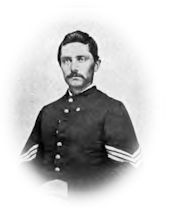
Sunday, 19th—Lieutenant Durbin and some of the boys went out scouting. They brought in a lot of corn to feed the horses; also some walnuts, hickory nuts, corn meal and molasses. The lieutenant took a “secesh” flag from a schoolma’am.
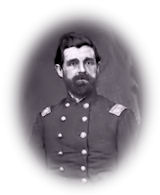
To Mrs. Lyon
Cairo, Sun., Jan. 19, 1862.—Cairo is on a very low peninsula at the junction of two rivers, and has a levee all around it to protect it in high water, the surface being some feet below high water mark. Cairo contains about 2,000 inhabitants I think, but how they live here is more than I can tell. The business of the place is all done on the Ohio river, which appears nearly as large as the Mississippi.
The troops that have already left here are back of Columbus somewhere, and have done no fighting yet. Some of the gunboats have gone down the river and there are seven here, all finished but one, and that is nearly done. I can not tell you anything about what is to be done; and, indeed, we know but little about what is going on all around us. We rely upon Chicago papers for intelligence mainly.
Columbus is only twenty miles from here, and of course is to be taken; but when, and who is to do it, I do not know. The ragged 8th expects to have a hand in it, however, when the thing is to be done. The companies are in barracks and in the best of spirits. Barracks comfortable.
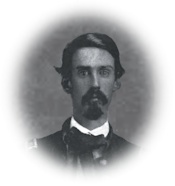
Headquarters 2d Brigade S. C.
Beaufort, S. C. Jan. 19th, 1862.
My dear Mother:
I am so accustomed to commence all documents in an official form, that even in a letter to you I find myself employing the customary heading. I regret very much that this letter will not reach you by the “Atlantic,” but it is too late — the steamer sailed a day sooner than at first reported. But I trust Walter has told you I am well, that Uncle Phelps has reported my purchase of a new horse, and that Capt. Wm. Elliott, who has returned home with your address in his pocket, will relieve your mind of all anxiety as regards the effect of my late illness. But tell Walter that all my fretting and fuming on two points was in vain. After writing as I did about the sword, I went to the express office to make a last inquiry. The office was closed, so I despatched my letter. On going to dinner a few hours later, one of the officers spoke up: “By the way, there’s a package for you at the express office, about three feet long and four or five inches deep.” My sword after a long delay at Fortress Monroe, at last had come. I am charmed at Walter’s forethought, and I promise to wear it with double pleasure, for the great love we bear each other.
Then the matter of the 79th officers sent out with commissions from Gov. Morgan, although not having a pretext of a claim for recognition — well, my efforts, somewhat Quixotic, and decidedly mutinous in character, were of no avail. I had set my heart on seeing Wm. Elliott in a position which every man who knows him acknowledges to be his due. The Lieut.-Colonelcy was vacant, the Colonelcy too; one of these offices the General declared he should have, but the Governor of New York had to attend to his friends and so William lost his promotion. I was indignant, outraged. I tried to get all the officers to resign, sooner than submit to imposition. Luckily for me, the men I sought to influence were “Canny Scotch” — the promotion of Elliott had no material interest to them. They could say that it was a shame, but losing the liberal pay the U. S. Government allows was too much of a stretch upon their sense of justice, so I was saved a deal of foolishness which must have ended disastrously. Necessarily in the army a great amount of temporary injustice is done, but in the long run merit will rise. And so I satisfy myself that Wm. Elliott will yet be a Colonel or something more, but he must bide his time. I meant to have written ever so much more, but just hearing the “Baltic” sails directly, I halt abruptly, hoping this may catch her.
Love to all.
Affectionately,
Will.
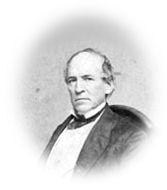
Sunday January 19th 1862
A rainy day, but Julia & I went out to ch in the afternoon. Dr Dwight, Missionary from Constantinople, officiated, rather a thin “House.” Mr Short did not come up on account of the rain I presume. It is very foggy this evening. Mrs Fenwick (Wido[w]) has been here all the evening. I have just been home with her to I St. She is a very pious Baptist but somewhat excentric as her Sunday evening visit might prove, but she is and [sic] old acquaintance. The City has been very quiet today, but the Drums are beating this evening. Last year at this time we were expecting an attack upon the City and the public mind was much agitated. The hideous form of Treason was just showing its head. None then imagined that the Civil War then threatened could possibly attain anything like its present proportions.
______
The three diary manuscript volumes, Washington during the Civil War: The Diary of Horatio Nelson Taft, 1861-1865, are available online at The Library of Congress.


