Jan. 16. Three more boats ashore and leaking, one of them is the U. S. mail-boat Suwanee, from Fortress Monroe for Hilton Head. She ran in here this morning to leave mails and dispatches for this fleet, intending to sail this afternoon, but owing to the high winds and heavy sea, she parted her cable and drifted on an anchor fluke, breaking a hole in her bottom and sunk. She lies on the sand, with her deck about four feet out of water. It is said she can be pumped out and raised when it calms, of which time, however, there seems to be a very dim prospect. We have just heard from the old steamer Pocahontas. She went ashore below Hatteras light. She had our team horses aboard, and nearly all of them were lost. The men who were aboard of her got ashore and are now coming down the island. The schooner on which the signal corps were aboard has not been seen or heard from and there is much anxiety for her safety. We have kept alive on hardtack thus far, but on account of the storm no tug has been able to get alongside with rations, and we going it with half a ration of hardtack and coffee once a day. Five cents apiece are freely offered for hardtack, with no takers.
January 2012
January 16.—The Florida Legislature has passed an act forbidding the exportation from that State of any beef cattle, dried or pickled beef, hogs, pork, or bacon, corn, or corn meal, or salt, or provisions of any kind, whether salt or fresh. The act also forbids any person or corporation from buying these articles for purposes of speculation, and provides that all provisions of life shall be sold at a price not to exceed over thirty-three per cent over cost and charges.
—An imposing demonstration of the Germans of New-York, in favor of General Franz Sigel, was held in that city this evening. Resolutions expressive of the highest confidence in the General were unanimously adopted, and enthusiastic speeches were made by R. A. Witthaus, and other public personages.—(Doc. 15.)
—Two companies of cavalry made a reconnoissance from Lexington, Mo., and succeeded in capturing several notorious rebel desperadoes, together with a large lot of horses, mules, wagons, and commissary stores, which had been taken from Colonel Mulligan’s command, and a considerable quantity of boots and shoes, which the rebels took from the steamer Sunshine.
—Colonel Dietzler, in command at Lexington, ordered the arrest of a large number of wealthy and influential secessionists, whom he held responsible for the conduct of their hirelings in assassinating his men.
—In the House of Representatives at Washington, Mr. Dunn, from the Military Committer, reported a bill authorizing and directing the Secretary of War to furnish the prisoners of the United States, in the revolted States, with clothing and other necessaries of life, and for this purpose that he employ such agents as may be necessary. The bill was passed.
—The Richmond Examiner of this date has the following: “The report of the keeper of Holywood Cemetery that up to the 12th inst, five hundred and forty Confederate soldiers had been buried at that place, was one well calculated to induce reflections of an unpleasant nature. To account for this seeming excessive mortality among our brave defenders, we may state that, to within a very recent period, it had been the practice in the army of the Potomac to retain all sick and disabled soldiers in the scanty and ill provided hospitals at that place, till, from want of skill, the virulence of the disease, exposure, or some other cause, they were past the power of human skill. When the soldier was thus reduced he was despatched to Richmond. It may in truth be stated, that many who thus came were as good as dead on their arrival. The parties having charge of the hospital here have shown neither want of attention or skill. The soldiers, or many of them, when received, were past hope. No wonder that they died. The matter having attracted the attention of these in authority, steps have been taken tending to give the sick soldier a chance for his life, as we learn it is not contemplated in future to bundle them off from Manassas after the sands of life have so nearly run out as to leave the subject one chance in a hundred of surviving the journey to Richmond. A hospital, with all the necessary adjuncts, has been established at or near Manassas. In this all sick and disabled soldiers will be taken for treatment. When sufficiently convalescent to bear the fatigue of a journey to this place, and not before, he will be sent down in the sick train to be either cured, killed or discharged here. This is as it should be.”
Jan. 15th. Arrangements to move at 9 A. M. for Cincinnati— marched mounted by country road. Went on ahead with Robinson, overtook Abbey and Wood. Rode on my horse about the city. P. M. took cars for St. Louis—1,300 strong.

ANUARY 15TH.—I forgot to mention the fact that some weeks ago I received a work in manuscript from London, sent thither before the war, and brought by a bearer of dispatches from our Commissioner, Hon. Ambrose Dudley Mann, to whom I had written on the subject. I owe him a debt of gratitude for this kindness. When peace is restored, I shall have in readiness some contributions to the literature of the South, and my family, if I should not survive, may derive pecuniary benefit from them. I look for a long war, unless a Napoleon springs up among us, a thing not at all probable, for I believe there are those who are constantly on the watch for such dangerous characters, and they may possess the power to nip all embryo emperors in the bud.
Some of our functionaries are not justly entitled to the great positions they occupy. They attained them by a species of snap-judgment, from which there may be an appeal hereafter. It is very certain that many of our best men have no adequate positions, and revolutions are mutable things.
Jan. 15. Rough weather still continues, and we are out of rations, subsisting entirely on hardtack and a short ration of that. Unless it calms down so a tug can get alongside, we shall be entirely out in a day or two more. Three more boats dragged their anchors and went ashore this morning, and other boats, with their flags union down, are calling for help. In fact, things are beginning to look gloomy, but amidst all the trouble and discouragements, Gen. Burnside is everywhere to be seen, flying about among the boats and vessels, encouraging his men and looking as cheerful as though everything was going to suit him. Today a rebel boat came down the sound to take a look at us. One of our boats went out to meet her, but the rebel, not caring for an interview, hauled off. The colonel, surgeon and one other man of the 9th New Jersey regiment were drowned today, by the upsetting of a small boat they were in. And so we go, trouble and dangers by sea, and I suppose there will be more by land, if we ever get there.

January 15 — Wet and dreary, rained and sleeted all day. Renewed our march early this morning, forded Back Creek near Shanghai, crossed the North Mountain, and at noon we arrived at Martinsburg, wet, but glad to get into comfortable winter quarters once more. I never saw it sleet faster than it did to-day when we were ascending the North Mountain. The Bath trip is over. We were gone just fifteen days, and never fired a single shot.
Wednesday, 15th—Nothing of importance. Got some more pies and doughnuts from a man and his wife who come in three times a week with them, to sell to the boys. We usually lay in a good supply.
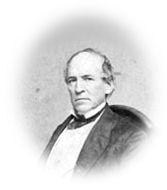
Wednesday Jan’y 15th
Nothing new in the City or from the army. More Cabinet changes talked of, and I think necessary. Julia had letter from Mrs Dr Barnes of the 27th Regt. She has been staying in Camp for the last ten weeks living in a tent. She also had a letter from Miss Mirrick of Lyons. It has been a cold unpleasant day, freezing until near night with a misty sleet falling all day. The ground is covered with snow, tonight it thaws and the snow & water on the ground render “rubbers” an absolute necessity. What the poor soldiers do it is hard to tell [in] this kind of weather. There is an immense amount of sickness in the City now among citizens. Small pox & Typhoid fever are both prevailing to a great extent. The mortality in the Military Hospitals is very great, forty or fifty pr day are carried off to their long homes. Bad management I fear there.
______
The three diary manuscript volumes, Washington during the Civil War: The Diary of Horatio Nelson Taft, 1861-1865, are available online at The Library of Congress.

Washington, ‘62.
We have made an engagement with Rev. Mr. Kennard, a young Baptist clergyman here, to visit the jail with him, where the poor contrabands are imprisoned on suspicion of being runaway slaves, or for debt. We have the Marshal’s permit, secured through a friend. . . . We made our visit; it is a wretched place, but the contrabands are better off than the convicts, though many of the poor creatures are almost naked. There are twenty men and boys and a few women, all runaway slaves. We gave them socks, shirts, drawers, etc. and shall go again. The women were very glad to get the sewing we had arranged for them.
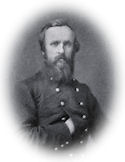
January 15. Wednesday. — A swashing rain is falling on top of the snow. What floods and what roads we shall have! No more movements in this quarter. Yesterday a party from Camp Hayes went out after forage to the home of a man named Shumate who had escaped from the guardhouse in Raleigh a few days ago. They stopped at his house. As one of the men were [was] leaving, he said he would take a chunk along to build a fire. Mrs. Shumate said, “You’ll find it warm enough before you get away.” The party were fired on by about thirty bushwhackers; two horses badly wounded. Four men had narrow escapes, several balls through clothing.
Two more contrabands yesterday. These runaways are bright fellows. As a body they are superior to the average of the uneducated white population of this State. More intelligent, I feel confident. What a good-for-nothing people the mass of these western Virginians are! Unenterprising, lazy, narrow, listless, and ignorant. Careless of consequences to the country if their own lives and property are safe. Slavery leaves one class, the wealthy, with leisure for cultivation. They are usually intelligent, well-bred, brave, and high-spirited. The rest are serfs.
Rained all day; snow gone. I discharged three suspicious persons heretofore arrested; all took the oath. Two I thought too old to do mischief, Thurman and Max; one I thought possibly honest and gave him the benefit of the possibility. He was from Logan County. Knew Laban T. Moore and my old friend John Bromley. John, he says, is “suspect” of Secesh.


