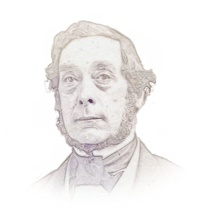
JANUARY 17TH.—A Mr. O. Hendricks, very lately of the U. S. Coast Survey, has returned from a tour of the coast of North Carolina, and has been commissioned a lieutenant by the Secretary of War. He says Burnside will take Roanoke Island, and that Wise and all his men will be captured. It is a man-trap.
January 2012
January 17.—One hundred and fifty prisoners, released from the rebel government at Richmond, Va., arrived at Fortress Monroe. All of them were convalescents from the hospital. About twenty had crutches, and a dozen had to be carried on board, some on cots. All of them had been wounded. Dr. Higginbotham accompanied them, and the men were loud in commendation of his uniform kindness to them, and after cordially grasping his hand in taking leave of him, they gave him three enthusiastic cheers. They then saluted the old Stars and Stripes with a burst of enthusiasm that brought tears to the eyes, many waving their crutches above their heads. On the way back the wharves and embankments at Newport News were thronged with soldiers who greeted the released prisoners with tremendous cheers. The Cumberland and Congress, lying in the Roads, were also manned and gave a most enthusiastic greeting to the prisoners.
—This night, at Lynchburgh, Va., the Confederate flag, which had been flying from the yard of John O. L. Goggin, was forcibly torn down by some traitorous scoundrel, the flagstaff broken in two, and the cord by which the flag was hoisted cut up into small fragments. The flag itself was torn into tatters, and from its appearance, when found, would seem to indicate that the guilty party desired particularly to strip the stars from it, as not a vestige of any of them was left The act was a mean and despicable one, and proves conclusively that there is at least one Lincolnite in our midst, for no one, we feel sure, with one speck of Southern spirit could have been guilty of such an act—Lynchburgh Republican, January 18.
—The Burnside Expedition, which left Fortress Monroe on the 11th and 12th, arrived at Hatteras, N. C, having met with a severe storm and adverse winds.
—This day about four o’clock the steamer Connecticut spoke a small steamer off Juniper Inlet, on the Florida coast She promptly displayed a suspiciously new British ensign, which told the whole story—she had no name on her stern. She proved to be the Emma, (or, as some of the crew call her, the Onward, that being the name they shipped under,) that ran the blockade at Apalachicola in November last. She had been to Havana and taken a cargo of cotton and other stores, in value, according to the invoice found on board, twelve thousand dollars. The captain denied all knowledge of the intentions of the owners. He and the crew, he said, were shipped for St. John’s, N. B. Some correspondence was found, sufficient to condemn her; one paper was a telegraphic despatch stating the “blockade was open and the coast clear” at Apalachicola. This was at the time she slipped out. The Connecticut took possession of her as a prize.
—The Fortification Bill passed the United States House of Representatives to-day, appropriating an aggregate of five millions nine hundred and sixty thousand dollars. Among the appropriations were one hundred thousand dollars for Fort Knox, on Penobscot River; one hundred thousand dollars for fort on Hog Island, Port; land harbor; seventy-five thousand dollars for Fort Warren, and fifty thousand dollars for Fort Winthrop, Boston harbor; one hundred thousand dollars for the fort in New-Bedford harbor. The appropriation also included the following for the year 1862: fifty thousand dollars for Fort Knox; fifty thousand dollars for Hog Island Fort; fifty thousand dollars for Fort Winthrop and exterior batteries; fifty thousand dollars for fort at New-Bedford; fifty thousand dollars for Fort Adams, Newport.
—The Seventy – sixth Regiment New – York State Volunteers, under the command of Colonel Green, and two artillery companies, commanded by Captains von Puttakamer and Ellis, left Albany for the seat of war. They were reviewed in the Park by Governor Morgan, and addressed by Governor Pierce, of Ulstor, before their departure. They are a fine body of men, and number one thousand and three hundred strong.
—Navigation of the Mississippi River was entirely suspended at St. Louis in consequence of the gorging of the ice twenty miles below the city, extending to a point some distance from there, the ferry-boats not being able to run, and the ice not being sufficiently strong to bear heavy weights.
—A Flag of truce from Fortress Monroe to the rebels took to-day the following released prisoners: Colonel Pegram, Captain Sutton, Lieutenant A. C. Bell, Captain Tansill, Lieutenant John W. Pool, Lieutenant J. C. Lassell, Dr. R. W. Jeffreys and Captain L. J. Johnson.
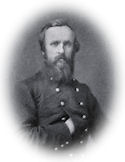
Fayetteville, Virginia, January 16, 1862.
Dear Uncle : — I am in receipt of your favor of New Year’s. So Allen got along. I hope he will not cause you more bother than he is worth. He was a good man here. I shall not be at all surprised if some day his owners undertake to recover him. You need not say this to him. His master still refuses to come in and take the oath of allegiance although an opportunity has been given him. He is a Rebel in the Rebel service.
We are doing well in all respects. I was at Camp Hayes, twenty-five miles further south, last week. They have pretty active times there with a few Rebel bushwhackers that infest the roads. Men are occasionally slightly wounded, but the shooting is from such great distances, and with common rifles, that no serious harm is done. The vast majority of the people are friendly.
As soon as four or five absent officers return, I shall ask for leave of absence. Say, in about three weeks.
Sincerely,
R.B. Hayes
S. Birchard.
Fayetteville, January 16, 1862.
Dear Lucy: — Lieutenants Warren and Smith leave today. We are very well. Mud awful deep and streams overflowing.
I shall apply for leave of absence soon after Captains Sperry and Zimmerman return, provided Dr. Joe is here. Of course it would not do for two prominent officers of the same family to be absent at the same time. These leaves of absence are so abused, that in the absence of some great necessity, I would not leave my regiment unless plenty of officers remain. I shall leave about the last of the month, I think, unless Dr. Joe should be detained on your account.
I am writing in much haste with a host of citizens growling. Love to all.
Good-bye, dearest.
R. B. Hayes
Mrs. Hayes.
Thursday, January 16, 1862. — Bright, warm weather. Colonel Scammon moved from Mrs. Manson’s house to Dr. Stites’. Lieutenants Warren and Smith start for Ohio. I send letters to Mother, Uncle, and Lucy. Warm and so muddy. The Kanawha up. Three steamboats at Loup Creek. Navigation good. Not having written “Thursday” above until this moment I thought it was Wednesday, and by a bet with Lieutenant Reichenbach lost a bottle of wine and the sardines. Present Dr. Jim W. [James Webb]; Lieutenants Reichenbach, Avery, and Kennedy. I fear Avery loves liquor “not wisely but too well.” Major Comly says he has captured two hundred and five law books.
16th. Enjoyed the trip much, especially the prairies, saw one on fire. Left over one train.
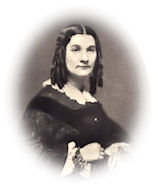
Adelia’s Diary.
We started the next week on Tuesday. I had to go to the military headquarters in Chicago to get our transportation. We stayed in St. Louis all night. We arrived in Victoria a few days before Christmas and met with a warm reception. The regiment had been sent to Victoria from Sulphur Springs to guard a number of bridges on the Iron Mountain Railroad, after they sent for us.
Mrs. Bartlett and I went out and bought chickens and potatoes for a Christmas dinner for Company K. The boys were very happy to be remembered. We were at a pretty fair hotel and had more comforts than we expected to have. Our babies were great pets. John Humphrey would often come and borrow my baby and take him out to the company. He told me that some of the men shed tears when they kissed him.
The regiment remained at Victoria until about Jan. 12. Our husbands went to Sulphur Springs with us, and we stayed there a couple of days. They were ordered to Cairo. We left them at Sulphur Springs. The regiment moved a few days after. The boat they were going on got on a sand bar, so they went by railroad.
1862
Thursday Jan’y 16th
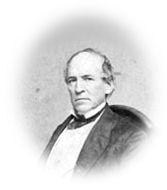
Streets all ice this morning and all the boys out Skateing before breakfast. In the office all day. Geo D Prentice of the Louisville Journal in the room today. Very plain appearing man, rather slovenly in Dress and looking anything but a Wit who keeps the whole country laughing.
Went down this evening to see a fine Bomb burst and burn on the ground south of the Presidents House. It is designed to set fire to buildings, woods &c fired from a Mortar. The Lincoln boys were here to dinner and brought a request from their Mother that our boys “Bud” & “Holly” would go home and sleep with them tonight and they are there. War matters appear to be coming to a crisis and it is almost certain that there will be an advance soon. Genl McClellan is again in the Saddle after his illness, and expectation is on “tiptoe” to hear from the Burnside Expedition & Grants down the Mississippi. Called upon Judge Mason today. Saw Mr [Forburk?] of Buffalo at Willards. A perfect jam there tonight.
______
The three diary manuscript volumes, Washington during the Civil War: The Diary of Horatio Nelson Taft, 1861-1865, are available online at The Library of Congress.
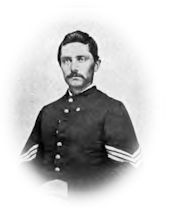
Thursday, 16th—A squad of the boys went out scouting[1] and took one man a prisoner, besides bringing in nine mules and six hogs. They took the man to headquarters, turned the mules over to the regimental quartermaster, and the hogs we made use of as so much extra pork for the company.
[1]This was really a foraging expedition which at that time they spoke of as “scouting.”—Ed.
JANUARY 16TH.—To-day, Mr. Benjamin, whom I met in the hall of the department, said, “I don’t grant any passports to leave the country, except to a few men on business for the government. I have ceased to grant any for some time past.” I merely remarked that I was glad to hear it.
Immediately on returning to my office I referred to my book, and counted the names of fifty persons to whom the Secretary had granted passports within thirty days; and these were not all agents of the government. Mr. Benjamin reminded me of Daniel Webster, when he used to make solemn declarations that his friends in office were likewise the partisans of President Tyler.


