
MARCH 15TH.-For several days troops have been pouring through the city, marching down the Peninsula. The enemy are making demonstrations against Yorktown.
March 2012
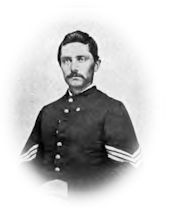
Saturday, 15th—It rained all day. It seems so dark and gloomy. We lay on the boats all day, but we are expecting to receive orders to go on up the river. Boats loaded with troops are passing us and going on up to Pittsburg Landing, Tennessee.
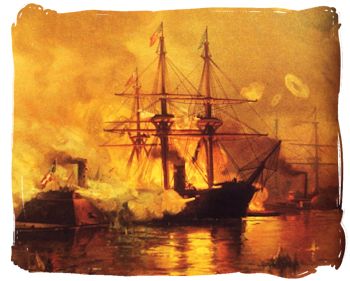
March 15th. Went up to the head of the Passes, which is eighteen miles from the mouth. The rumor prevails that we here wait for Capt. Porter’s mortar fleet. This is a dreary place, but somewhat pleasanter than below; where nothing was to be seen but mud, muddy water, and huge fog banks.
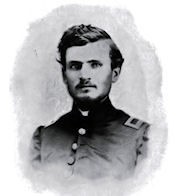
March 15th. Wrote to Sarah Felton and was on duty at the commissary.
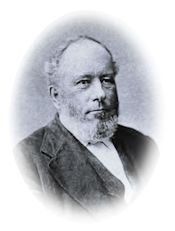
March 15. The boys came out this morning, looking a little the worse for wear, lame, sore and stiff; but with a good bumper of whiskey to lubricate their stiffened joints, and a little stirring around to take the kinks out of their legs, a good breakfast, hot coffee, etc., they soon resumed their normal condition. There is not much doing today except lying around in quarters or looking over the town. Negroes are coming in by the hundred, and the city is full of soldiers and marines traveling about and having things pretty much their own way. Guards are sent out to patrol the streets and assist Capt. Dan, the provost marshal, in preserving order preparatory to putting on a provost guard and bringing the city under law and order. Some enterprising party has hoisted the old flag on the spire of the church on Pollock street. There let it proudly wave; let it catch the first beams of the morning, and let the last rays of the setting sun linger and play amid its folds; let it gladden the hearts of every lover of liberty and loyalty, and let it be a notice to these deluded and ill-advised people around here, that it will never again give place to their traitorous rag of secession.
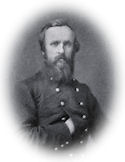
Saturday, March 15. — Changed the manner of scouting. Hereafter the cavalry are to scout at irregular intervals on routes changed daily, and an infantry scouting party of twenty-five to a full company will be sent in the general direction of apprehended danger to skirmish the woods and by-roads. Lieutenant Hastings with twenty-five men of Company I does this duty today.
P. M. Rained and cleared up half a dozen times during the . day; a heavy thunder-storm. April weather. Lieutenant Hastings with a man he found four or five miles out on the Princeton Road, named Hull, scoured the country near the scene of the attack on the cavalry patrol; found where about twelve to fifteen of the bushwhackers staid during the night after the affair at an empty house owned by Saulsbury; burned it, also burned two other houses owned by bushwhackers. Captain Drake burned three. James Noble buried yesterday.
London, March 15, 1862
Times have so decidedly changed since my last letter to you, which was, as I conceive, about three weeks or a month ago, that I hardly know what to write about. My main doubt is about your prospects. I see no reason why Davis and his whole army should n’t be shut up and forced to capitulate in Virginia. If so, you will be spared a summer campaign. But if he is allowed to escape, I shall be disgusted, and God only knows what work may be before you.
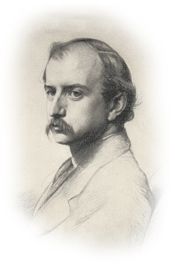 Meanwhile it worries me all the time to be leading this thoroughly useless life abroad while you are acting such grand parts at home. You would be astonished at the change of opinion which has taken place here already. Even the Times only this morning says: “The very idea of such a war is American, multitudinous, vast, and as much an appeal to the imagination as the actual brunt of arms.” And again in speaking of the tone of the Southern papers it says in a striking way: “Some of their expressions recall those in which the Roman historians of the later Empire spoke of the Northern tribes.” The truth is, as our swarm of armies strike deeper and deeper into the South, the contest is beginning to take to Europeans proportions of grandeur and perfection like nothing of which they ever heard or read. They call us insane to attempt what, when achieved, they are almost afraid to appreciate. A few brilliant victories, a short campaign of ten days or a fortnight, rivalling in its vigor and results those of Napoleon, has positively startled this country into utter confusion. It reminds me of my old host in Dresden, who, when he heard of the battle of Magenta, rushed into my room, newspaper in hand, and began measuring on the map the distance from the Ticino to Vienna. The English on hearing of Fort Donnelson and the fall of Nashville, seem to think our dozen armies are already over the St. Lawrence and at the gates of Quebec. They don’t conceal their apprehensions and if we go on in this way, they will be as humiliated as the South itself. The talk of intervention, only two months ago so loud as to take a semiofficial tone, is now out of the minds of everyone. I heard Gregory make his long-expected speech in the House of Commons, and it was listened to as you would listen to a funeral eulogy. His attacks on us, on Seward and on our blockade were cheered with just enough energy to show the animus that existed in a large proportion of the members, but his motion, a simple and harmless request for papers, was tossed aside without a division. I saw our friend Mason on the opposite side of the House to where I was sitting with Thurlow Weed. He is unlucky. One of the Bishops who happened to have come in and was seated near the door, heard a “Hear! hear!” behind him, and looking round saw Mason. For a stranger to cheer is a breach of privilege, and the story went all over town creating quite a row. Mr. Mason now denies it, I am told, and says it was some one else who cheered. He maintains now that the South always expected to lose the border States and that now that they are retiring to the cotton region the war has just begun. He coolly talks this stuff to the English people as if they had n’t always asserted that the border States were a vital point with them. We on the other hand, no longer descend to argue such stories, or to answer the new class of lies; but smile blandly and compassionately on those who swallow them and remark that so far as advised, the nation whom we have the honor to represent is satisfied with the progress thus far made, and sees no reason to doubt that the Union will be maintained in its fullest and most comprehensive meaning.
The blockade is now universally acknowledged to be unobjectionable. Recognition, intervention, is an old song. No one whispers it. But the navy that captured Port Royal, Roanoke and Fort Henry, and that is flying about with its big guns up all the rivers and creeks of the South, is talked of with respect. And the legion of armies that are winning victory after victory on every side, until we have begun to complain if a steamer arrives without announcing the defeat of some enemy, or the occupation of some city, or the capture of some stronghold, are a cause of study to the English such as they ‘ve not had since Napoleon entered Milan some seventy years ago. I feel like a King now. I assert my nationality with a quiet pugnacity that tells. No one treads on our coattails any longer, and I do not expect ever to see again the old days of anxiety and humiliation….
Eliza’s Journal.
March 14.
 One of General Franklin’s aids has been in to say that his Division is now marching into Alexandria and is to embark on Saturday or Sunday, down the Potomac. . . . We went down to Alexandria and took lodgings at Mrs. Dyson’s, on Water street, for over Sunday, and two more wretched or longer days I never passed. Through a drenching storm McDowell’s corps was marched back from Centreville, 35 miles, and arrived at dusk, cold, hungry, wet to the skin, to find no transports ready and no provision made for their shelter or comfort. The city was filled with the wretched men, many crowded into the market stalls and empty churches, others finding shelter in lofts or under sheds and porches, and some, we know, sleeping in the open streets. In the market they had large fires, but with soaking knapsacks, no dry clothing to put on. In one place, the loft of a foundry, where Chaplain Hopkins found shelter for one company, the steam which rushed out as he opened the door was as that of a laundry on washing day. The poor fellows suffered from hunger as well as cold and fatigue, for on Sunday all the stores were closed. Whiskey could be had, which Moritz and G. and H. distributed among tired and wet volunteers on cellar doors. Some of them actually begged for bread or offered to sell their rings and trinkets for food. It was a wretched and heart-sickening day and shook our confidence in McClellan or McDowell, or whoever the responsible person may be. We sent Moritz up to Washington for a half barrel of socks Aunt E. had just sent on and took them to the churches where the soldiers were quartered, and distributed them among the eager and grateful men. The men were lying on the benches and floors, and in the baptistry of the “Beulah Particular Baptist” and the Presbyterian secesh churches, and we stumbled about, holding the end of a candle for light, distributing socks. All ours were soon gone, and Chaplain Hopkins went back to the hospital, and telling the steward to protest, so that he might be shielded from blame, deliberately took ten dozen pairs from the store-closet and distributed them. The two long useless marches with nothing accomplished, no shelter and no food, have shaken the unbounded faith in McClellan. Congress has been debating a bill displacing him; the Star says it was withdrawn to-day. Our soldier, Joe, and the 16th, were not in that wretched plight but were kept in bivouac out of the town. Joe took final command of the regiment that Sunday morning.
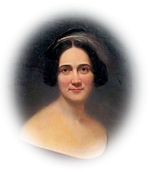
March 15th.—When we came home from Richmond, there stood Warren Nelson, propped up against my door, lazily waiting for me, the handsome creature. He said he meant to be heard, so I walked back with him to the drawing-room. They are wasting their time dancing attendance on me. I can not help them. Let them shoulder their musket and go to the wars like men.
After tea came “Mars Kit”—he said for a talk, but that Mr. Preston would not let him have, for Mr. Preston had arrived some time before him. Mr. Preston said “Mars Kit” thought it “bad form” to laugh. After that you may be sure a laugh from “Mars Kit” was secured. Again and again, he was forced to laugh with a will. I reversed Oliver Wendell Holmes’s good resolution—never to be as funny as he could. I did my very utmost.
Mr. Venable interrupted the fun, which was fast and furious, with the very best of bad news! Newbern shelled and burned, cotton, turpentine—everything. There were 5,000 North Carolinians in the fray, 12,000 Yankees. Now there stands Goldsboro. One more step and we are cut in two. The railroad is our backbone, like the Blue Ridge and the Alleghanies, with which it runs parallel. So many discomforts, no wonder we are down-hearted.
Mr. Venable thinks as we do—Garnett is our most thorough scholar; Lamar the most original, and the cleverest of our men—L. Q. C. Lamar—time fails me to write all his name. Then, there is R. M. T. Hunter. Muscoe Russell Garnett and his Northern wife: that match was made at my house in Washington when Garnett was a member of the United States Congress.
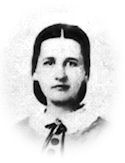
March 15th, 1862.—Sister Mag has a daughter, born this morning. Poor little girl. She will, in all probability, never see her father’s face. I do not believe the war is going to end in even ninety days. Sister Mag is very ill tonight and I have Eddie upstairs with me, that he may not disturb his mother. He is as sweet and good as can be. When I told him about his baby sister he said, “Don’t bring her upstairs, let her be Aunt Pat’s baby, I is yours.” I certainly love him.


