Following the American Civil War Sesquicentennial with day by day writings of the time, currently 1863.

March 2012

March 11.—Manassas, Va., being evacuated by the rebel troops, this day the National forces took peaceable possession. Previous to their retreat the rebels attempted to destroy such of their stores as they could not carry with them. Bridges were burnt, the railroad tracks were broken up, and a large amount of commissary stores and other property was destroyed by fire. They left behind them, however, eighty army wagons, six caissons in good order, a large quantity of army clothing, good supplies of medical stores, besides many other useful articles. The forts were all dismantled, but the huts, sufficient to accommodate twenty-five or thirty thousand men, and built in a substantial manner, were left unharmed.—(Doc. 85.)

—This day Jeff. Davis sent a message to the rebel Congress, stating that he had suspended Gens. Floyd and Pillow from their commands until they could give more satisfactory accounts of their action at Fort Donelson. He is dissatisfied with their reports. The message states that neither of them say that reinforcements were asked for, nor do they show that the position could not have been evacuated and a whole army saved as well as a part of it. It is also not shown by what authority two senior generals abandoned their responsibility by transferring the command to a junior officer. —(Doc. 46.)

— This afternoon Assistant Surg. A. C. Rhoads, of the Pocahontas, by permission of his commanding officer, landed with a boat’s crew near Brunswick, Ga., for the purpose of procuring some fresh beef, for the ships. Having accomplished his object, the boat was returning to the Pocahontas, but had scarcely gone twenty yards from the beach, when they were suddenly fired upon by a body of rebels concealed in a thicket, and two men, John Wilson and John Shuter, were instantly killed, and seven wounded, one, William Delaney, mortally, and two severely, namely, William Smith, second, (first-class fireman,) and Edward Bonsall, (coxswain.)

After the rebels had fired their first volley they called out, in most offensive language, to surrender; but this demand was refused by Dr. Rhoads, who, with the assistance of Acting Paymaster Kitchen and his wounded boat’s crew, pulled as rapidly as they could toward the Pocahontas, the enemy continuing their fire.

In a few minutes a shell from one of the eleven guns of the Mohican dropped among them, and quite near to another company of about sixty men, who were advancing rapidly. The rebels scattered and fled in all direction. Several shells were also fired at a locomotive and train observed in the distance, and it is supposed with effect —Flag-Officer Du Pont’s Report.

—In the rebel Congress at Richmond, Va., a vote of thanks was passed to Capt Buchanan, his officers and crew, for their gallantry in the action in Hampton Roads, Va.

—Gen. Grant was this day presented with a sword by the officers of his command, at Fort Henry. The sword is of most exquisite workmanship, and manufactured at great expense. The handle is ivory, mounted with gold, and the blade of the finest texture and steel. There are two scabbards — one of fire-gilt and the other of gilt, mounted at the band. Accompanying the sword is a beautiful sash and belt, all inclosed in a fine rosewood case. The inscription on the sword was simply as follows: “Presented to Gen. U. S. Grant by G. W. Graham, C. R. Lagou, C. C. Marsh, and John Cook, 1861.”—Gen. C. F. Smith has taken command of the army in the field, Gen. Grant remaining at Fort Henry. The latter has applied to Gen. Halleck to be relieved of his command altogether.

—Col. Geary, Acting Brigadier-General of troops at Leesburg, Va., made a personal reconnoissance yesterday as far as Carter’s Mills. The trail of the retreating enemy was blackened with the ruins of granaries, ashes of hay and grain-stacks, fences, etc. He found the bridge over Goose Creek had been burned. The rebels have completely fallen back. The command continues to make captures of rank secessionists. The loyal feeling is growing, and many persons come forward to take the oath of allegiance daily.

Col. Geary, with some of his officers and a detachment of the First Michigan cavalry, rode to Ball’s Bluff to-day and buried the whitened bones of the brave Union soldiers who fell upon that field in October last. Impressive remarks preceded this humane act, and a monument of gross rebel neglect was hidden from human sight— N. Y. Times, March 12.

—The occupation of Manassas, Va., by the National troops, was celebrated throughout the loyal States in every manifestation of joy and patriotism.

—President Lincoln assumed the active duties of Commander-in-Chief of the Army and Navy of the United States. His first order, issued January twenty-second, but only now made public, directs a general movement of the land and naval forces against the rebels on the twenty-second day of February. The army and naval forces designated for this movement are especially directed to be ready, and the Secretaries of War and of the Navy, the General-in-Chief, McClellan, and all other commanders and subordinates are notified that they will be held to a strict and full accountability for the prompt execution of the order. The second order directs the organization of the Army of the Potomac into five corps, and designates the commanders of each. The third order states that Gen. McClellan, having personally taken the field, he is relieved of the command of all other military departments except that of the Department of the Potomac. The two departments of Generals Halleck and Hunter, with a portion of that now under Gen. Buell, are consolidated and designated as the Department of the Mississippi, and placed under the command of General Halleck. The country west of the Department of the Potomac, and east of the Department of the Mississippi, is designated the Mountain Department, and placed under command of General Fremont This department will include Western Virginia and East-Tennessee north of Knoxville. Commanders of departments are notified to report directly to the Secretary of War, and that prompt, full and frequent reports will be expected of them.—(Doc. 86.)
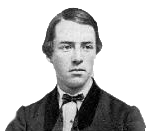
Fairfax Court House, March 10, 1862.

Dear Father, — Safe in the former headquarters of General Beauregard in the house of Dr. Gunnell, once a physician here but now a surgeon in the rebel army. The house, now General Porter’s headquarters, is one of the best in this town, being built of brick and being two and a half stories in height. It stands back from the road some 300 feet, and has a straight avenue leading to it, with medium-sized trees planted on each side. Still it has the true Southern look about it, viz., the air of neglect, of something wanting to complete the estate, as if the owner had begun with the idea of making a fine place and had been stopped short for want of funds. The fences round the place are of the most common kind, such as we see in our pastures. What adds to the air of shiftlessness is a sow with a litter of a dozen pigs rooting around the trees and in what used to be a garden. She threatened to bite me to-day when I went too near her young ones, and worked upon my fears so much that I put my hand on my pistol to shoot her, but she fortunately retreated. She was a fierce and ugly creature. I offered James a quarter to catch me one of the young ones, as I wanted to see the sow run at him, but he thought it was safer to let them alone. I tried to get General Porter to let me have one killed for dinner, but he would not. You can tell when you arrive in a Southern city by seeing pigs and cattle running round in the streets. I have found it so in Washington and Georgetown.

I got about three hours’ sleep last night, being occupied in packing, and writing for the general most of the time. We had breakfast at 5 and started about 8 o’clock on our advance. We reached here about 12, having a pouring rain most of the way, from which I was well protected by my rubber coat, and cap-cover which you bought me, and which I now prize highly. I did not get a particle of my clothing damp or moist. My horse I think a great deal of. He has great powers of endurance, and was not in the slightest degree tired when we reached here, although I carried more on his back than any of the other officers. I begin to think that it was a good plan having him shaved. A few minutes after the rain was over he was as dry as when he started, while the other horses were wet and steaming. Nothing of any importance happened on the way, no rebels being seen, as they evacuated the place yesterday. Colonel Averell we found here on our arrival, he having started early in the morning. He left soon after with McDowell’s division for Centreville, which place he has reached without finding any enemy, and he is now pushing on to Manassas, which he will reach to-night. The enemy have evacuated that place too, and where they have gone no one knows. I think that McClellan had a hint from Lincoln that unless he did something within a few days his course would come to an end, and hence his speedy advance. We (P.’s division) shall probably remain here a day or two. McClellan has taken up his headquarters at this place, a few houses distant from us.

My room here is a large pleasant one, with a big open fireplace, in which I have some enormous logs burning, casting a very pleasant light over the apartment. It is occupied by Batchelder, McQuade and myself. I have my buffalo-robe blanket, and canvas bag filled with changes of clothing, etc., with me, and can get along quite comfortably with my present conveniences for three or four weeks. My trunk I left at camp in charge of one of the clerks who stays there with the guard.

As we approached Fairfax we found slight earthworks which had been hastily thrown up by the rebels some time ago, commanding all the country round the town, for some distance. They don’t amount to anything and were probably occupied by the rebel pickets some time ago. On entering the town we struck the turnpike, which is quite a decent road, and which forms the principal street of the town. The Court House is situated on it and is an old-fashioned brick building with a portico in front. We should call this a small village in Massachusetts, but here it is quite a city in the estimation of the F. F. V.’s.

I copied a report for Hendricks of the New York Herald this afternoon which you will probably see in to-morrow morning’s N. Y. H. It was amusing to hear him “get off” the usual stereotyped phrases about the enthusiasm, alacrity, etc., of the soldiers, and then hear him say “big lie,” etc., to each phrase. For instance, when he wrote about there being very few stragglers, I said I didn’t agree with him as I thought there were a good many. “Oh, I know it,” said he, “still I must write it so.” That is just the way these newspaper reporters do. All the stories about fine drill, discipline, etc., we know to be untrue half of the time. Still, on this morning’s march the soldiers did very well, as the roads were muddy and the travelling very heavy.

The troops are all bivouacked to-night and some regiments have what are called shelter tents, — small low tents, accommodating three men, and equally distributed among the three men on a march, each one carrying his share.

I am so sleepy that I must end and ask you to excuse any deficiencies in the letter on account of my being so tired.

Monday March 10th 1862

This has been an exciting day. The troops commenced moving last night about midnight and have been going over the River nearly all the time since. It is said that not less than fifty thousand have crossed into Virginia today. It is confirmed that the Rebels are running from Manasses & Centreville, so our troops will have no fight there. The exploits of the Rebel Iron clad Steamer Merimac yesterday at Hampton Roads destroying the frigates Cumberland & Congress created a good deal of excitement in the City. But the exploits of the little Iron Boat Monitor (Erricksons Boat) eclipsed all as she fairly drove the Merrimac back to Norfolk. The son of our next door neighbor, Comodore Smith, commanded the Cumberland congress and was killed. They are in great grief. I was down to Willards tonight, two Regts of Regulars passed on their way over the River. Wrote today to Brother C.R. Taft & to Col Mirrick, home tonight 1/2 past 9.

______

The three diary manuscript volumes, Washington during the Civil War: The Diary of Horatio Nelson Taft, 1861-1865, are available online at The Library of Congress.

March 10th, 1862.—Well, the Army of the Potomac is at last in motion. After having lain still with 150,000 men, comparatively idle, for nearly eight months, our National Capital besieged, its great thoroughfare blockaded by a foe of which we have habitually spoken with contempt, the Van Winkle-ish sleep is apparently broken, and we are at last in motion.

We left Camp Griffin at 4 o’clock this A.M, and now—1 P.M., are bivouacked in sight of Fairfax Court House. Freedom Hill, Vienna, Flint Hill, all passed, and we have met no enemy. We are within eight miles of Centreville, and are receiving reports that the place is already in our possession. There is nothing authentic, but we shall know to-night. We are within ten miles of the famous Bull Run battle field, within fifteen of Manassas. Ho! for Richmond!

We have had a most unpleasant march to-day. Rain, rain, mud, mud. The men have suffered much, and many have fallen out of the ranks. I have received another official reprimand to-day, and still another. I suppose I deserved them. Only last night I wrote a letter to _____, in which I expressed my joy that I had at last come to the determination that feelings of humanity should not again enter into any of my plans or conduct during the war—that I should now take the “Army Regulations” as my guide. They recognize no benevolence, no affection. Commands and obedience are all they know, and I left camp this morning firmly resolved that these alone should govern me in the future. Five miles from camp I overtook a poor, weakly little fellow who had fallen out of the ranks. He had unpacked his knapsack and thrown away his clothes, to enable him to keep up. My resolution of three hours’ ago was all forgotten. I had his knapsack repacked, carried it for him till I overtook an ambulance and put it in. Captain _____, one of the General’s staff, saw me put it into the ambulance, and I “caught it.” This reminded me of my resolve, and I renewed it. I pushed forward, and overtaking the regiment I found F. staggering under his load of knapsack, arms and accoutrements. Poor F., the pale boy, who had been my assistant since I joined the army, but now, through the arbitrary vindictiveness of a little military despot, reduced to the ranks; could I leave him stuck in the mud and in the enemy’s country? I forgot again! Shouldered his gun and knapsack, took his place in the ranks, and mounted him on my horse to rest. I confess it was not very dignified to see a Surgeon—a staff officer—and at this time accidentally on the General’s staff,[1] wading through the mud, with knapsack and musket, whilst a soldier was riding. ‘”Twas derogatory to the staff.” So to the usual reprimand, the polite military addendum of “d__mn_d fool” was this time appended. Well, a man who will so often forget his good resolutions, deserves it, and I will try not to forget again, so far as to permit my kind feelings to derogate from the dignity of my commander’s staff.

Report of the evacuation of Manassas is confirmed. We got news of a terrible naval battle in the James River. Congress and Cumberland lost! Merrimac disabled! But today we have Fairfax, Centreville Manassas and Ocoquan; that pays for the work of the Merrimac.


[1] I was acting as Brigade Surgeon.

MARCH 10TH.—One of the friends of the Secretary of War came to me to-day, and proposed to have some new passports printed, with the likeness of Mr. Benjamin engraved on them. He said, I think, the engraving had already been made. I denounced the project as absurd, and said there were some five or ten thousand printed passports on hand.

Monday, 10th—We arrived at Jefferson City about daylight. Our regiment came together here this morning after being separated since the 22d of last December. We left for St. Louis about 8 a. m., our train being made up of almost every kind of car known, and arrived about 3 p. m. We went aboard the “Great Western.”

10th. Finished our march to Fort Scott. Strong wind in our faces—great dust to trouble us. Had colic most all way. Thunderstorm during the night. Encamped near the Ninth Wisconsin a little beyond the village.

Headquarters 2d Brigade, S. C.

Beaufort, S. C. March 10th, 1862.

My dearest Mother:

The “Atlantic” brought Wm. Elliott who had much to tell me of you all, and I gladly learned of your happiness and good health. The letters with the latest news and Lilly’s carte-de-visite, likewise came to hand. I must thank Lilly a thousand times for having undergone the ordeal of being photographed for my sake. Only let Molly go and do likewise. As for the little boys, I fear their moustaches will grow before their mother will consider them lovely enough for the occasion. Pshaw! As though a photograph could represent a red nose or a cold in the head!

Well, I thank Uncle Phelps most heartily for the wine he sent me, which has been much commended by judges of the article. Aunt Maria’s crackers were a welcome addition to our mess, for which I am this month acting as caterer.

I received a long, long letter from Sam Elliott, for which I am most grateful. Tell him, if I do not answer as speedily as it deserves, he will nevertheless always remember how much I prize his friendship. I am very glad you did not accompany “the excellent females” whom the “Atlantic” brought hither for the purpose of regenerating the negro race. They have been having a most royal time of it I assure you. Some of the ladies are from Boston, and do not wish to associate with ladies from New-York. Indeed, some of the Boston ladies have been creditably informed that the New-York delegation is composed of nothing better than milliners. The New-York ladies say that they have volunteered their services while the philanthropic Boston women are receiving $20.00 a month — in fact are paid wages for their charity. And so the battle rages high. In fact the most of the combatants are heartily sick of it. They supposed they were coming here to occupy the superb mansions of the wealthiest of Southern Planters — such mansions as you read of in Mrs. Caroline Lee Hentz’s picture of Southern life. They have come, however, and found an old-fashioned town with crumbling old-fashioned houses, all run to waste in piazza — very picturesque to look at to my eyes — “but then they are so different,” the ladies say, “to what we are accustomed about Boston.” With the men of the Association there has been no little fun. They are strictly non-combatants, and have indeed a sort of superior feeling to those who are brutally employed in bearing arms. For this they have been punished by being made the recipients of the most marvellous “canards” imaginable. They are kept in a continual state of alarm by reports of a speedy attack from overwhelming forces. They are comforted by the coolest assurances that the enemy would in no case regard them as prisoners of war, but would hang them without compunction to the nearest tree.

But I have told scandal enough. We were reviewed a week ago by Gen. Sherman. Our brigade made a fine appearance, and I am glad to particularize our Conn. Battery which really reflected very creditably on its captain. I met a young fellow a few days ago, named __________, who says he knew you and Lilly when you were at the Wauregan Hotel. I believe he had a class in Sunday-school then, though somewhat anxious to play the fast boy now. Well, it seems we are making rapid progress in the war, and who knows but that I may be home by next 4th of July, instructing Mary’s boys in firing off crackers and other noisy nuisances incident to the occasion.

Good-bye, my dear, darling Mother. Love to you and all of my friends, to sisters and the little children. You must report progress too about Walter’s boy.

By-the-by, you addressed me some time ago in a most mysterious manner. Reading over the letter lately, I have concluded to answer with equal mystery—”Precisely!”

Your affectionate son,

W. T. Lusk,
Aide-de-Camp.

Monday, 10. — Captain Moore (R. B.), of Willoughby, has resigned. I yesterday invited him to quarter with me, his company (I) having gone to Raleigh. The weather is warm and threatening rain. Last night there was a thunder-storm.

March 10th. (AM)—Returned early last night; but before midnight received orders to have two days’ rations cooked, and be ready to move at 4 o’clock this A.M. Before I got dressed I found myself not only Regimental Surgeon, but in consequence of the absence of the Brigade Surgeon, I had charge of his duties also. My hands were full. I guess the watch is almost old enough.

We know nothing as to where we go, but a party of scouts who were out through the day yesterday, report that Manassas is evacuated, and that the rebel army of the Potomac has all gone South. About ten o’clock to-day we heard a terrible explosion, supposed to be the blowing up of some bridge to prevent pursuit. And has that army been so disrespectful to General McClellan as to go off without going into his bag? Fie on them!

And now we are off. The sick whom I have nursed till my care grew into affection for them, are sent away. Those to come will be new ones. The last few weeks have taught me that in the army the Surgeon’s duty is to take care of the Surgeon, and to leave conscience and humanity to take care of themselves. These, with the affections which are apt to accompany them, may be good enough in civil life; in the army they are obsolete, fit only for fogies. True, there are a few yet in the Regiment, for whom, should they be suffering, I might yield to the sheepish impulse of humanity, and even become interested in their comfort. But Surgeon first, is to be my motto now. Hurrah! we are on the move!