Following the American Civil War Sesquicentennial with day by day writings of the time, currently 1863.

March 2012

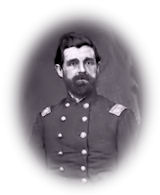
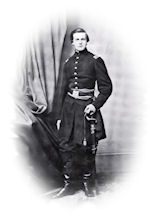
Hall’s Hill, Va., March 6, 1862.

Dear E.:—

As far as advice is concerned about what you are to do in the future I do not know as I can give any. Mother’s idea of your learning a trade depends upon just what you intend to do through life. A blacksmith’s trade is a very good one if well followed, and, if you ever intend to be a blacksmith, now is the best time for you to commence. By the time you are of age you will have a good capital to begin with, for I consider almost any business well mastered a capital. You can earn a good living and make property, too, always provided your heart is in it and you like the business. If you ever intend to learn any trade, now is just the time for you to begin. Your education is sufficiently advanced for the purpose, and it need not entirely stop on account of your having steady employment. On the other hand, if you have determined to adopt one of the professions and feel that you can succeed, and have made up your mind just what you will do and how you will do it, I say go ahead and do it. My advice is—determine now what you will follow through life and then shape your conduct accordingly. You doubtless have the idea that a good education is of great advantage to a man in any business. This is true, but you and I have to depend upon ourselves without help from relatives and commence life immediately on coming of age. We must look this fact squarely in the face and act accordingly. Now, if you mean by getting an education, completing a college course, how are you to do it? You can get along by working on a farm part of the time and fit yourself to enter college. Then you must have five or six hundred dollars to take you through and graduate. Then you are ready to commence the practice of your profession. You have years of patient industry after you begin, before you attain a profitable business. Now after you are fitted for college you have the means to earn to take you through. Look at that and meet it squarely. If you have health, patience, perseverance and firm self-reliance, you may accomplish it and obtain a good profession. On the other hand, if you learn a trade, you may be settled comfortably in life in a few years. But, if you adopt a business against your will, ten chances to one you will be unsuccessful. So if you decide on a trade pitch into it heart and soul and you may succeed. You say Father does not favor your learning a trade. Well, what does he advise? To get an education? Yes, but for what? What kind of an education, for that’s the question? At the best he can assist you but a year or two longer, and he can scarcely do that. Now my opinion is that the best assistance he can give you is to help you fix your choice on some calling and then take the proper steps to secure success in that calling. You have the material in you for a first-class man, and I hope you will prove yourself to be one. Prove yourself to have one of the first qualities of such a man—decision of character—by marking out your path and then steadily following it. It is just the turning point of life with you, and I know just about how you feel. You look away down into the dim future of coming years and imagine yourself a man, a prosperous business in your hands, a splendid home, a good wife, and yourself rich and respected. Such is your ideal. It lies within your reach, but it will never come by your wishing for it. You must grow into it. You cannot begin too soon to select your road to it. There are many roads, but you can travel but one, and the sooner you set out the sooner you will reach the goal. I cannot advise you which to take, but only say take some one and act the man in your choice, show that you have judgment like a man and look at all sides of the question. Perhaps I have now written more than enough on this subject, but I see it is occupying your thoughts, and, as you asked my advice, you have it for what it is worth.
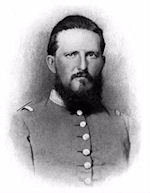
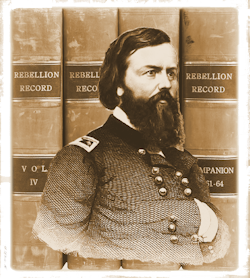
Winchester, March 6, 1862.

Your first letter since I left home reached me on yesterday, bringing the welcome intelligence that you were all well, and the intelligence, not less gratifying, that you would not have me stay at home whilst the country has such pressing need for the service of every citizen in the field. If such were the feeling and wish of every woman and child, the men would be moved by nobler impulses and we would have a brighter prospect before us. Our soldiers, impelled by influence from home, would all remain in the service, and those left behind would rally to their support, instead of remaining behind until compelled by force to join the army and fight for the liberties of the country. Whatever others may do, their delinquencies will not justify our faults; and you and I must act so that what we do in these times of peril and uncertainty shall hereafter have our own and the approval of those whose good opinion we value.

We came to our present encampment a week ago, and have made little preparation for comfort, not knowing how soon, but expecting every day, we might move again. I doubt not you have heard frequent rumors that a battle was imminent. You had best never alarm yourself with such. From this to the end of the war, I never expect to see the time when a battle may not occur in a few days. Hence I always try to be ready for it, expecting it as something through which I must pass, which is not to be avoided. The facts, so far as I can learn, are that the enemy is in Charlestown with considerable force, in Martinsburg with some 3000, and at Paw-paw tunnel in Morgan with some 12,000 or 15,000. I think it very uncertain whether an advance upon Winchester is intended at this time. Their purpose in crossing the river is probably to rebuild the railroad. When this is done we shall probably be attacked here. If the force of the enemy is far superior to our own,—and it probably will be, I think,—we shall retire from the place without making a defence. So don’t be alarmed at any rumors you may hear.


Since my return we have had a very idle time. My duty is to take charge of the regiment in the absence of the Colonel, and as he is here I have nothing at all to do. I am very anxious to get a job of some sort which will give me occupation.

The wish which lies nearest my heart is for your comfort and happiness in my absence. I will write regularly so that you will get my letters on Sunday morning when you go to church. As soon as you hear what was the fate of Brother’s two boys at Fort Donelson, write me about it.

March 6.—A squad of Van Allen’s cavalry today captured a rebel picket, five in number, near Bunker Hill, Va. They belonged to the Second Virginia infantry. They were carried before the Division Provost-Marshal, Lieut-Col. Andrews, of the Massachusetts Second, for examination.

-—The confederate Congress passed the following substitute for the original bill offered by Mr. Foote, of Tennessee, to authorize the destruction of cotton, tobacco, and other property in military emergencies:

Be it enacted by the Congress of the Confederate States of America, That it shall be the duty of all military commanders in the service of the confederate States to destroy all cotton, tobacco, or other property that may be useful to the enemy, if the same cannot be safely removed, whenever, in their judgment, the said cotton, tobacco, and other property is about to fall into the hands of the enemy.

The following clause was struck out of the original bill on a motion to amend:

The owners thereof shall receive just compensation therefor from the confederate government, under such laws and regulations as may hereafter be established by Congress.

It will be seen that the question of the compensation of owners of the property destroyed is cut off.—Richmond Examiner, March 7.

—President Lincoln transmitted to Congress a message, recommending the adoption of a joint resolution that “the United States ought to cooperate with any State which may adopt a gradual abolishment of slavery, giving to such State pecuniary aid, to be used by such State in its discretion to compensate for the inconveniences, public and private, produced by such change of system.” The President does not urge the adoption of the resolution, but says that the proposition is made “as an offer only,” and declares his conviction that the emancipation of slavery must be gradual, not sudden. He says the “war has been an indispensable mean” for the preservation of the Union, and the present proposition is made as something which promises “great efficiency toward ending the struggle.”— (Doc. 79.)

—Smithfield, Va., was this day occupied by a strong force of United States troops.—Capts. Bell, McKean, Du Pont, Goldsborough, and Farragut were confirmed by the Senate of the United States as flag-officers of the Navy. President Lincoln, in addition to the officers promoted for gallant conduct, nominated Brig.-Gen. Thomas to be a major-general, as a recognition of his eminent services in Kentucky.

—The Ninety-eighth regiment of New-York State volunteers arrived at New-York, en route for the scat of war. It is commanded by Col. William Dutton, a graduate of West-Point, and a classmate of Gen. McClellan.

—An adjourned meeting of citizens of Charleston, S. C, was held at the City Hall, at seven o’clock P.M., to organize the free market of the city, in order to supply the families of soldiers and sailors with provisions and necessaries, free of charge, during the existing war.— Charleston Mercury, March 6.

—A Squadron of the First regiment of Michigan cavalry surprised a party of rebel cavalry at Berryville, Va., routing them, killing three and capturing nine horses, without the loss of a man. —Baltimore American, March 7.

Ash-Wednesday, March 5.—This morning Dr. Wilmer gave us a delightful sermon at St. Paul’s. He will be consecrated to-morrow Bishop of Alabama. To-night Bishop Elliott of Georgia preached for us, on the power of thought for good or evil. I do admire him so much in every respect.

5th.—The deed is done. The blood-hounds tracked out at least a part of their game. The following will tell its own tale :

Headquarters ______ Reg’t _____Vols,”

Camp Griffin, Virginia, March 5th, 1862.

Regimental Order,
No. 72.

Privates _____, _____, _____, _____, _____, _____, _____[1] are detailed for extra duty in the Regimental Hospital. They will report to the Surgeon at the hospital forthwith, taking with them their knapsacks, arms, accoutrements, but no ammunition.

Privates _____, _____, _____, _____, _____, _____, _____, _____, _____, _____[2] are relieved from extra duty at the Regimental Hospital, and will report for duty forthwith, to their company commanders.

The above changes in the attaches of the hospital is deemed necessary, on account of the late complimentary presentation, made by the attendants now relieved to the Surgeon in charge of the hospital. This was in violation of the spirit of the army regulations, and of the usage of the service.[3] Yet it is believed that in so doing the men were guilty of no intentional wrong, and were actuated by the better impulses of human nature; and there is, too, much reason to believe that they have been misled by the precedents which have been but too many in the volunteer service. While it is not intended to disgrace the soldiers above named, it is considered that by making this present to their superior in the Medical Department, they have so embarrassed their relationship to that officer as to render the continuance of that relationship subversive of military discipline.

The relationship of officers and soldiers is that of instruction and command on the one part, and of respect and obedience on the other. All discipline is based upon this theory, and while the officer will receive in his own consciousness of duty discharged, and the disinterested approval of his superiors and peers, his sufficient reward, the soldier, by doing his duty in the defence of his country, will continually pay a greater compliment, and make a more acceptable presentation to his officer than handiwork can fashion or money buy.

By order of the Colonel Commanding,

_____ _____ _____, Adjutant.”

Copy, Official.
_____ _____ _____, Adjutant

Well, there is a good deal of rhetorical high-fa-lu-tin in all that; but after it shall have been laughed at, hooted and ridiculed by all who see it, I wonder how much comfort the poor soldier who has had his hip shattered or his spine dislocated by a shell, will derive from the recollection of this rhetorical sophistry, whilst he is being handled on the battle field as a bear would handle him, instead of by those hands which had for months been trained to a knowledge of the business, and now withheld for the gratification of a cowardly vindictiveness.

But take it all in all, the above is a remarkable document. Nothing recognized but order and obedience. Affection for the commander is entirely ignored. It has been my boast and pride, that for months, not one of the ten men taken from me has been ordered. Their affection for me has anticipated my every wish as well as every necessity of the sick, and there has been a constant emulation amongst them as to who could best please me by contributing to the comforts of the sick. This, it seems, is not consistent with the good of the service, and they are all this day returned to the ranks ! Well, if military discipline ignores the impulses of affection, and of obedience from kindness, God deliver me from all such drill.


[1] Names of seven privates.

[2] Names of the ten of the hunted out.

[3] Everybody knows that statement to be false. ‘Twas perfectly in accordance with the uaage at that time and is yet.

Wednesday 5th

Went down on to the Ave this evening, had a talk with Judge Edmonds, Comr of the Land office, at the National. Called into “Willards.” Saw Mr Stillson there, was introduced to Mr Wills, a lawyer of Chicago, who is engaged in the great Land suit against the RR Company at Chicago. He appears to be a “smart one.” Called on my return home at the office of Maj Williams on 11th st. Saw VanMaster, just from Lyons. Nothing new from there. We are all much attached to the place. I have spent most of my life there.

______

The three diary manuscript volumes, Washington during the Civil War: The Diary of Horatio Nelson Taft, 1861-1865, are available online at The Library of Congress.

MARCH 5TH.—Martial law has been proclaimed.

Wednesday, 5th—Company E had prayer meeting this evening in a vacant room close by their quarters. It is reported that we are to leave for the South in two or three days. The war has certainly struck this place a hard blow. There are many vacant houses and most of the storerooms are standing empty. There are but few men left in town, most of them having gone to war. Families are divided, each member having gone to the army of his choice; there are fathers against sons and brothers against brothers. They are so determined for the side they take that many are killed in the neighborhood by their neighbors, and some even by members of their own families.

March 5th. The Rhode Island arrived, after having been to Galveston, Texas, visiting our ships as she passed them. On her way home she is to call among the blockaders, carrying home the sick and leaving stores. We put four patients aboard her for home. In the evening the U. S. sloop-of-war Richmond arrived from home; also one or two gunboats. Thus the great fleet detailed to our flag-officer’s command is slowly gathering in.

To Mrs. Lyon

Mound City, Ill., March 5, 1862.—I was down to Cairo yesterday, and while there the regiment received orders to march to Charlestown, a few miles west of Bird’s Point. Company K was not included. You are glad. Columbus is evacuated, no fight there. The boys are hungry for a fight.