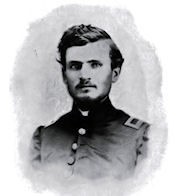
5th. Packed and struck tents. Received a letter from home. Ready to march at 9 A. M. Called for the turkey and received the blessing of the good ladies. Had a very pleasant ride of fifteen miles toward Fort Scott, until we overtook the First Battalion. Trip delightful and novel. The scenes were truly grand as we crossed the rolling prairies and looked over them from some elevated spot—here and there oases, wood-covered and watered by pure clear streams. It made the trip restful and refreshing. I enjoyed it and walked some, leading my horse.
March 2012
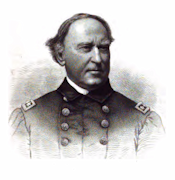
You will prepare your ship for service in the Mississippi River in the following manner:
Send down the top-gallant masts. Rig in the flying jib-boom, and land all the spars and rigging, except what are necessary for the three topsails, foresail, jib, and spanker. Trice up to the topmast stays or land the whiskers, and bring all the rigging into the bowsprit, so that there shall be nothing in the range of the direct fire ahead.
Make arrangements, if possible, to mount one or two guns on the poop and top-gallant forecastle; in other words, be prepared to use as many guns as possible ahead and astern, to protect yourself against the enemy’s gunboats and batteries, bearing in mind that you will always have to ride head to the current, and can only avail yourself of the sheer of the helm to point a broadside gun more than three points forward of the beam.
Have a kedge in the mizzen chains (or any convenient place) on the quarter, with a hawser bent and leading through in the stern chock, ready for any emergency; also grapnels in the boats, ready to hook on to, and to tow off, fire-ships. Trim your vessel a few inches by the head, so that if she touches the bottom she will not swing head down the river. Put your boat howitzers in the fore-maintops, on the boat carriages, and secure them for firing abeam, etc. Should any injury occur to the machinery of the ship, making it necessary to drop down the river, you will back and fill down under sail, or you can drop your anchor and drift down, but in no case attempt to turn the ship’s head down stream. You will have a spare hawser ready, and when ordered to take in tow your next astern do so, keeping the hawser slack so long as the ship can maintain her own position, having a care not to foul the propeller.
No vessel must withdraw from battle, under any circumstances, without the consent of the flag-officer. You will see that force and other pumps and engine hose are in good order, and men stationed by them, and your men will be drilled to the extinguishing of fire.
Have light Jacob-ladders made to throw over the side for the use of the carpenters in stopping shot-holes, who are to be supplied with pieces of inch board lined with felt and ordinary nails, and see that the ports are marked in accordance with the ‘ordnance instructions’ on the berth deck, to show the locality of the shot-hole.
Have many tubs of water about the decks, both for the purpose of extinguishing fire and for drinking. Have a heavy kedge in the port main-chains, and a whip on the main yard, ready to run it up and let fall on the deck of any vessel you may run alongside of, in order to secure her for boarding.
You will be careful to have lanyards on the lever of the screw so as to secure the gun at the proper elevation, and prevent it from running down at each fire. I wish you to understand that the day is at hand when you will be called upon to meet the enemy in the worst form for our profession. You must be prepared to execute all those duties to which you have been so long trained in the Navy without having the opportunity of practicing. I expect every vessel’s crew to be well exercised at their guns, because it is required by the regulations of the service, and it is usually the first object of our attention; but they must be equally well trained for stopping shot-holes and extinguishing fire. Hot and cold shot will, no doubt, be freely dealt to us, and there must be stout hearts and quick hands to extinguish the one and stop the holes of the other.
I shall expect the most prompt attention to signals and verbal orders, either from myself or the Captain of the fleet, who, it will be understood, in all cases acts by my authority.
D. G. Farragut.
Headquarters Heavy Artillery,
14th Mass. Regt., Co. B.
Fort Albany, March 5, 1862.
Dear Mother and Brothers:
We fired a National Salute here yesterday in honor of the first anniversary of Lincoln’s inauguration. It happened to be my detatchment that fired it, so I can say I have helped fire a cannon 6 P.dr. brass. 20 guns were fired, then we limbered up and run into the Fort.
Well, how do you get along with the Geese? Jerry told me you were not going to keep any this year, but I am glad you are. Write me which ones you keep and ducks and hens, because I am a little anxious to know how things go long about the Bradley Farm.
We had a lively time here the other day. I was making out pay-rolls, but when the order came to fall in, I seized my old comrade [gun] and went down. We formed in line and the adjutant read the orders from McClellan to Division Generals; it was to be ready to march, how much we could carry and to keep 2 days Rations ahead, in case of emergency. We have had several other orders since which indicate a forward movement. I hope we shall go, fighting or not.
Had a letter from Hull to-night. I have been making out papers to enable him to draw his pay in Massachusetts.
The Capt. has had a cold and does not feel very well. I have written a good long letter and I don’t believe he will. Jerry is well and on guard as drummer. By our latest news we have possession of Columbus, that great place of the Rebels. I think our army of Kentucky has done the most so far.
The Chaplin has got his wife out here and a Lieu’t had his come to-night. We shall soon have a village.
We have men from Washington to work on the Fort, as the frost has caused the Ramparts to slide off into the ditch. We hear considerable said about going home: some say in a month, others a year and some three years. Don’t make much difference to me.
As I know of nothing else to write, I will close.
Signed, Sealed in presence of
Leverett Bradley, Jr.
George, you may give my respects to the Gals and Boys about Pleasant Valley.
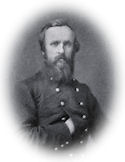
Fayetteville, Virginia, Wednesday, March 5. — Snow, raw weather. Rode with Dr. Joe four or five miles. The new horse doesn’t seem to care for pistol firing. Open-air exercise agrees with me so well that I often feel as if an indoor life was unworthy of manhood; outdoor exercise for health! Read news of the 28th and [March] 1, Cincinnati. Rebel papers afford good reading these days.
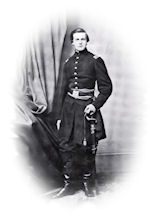
Camp of the 83rd P. V.,
Secesh, Va., March 5, 1862.
Dear Friend P—s.:—
I received your letter of the 24th ult. last night. We are still here on Hall s Hill with no prospect that I can see of leaving very soon. To be sure we have marching orders occasionally, were under orders last week. They kept us two or three days with everything in readiness to leave at a moment’s notice and turned us out into ranks several times, but the whole thing flashed in the pan, as it always does. I think the spring will find us here. It does not seem to be any part of the plan to attack the rebels at Manassas till they are forced to abandon their position, partially, at least, by some other portion of our forces. The intention may be to turn their left flank and so get in their rear. General Banks made a movement looking towards that last week, by taking his division across the river at Harper’s Ferry. He met no opposition, though report says the rebels immediately concentrated a large force at Winchester, their extreme left position, evidently to prevent his turning their flank. Everything is managed so secretly now it is impossible to tell what will be done two days in advance.
The weather is so extremely changeable that no reliance can be placed on its favorableness till spring is fairly open. For example, Sunday morning was clear and warm, at noon it rained, before night we had five inches of snow, during the night it rained and in the morning it was all slush, before noon the snow was all gone and last night it rained in torrents, washing great gullies in the streets. This morning it was frozen as hard as a stone and the sun is shining clear again. Now in such weather an army cannot move, the roads are so bad that artillery and baggage cannot be transported and we are forced to wait for better weather. In the west the army is doing wonders. Every day we receive news of the success of our arms and the total defeat of the rebels. While things work as well as they are doing now I am content to wait in patience the time for us to do our share in crushing the rebellion. I know the North is impatient and wondering why the Army of the Potomac don’t move. It’s just because we are to have no more Bull Runs. The time has not come yet, but when it does, I am convinced that the boys here will show as good fighting qualities as our western army. The fight at Dranesville though but little was said of it in the papers, showed what stuff our boys are made of. They seem to care nothing for the rebels, but are ready to pitch into any number who show themselves.
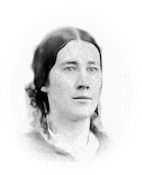
March.
Dear Girls: May is busy concocting things for a fair she and Bertha hold to-day, for the benefit of our “brave volunteers.” Papa and mamma and aunties are to buy the things, and May is to spend the money in little books, the first day she is well enough to come over. Robert asked me to say that he sent a box of books to Eliza’s address, Ebbitt House, for some hospital library. They were chiefly English reviews, which were too good reading to give to any of the recruiting camps here, and he thought in a general hospital there would always be somebody who could appreciate them. I was glad to get Charley’s second letter and wish he could hear from us. .. .
Perhaps these winds will dry the roads and enable you to go comfortably at least to Joe’s camp. It is too bad to have Mother leave Washington just as March winds prepare the way for McClellan’s advance. I am ready, mind you, Georgy, to wait for McClellan just as long as he desires. Only I think unless he threatens the enemy in some way, and thus keeps them cooped up, he may wake up some morning and find them all flown southward and he left, stuck in the mud. I don’t see why he couldn’t have done on the Potomac last December what Halleck has just done on the Tennessee.
. . . I shall take great interest in the working of the educational and industrial movements among the blacks at Port Royal. A large party of teachers, with supplies of various kinds, seeds and sewing machines, etc., went out in the Atlantic. Some of the lady teachers are known to us through friends, and though the whole arrangement has been matured very rapidly, it seems to be under judicious oversight. Jane has a venture in it. She went into the office to collect information and to offer help, and was levied on for eight neat bed-spreads, which she purchased at Paton’s. We can imagine the lady teachers reposing on their camp cots, in those distant islands, under Jane’s quilts. . . .
I wish I could feel that the end of the war will see, (as Prof. Hitchcock said on Sunday), in all this wide country “not a master, not a slave, only all Christ’s Freemen.” . . .
Jane and I get along famously, as independent as two old maids. We are not even troubled with evening callers, but sit each in our armchair with a foot-stool, a cup o’ tea and a newspaper, and shall be very much “put out of the way” if Mother comes home from Washington. We write begging her not to think of it again. Her duty and pleasure are both to be with you, and I don’t want her to have a moment’s uneasiness about the thought of separation, even if she stays months.
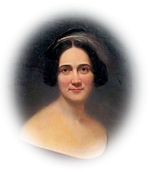
March 5th.—Mary Preston went back to Mulberry with me from Columbia. She found a man there tall enough to take her in to dinner—Tom Boykin, who is six feet four, the same height as her father. Tom was very handsome in his uniform, and Mary prepared for a nice time, but he looked as if he would so much rather she did not talk to him, and he set her such a good example, saying never a word.
Old Colonel Chesnut came for us. When the train stopped, Quashie, shiny black, was seen on his box, as glossy and perfect in his way as his blooded bays, but the old Colonel would stop and pick up the dirtiest little negro I ever saw who was crying by the roadside. This ragged little black urchin was made to climb up and sit beside Quash. It spoilt the symmetry of the turn-out, but it was a character touch, and the old gentleman knows no law but his own will. He had a biscuit in his pocket which he gave this sniffling little negro, who proved to be his man Scip’s son.
I was ill at Mulberry and never left my room. Doctor Boykin came, more military than medical. Colonel Chesnut brought him up, also Teams, who said he was down in the mouth. Our men were not fighting as they should. We had only pluck and luck, and a dogged spirit of fighting, to offset their weight in men and munitions of war. I wish I could remember Teams’s words; this is only his idea. His language was quaint and striking—no grammar, but no end of sense and good feeling. Old Colonel Chesnut, catching a word, began his litany, saying, “Numbers will tell,” “Napoleon, you know,” etc., etc.
At Mulberry the war has been ever afar off, but threats to take the silver came very near indeed—silver that we had before the Revolution, silver that Mrs. Chesnut brought from Philadelphia. Jack Cantey and Doctor Boykin came back on the train with us. Wade Hampton is the hero.
Sweet May Dacre. Lord Byron and Disraeli make their rosebuds Catholic; May Dacre is another Aurora Raby. I like Disraeli because I find so many clever things in him. I like the sparkle and the glitter. Carlyle does not hold up his hands in holy horror of us because of African slavery. Lord Lyons¹ has gone against us. Lord Derby and Louis Napoleon are silent in our hour of direst need. People call me Cassandra, for I cry that outside hope is quenched. From the outside no help indeed cometh to this beleaguered land.

______
¹ Richard, Lord Lyons, British minister to the United States from 1858 to 1865.
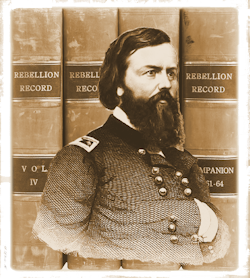
March 5.—An order, dated at Jackson, Tenn., was issued by Gen. P. G. T. Beauregard, of the confederate army, assuming command of the rebel army of the Mississippi. The order declares that the Northern “invaders” must be “made to atone” for the reverses experienced by Southern arms, and terminates by calling the rebel cause as “just and sacred” as any that ever animated a nation.—(Doc. 77.)
—In the Confederate Congress, Mr. Smith offered a resolution that the Committee on Post Offices and Post-Roads be instructed to inquire into the expediency of reporting a bill to prevent the appointment, as postmasters, of persons between eighteen and forty-five years of age, where the compensation is under seventy-five dollars per annum; but such appointment shall be made with reference to those persons who, by bodily infirmity, age, or sickness, are exempt from military duty.
The object of the mover of the bill was mainly set forth in the bill as it read. He wished to cut off from the benefit of the exemption law many persons, able-bodied and active young men, who sought these offices, some of which paid but ten dollars a year, only for the purpose of escaping military duty. In these offices, where so little exertion was required, persons could be placed who were unfit for the field, or, if necessary, some of the noble women of our country could be looked to to perform these duties.—Richmond Examiner, March 7.
—This day the United States steamer Water Witch captured, off St Andrew’s Bay, west coast of Florida, the rebel schooner William Mallory, of Mobile, from Havana February twenty-eighth, and bound wherever she could make a port. She is a schooner of one hundred and eight tons burden, and is a remarkably fast sailer, having been chased five hours and fired at several times before she would heave to.—National Intelligencer, March 20.
—A Proclamation was issued by F. W. Pickens, rebel Governor of South-Carolina, calling for five volunteer regiments, to serve during the war, in response to a requisition for that number made upon the State by the President of the Confederate States. He urges upon the people the necessity of the call, in consequence of reverses to the Southern arms, and threatens to meet the demand by conscription, if the regiments are not formed by volunteers within fifteen days.— (Doc. 78.)
—Tue public mind of the entire South is fast recovering from its causeless panic occasioned by the unfortunate affairs at Roanoke Island and Fort Donelson. Considerate men see that much ultimate good may come of them by inuring us to defeats that must often occur in a war with a power possessed of superior numbers and superior resources of all kinds, by curing us of that rashness which our continued successes had begotten, and, most of all, by stimulating enlistments, and thus increasing the number and efficiency of our armies. It is now almost certain that by the last of April we shall have a larger disposable force in the field than that of our enemies; for they must retain two hundred thousand men in Maryland to guard and retain that State and the city of Washington, one hundred thousand in Kentucky and Missouri to hold those States, some twenty thousand in their various forts, and probably eighty thousand in their fleets. Thus their stationary force being four hundred thousand, even if their armies number seven hundred thousand, they will have a disposable force of only three hundred thousand with which to invade our interior; and, in long incursions, this will be diminished at least one third by the forces detailed to keep up communication with their base of operations. Besides, by deferring their invasion of the South until the warm season, they will soon decimate their ranks by the malarious diseases of our climate.
Heretofore we have had to fight against superior numbers, but so soon as they quit their vessels, march into the country and meet us in the open field, we shall out-number them, if we please, in every conflict.
They cannot probably hold Nashville longer than the rainy season keeps the Cumberland River flooded. We know not how large an army they have there, but believe it cannot be very large. Should we be mistaken, and they attempt to hold it permanently, we ought, in a few weeks, to make prisoners of their whole army. Their present occupation of that city, of Fort Donelson, and of Clarksville so divide their land and naval forces as to disable them from attacking and taking Columbus, and proceeding down the Mississippi to Memphis and the cotton region.
If, with their whole land and naval force, and their eager appetite for cotton, they durst not attempt to descend that river, they will surely not now venture to do so with a crippled and divided navy and army. It may yet turn out that the fall of Fort Donelson and of Nashville will be a great gain to us, and a great misfortune to them.
The whole country, from the Ohio to Nashville, is inhabited by brave men and zealous secessionists. They cannot make that city a base of operations from which to invade the cotton States, for in a few weeks, probably days, the Cumberland River will become unnavigable for the smallest gunboats, and they would be cut off from their Northern supplies and resources. If they attempt it, even with a force of a hundred thousand men, we should at once surround them with a force of a hundred and fifty thousand, and capture their whole army. This would end the war; and we should not be surprised that it should end somewhat in this way. The North, under a weight of debt and want of cotton, is become desperate, and will rashly quit its woven walls ere long and march far into our interior. Then we will make prisoners of their armies, and gloriously and triumphantly wind up the war. Let faint-hearted people recollect that we never yet met them with equal numbers, in the open field, without defeating them; and that under the levy en masse which is going on in the South, if they invade us by land after the first of April, we will meet them with superior numbers. Our bad roads will prevent their invading us sooner.—Richmond Dispatch, March 5.
—Bunker Hill, Va., was occupied by the National forces.—Reverdy Johnson was to-day elected United States Senator by the Maryland Legislature for six years from March, 1863.
—A Reconnoitring party of the Sixty-third regiment of Pennsylvania, Heintzelman’s division, was ambushed this morning beyond the Occoquan, Va., two or three miles in advance of the Union pickets, and received the fire of a party of concealed rebels, who instantly fled through the woods. Capt. Chapman and Lieut. Lyle were killed, and two privates were wounded, one of them mortally.
—The National pickets at Columbus, Ky., were this day driven in by the rebel cavalry, who fled upon being shelled by the gunboats.
—An order was issued, dated at Jackson, Tennessee, by Major-Gen. Bragg, of the confederate army, designating different rendezvous for troops coming within his division, assuming authority of the railroads in the limits of his command, and declaring martial law in the city of Memphis, Tennessee. All prisoners of war at Memphis were ordered to be transferred to Mobile and thence to Tuscaloosa, Alabama, for confinement.
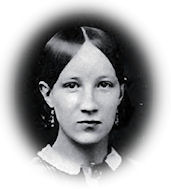
March 4.—John B. Gough lectured in Bemis Hall last night and was entertained by Governor Clark. I told Grandfather that I had an invitation to the lecture and he asked me who from. I told him from Mr Noah T. Clarke’s brother. He did not make the least objection and I was awfully glad, because he has asked me to the whole course. Wendell Phillips and Horace Greeley, E. H. Chapin and John G. Saxe and Bayard Taylor are expected. John B. Gough’s lecture was fine. He can make an audience laugh as much by wagging his coattails as some men can by talking an hour.
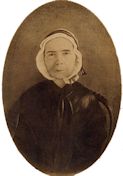
4th.—In statu quo as far as our armies are concerned. The Nashville, a Confederate steamer, that has been watched by eight Federal war vessels, came into port the other day, at Beaufort, North Carolina, after many hairbreadth escapes, bringing a rich burden.


